
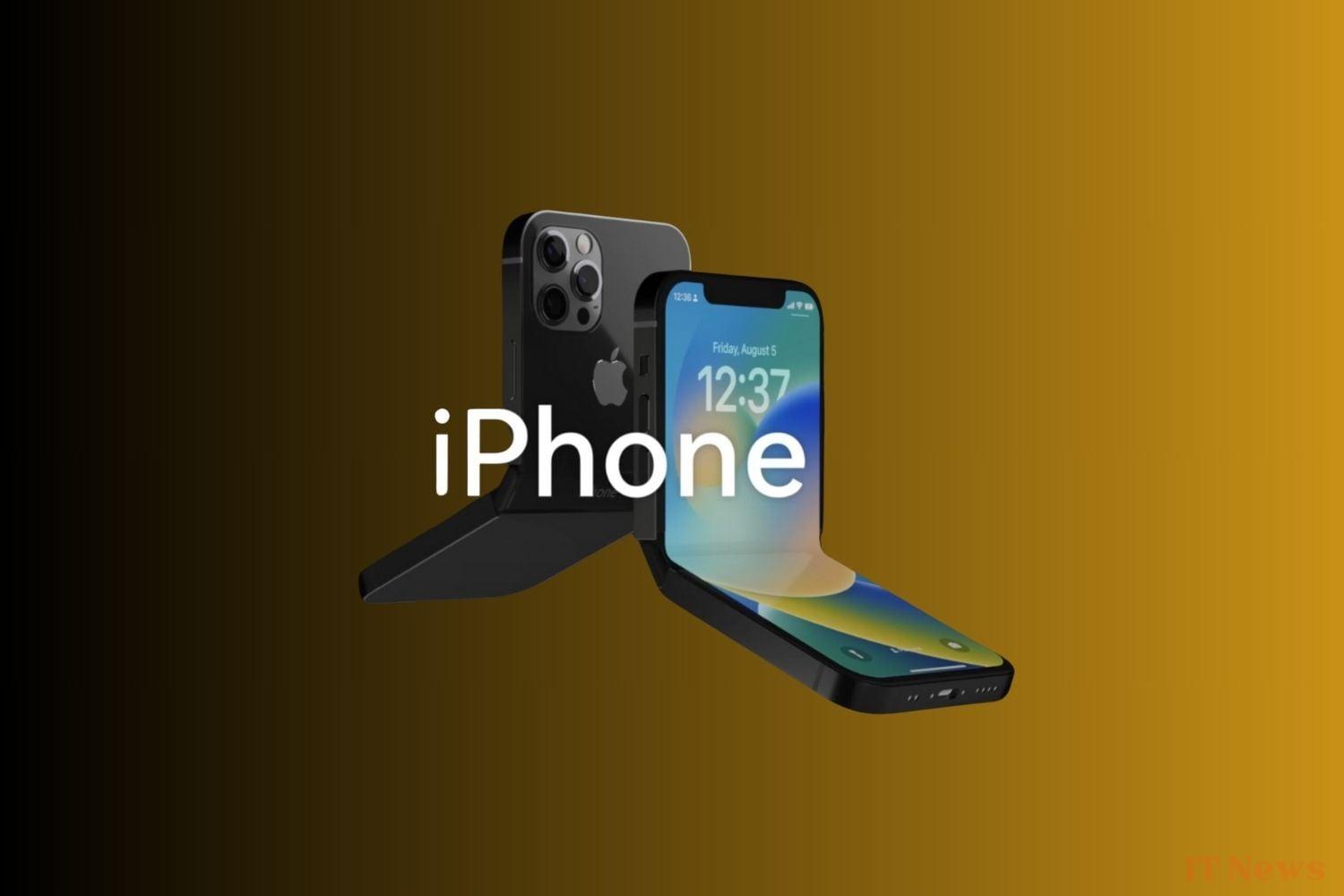
2024, 2025, 2026… Rumors and analysts are lost in conjecture when it comes to determining with relative precision the launch year of the foldable iPhone. 2024 is definitely a no-go now, and 2025 seems frankly optimistic while Apple already has a lot to do with a brand new very thin model, the iPhone 17 Air.
The SIM card of discord
For Ming-Chi Kuo, an analyst well-informed about what is happening behind the scenes of Apple's Asian production line, the foldable iPhone is still in its planning phase. Once it gets past that, the manufacturer can consider production — and given the expected sluggishness of iPhone sales in 2025, the Apple company may want to accelerate on that project.
But even with a worthy competitor to the Galaxy Z Flip, as it seems to be shaping up to be, Apple could have a hard time turning this iPhone into a huge commercial success, Kuo believes. According to him, Apple would choose to do without SIM card support for reasons of thinness; like the iPhone 17 Air, the foldable would make do with an eSIM chip (as has been the case for iPhones sold in the United States for the past few generations).
But that could be a problem in China, which has put in place strict measures to favor smartphones with SIM cards. These indeed facilitate the control and surveillance of populations (obligation to register with an operator that collects personal information), while eSIMs are programmable remotely.
As a result, Apple could have difficulty marketing not only the iPhone 17 Air, but also the folding iPhone in China. Which is bad timing, because it is one of the most important markets for the iPhone and for smartphones in general.
The launch of this folding device could take place in 2026, the Wall Street Journal reported a few weeks ago. The device would have a larger screen than that of the iPhone 16 Pro Max (6.9 inches). One of the technical problems facing Apple is the hinge of the smartphone: it is a question of making the fold as imperceptible as possible. Will the manufacturer find the solution quickly?
Source: Ming-Chi Kuo


0 Comments