
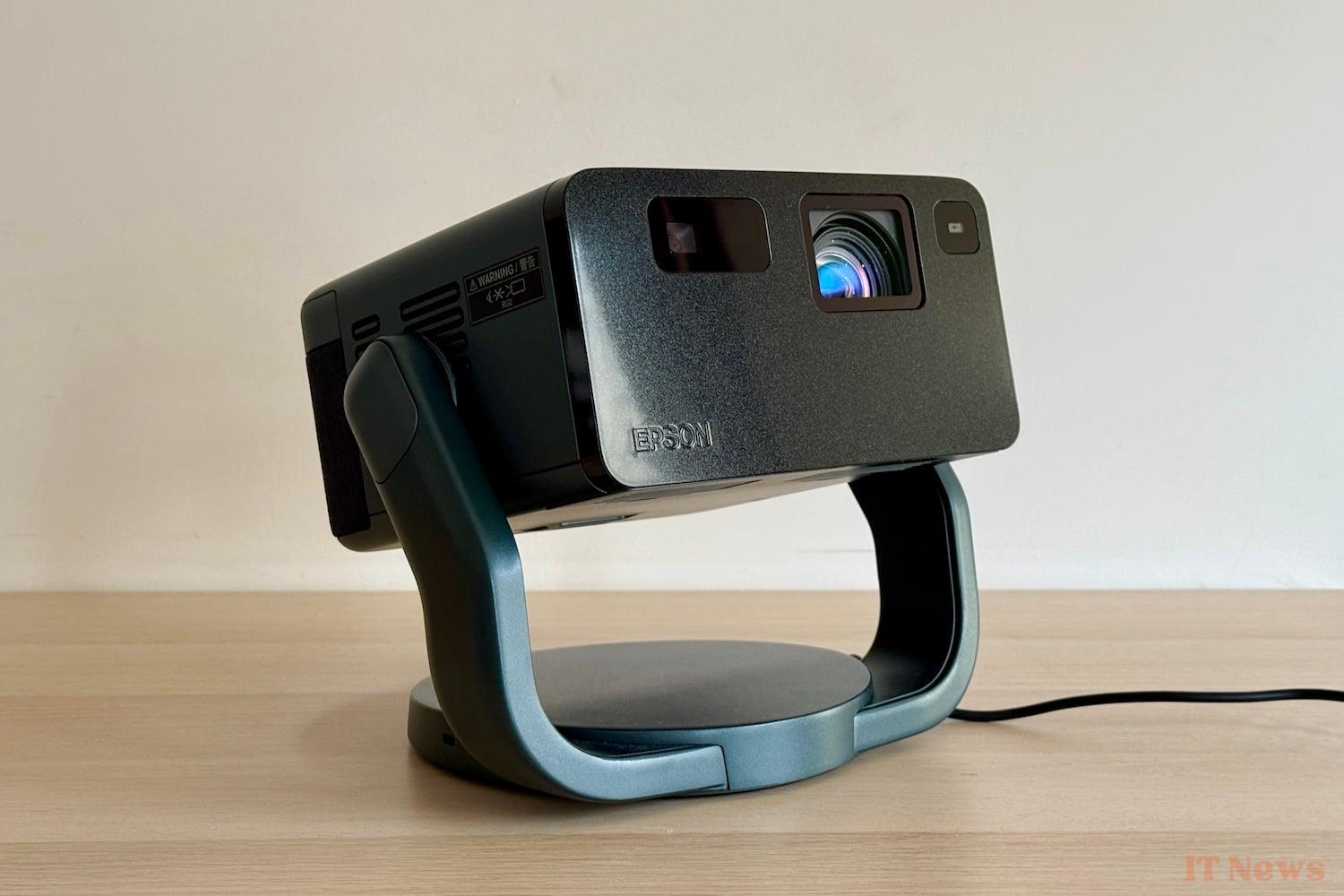
Epson is not just about printers. Home cinema enthusiasts know that the Japanese brand has also made a specialty of video projectors of all kinds. In the compact and transportable category, this EF-22 model was accompanied during its presentation by the EF-21, which has almost the same characteristics (it does not have a passive radiator), but does not have a support.
However, this is the most visible quality of the EF-22: its swing allows it to pivot vertically, while its 360° rotating support can orient it horizontally. This system is a guarantee of ease of installation. All you have to do is place it on a coffee table, a small piece of furniture or even the armrest of your sofa if it is wide enough for the automatic adjustment system to adapt the image to the projection surface (a screen is always recommended rather than a simple wall). If you move it, it only takes two seconds to get a rectangular and sharp image thanks to the sensors arranged on the front next to the lens.
Perfect finish and 3 kg on the scale
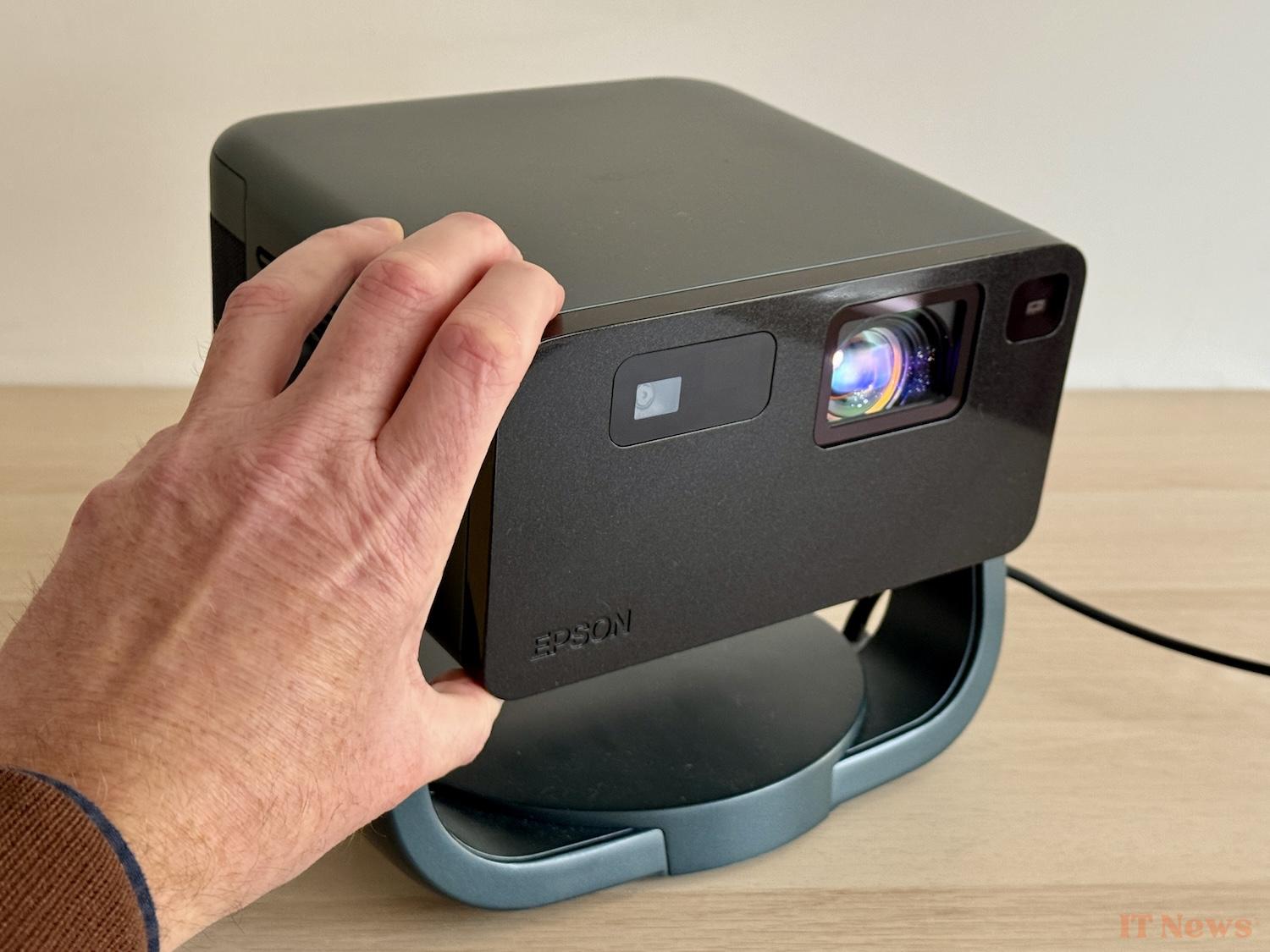
Be careful though, the EF-22 is not quite a pico projector. It does not have a battery (the compact external transformer provided is essential) and still weighs 3 kg for dimensions of 236 x 191 x 193 mm. It is therefore closer to a transportable than a portable. Under the support, a universal screw thread also allows it to be fixed to a stand or better still to the ceiling. In this case, the image is again adapted by being reversed.

The finish is simply impeccable. The adjustments are spot on and worthy of a device that is certainly affordable, but still costs 1100 euros. While plastic is exclusively used for the body of the device, the rotating foot and the swing are made of metal, ensuring perfect stability. The version provided here by Epson for our test was a metallic blue color, very dark and perfectly invisible in the dark. For those who want even more sobriety, it is also sold in a black version.
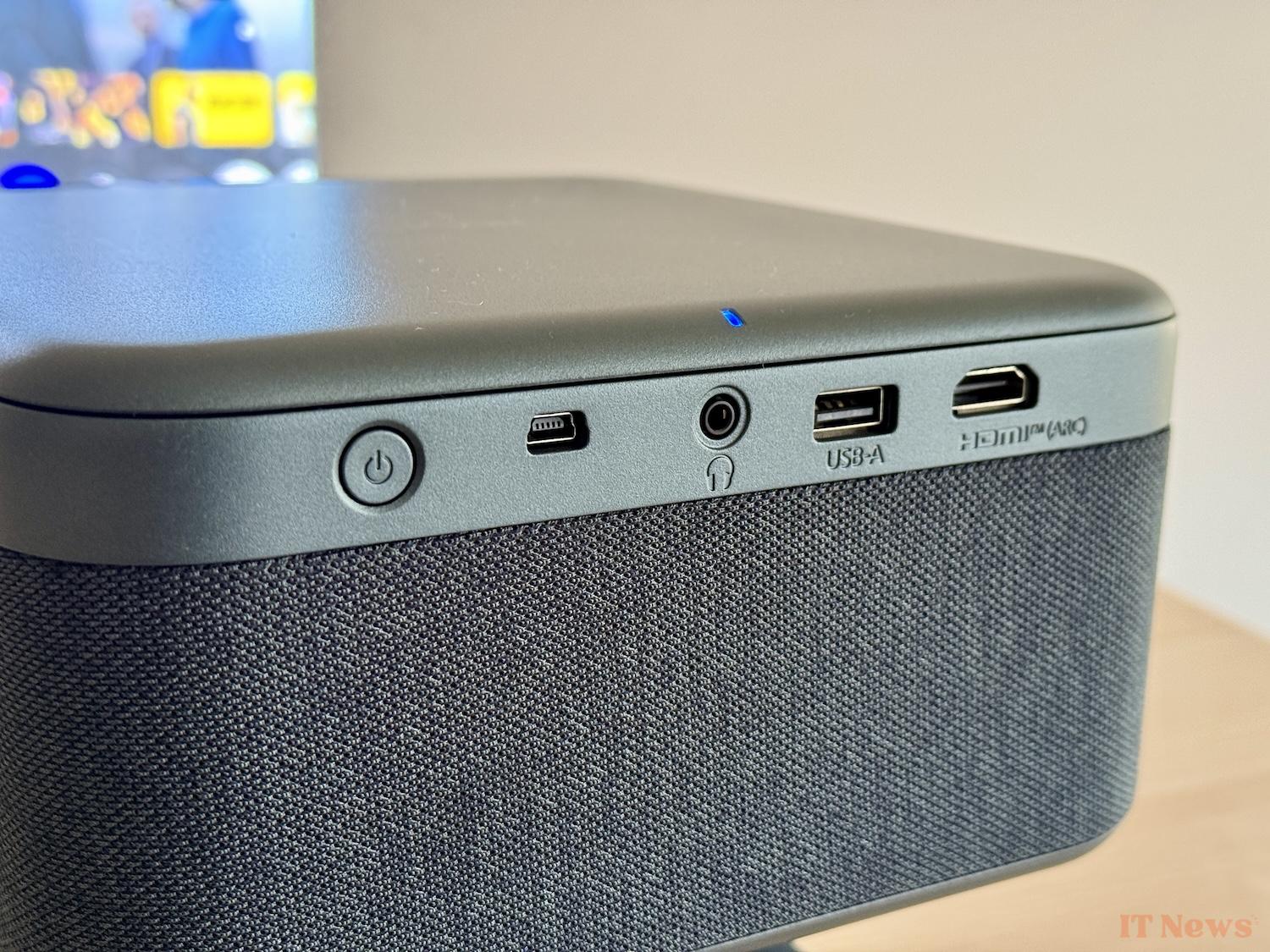
On one side of the stand, the power socket, on the other a Kensington slot to secure it if necessary. On the back of the device, you will find all the connections: HDMI 1.4 ARC, USB-A, 3.5 mm jack audio output and a mini-USB port exclusively reserved for the service. The power button is also located next to them. Some will find it limited, but it deserves to offer the essentials and above all to allow you to continue to easily handle the video projector rather than multiplying the cables that could hinder it.
Google TV to enjoy (almost) everything
Especially since the EF-22 will not necessarily require a wired connection, since it has Wi-Fi and the Google TV operating system (certified for Netflix). You therefore have access to all the applications necessary to enjoy your VOD or SVOD accounts (myCANAL, Disney+, Apple TV+, Max, Paramount+, etc.). To play video files, simply plug in a USB key containing them and use the VLC application, for example. It is also compatible with Google Cast to stream content from a smartphone. Finally, for those who are worried about the obsolescence of such a connected device, Epson guarantees software updates for 7 years.
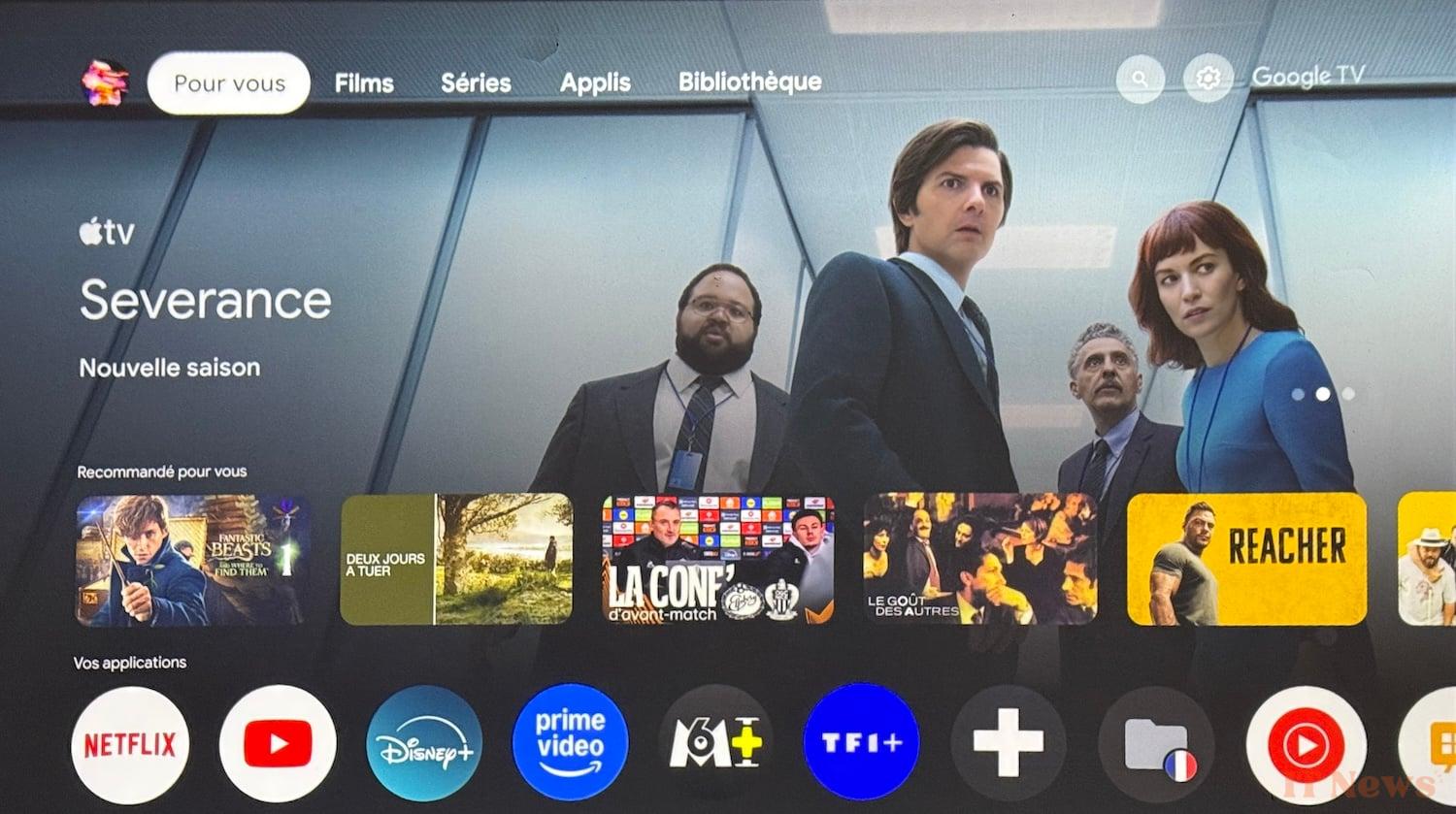
The interface is not necessarily the most fluid, but it is in any case absolutely responsive and does not present any annoying latency in use. At the back, a fabric surface covers two 5-watt speakers arranged at an angle. Not enough of course to compete with a dedicated installation, but enough to offer a more than honorable rendering. You can even use the EF-22 as a speaker thanks to its Bluetooth 5.2 connection. For those who want more, you can then connect it to a sound bar via the HDMI ARC output. Unfortunately, it will not be possible to enjoy Dolby Atmos, the projector only manages a stereo signal. In terms of acoustics, we should also note its relative silence with barely 35 dB measured at a distance of one meter. Plenty to be covered by the soundtrack of the film you are watching.

To control everything, the remote control supplied is light and ergonomic. Connected via Bluetooth, it does not need to be pointed at the device to control it. On the other hand, if no backlighting is offered, some essential buttons are white, allowing you to be better located in the dark.
Technological limitations…
And darkness, you will need it to get the most out of the EF-22. Indeed, Epson has chosen to use LCD technology and not DLP which generally offers more faithful colors and higher contrast. However, DLP has a defect: it produces an annoying rainbow effect more or less visible to some people. Even with its laser light source (given for 20,000 hours), this video projector needs to be used at least in relative darkness.
Once installed and the automatic keystone correction performed, we also note that the autofocus is very effective, showing no imperfections, even in the corners of the image. The device is also equipped with an obstacle avoidance system (poster, board, electrical outlet) and a light deactivation when you walk past it to avoid getting it in your eyes. It's a shame, however, that no adaptation to the color of the wall is offered. However, it is very practical for obtaining faithful colors when you don't have a screen and your wall is not perfectly white.
…But quality to match
Its 0.62-inch LCD panel can project an image from 30 to 150 inches depending on the distance from the wall. To reach 100 inches, for example, you have to place the EF-22 a little over 3.30 meters away. The maximum brightness is given at 1000 lumens, while the definition is unfortunately limited to Full HD. Another limitation is that the projector is only HDR10 compatible (no HDR10+ or HDR Dolby Vision).
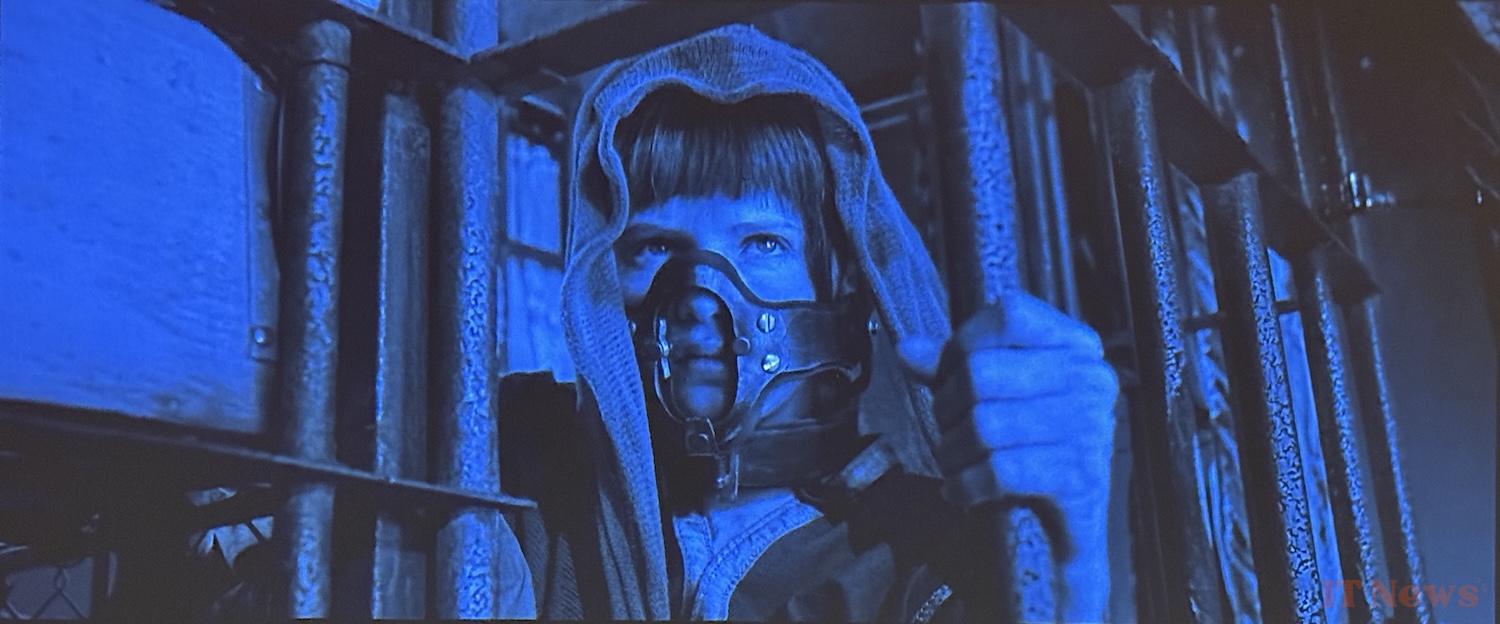
Despite these limitations, the overall rendering is quite up to par with this type of range. Even in Full HD, we see a lot of details and we benefit from fairly natural colors; the whole is clearly flattering. Same thing for the contrast which is not of a crazy performance, but which is enough to obtain image depth and blacks which do not turn gray. Fast movements, for example in action films, are also very well handled, without any apparent dragging effect.

For users who want to go further, several image modes are offered in the "Projector" section of Google TV. Dynamic, Vivid, Natural, Cinema and Custom. The latter has the merit of offering warmer colors, but also of adjusting the contrast, saturation, sharpness, gamma (according to three levels) and the three primary colors. Enough to meet most needs.
No, the EF-22 is not the most efficient video projector. Without 4K, it also requires relative darkness for its use. It is therefore aimed more at users looking for a model to use occasionally and which is likely to be moved often. For this use, its practicality and ergonomics are unparalleled, especially since it offers very good image and sound quality for this type of device.


0 Comments