
The release of Microsoft's Game Pass in 2017 profoundly transformed the video game ecosystem. This service, sometimes referred to as the "Netflix of video games" (a term that would become important later), significantly changed the way part of the public not only pays, but also consumes. Today, it is possible to play tons of games without spending a cent to buy a single individual title.
And this is a very important distinction, because it is not just a change in the economic model. It is indeed the outlines of a total paradigm shift that are beginning to take shape, and this dynamic will likely have serious implications for the way we consume our games.
A new video game Eldorado
This transition has already begun, at least in part. Overall, the initial public feedback on Game Pass has been more than positive. The majority of players seem to appreciate the format, and it's easy to see why; with a substantial and constantly updated catalog that costs less than a quarter of a AAA game per month, the formula seems almost unbeatable economically, especially for casual players.
Furthermore, in the current context where games are too often released in a deplorable state, this model is a form of insurance for the customer. With this type of service, they are no longer forced to play poker by paying around sixty euros for a potentially disappointing game. But above all, and this is certainly the most attractive aspect of GamePass and its counterparts, it is a golden opportunity to try out dozens of titles that would have been inconceivable to enjoy if they had to be purchased individually.
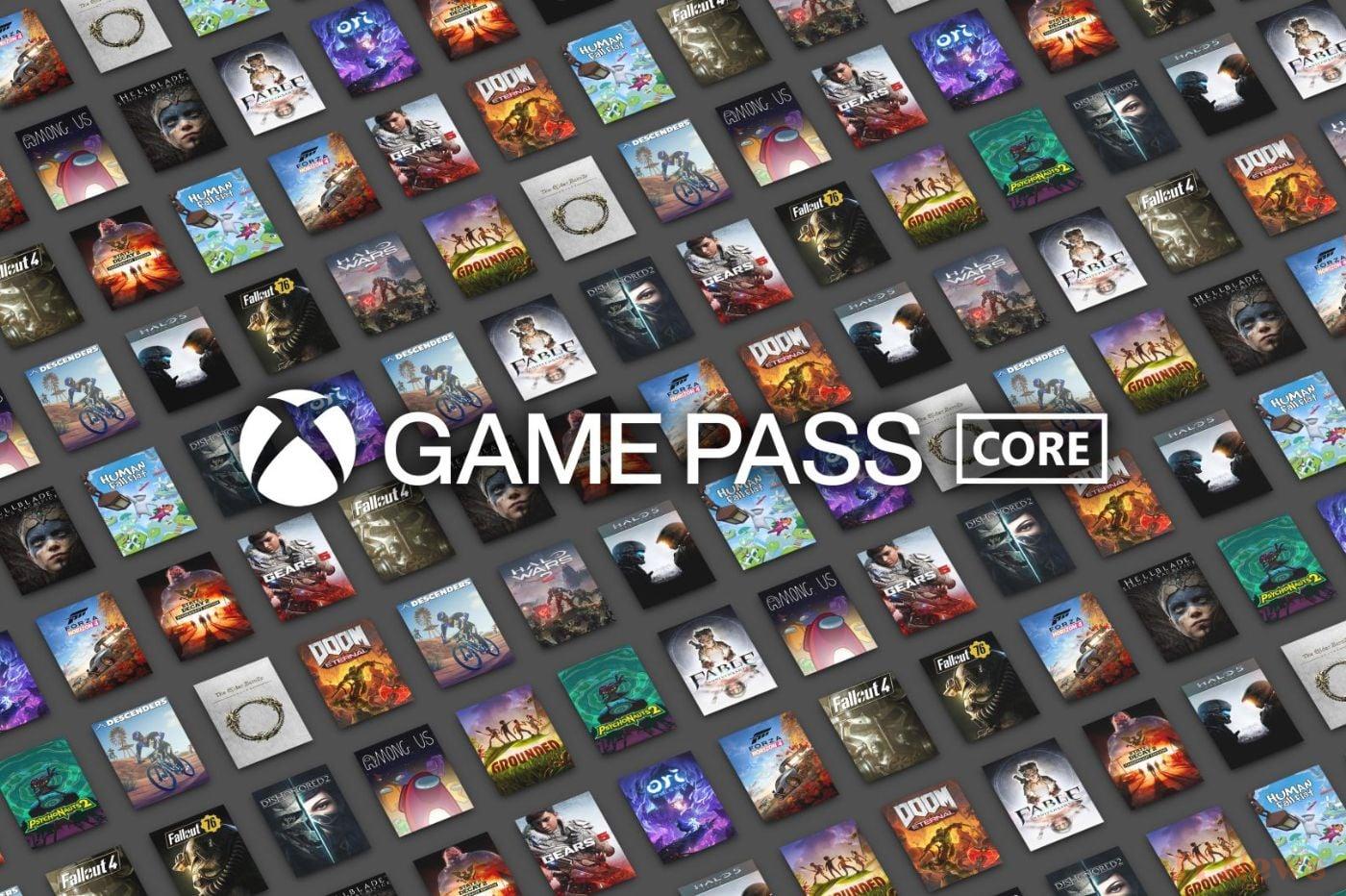
Today, we can even see that many players have decided to buy Microsoft's console solely on the basis of Game Pass, sometimes even in addition to a PS5. What could be more revealing than players spending several hundred euros just to crack open the door to a paid service?
The future of GamePass therefore seems assured. But there are still a lot of unknowns at this stage; it would be very clever to be able to guess Microsoft's intentions precisely. We can therefore ask ourselves lots of questions about the video game ecosystem of tomorrow.
Particularly with regard to the economic model. Because if there is one point that seems indisputable, it is that the service is still on a seduction dynamic.
A model still in its infancy based on seduction
Indeed, Microsoft has invested immense resources to put together an offer that, for the moment, seems almost too good to be true. Microsoft refuses to communicate the slightest data on the financial benefits; it is impossible to know precisely to what extent GamePass is profitable. But between marketing costs, the envelope intended for developers and publishers, maintenance... it is not excluded that Microsoft's margins are not enormous for the moment. Consequently, one can legitimately wonder where the company finds its economic account there.
For the digital giant, the interest is elsewhere. Like Netflix, whose rise began with extremely aggressive prices, Microsoft still seems to be on a seduction dynamic. It is above all a question of retaining as large a community as possible, probably with the aim of pushing for the transition to this new model. Strategically, Microsoft has everything to gain, since it already dominates this segment head and shoulders. It will therefore be very interesting, and we say this with a hint of apprehension, to see what will happen once the Game Pass has finished extending its hold on the AAA ecosystem.

It is likely that GamePass as we know it is actually a sort of trial version offered at a preferential rate. And once the model has become even more popular, it may be time to move from seduction to conversion by massively increasing prices once everyone has taken the bait.
From the console war to “gaming as a service”
Ultimately, this hegemony will probably be shared with certain competitors who will probably launch their own version of Game Pass. The console war that traditionally pits manufacturers against each other could therefore take on a whole new dimension; it is a safe bet that it will increasingly resemble the war between SVOD platforms, with all that this implies for players, developers, and publishers.
For the latter, the first question will be whether Microsoft and its competitors intend to position themselves as suppliers or aggregators. The answer could determine a significant part of the future of the industry. For example, we can imagine that AAA games will have to comply with certain guidelines to have a chance of existing in this highly prized, but also intrinsically exclusive, space. If GamePass and the like become as monolithic as we might think, developing a AAA game that would have no chance of being admitted to GamePass would no longer make any economic sense. This could generate a sort of passive formatting of the industry, for better or for worse.
On the one hand, this dynamic could reduce the number of pre-orders, since players will have every interest in enjoying the game at no extra cost on GamePass a few weeks later. This could force studios to offer finished products, which would be excellent news.
But another reading of the situation is also possible. We already observe today that to a certain extent, audacity and originality are increasingly the preserve of the independent world; at the top of the food chain, we prefer safe values with strong commercial potential, even if it means chaining together redundant and bland titles. Some see this as a devaluation of an art form in its own right, and this dynamic could become even more pronounced. Here again, the parallel with Netflix and the like emerges in the background.
More broadly, we are heading towards a major change in model that is already starting to take hold surreptitiously. We already hear a lot about "game as a service" today, but this is probably just a preamble to what could be more broadly called "gaming as a service ", well beyond individual games. Extrapolating further, we can even imagine that one day, consoles will only be platforms for accessing the various services offered by video game giants.
This also raises the eternal question of “ownership” of games. In practice, this is a concept that is disappearing. For example, if you naively think that you are the legitimate owner of a copy of the games you bought on Steam… it’s because you never bothered to read the fine print; they absolutely do not belong to you. Legally speaking, no customer “owns” their Steam games, much to the chagrin of gamers who remain, for the most part, very attached to this notion. And even those who have bought a game in physical format are not safe from bitter disappointment if a supplier stops supporting it.
Beyond the notion of ownership and the physical dimension, we can also imagine that the idea of a personal collection, one of Steam's big assets, could be undermined by the constant renewal model.
Change is now
Incidentally, we can also wonder about how Valve's platform intends to position itself in the midst of this massive polarization of the JV ecosystem. Of course, for the moment, Steam remains unshakeable, and this example shows that the single-game model still has a bright future ahead of it. But in the current context, we can legitimately wonder if Valve will not end up moving towards a Steam Pass. Conversely, Gabe Newell could also stick to his guns and defend his model tooth and nail.
For now, it is still impossible to say — and this observation applies to the entire new ecosystem that is beginning to emerge. It would be very clever to be able to anticipate all the repercussions of this paradigm shift.
This article does not claim to cover all the technical, practical and commercial implications inherent in this theme; There are simply too many of them, and each one branches out into a vast tree of subsidiary questions whose scope is still difficult to measure. We have simply sought to outline the contours of this new video game landscape. But what seems certain is that the way we consume these products is likely to change radically by the end of the decade. And even if this major transition promises to be a bit anxiety-provoking for a large part of the public, it will be very interesting to see how the industry will evolve in the short, medium and long term. It remains to be seen who will benefit from it, and who will be the fall guy.


0 Comments