

After a Quest 3 technically interesting but exceeding the psychological threshold of €500, Meta has gone back to work to significantly lower the price without sacrificing (too much) the virtual and mixed reality experience. This in-depth work resulted in the Quest 3S, launched at the end of last year, and whose price — starting at €330 — makes it accessible to anyone who wants to try out these immersive technologies without breaking the bank. Here is our Meta Quest 3S review, enjoy reading.
Une salade de Quest
Technically speaking, the Quest 3S is a balancing act to keep costs as low as possible. That's why the headset looks like a mix of previous models. We thus find the screens of the Quest 2 with their resolution of 1832x 1920 in each eye, a field of vision of 96 degrees in height and 90 degrees vertically, as well as the same optical system used in the Quest 2 and 3S, to have Fresnel lenses. An older technology than the "pancake" lenses of the Quest 3, and which weighs down the silhouette of the headset. But these lenses also have the merit of costing less…
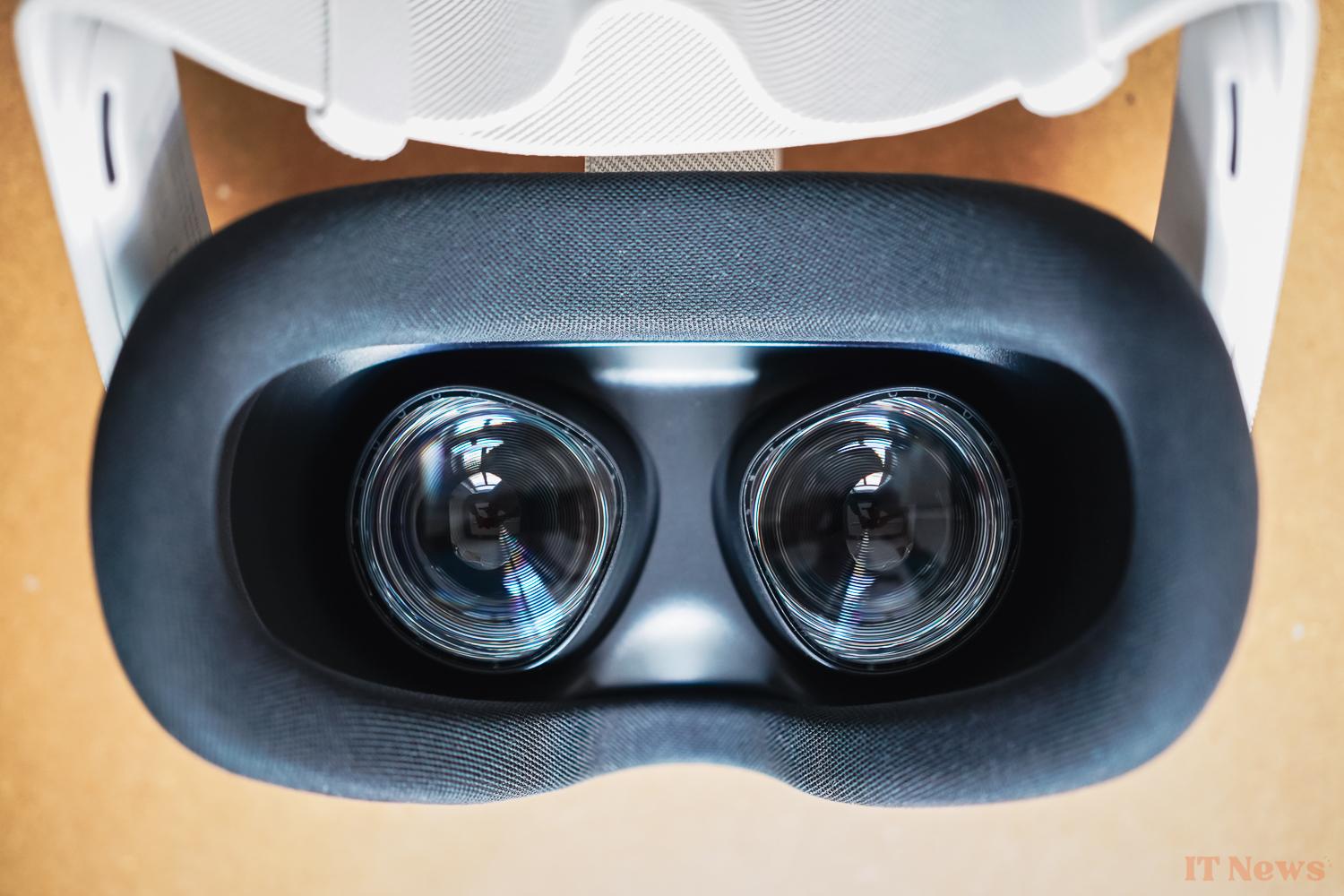
The Quest 3 has much better defined screens (2064x 2208 per eye) and a wider field of vision (110H/96V), which contributes to better immersion. The eyes “bump” less often against the physical limits of the headset. The Quest 3S borrows from its big brother the Snapdragon XR2 Gen 2 chip, the 8GB of RAM, the camera system for passthrough video (4 mpx), and it even has the luxury of a 2.5 hour longer battery life, despite a 4324mAh battery — compared to 5060mAh on the Quest 3, which has to make do with 2.2 hours of battery life.
In other words, the Quest 3S at €330 is just as powerful as the Quest 3 sold for €550 (admittedly, you have to make do with 128GB of storage, compared to 512GB on the top of the range in the family). The main sacrifice concerns the screens. It is undeniable that their quality and visual rendering are lower than in the Quest 3.


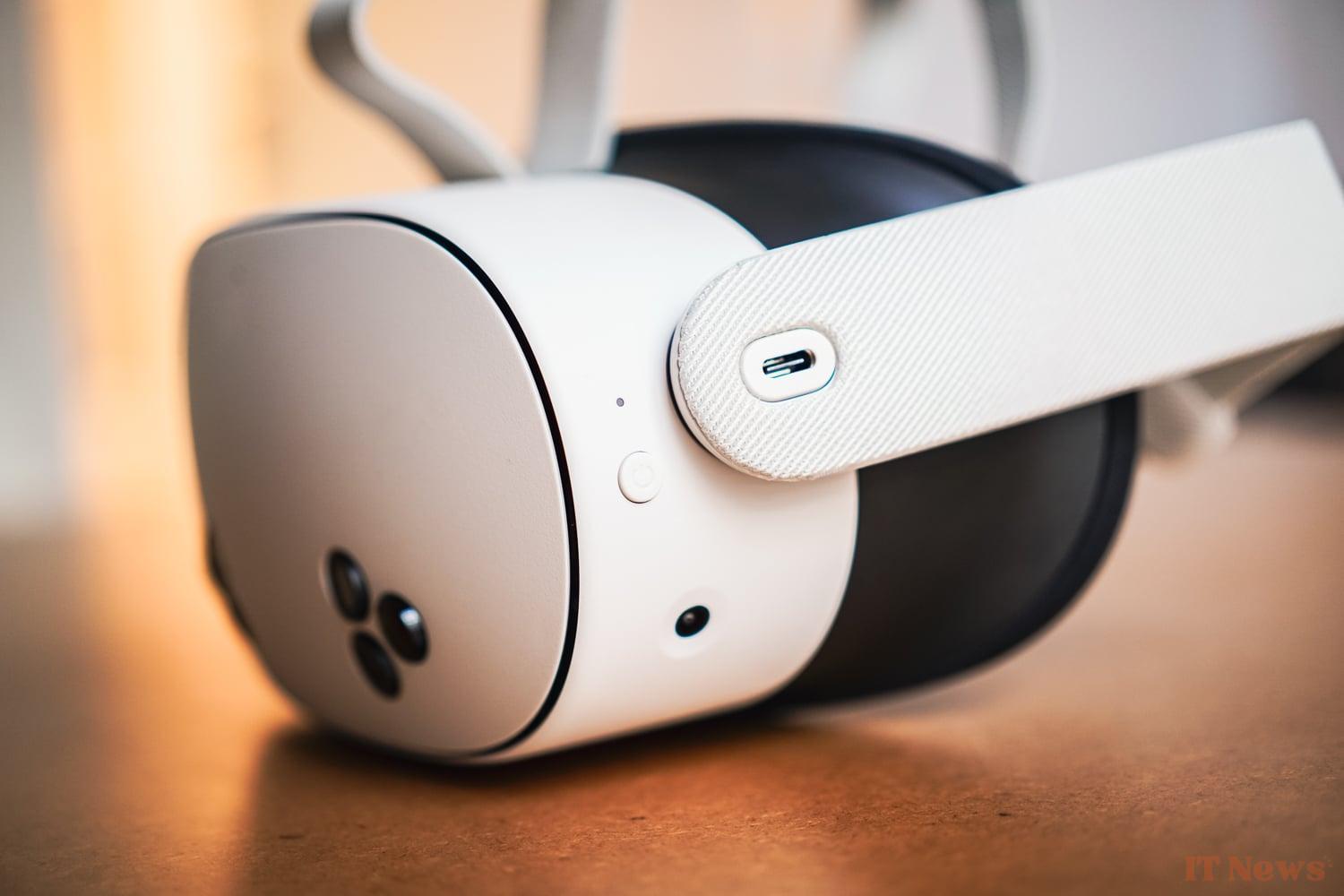
The Quest 3S is undeniably a sum of compromises, but compromises that are, all in all, understandable and smart, because they manage to offer a convincing virtual reality experience for the general public, at an affordable price. At the moment, it is difficult to ask for more in terms of hardware in this price range.
Mixed reality, that is to say the integration of virtual objects and windows into the user's environment, is more of a gimmick. The visual rendering of the Quest 3S passthrough mode is not great, we can clearly "see" that we are in front of screens: the environment is pixelated and turns red when the room is unfortunate enough not to be bathed in light.
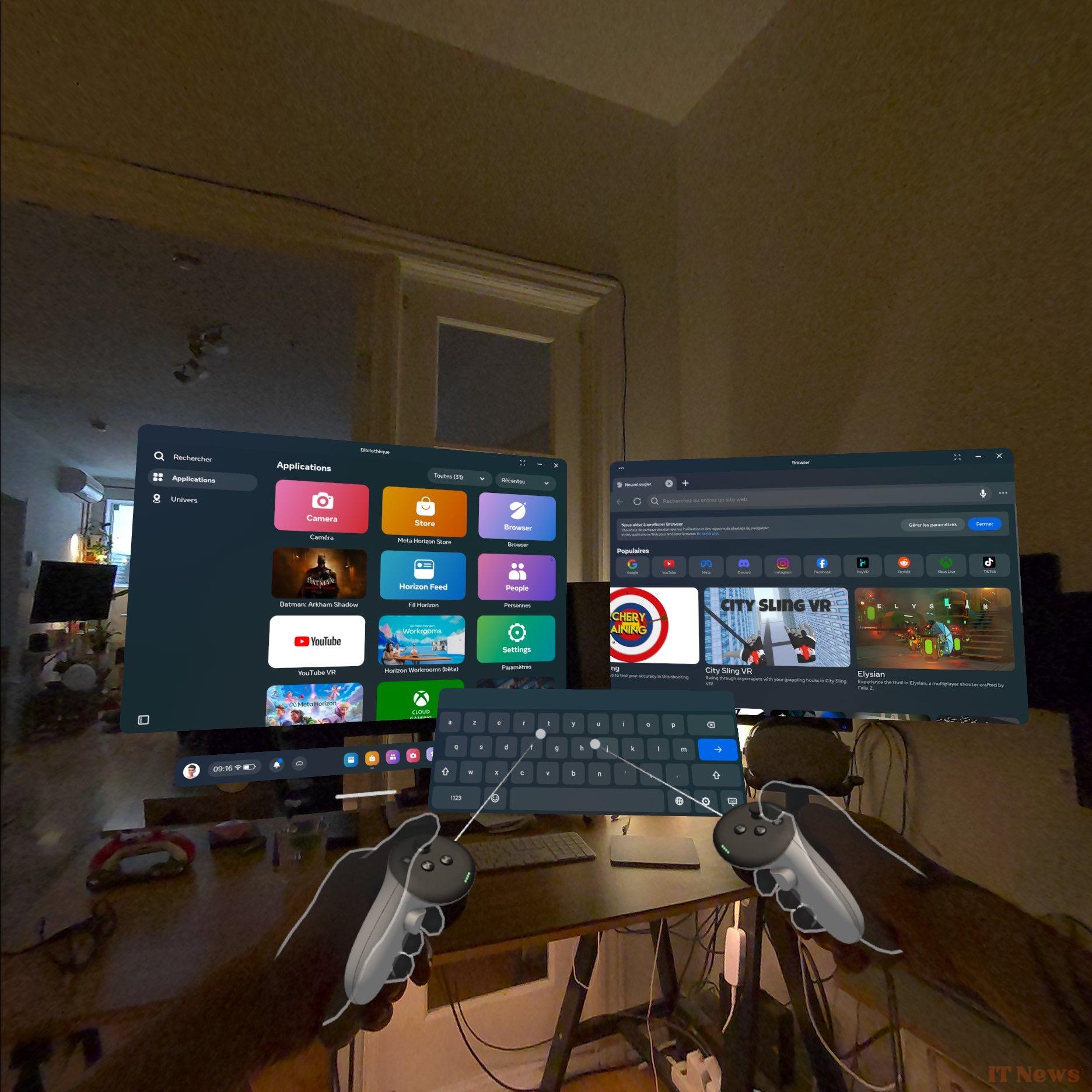
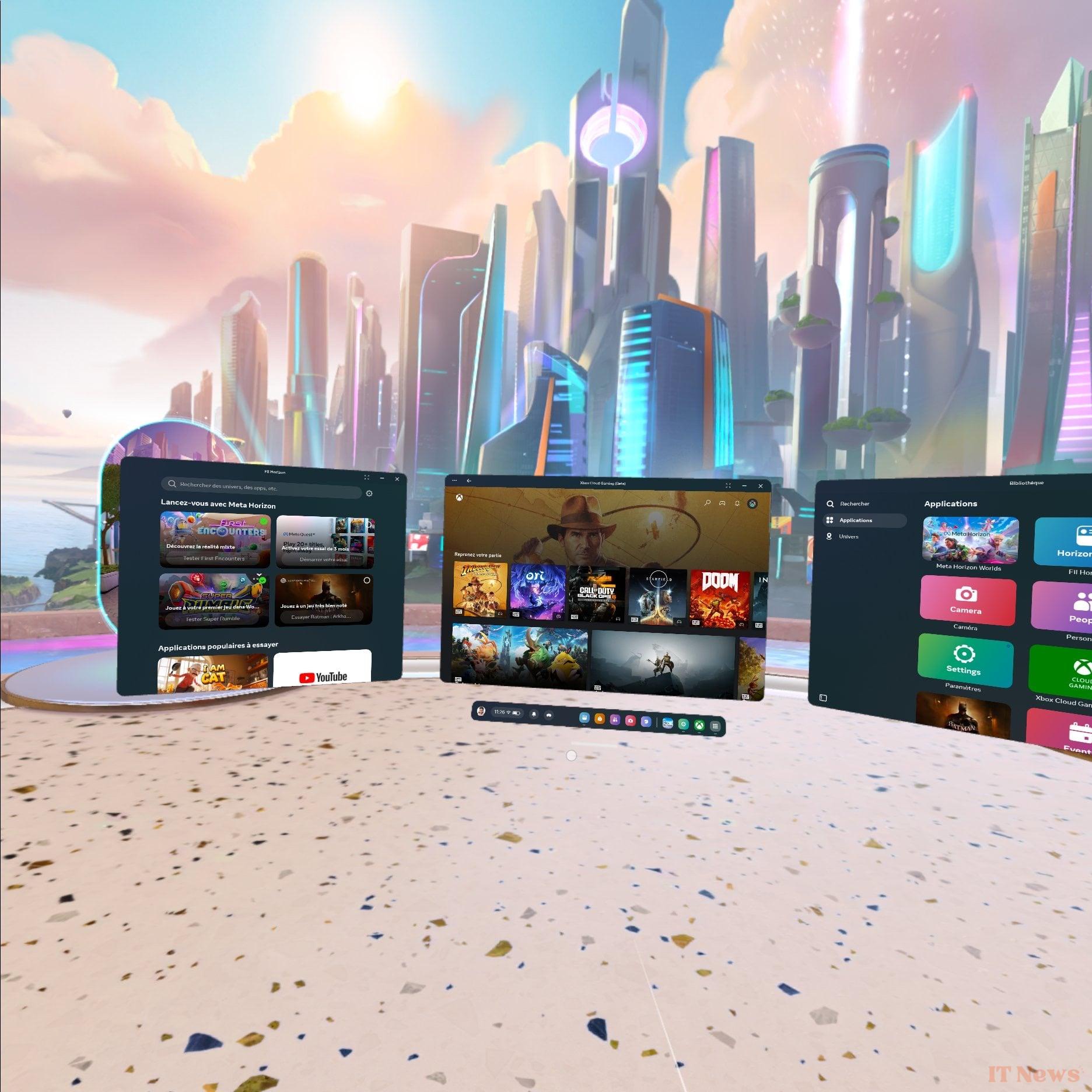
This is a far cry from the Vision Pro screens, which display a resolution of 3660 x 3200 for each eye. But Apple's headset also costs 10 times more... Meta has in any case thought its business carefully, since it is possible to switch from one mode to another by pressing a button placed under the headset.
Our opinion on ergonomics
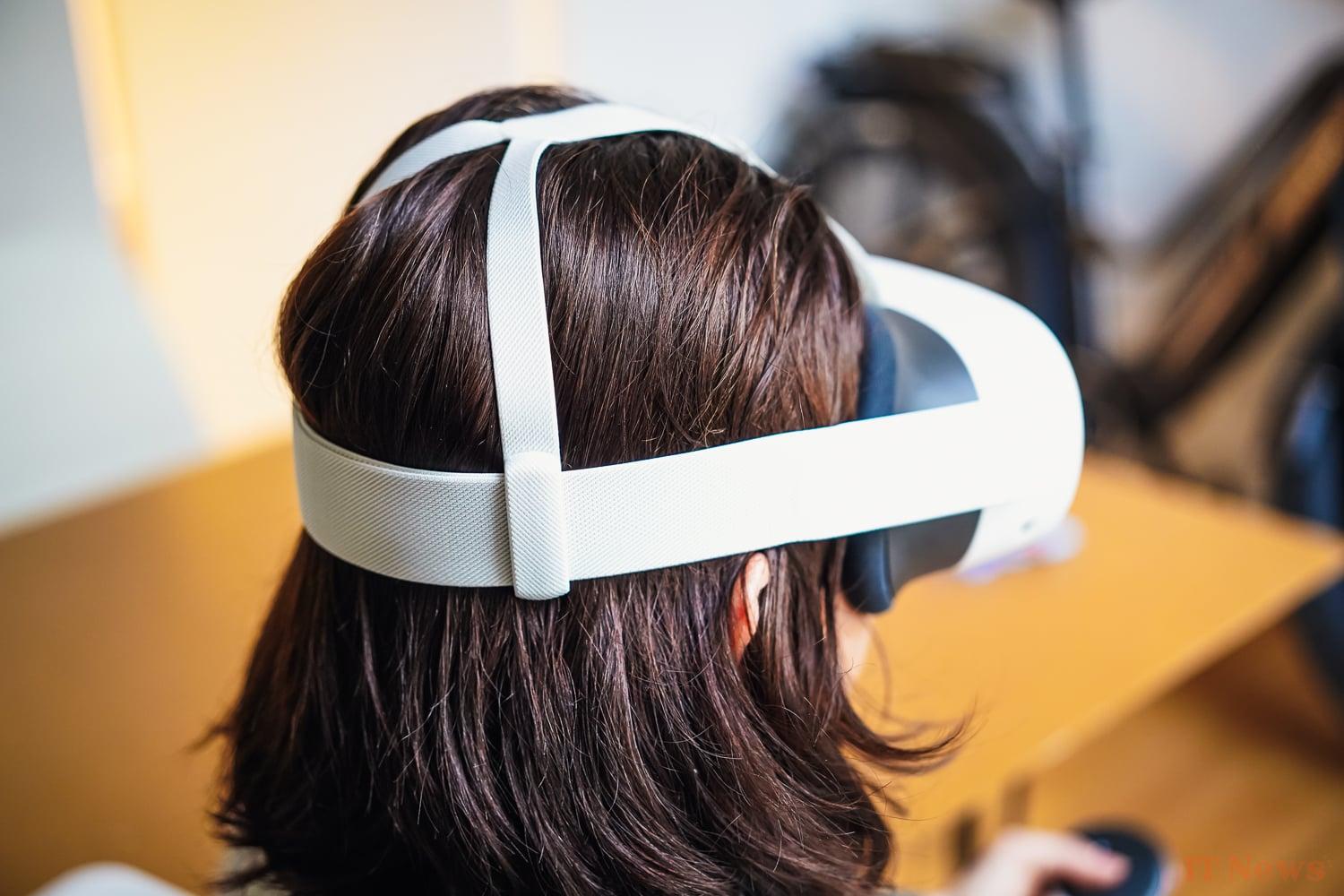
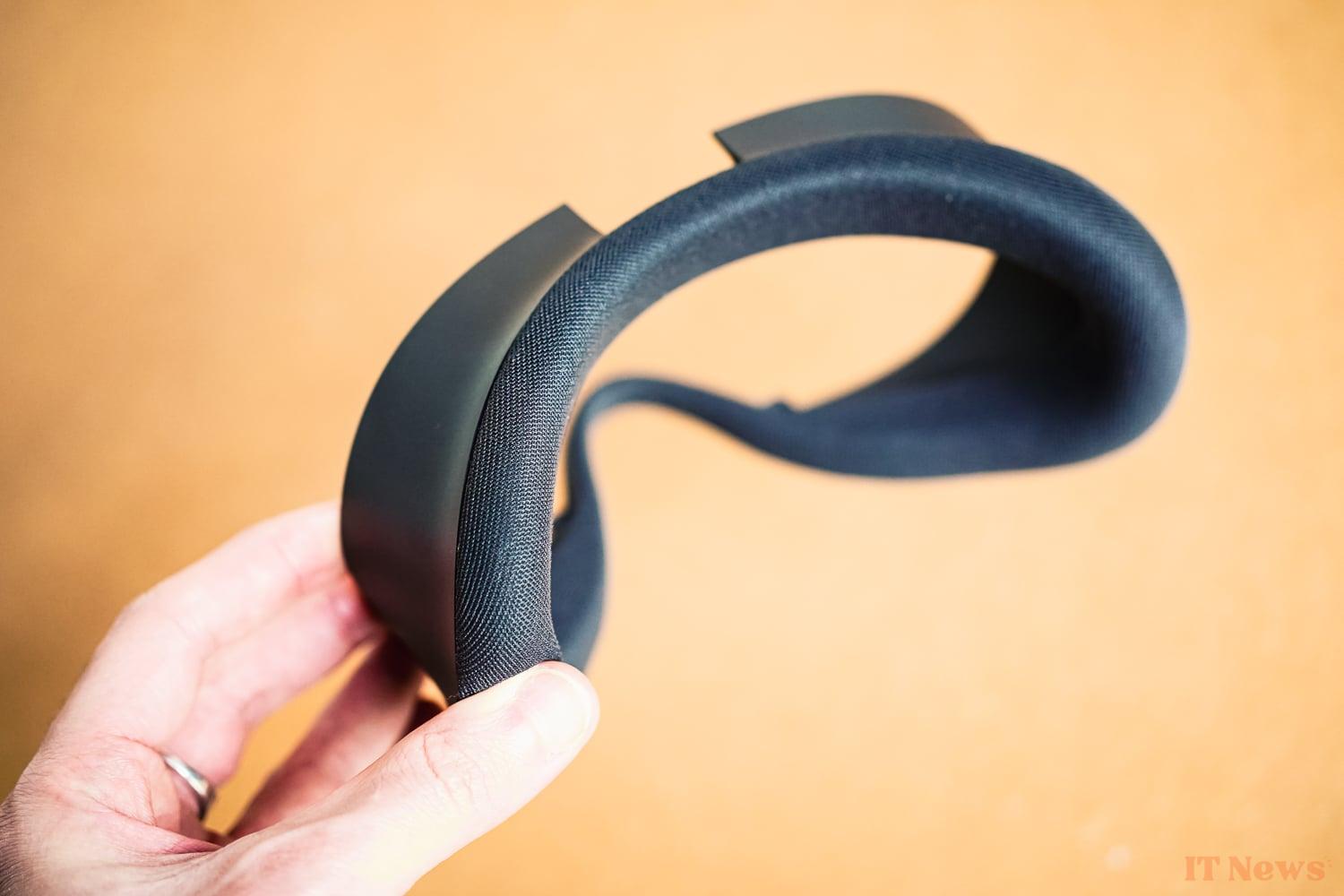
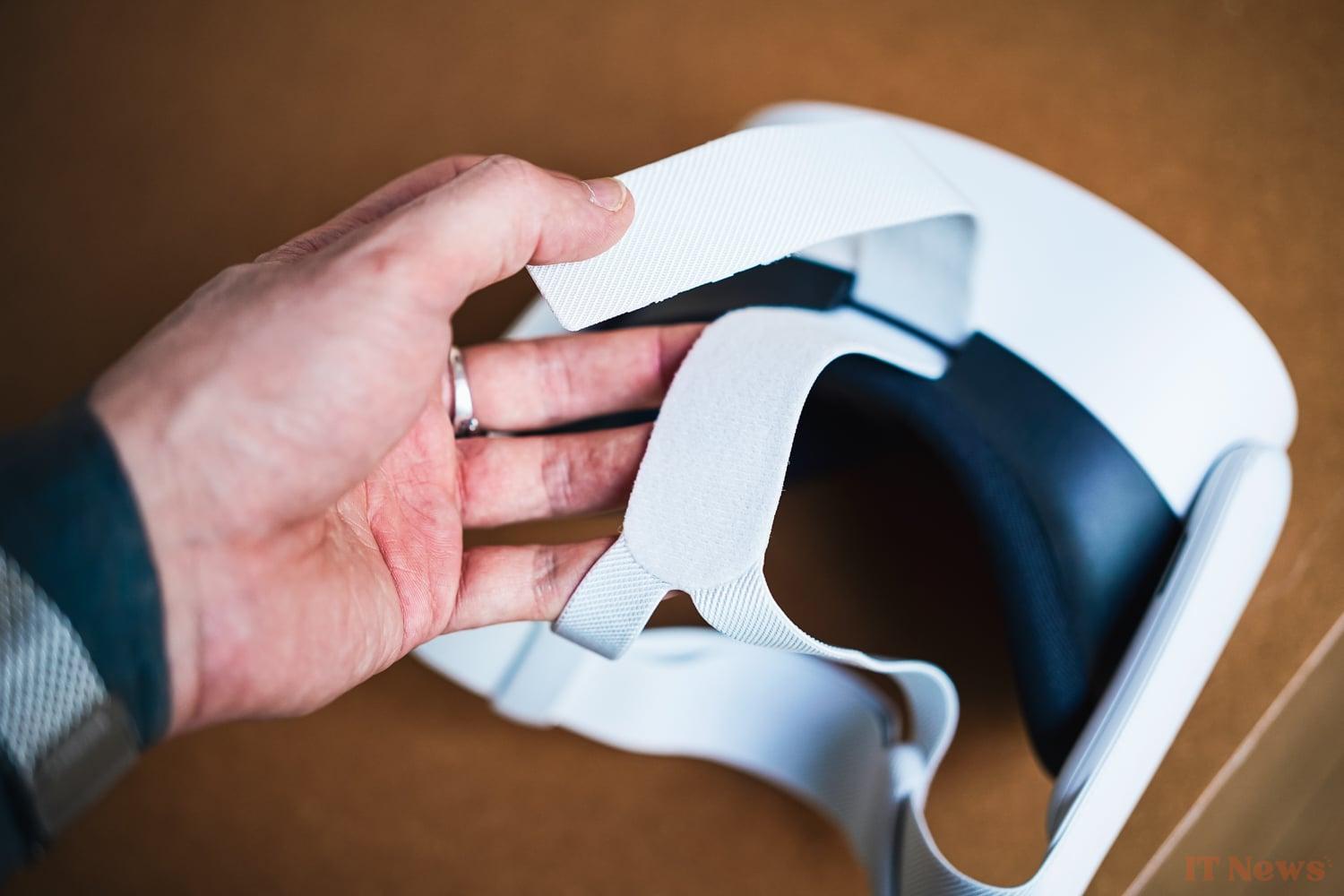
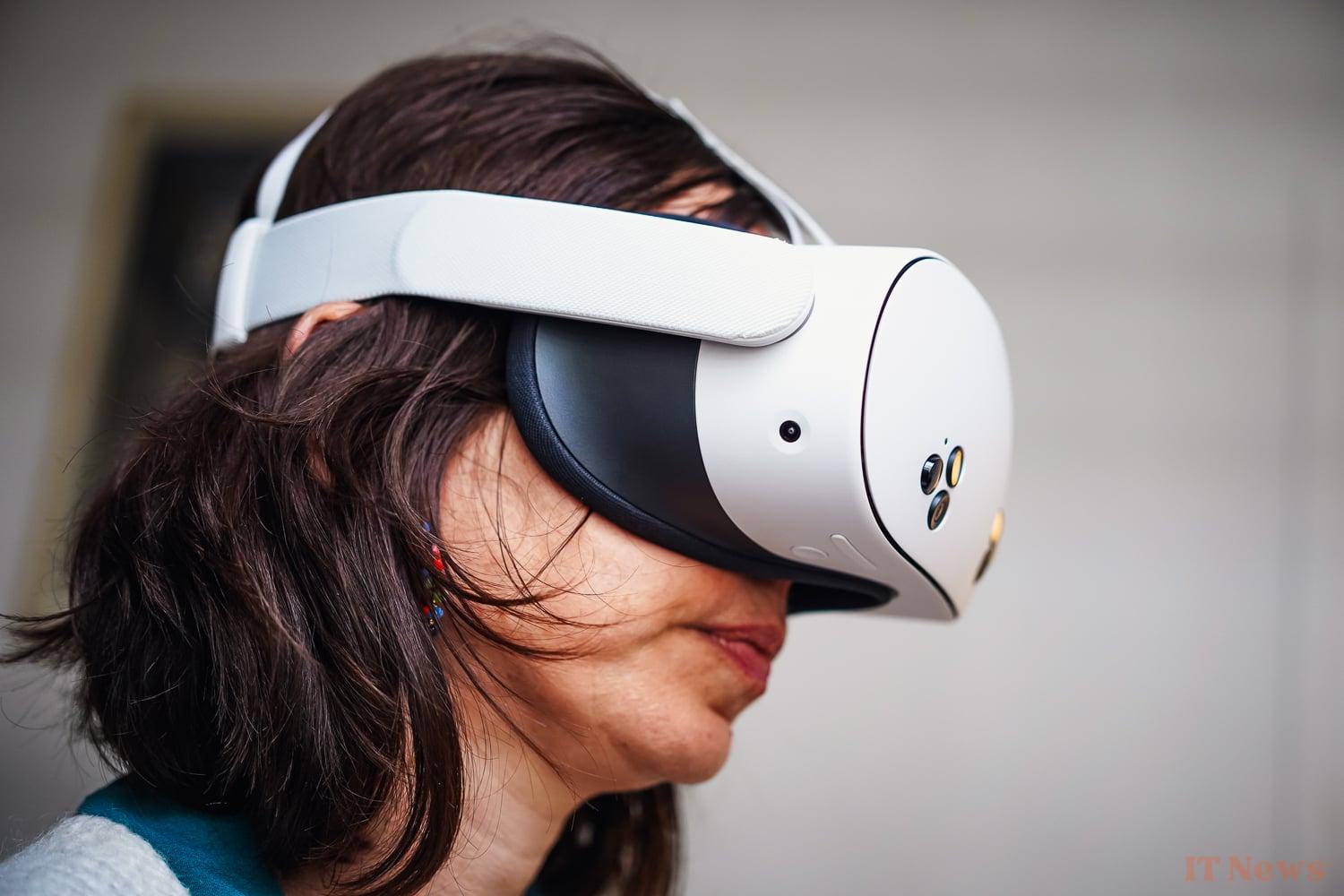
The experience accumulated over the years by Meta has paid off: the Quest 3S is easy to install and remove thanks to well-designed straps. It is possible to keep your glasses in the headset with the help of a spacer provided. The lenses can be moved apart (three settings) to obtain the best possible image depending on the shape of your face. Once it's in place, there's no need to touch it.
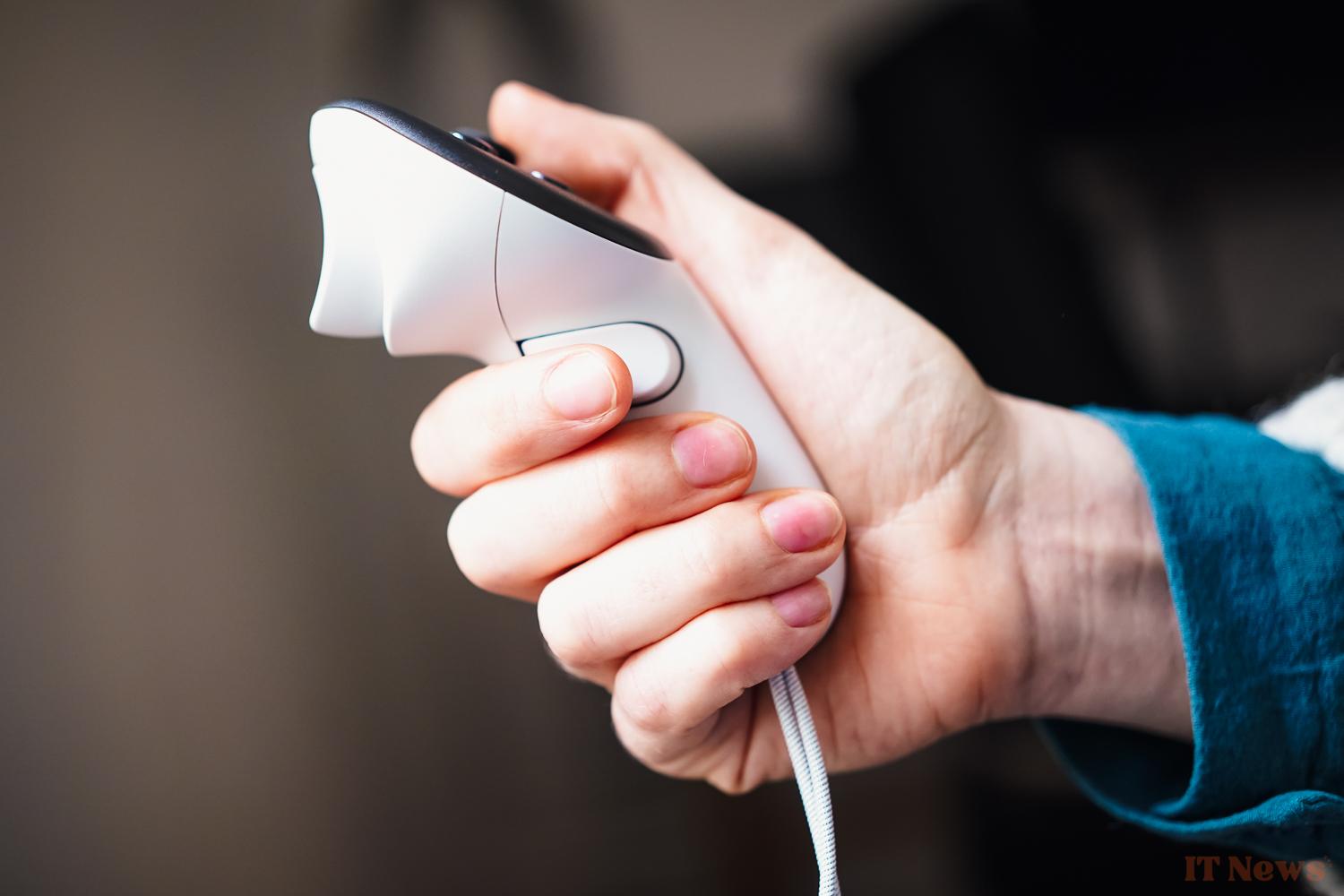
The Touch Plus controllers are also quite effective. Supplied with wrist straps (which are a good idea to put around your wrists to avoid silly accidents), they allow you to control the interface and of course the applications. The buttons and triggers fall easily under the fingers, the clickable sticks are just as good as those on console controllers.

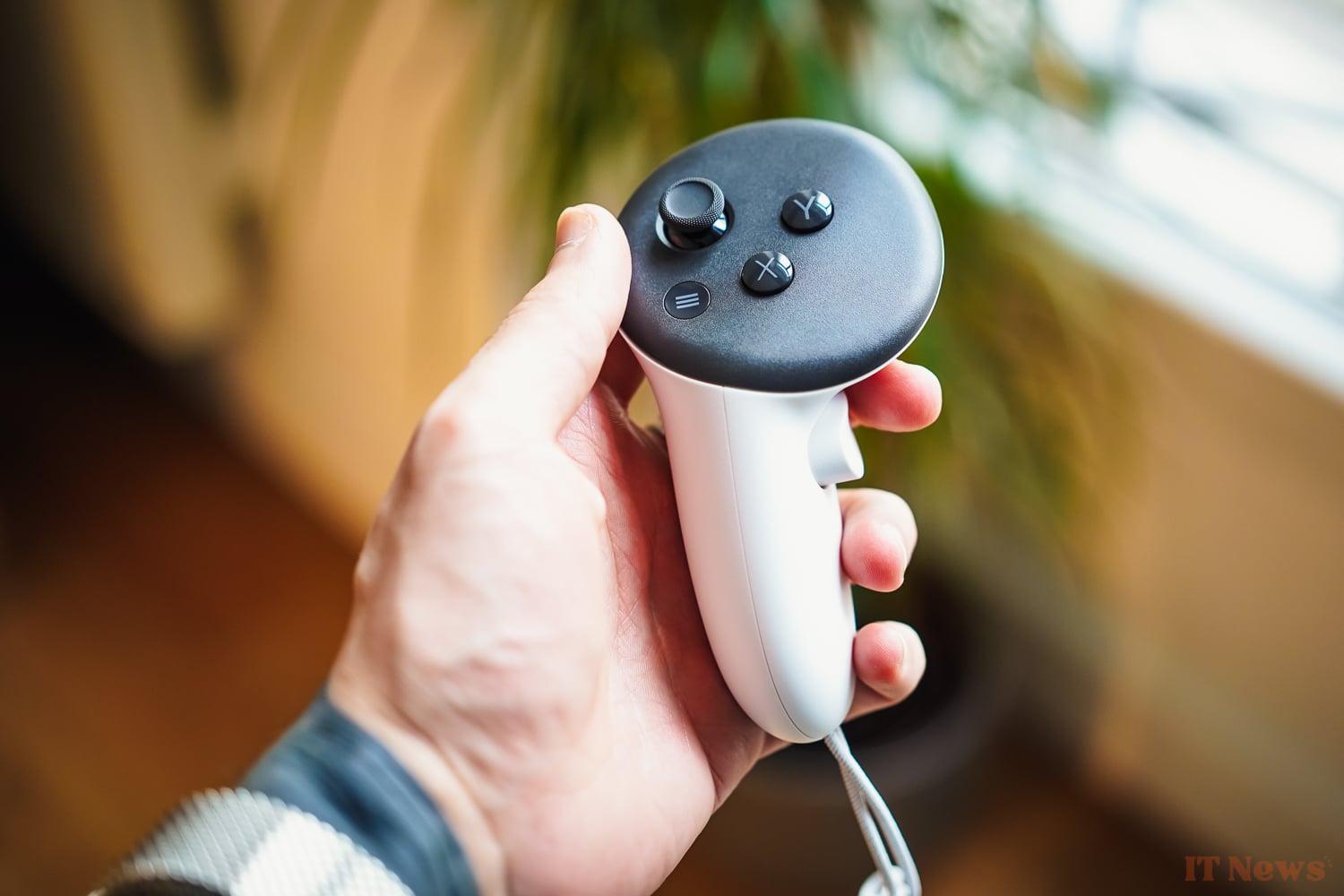
The Horizon OS operating system is designed for direct use that poses no problem of understanding, with its interface with large buttons without fuss. We are quickly plunged into the deep end! The controllers are obviously used to navigate in Horizon OS, but nothing prevents us from using our hands. Meta has made great progress in this area and if we are still a little far from the precision of visionOS (which also benefits from eye tracking, which the Quest 3S does not have), we must still recognize that using our hands and fingers can help out.
Overall, in terms of user comfort, Meta has succeeded in its score. The 514 grams, 1 gram less than the Quest 3, may seem high, but the weight distribution is optimal - more so than with the Vision Pro and its 600 grams, which also requires carrying a wired battery. Undeniably, Meta knows how to remove the maximum friction inherent in wearing a VR headset.
Wearing a VR headset is one thing, but the management needs to follow suit: what is Meta's software platform worth?
Good at gaming, less convincing on the rest
If there's one thing the Quest 3S knows how to do, it's virtual reality video games. To get a foot in the door, Meta has the good taste to offer Batman: Arkham Shadow with the purchase of a headset; the title normally costs €46. The game is part of the Arkham saga (the events take place between Arkham Origins and Arkham Asylum). It is simply one of the best VR titles currently available on all platforms.
In the costume of the bat man, we find ourselves roaming the sewers and the prison of Gotham to put an end to the threat posed by the Rat King and his henchmen. The game is gripping, the immersion is particularly successful — as long as you like the genre —, with combat sequences that are as realistic and physical (it’s a sport!) as possible.

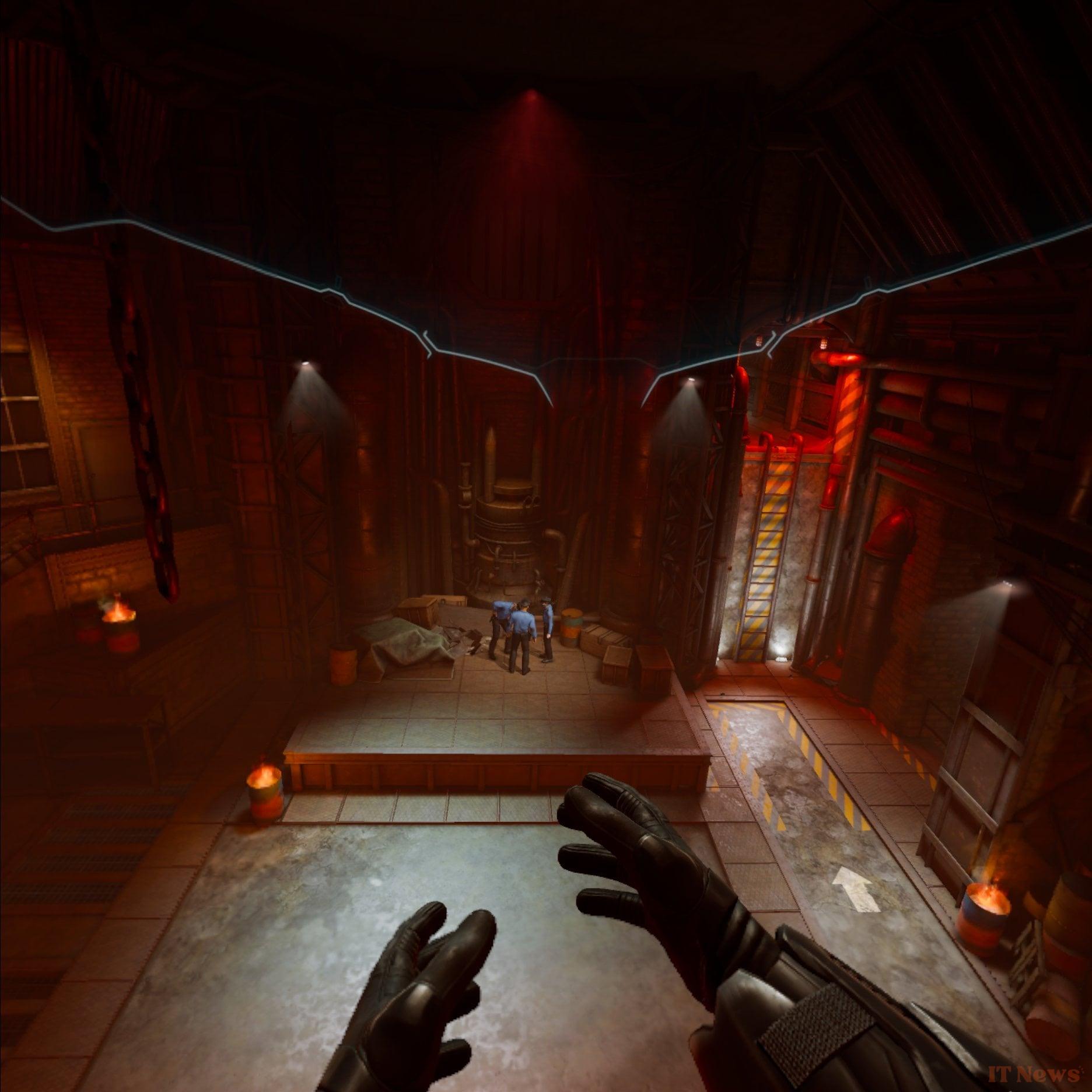
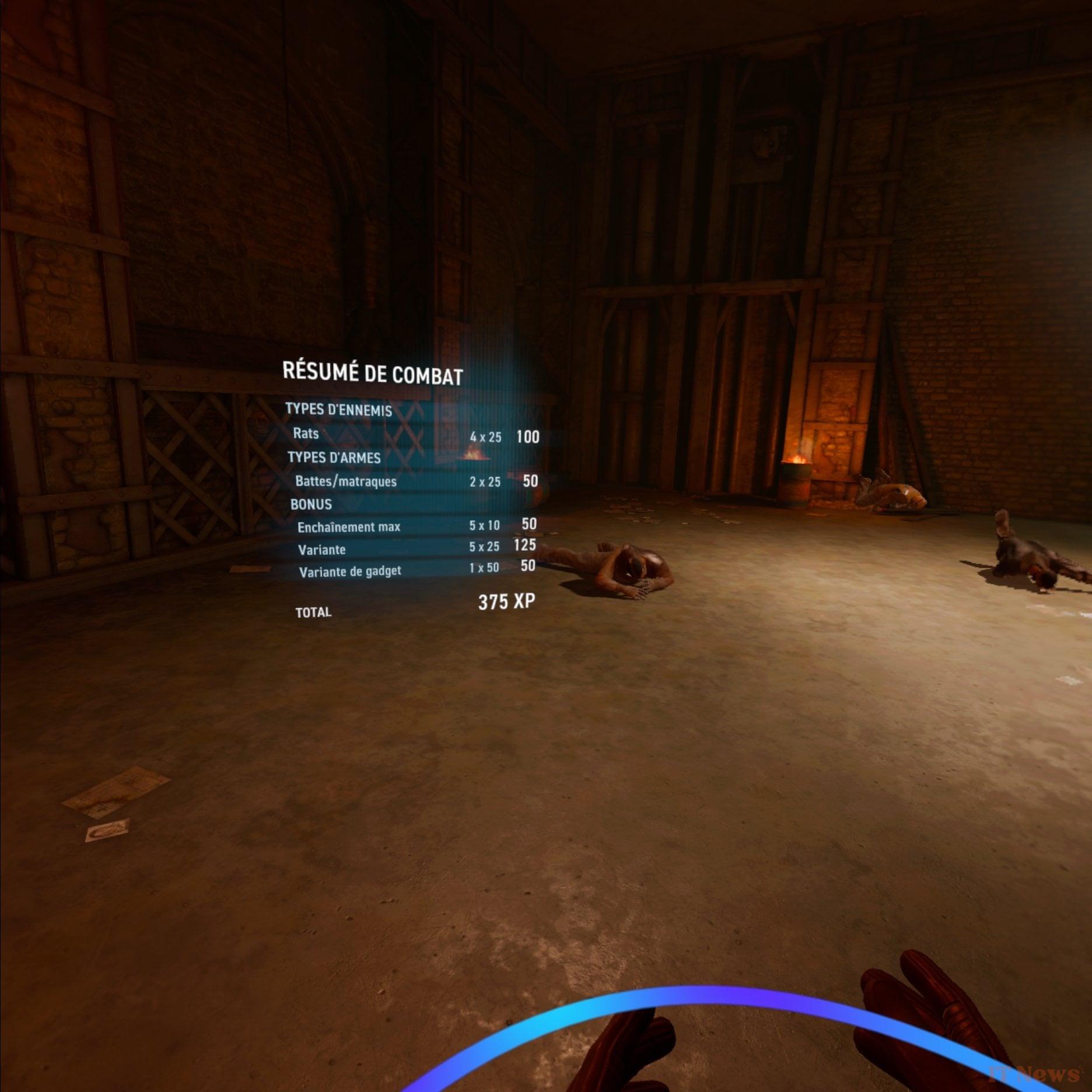
The game offers a good ten hours of action and exploration, you come out of it exhausted but happy. This is also the case with Meta's previous big title, Asgard's Wrath 2, a role-playing game that doesn't hide its ambitions with a structure and depth worthy of the best representatives of the genre, in a universe with varied settings.
Graphically speaking, you shouldn't expect a PS5 level. We are closer to the capabilities of an Xbox 360 or One, with a better resolution and a display frequency adapted to virtual reality. We can always ask for better, but for the price of the headset, it's not so bad. The controllers are rather effective with haptic feedback to improve immersion (too bad it doesn't concern the triggers, which would also have deserved a shorter stroke). It's impossible to compete on this point with the sophistication of the PS5's DualSense or the PS VR2 controllers.
Since the Quest platform is by default the first in the virtual reality market, it is also the one where the most interesting games are offered. This will be the case for Civilization VII VR this spring, which will allow you to play the strategy game in virtual and mixed reality. Among the big names in VR available on Quest headsets, we also find Metro Awakening, Assassin's Creed Nexus, Behemoth and Alien: Rogue Incursion.
These blockbusters nevertheless struggle to hide the reality of the Quest video game landscape, whose catalog is often made up of games sold quite expensively, often old or simply mediocre. Despite the success of Meta's headsets, VR remains a niche market and developers who try their luck sometimes come back disappointed by the level of sales.
The latest example: the enjoyable Powerwash Simulator VR. Launched less than a year ago, the game about cleaning up all kinds of objects will no longer receive updates or additional content. The FuturLab studio has decided to stop the costs, as developing a VR version costs more than it brings in. Under these conditions, Meta must continue to fund game design, as is the case for Batman or Asgard’s Wrath.
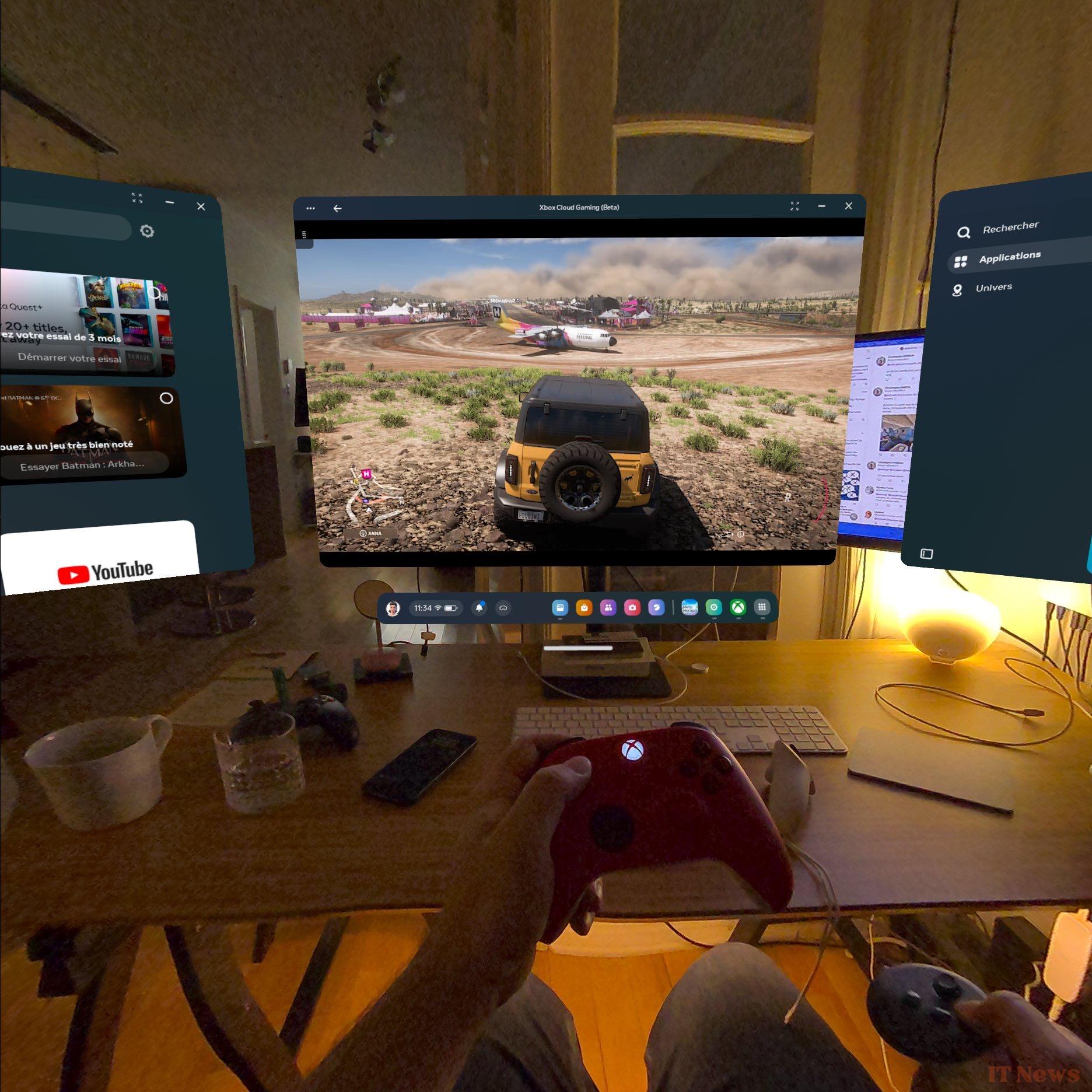

The Quest 3S can also count on access to the Game Pass cloud gaming, for players subscribed to the most expensive plan of Microsoft’s service (€17.99), or GeForce NOW from Nvidia. In both cases, it’s quite effective as long as you have a solid internet connection. And the games offered by these services are much richer than most of those available in the Quest store.
And for those who have a good gaming PC on hand, the Quest platform is also compatible with SteamVR. Games like Half-Life Alyx, Beat Saber or F1 24 are particularly fun in VR, even if the configuration can be complicated depending on the games.
Alongside video games, Meta wants to get across another message: the Quest 3S is also good for productivity. And here, we have to admit that the results are more nuanced.
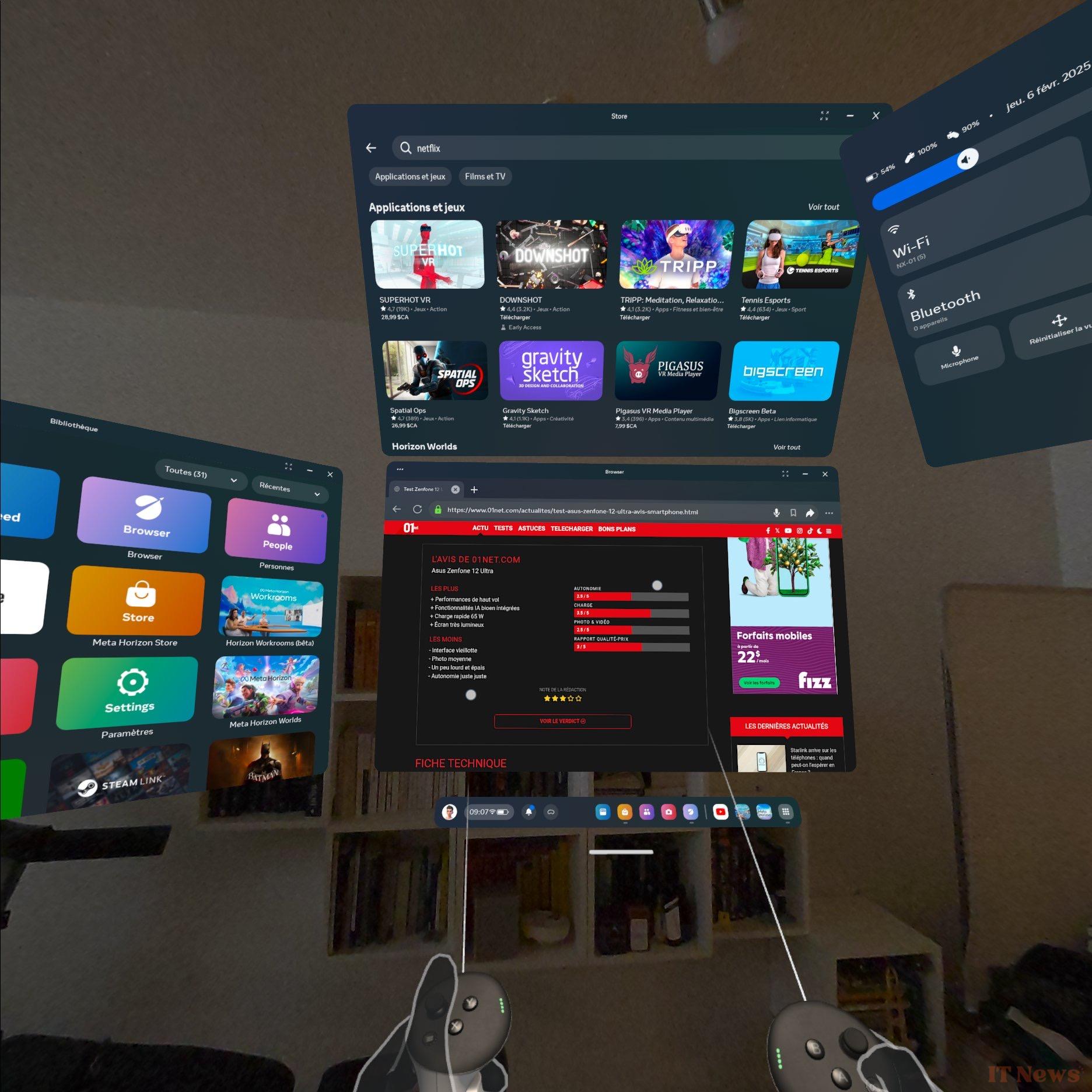
The main problem lies in the internal screens, whose resolution remains too low to really look serious. Mixed reality does not really give off an illusion for very long, unless you work in a very bright environment. You will always be more comfortable working on a better defined 2D monitor than with a Quest.
That doesn't mean that Meta's solution is completely devoid of interest. It is thus possible to display up to 6 application windows around you in order to be truly multitasking — and to have all the necessary information in front of your eyes. Displaying your PC's desktop is also possible, wired using a USB-C cable, or even via Wi-Fi with the Quest Link app… but only in virtual reality. Fortunately, it is possible to use a physical keyboard, connected via Bluetooth.

Meta also offers a Remote Desktop tool to use with the Horizon Workrooms app. The experience is more successful than with Quest Link, since it displays the PC or Mac desktops in its work environment or in an immersive environment (but with a window on the keyboard and mouse). This does not change anything regarding the resolution of the headset's internal screens, in other words, you can see the pixels! But for office work, it's not so bad.
Meta also promotes its metaverse with Horizon Worlds, an application to meet other users and dive into all sorts of experiences: these can be mini-games or universes sponsored by brands. It is not a success, there are not many people and we have the impression of wasting our time rather than living in the future. 2025 is supposed to be the year when the metaverse will have to impose itself or disappear, according to Meta: something tells us that it is still not won.
To conclude
The Quest 3S has two assets. First, Meta is at the head of the best virtual reality and mixed reality platform on the market, a bit by default due to lack of fighters. Nevertheless, the company puts a lot of money and resources into developing experiences and games, with some successes (especially for AAA games) and some failures (basically, everything related to the metaverse).
Unlike HTC, where the Vive platform does little more than scrape by with its offering of outdated apps and games, and Apple that doesn't seem to know where it wants to go with its Vision Pro, Meta has at least understood that virtual reality should be embodied by high-end games and immersive experiences. Not to mention a relatively simple connection with PCVR games.
For all that is productivity on the other hand, the technical limits of the Quest 3S being what they are, it is hard to imagine spending the whole day with the headset on your head to work, or even two or three hours in a row. It is already difficult with a Vision Pro whose capabilities are much more extensive thanks to high definition screens and an impeccable connection to the Mac.
The other advantage of the Quest 3S is obviously its price: starting at €330, Meta's headset offers the most complete virtual reality experience on the market - even if it is a market that does not look very far. However, we can't take away from the company that it's making every effort to push the Quest platform, with varying degrees of success.
The fact remains that after playing the 3 or 4 VR games and testing the main applications that were worth it, it's quite complicated to find a long-term use for the Quest 3S. This is not a specific flaw of this model: all of Meta's headsets and those of competitors are faced with this puzzle. And no one has yet found the solution.


0 Comments