
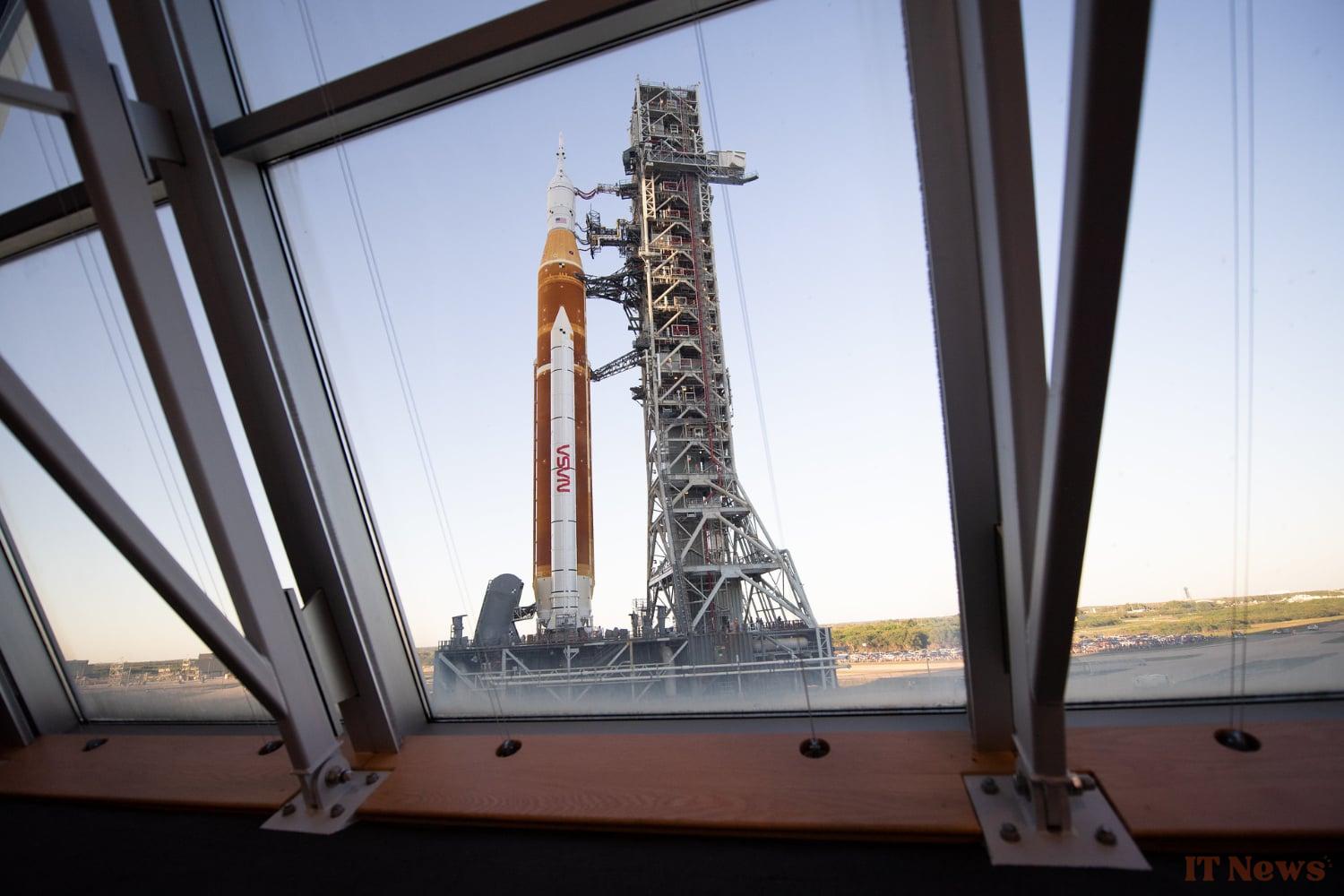
The Space Launch System, abbreviated SLS, is a super-heavy rocket, developed by NASA since 2011. With it, the American space agency intended to carry out its Artemis program, that of the return of Westerners to the Moon, and the establishment of a base on the ground of the natural satellite. However, during the month of November, the probability that Donald Trump would win the January 2025 elections increased, at the same time, the probability that SLS would be ruled out. Journalist Eric Berger, head of aerospace issues at Ars Technica, raised his estimates to a 75% chance of abandonment at the beginning of December.
The fate of the SLS rocket took a blow again at the beginning of this year when Boeing warned its team responsible for the Space Launch System of potential layoffs, numbering 400, by April. Boeing told Gizmodo in an email: "We are working with our customer and are seeking employee redeployment opportunities across our company to minimize job losses and retain our talented teammates." The heavy-lift launcher is not exclusively produced by Boeing, but the company is responsible for its core stage. After a first flight with Artemis I on November 16, 2022, SLS was due to take off again in 2026.
Described as a "budgetary nightmare", the rocket had already been estimated at $93 billion between 2012 and 2025 with the Artemis program, whose strict costs for SLS would have been $23.8 billion until 2022, announced the NASA Office of Inspector General (OIG), whose audit dates from February 2022 to April 2023. NASA's spending to use the SLS would not be slowing down any time soon, with each launch reportedly exceeding $1 billion. A significant portion of the $24 billion a year that the U.S. federal government allocates to its space agency.

Boeing’s role in the SLS rocket failure
Boeing would not only be a victim of the situation, if we look at another audit by the space inspector general in 2024, which criticized “Boeing’s ineffective quality management and inexperienced workforce, continued cost increases and schedule delays, and delayed cost and schedule baseline establishment”, regarding the SLS upper stage. It was due to be delivered in early 2021, but development is not expected to be completed until 2027. In the meantime, SpaceX and Blue Origin have been developing their versions of a heavy-lift launcher: Starship and New Glenn.
It’s not for nothing that SpaceX boss and Donald Trump’s new right-hand man, Elon Musk, was not shy about criticizing Boeing and the SLS launcher. “The Artemis architecture is extremely inefficient because it’s a jobs-maximizing program, not a results-maximizing program,” the man said, adding, “We need something entirely new.”
At a special press conference on December 6, former NASA CEO Bill Nelson spoke out to delay the Artemis schedule once again. He proposed a new plan, in which Artemis II would be scheduled for April 2026, and Artemis III for 2027. Several months of delays when Artemis II was scheduled for September 2025. The NASA boss put forward the excuse of the need for adjustments to the Orion spacecraft, located at the head of the SLS rocket. But it could be quite different, if the entire rocket were discarded. In fact, one possible path involves the United States no longer even seeking to target the Moon, but Mars directly, to leave the race with China, and get closer to SpaceX's plans with Starship.
During his inauguration speech, Donald Trump simply did not mention the Moon, but instead spoke of "launching American astronauts to plant the American flag on the planet Mars".
Source: Gizmodo


0 Comments