
Ubisoft had a busy end of year with releases after a few difficult months. If at the start of the school year we were able to discover Assassin's Creed Mirage, and just before Christmas the famous title Avatar: Frontiers of Pandora, the beginning of 2024 is not to be outdone. Players will soon be able to get their hands on Prince of Persia: The Lost Crown, a game that is arriving with great fanfare despite the initial criticism of it when it was announced.
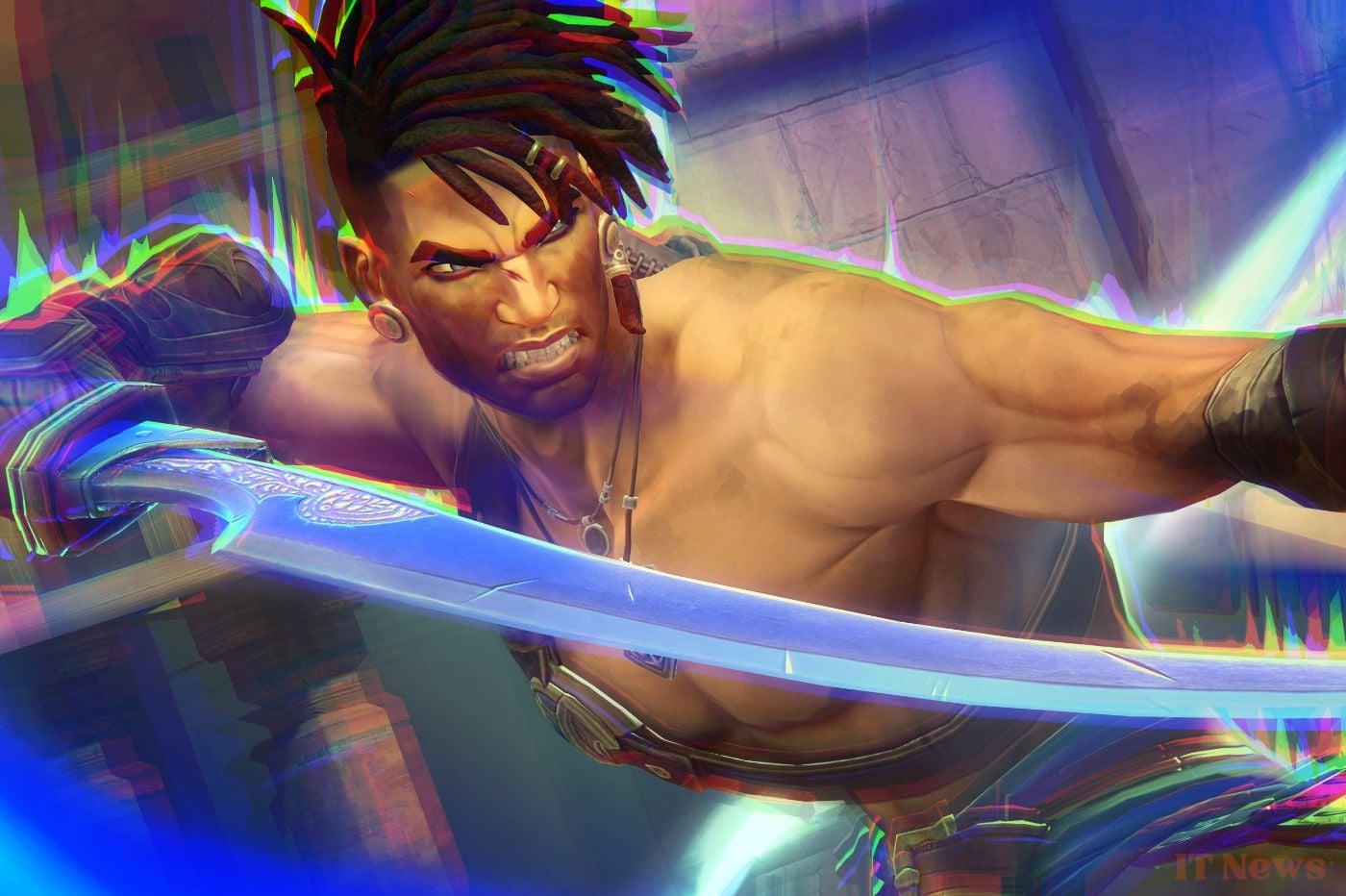
The franchise is indeed getting a makeover with a modern hero, cartoonish drawings and a new story propelling us to Mount Qaaf. Sargon has the duty to save the Persian prince while he is kidnapped for obscure reasons. During our preview, we were able to discover the introduction of the game, which lasts about 3 hours. Is the wait worth it? The answer in this first review of Prince of Persia: The Lost Crown.
A true renaissance…
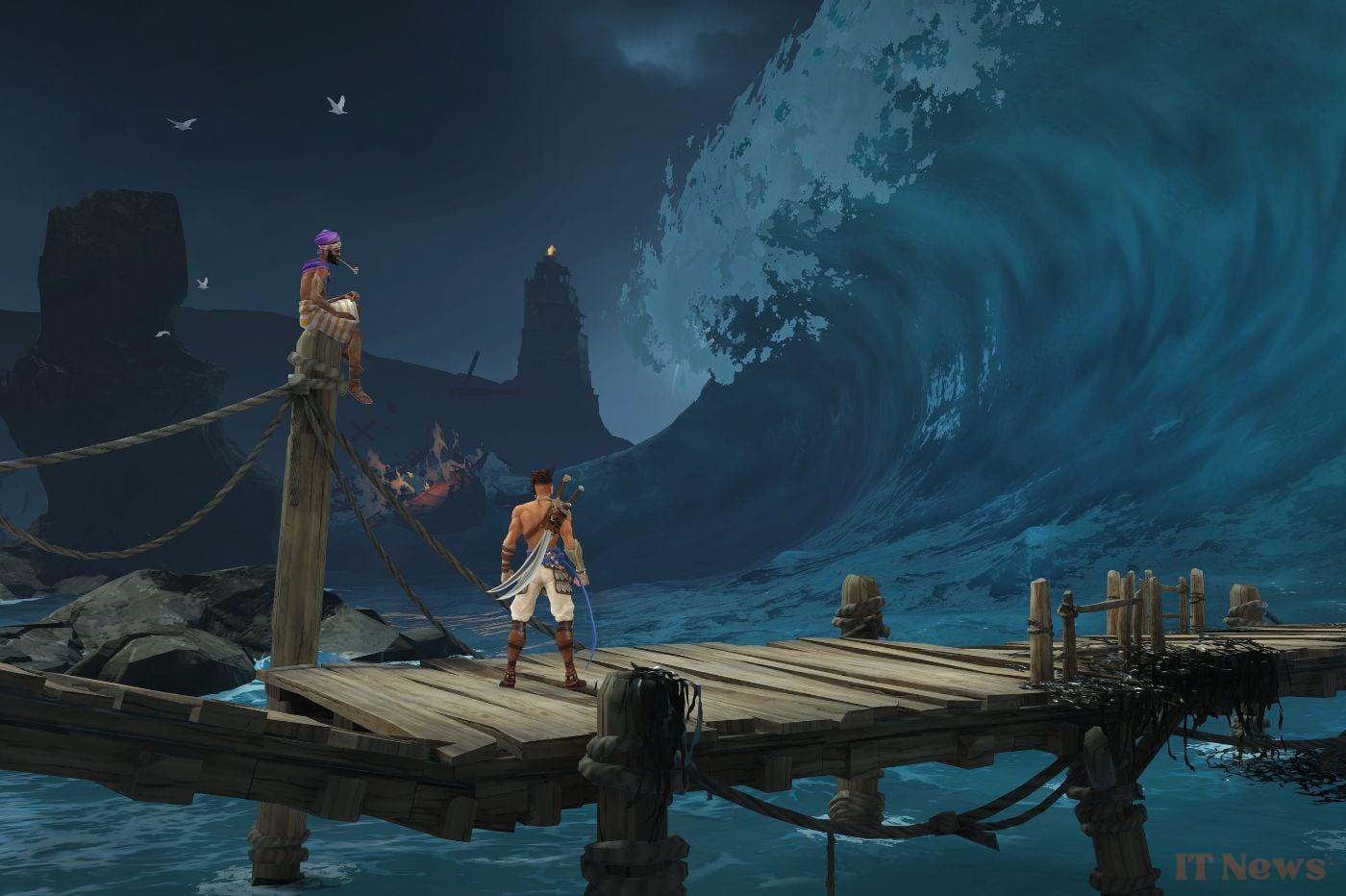
Right from the start, Prince of Persia: The Lost Crown has a few strings to its bow. We have the choice between three difficulty levels, which is quite rare in a metroidvania. This is a feature that always does good to potential players who may feel impressed by a unique and often inaccessible difficulty. Prince of Persia: The Lost Crown therefore logically opens up to a new audience, while respecting and honoring its first fan base.
From what we have seen, the plot springs are not very surprising. We nevertheless find ourselves caught up in the mystery that resides in Mount Qaaf, as well as by the intrigue around the sands of time. The Lost Crown takes up the charm of Hades-style narrations with comic book dialogues that are enjoyable both to the eye and to the ear. The game is dubbed in Farsi for even more immersion (we recognize Ubisoft here). However, we regret the visual quality of the more classic cutscenes, especially with regard to the graphic treatment of the characters.
The cartoon side does not follow in all situations and we are sometimes faced with a game that seems to come straight out of the 2010s at best. We hope for work on the textures and the outlines of the cutscenes by the release, or at least a real position on the artistic direction that tends to get lost.
… that respects traditions
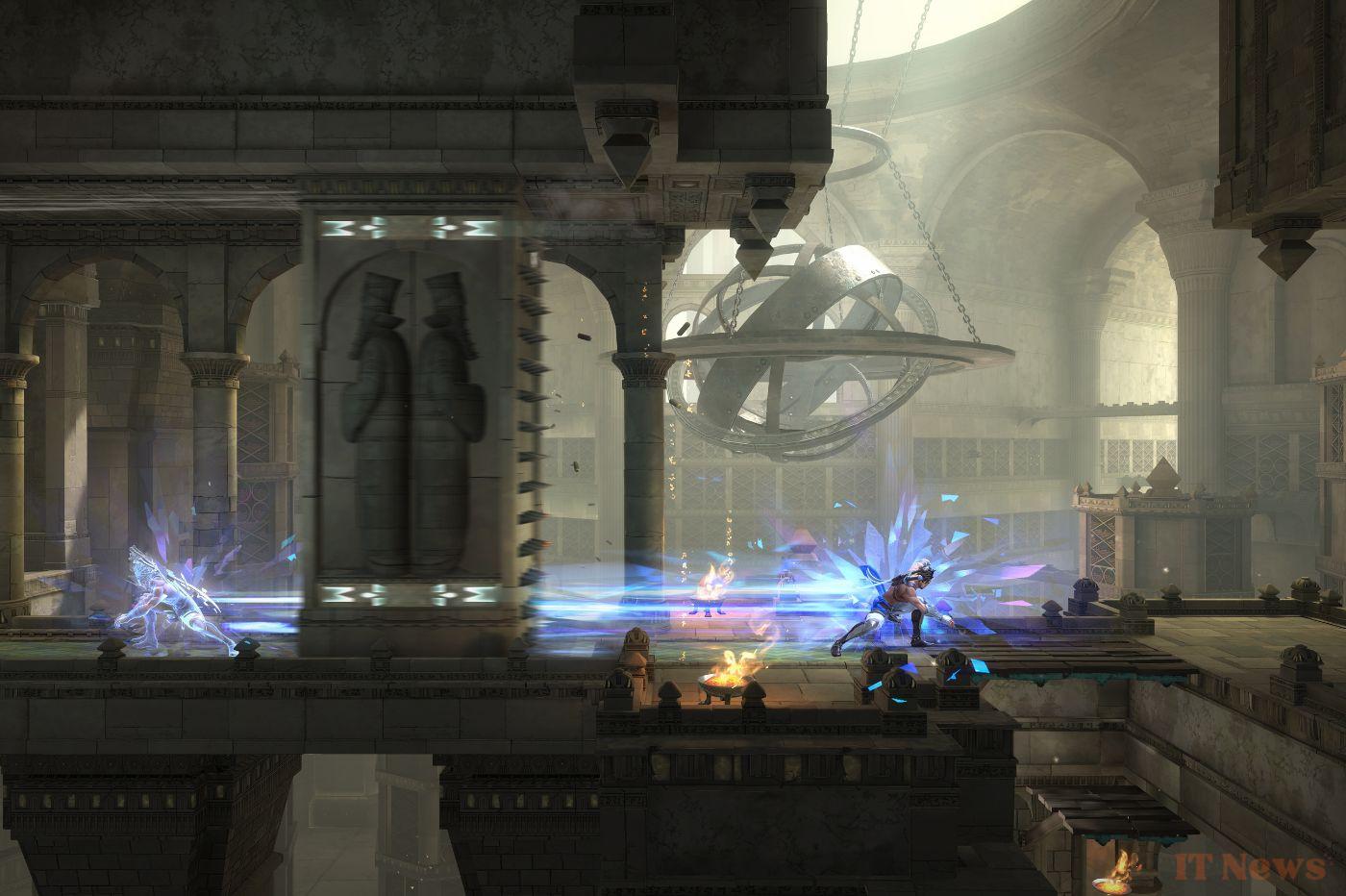
The excellent point is that the game mechanics alone are enough to keep us on the edge of our seats. Prince of Persia: The Lost Crown brings together all the right ingredients, at least for this early game, to attract a wide range of players. As a metroidvania, it excels in juggling exploration and action. This is how only 20 minutes separate us from the first boss, while we are still learning the basics of the title.
Once on the field, a range of features that allow us to improve in combat, including amulets or even leveling up your weapons, are available to us. But most of the time, it is a question of timing that governs the confrontations. In this respect, The Lost Crown does not reinvent anything, but handles in its own way the notions of light attacks, special attacks, dodges and parries. You have to alternate between super hits and lucky breaks to defeat your enemies.
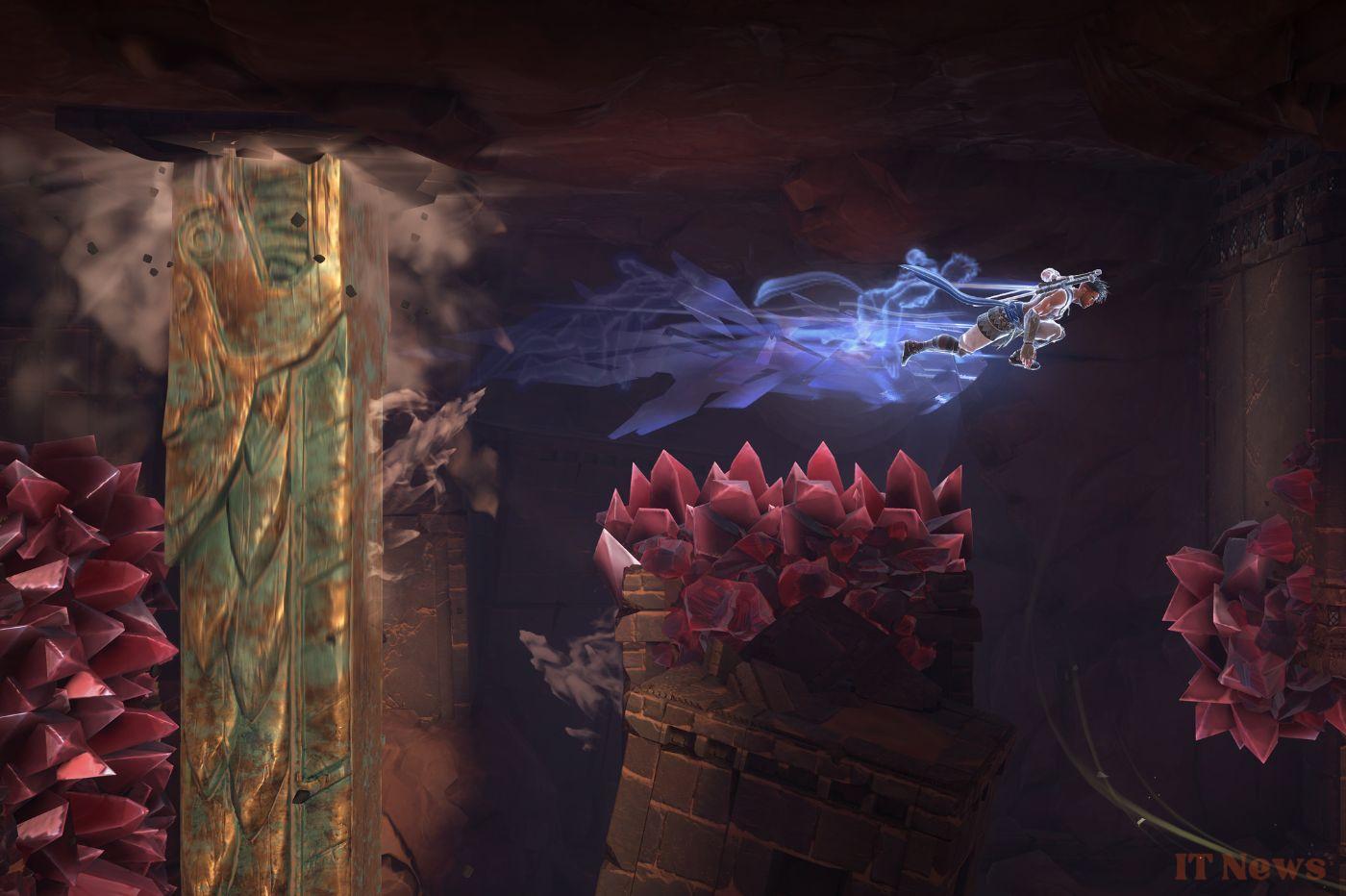
In the more exploratory phases, challenges are also present. As in any metroidvania, there are save points scattered throughout the world. They allow you to regenerate your health, but also to access your skill points and amulet assignments. While it is absolutely not surprising to observe the reappearance of defeated enemies at each save, it is much more surprising to note that this action is not limited to this single mechanic.
Even if you do not go through these points, it is possible to see some of your light opponents reappear. We cannot say for the moment if this is a normal or unusual feature with the context of the preview, but it is in any case not as punitive as it seems. This allows you to challenge even those who have good resource management during the longer exploration phases.
A crazy first experience (sometimes literally)
We were pleasantly surprised by the level design, which is well-constructed enough to maintain enthusiasm throughout the game. Exploration is allowed, even encouraged, and the map is revealed in a way that is as cryptic as we would have liked. The game even has a few clever additions that will help novices find their way. This is the case for photo tags that allow you to take a screenshot of an inaccessible place, to locate it on your map in order to return to it later when you have the required skill.
We agree that some areas seem more empty than useful, but there are not many of them. The game offers several very distinct environments and those that we visited are not numerous. But the game knows how to keep its players on the edge of their seats with several environmental obstacles and puzzles worthy of a few minutes of thought and several attempts for some. The level remains moderate, like the entire experience of the game which can be summed up as an agile balance.
According to the latest information received, the adventure lasts between 20 and 25 hours, which is rather reasonable for this type of game. The music is incredibly stimulating during the active phases, and pleasant to listen to during moments of contemplation or listening to the cutscenes. The entire musical environment is a real asset for this renewal that is both traditional and modern. It remains to be seen whether these promising first hours will come to fruition when the game is released on January 18.


0 Comments