
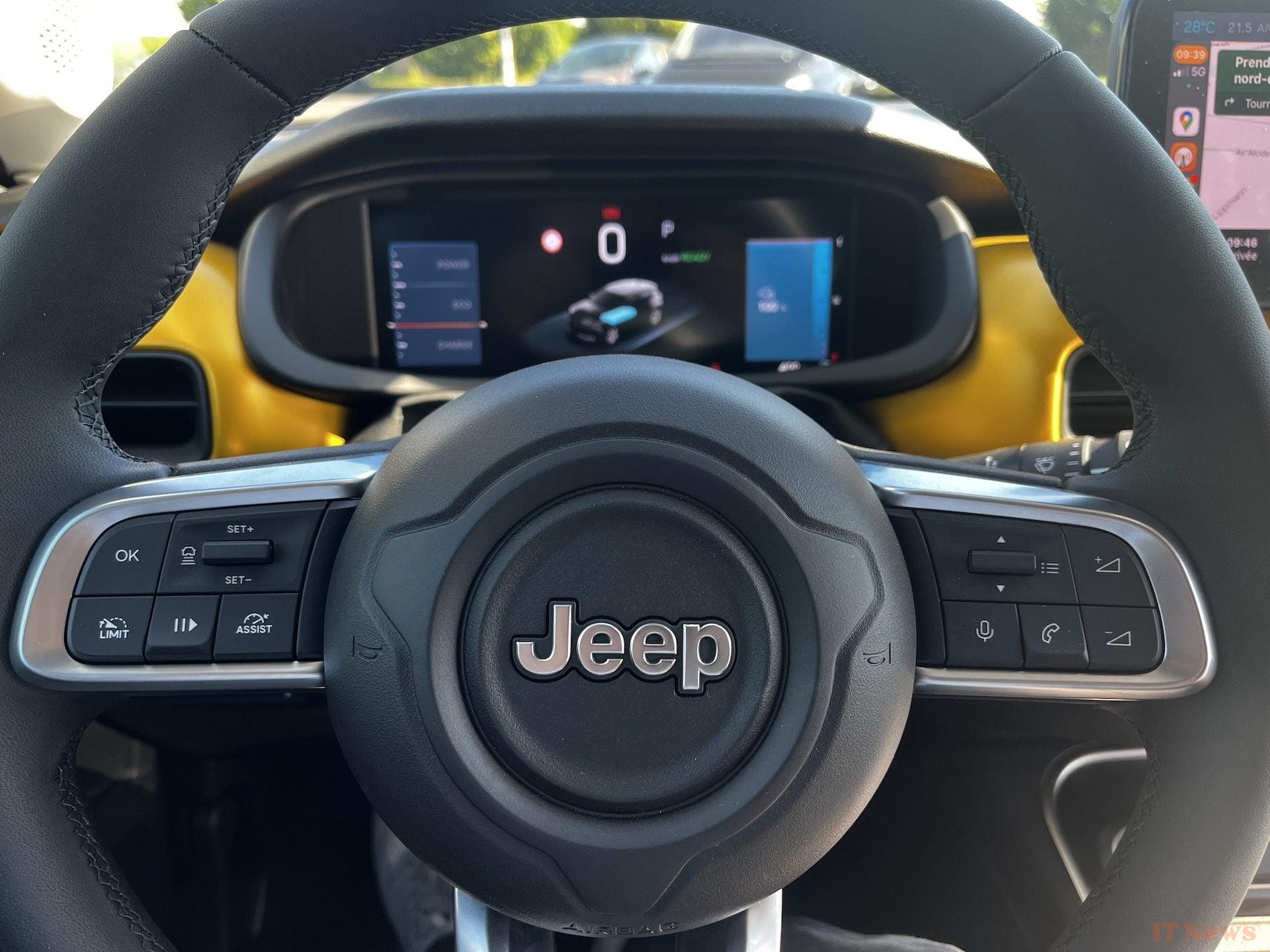
After multiplying and then expanding in cars, screens could have a new function: to serve as advertising for the driver and passengers. At least, this is the very bad idea of Jeep (Stellantis group) which launched this "service" in the United States. For a few days, Jeep users have been reporting the appearance of advertising inserts for insurance and other joys on the infotainment screen of their car. These systematically appear at each stop sign and at red lights, in other words when the vehicle is stationary.
Limited to the United States and to Jeep a priori, the functionality was quick to make the owners of the vehicles concerned react. Because, in addition to polluting the visibility of a GPS for example or distracting attention from the road, these ads need to be closed manually. And beware of handling errors or the ad will be displayed full screen. Many users were therefore quick to react.
Stellantis persists and signs
To a driver of a Jeep 4xe who complained about the system, explaining that the display harmed visibility and could reduce her attention, Stellantis nevertheless split a response. A manager of JeepCares, the brand's customer relations service, in fact explained that these advertisements were part of a more global agreement, stated in black and white in the vehicle's sales contract. In other words: owners accept the display of these ads from the moment they buy their vehicle. The only solution offered by Jeep: "press the X next to the image and close it".
This case only concerns, for the moment, a single brand, Jeep, and is limited to the other side of the Atlantic. There is therefore no underlying trend, which does not make it any less revealing. On the one hand, if it only concerns Jeep, it must be kept in mind that, behind the American brand, there is the Stellantis group, owner, among others, of Peugeot, Citroën, DS, Alfa Romeo, Opel, Chrysler, etc.). Does this mean that your e-208 will soon display billboards for you? Not really, at least not for the moment.
Manufacturers are fumbling with new technologies
But this change in method by Stellantis demonstrates one thing: the difficulties traditional manufacturers have in valuing their investments in technology. Traditionally, additional functions in a car are paid for via the principle of options. The more equipped you want a car, the higher the bill will be. But the integration of screens, OS and other functionalities linked to remote updates has opened the way to new uses and new ways of charging for them. So, BMW made a lot of noise when it made heated seats an option to be unlocked for a fee. The same goes for Mercedes, which has completely restricted the power of certain models, thus asking the owner to put their hand in their pocket if they want to have the real capacities of their engine.
Of course, in the case of Jeep, another parameter must be taken into account: that of safety. Because if this practice is indeed authorized in the United States, European road safety regulations are much stricter.
Source: Techstory


0 Comments