
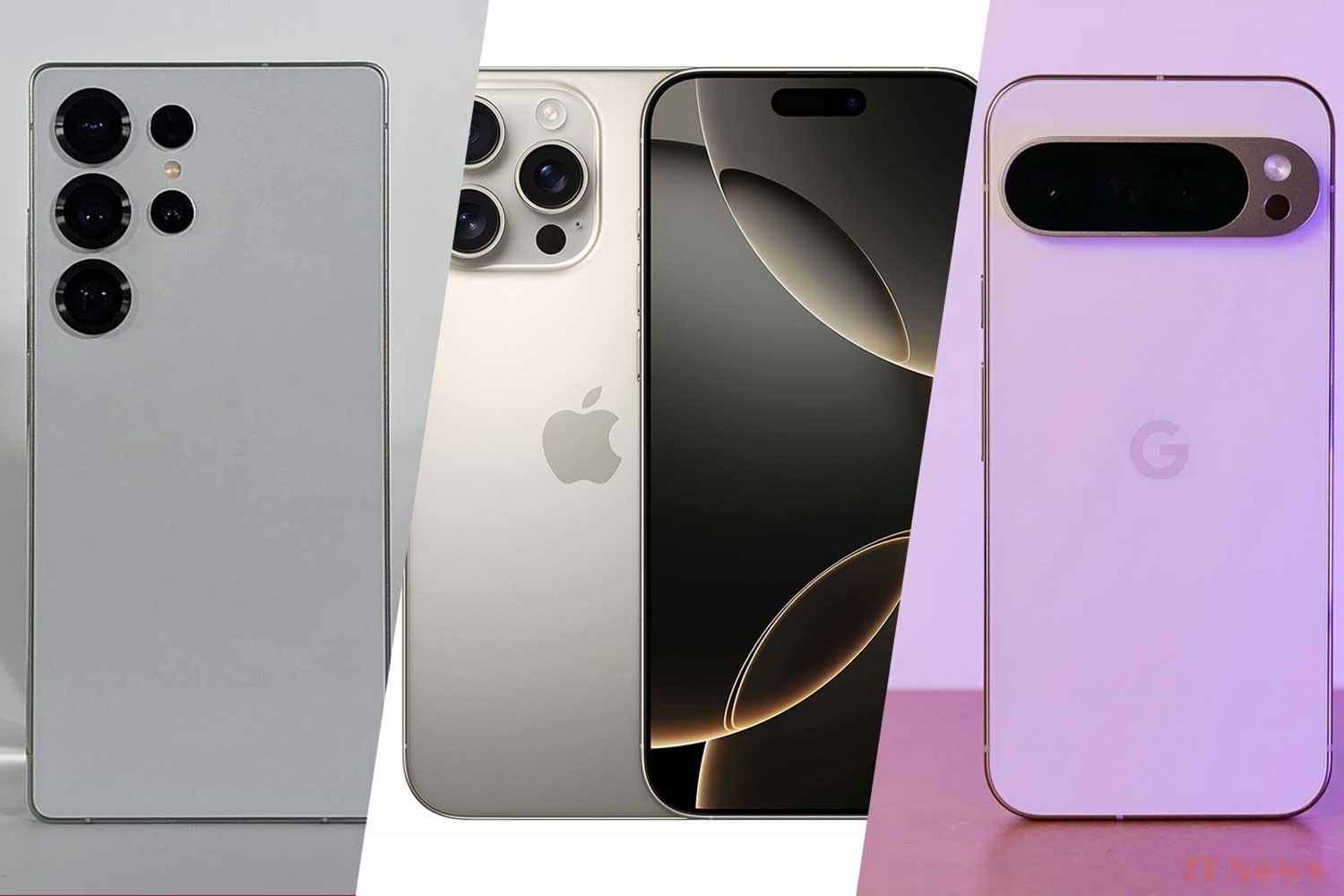
Samsung has just made the Galaxy S25 Ultra official and the new flagship already has two direct competitors, the iPhone 16 Pro Max and the Pixel 9 Pro XL. The three smartphones have only one ambition: to reign supreme by being the most complete smartphone on the market. But which one is really suited to your use?
| Galaxy S25 Ultra | Apple iPhone 16 Pro Max | Google Pixel 9 Pro XL (3120x1440, 500ppp) - HDR10+ - LPTO 1-120Hz - 240Hz Touch Sensor - Gorilla Glass Armor 2 - Center punch | - Super Retina XDR with ProMotion - 6.9 inches - 1320x2868 definition - Density 460ppp - Dolby Vision - HDR10 - DCI-P3 - 1000 nits (1600 nits for HDR, 2000 nits outdoors) - True Tone - Haptic Touch - Dynamic Island - Ceramic Shield - Oleophobic coating | - Super Actua Display OLED screen 6.73" - QHD+ definition (1344x2992) - 486ppi density - Gorilla Glass Victus 2 - HDR certification - Fluid Display 1-120Hz - LPTO technology - Always-On mode with Preview and Listening - 20:9 format - Max brightness 2000 nits (3000 nits Peak) | |
|---|---|---|---|---|---|
| Design | - Titanium frame - Gorilla Glass Victus 2 back - IP68 - Storage space for the S Pen | - Titanium frame - Textured matte glass back - Button Action - Camera Control Button - IP68 | - Gorilla Glass Victus 2 back - Recycled aluminum surround - IP68 - Anti-fingerprint coating | ||
| SoC and GPU | - Qualcomm Snapdragon 8 Elite - Adreno 830 GPU | - A18 Pro - 6-core CPU - 6-core GPU - 16-core Neural Engine | - Google Tensor G4 - GPU ARM Mali G710 MP07 - Titan M2 Security Module - AR Core - VPN by Google | ||
| Memory | - 12GB of RAM - 256GB, 512GB or 1TB of storage - No Micro-SD port | - 256 GB, 512 GB or 1 TB storage - No memory expansion | - 16GB LPDDR5x RAM - 128GB, 256GB, 512GB or 1TB storage in UFS 3.1 - No memory expansion | ||
| Colors | - Silver Blue - White Silver - Gray - Black - Pink Gold (Samsung.com Exclusive) - Jet Black (Samsung.com Exclusive) - Jade Green (Samsung.com Exclusive) | - Titanium Black - Titanium White - Titanium Sand - Natural Titanium | - Volcanic Black - Porcelain - Sage Green - Rose Quartz | ||
| Camera | - 200MP main sensor - Output in 12MP, 50MP or 200MP - 23mm, Aperture f/1.7, Quad Pixel, Optical Stabilization and Phase Detection Autofocus - 10 MP 3x #1 Telephoto Sensor - 69mm, 36°, F/2.4 Aperture, Optical Stabilization and Dual Pixel Autofocus - 50 MP 5x #2 Telephoto Sensor - 115mm, 22°, F/3.4 Aperture, Optical Stabilization and Dual Pixel Autofocus - 50 MP Ultra Wide-Angle Sensor - 13mm, 120°, F/1.9 Aperture and Dual Pixel Autofocus - Auto HDR Photo - Night Mode - 10x Optical Zoom - 100x Space Zoom (digital) - 8K video capture at 30fps - UltraHD video capture at 60fps on all sensors - Slow motion up to 960fps in 1080p - Optical video stabilization up to 4K - Digital video stabilization in 8K - Super stabilized Action-Cam Video Mode 1080p - Night Hyperlapse - Single Shot Mode Photo (AI Best Moment, Ultra Wide Shot, Live Focus, AI Filter, Smart Crop) Video (Forward and Backward Videos, Original Video) - 12 MP front sensor - 25mm, 80°, f/2.2 aperture - Dual Pixel autofocus - 2D face recognition - Automatic HDR - Front video capture in UltraHD at 60fps | - 48 MP main sensor, Standard 24mm and f/1.78 aperture, Sensor-shift stabilization, 100% Focus Pixels, 12 MP 2x Telephoto, 48mm and F/1.78 Aperture, Optical Image Stabilization - 48 MP ultra-wide-angle sensor, 13mm, 120° FoV and F/2.2 Aperture, 100% Focus Pixels - 12 MP 5x Telephoto sensor, 120mm (20°) and F/2.8 Aperture, 3D sensor-shift optical image stabilization, Tetraprism - Customizable main lens - Photonic Engine - LiDAR Scanner - Photographic Styles - Deep Fusion - True Tone Flash - Smart HDR 5 - Portrait mode - Night mode - Panorama mode (63 MP) - JPEG and HEIF format - Apple ProRAW (24MP and 48MP) - Capture UltraHD or Dolby Vision video up to 4K at 120fps - Apple ProRes up to 4K at 120fps - LOG video recording - ACES (Academy Color Encoding System) encoding system - Cinematic mode up to 4K at 30fps - Action mode up to 2.8K at 60fps - 8MP photo during 4K recording - Slow motion up to 240fps in 1080p - 4 microphones - Audio mixing - Spatial audio and stereo recording - Wind noise reduction - 12 MP TrueDepth sensor - f/1.9 aperture - Portrait mode - Animoji and Memoji - 3D face recognition - Smart HDR 5 - UltraHD or Dolby Vision video capture up to 4K at 60fps - Cinematic mode up to 4K at 30fps - Slow motion in 1080p at 120fps - Retina Flash | - Triple rear camera: - Main camera: 50 Megapixels, 82°, F1.68, Octa PD, OIS, EIS - Multi-zone Laser LDAF autofocus - Ultra wide-angle camera: 48 Megapixels, 123°, F1.7, Quad PF with AF, Lens correction - Periscope zoom: 48 Megapixels, 5x optical zoom, 22°, F2.8, OIS, EIS - Spectral and flicker sensor - Pro Controls - High Resolution (up to 50 Megapixels) - Magic Retouch - Magic Eraser - Better Shot - Anti-Blur - Enhanced Zoom - Portrait Lighting - Super Res Zoom up to x30 - Add Me - Macro Focus - Night Vision - Astro Photography - Portrait Mode - Clear Face - Long Exposure - Motion Panorama - Real Tone - Panorama - Top Shot - Frequent Faces - Ultra HD 2160p video recording at 60fps - 8K video recording at 30fps (powered by Video Boost and only on the main camera) - Video Boost - Video Night Vision - High-Res Video Zoom - Macro Video - 10-bit HDR Video - Cinematic Blur - Cinematic Panorama - Slow Motion up to 240fps - 4K Time Lapse with Stabilization - Time Lapse Astrophotography - Night Vision Mode on Time Lapses - Optical Image Stabilization for Video - Video Stabilizer - Video Stabilization in Cinematic Panorama Mode (4K, 1080p) - Video Stabilization for Still Shot (4K, 1080p) - Video Stabilization in Motion (1080p) - Audio Magic Eraser - Audio Zoom - Stereo Recording - Voice Enhancement - Wind Noise Reduction - Ultra Wide-Angle Front Camera - 42 Megapixel Dual PD - Autofocus - 103°, F2.2 - Electronic stabilization (EIS) - Front video recording up to 4K at 60fps | ||
| Audio | - AKG stereo speaker - Dolby Atmos - no 3.5mm jack | - Stereo speaker - Dolby Atmos - Dolby Digital Plus - No 3.5mm jack | - Stereo speakers - 3 microphones - Noise cancellation - Spatial Sound | ||
| Battery | - 5000 mAh - Super Fast Charging 45W - USB-C Port - Fast Wireless Charging 2.0 10W - Wireless Powershare | - Fast Charging (50% in 30 minutes on a 20W charger) - USB-C Port - USB 3.0 - MagSafe wireless charging up to 25W - Qi2 wireless charging up to 15W - Qi wireless charging up to 7.5W | - 5060mAh battery - Fast charging 45W (70% in 30 minutes) - Qi fast wireless charging - Battery Share | ||
| Connectivity | - Ultrasonic fingerprint reader under the screen - Bluetooth 5.4 - WiFi 7 - Ultra Wide Band - 2x nano-SIM - 5G sub-6 - S Pen support | - Face ID - Bluetooth 5.3 - WiFi 6E - UWB 2nd Generation - 1x nano-SIM - 2x eSIM - 4G LTE - 5G | - Fingerprint sensor under the screen - Bluetooth 5.3 - WiFi 7 - 5G - 1x nano-SIM + 1x eSIM - A-GPS+GLONASS, DNLA, Miracast (WiFi Direct), Google Cast - NFC - USB Type-C 3.2 Gen 2 - Barometer, Gyroscope, Accelerometer - Proximity and brightness sensor - UWB chip | ||
| Software | - Android 15 - One UI 7 - Samsung DeX | - iOS 18 | - Android 14 (at launch) - Pixel Launcher | ||
| Size and Weight | - 162.8 x 77.6 x 8.2 mm - 218g | - 163 x 77.6 x 8.25 mm - 227g | - 162.8 x 76.6 x 8.5 mm - 221g | ||
| Price | - S25 Ultra 256GB: €1469 - S25 Ultra 512GB: €1589 - S25 Ultra 1TB: 1829€ | - 1479€ (256 GB) - 1729€ (512 GB) - 1979€ (1 TB) | - 1199€ (128GB) - 1299€ (256GB) - 1429€ (512GB) - 1689€ (1TB) | ||
| Availability date | - February 7, 2025 | - September 20, 2024 | - August 13, 2024 |
Design
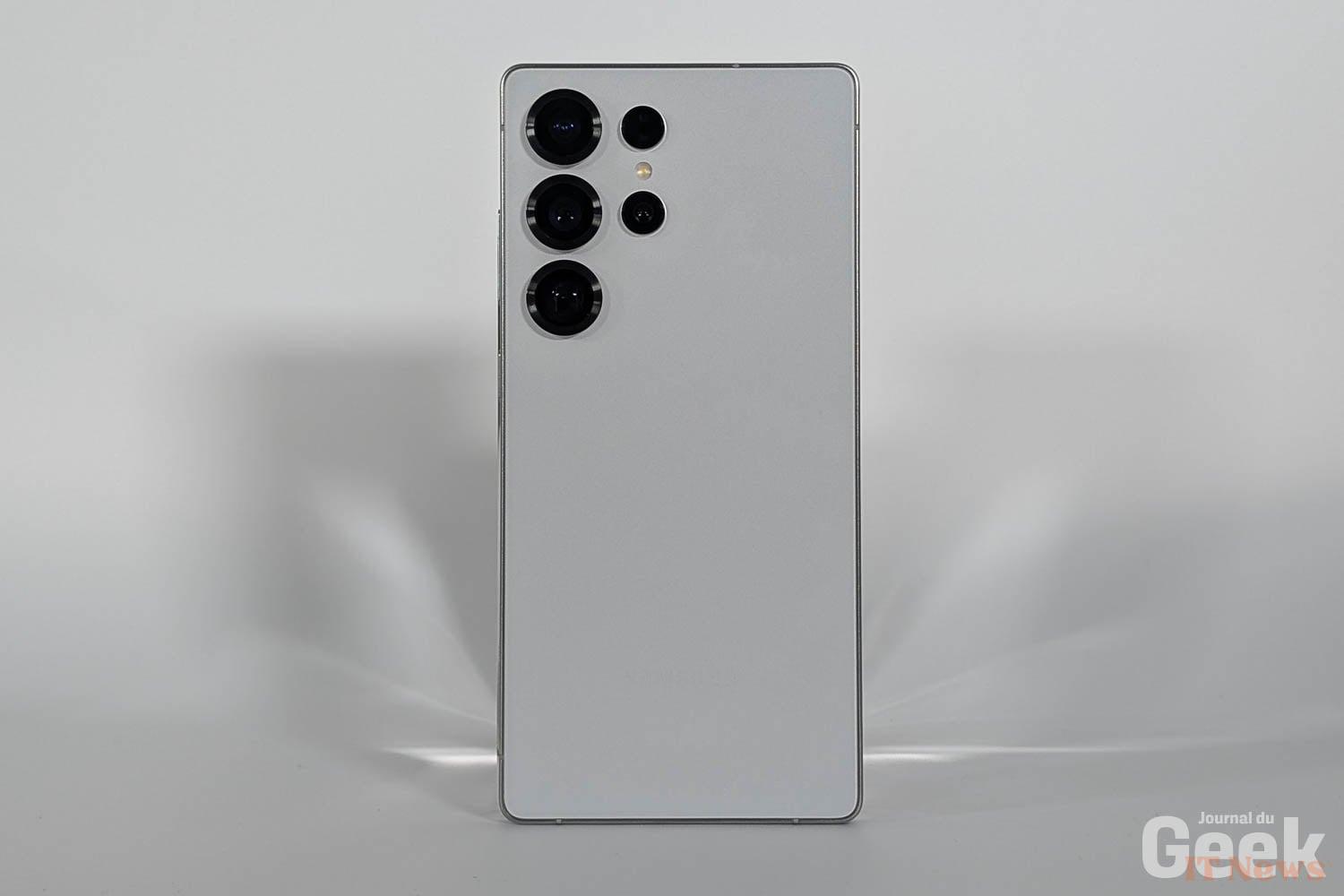
All three models have their own unique style and feature notable design differences. The most recent, the Galaxy S25 Ultra, takes the broad lines of its predecessor and abandons the very straight corners in favor of slightly more rounded lines. It also brings a screen and flat edges while its titanium claims lightness (218 g) and shock resistance.
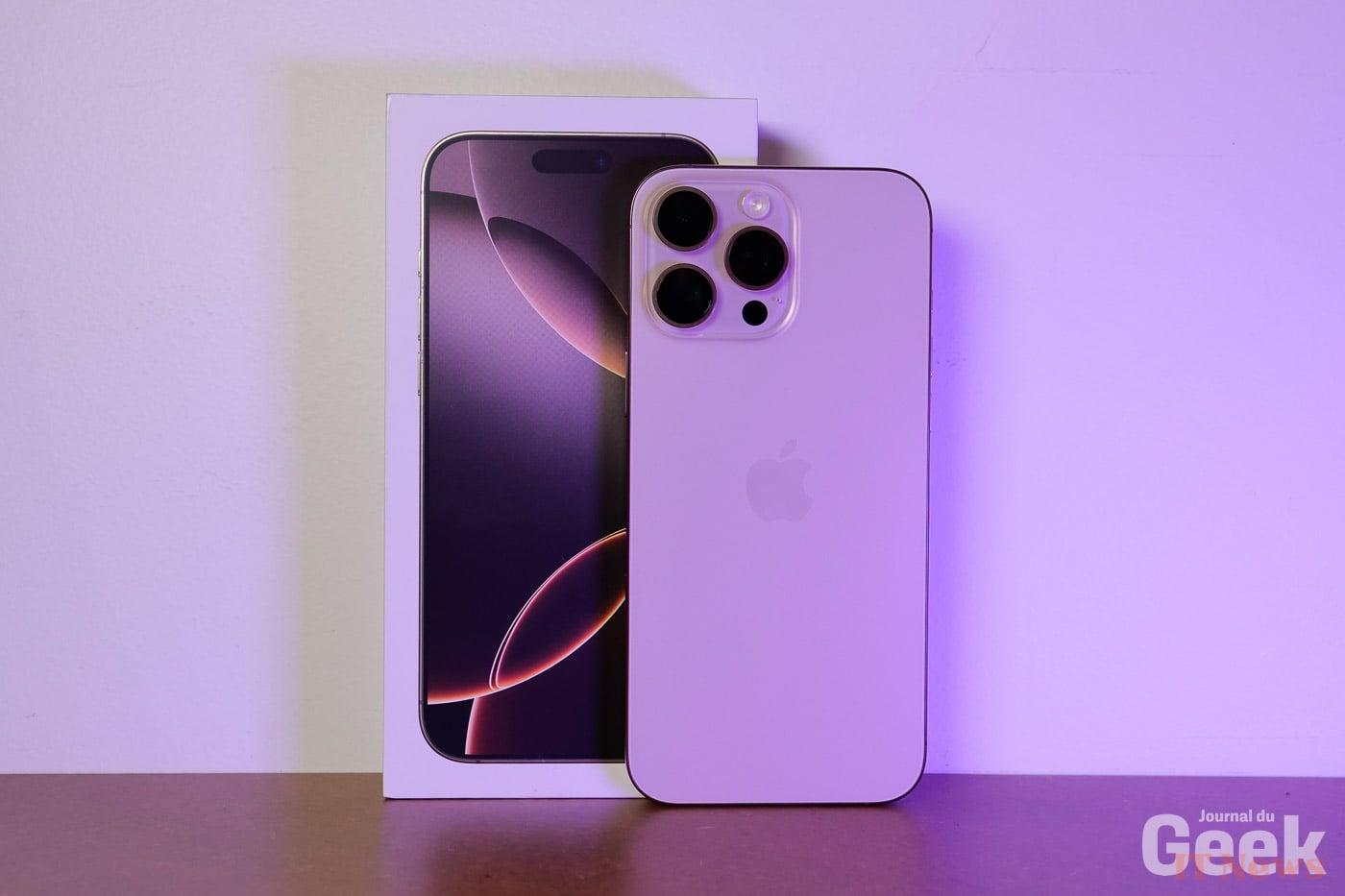
Facing it, Apple is still playing the continuity card on the iPhone 16 Pro Max. If the style does not change much, adjustments are present to stay in the race. The finishes are premium with the presence of titanium and the largest model of the apple is the heaviest in our comparison (227 g). It is very imposing, but this is also the case for its Android rivals who adopt X(X)L formats.
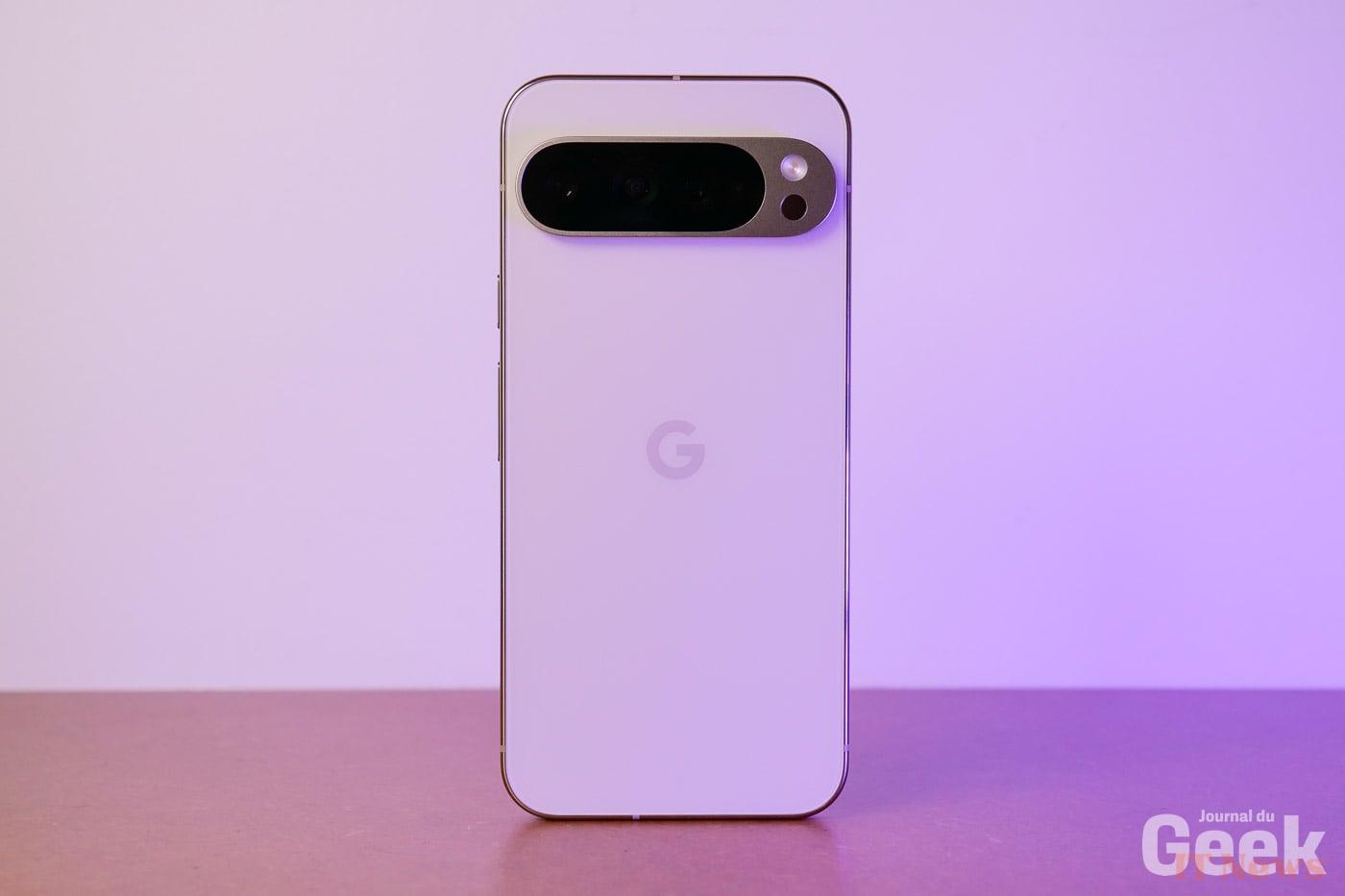
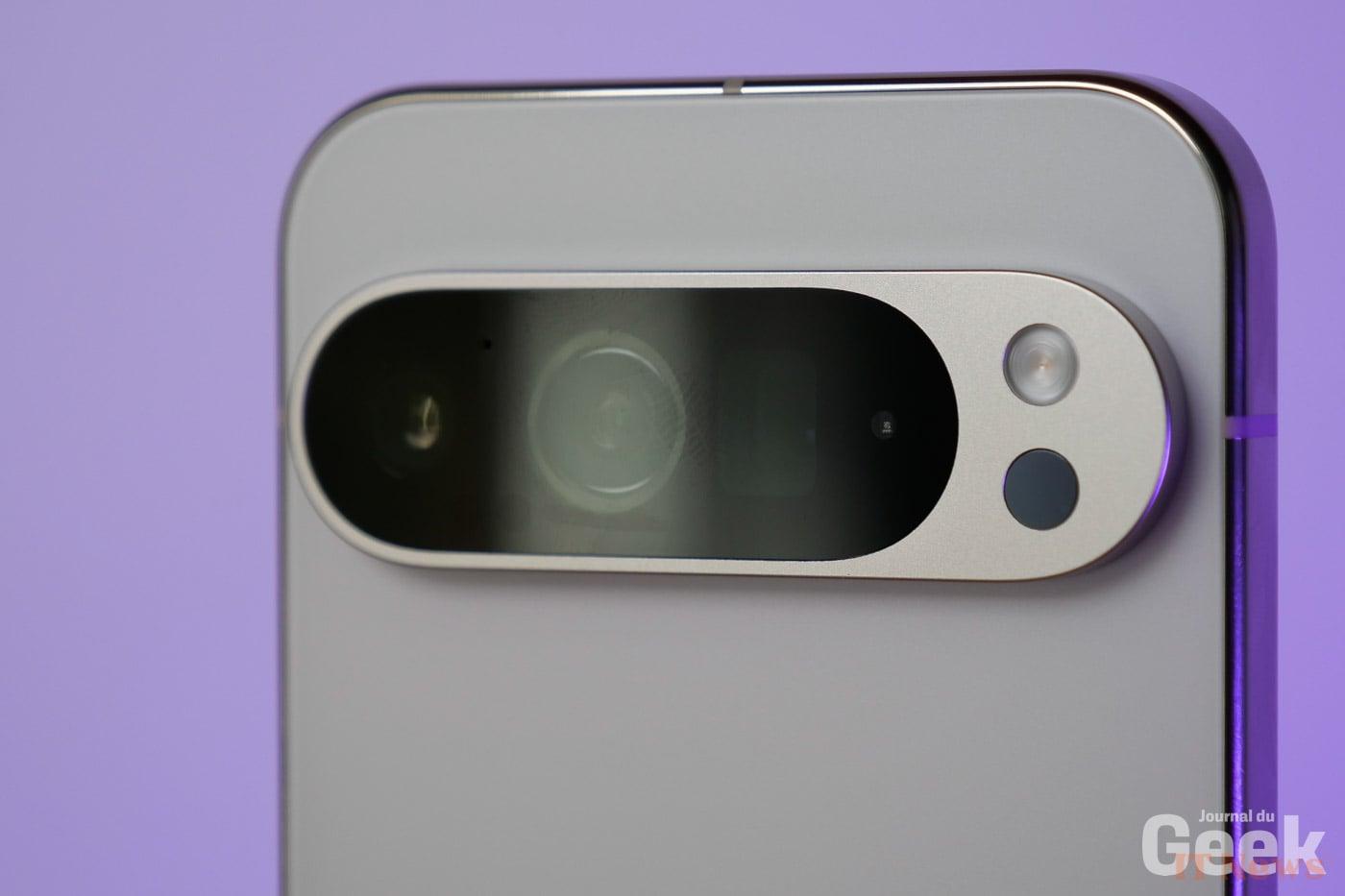
The model that brings the most changes compared to its predecessor is the Pixel 9 Pro XL. Google continues to rely on the headband, a true trademark of the Pixel, but now offers a sort of capsule to house the cameras. Moreover, this approach allows for a flat smartphone when it is on its back, which the iPhone 16 Pro Max cannot do because of prominent modules in a square. Its dimensions (162.8 x 76.6 x 8.5 mm) and its weight (221 g) are close to those of its competitors.
Verdict: draw
Screen
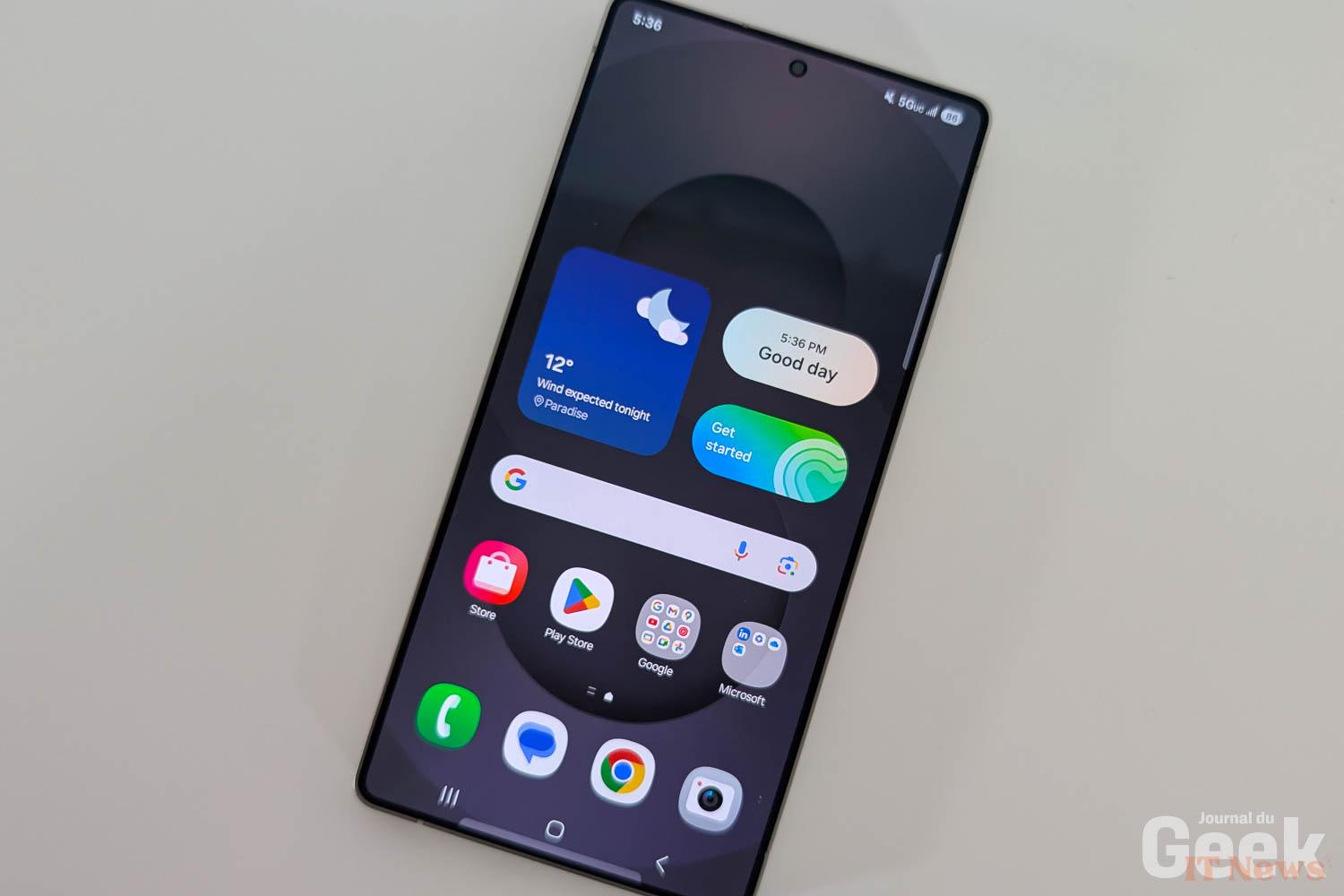
These smartphones are at the top of the range and feature the latest technologies of the moment. We are in the presence of very large models, whose screen flirts with 7 inches. This is the case of the Galaxy S25 Ultra and the iPhone 16 Pro Max (6.9 inches) while the Pixel 9 Pro XL offers a screen barely smaller (6.8 inches). LTPO OLED technology is obviously available and offers an adaptive refresh rate of 1 Hz up to 120 Hz. In addition, the three smartphones opt for very bright screens.
Verdict: draw
Performance
It's a heavyweight battle with the Snapdragon 8 Elite for Samsung, the A18 Pro for Apple and the Tensor G4 for Google. The three chips are among the best currently available on mobile (not to mention the MediaTek Dimensity 9400) and offer excellent performance, thanks to the manufacturers' optimizations. Apple has control over its A18 Pro chip and Google is looking to imitate the Apple model by developing its SoC, but the search giant is also relying on... Samsung's know-how.
For its part, Samsung trusts Qualcomm and takes advantage of its collaboration with the mobile chip giant to offer a "for Galaxy" variant for its smartphones. A little more recent, the Samsung Galaxy S25 Ultra can take the lead in benchmarks and benefits from "in-house" optimization. Its Qualcomm chip operates at a slightly higher frequency than the base version, which helps with the most demanding uses.
However, the iPhone 16 Pro Max remains a real power monster and benefits from Apple's optimization. iOS can even have the advantage over certain applications optimized for Apple's operating system.
Conversely, the Tensor G4 remains an SoC that takes care of optimization and it does not keep up with its two rivals in benchmarks. It also tends to heat up and this can lead to performance drops. Google's priority is the support of AI functions and the Tensor G4 will not be the "no compromise" chip suitable for multitasking and gaming, as the A18 Pro and the Snapdragon 8 Elite can be.
On the memory side, there is 16 GB in the Pixel 9 Pro XL, 12 GB of RAM on the Galaxy S12 Ultra and 8 GB of RAM on the iPhone 16 Pro Max. Storage starts at 128GB for Google and extends up to 1TB via 256GB and 512GB versions. It is identical for Samsung and Apple with 256GB, 512GB and 1TB variants for models sold in France. It is not possible to extend this capacity using a microSD card on the three devices. The high amounts of memory should help with multitasking and running the latest AI innovations.
Verdict: Samsung Galaxy S25 Ultra
Artificial intelligence
Artificial intelligence is the current priority for smartphone manufacturers, especially for our three representatives. It is becoming so important that it even eclipses the traditional little comparison between Android and iOS. It must be said that both operating systems are mature and are now very comprehensive, so it is above all a matter of affinities and preferences that determine the choice. On models of this caliber, the experience is fluid and manufacturers promise a long lifespan with the best software monitoring on the market.
What differentiates them in 2025 is the way they integrate AI features. Google is ahead of the game, because the Mountain View firm has always prioritized this subject and the Pixel 8 was the first smartphone of the AI era on mobile. Google is determined to maintain this lead and is focusing above all on the integration of Gemini, photo functions (such as "add me") or even "circle to search". These features are integrated into the almost “stock” interface of the Pixel, but we find most of them on the Galaxy S25 Ultra.
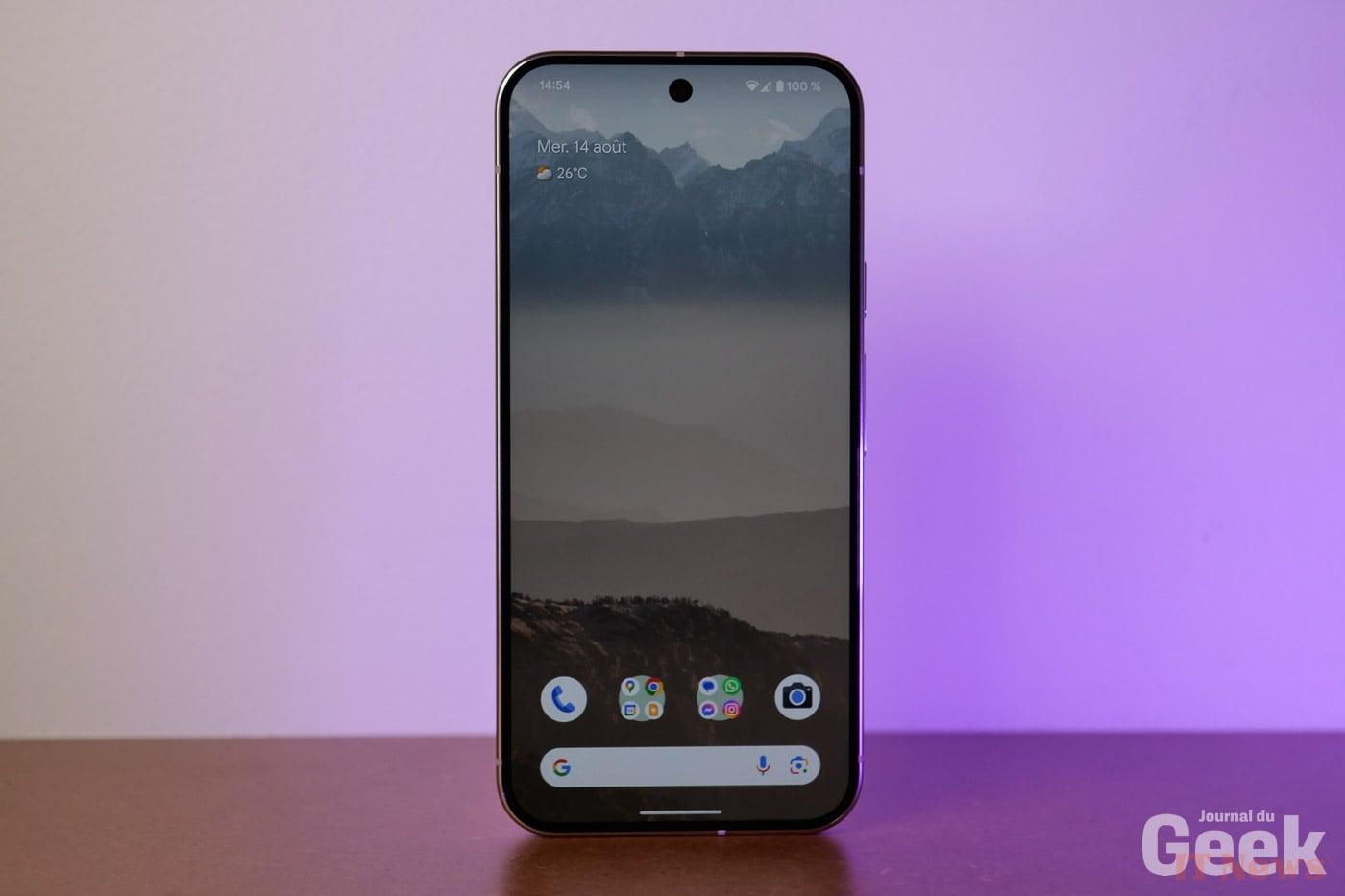
Since last year, Samsung has also been leading the way in terms of integrating AI functions with Galaxy AI. The South Korean giant's sequel is based on Google technologies and you find, more or less, the same functions on both Android phones. Even the Gemini assistant has a prominent place on the S25 Ultra by taking the place of Bixby.
At Apple, you unfortunately have to be patient to enjoy AI on the iPhone 16 Pro Max. The theme was a priority for Apple with the announcement of Apple Intelligence, but Cupertino-style AI is still conspicuous by its absence in our countries. If it is available elsewhere in the world, Apple's artificial intelligence is still awaited... and could arrive in France in a few weeks. It will then be time to see if the iPhone 16 gets back into the race against Android models that have taken a bit of a lead.
Verdict: Samsung Galaxy S25 Ultra and Google Pixel 9 Pro XL (for now)
Photo
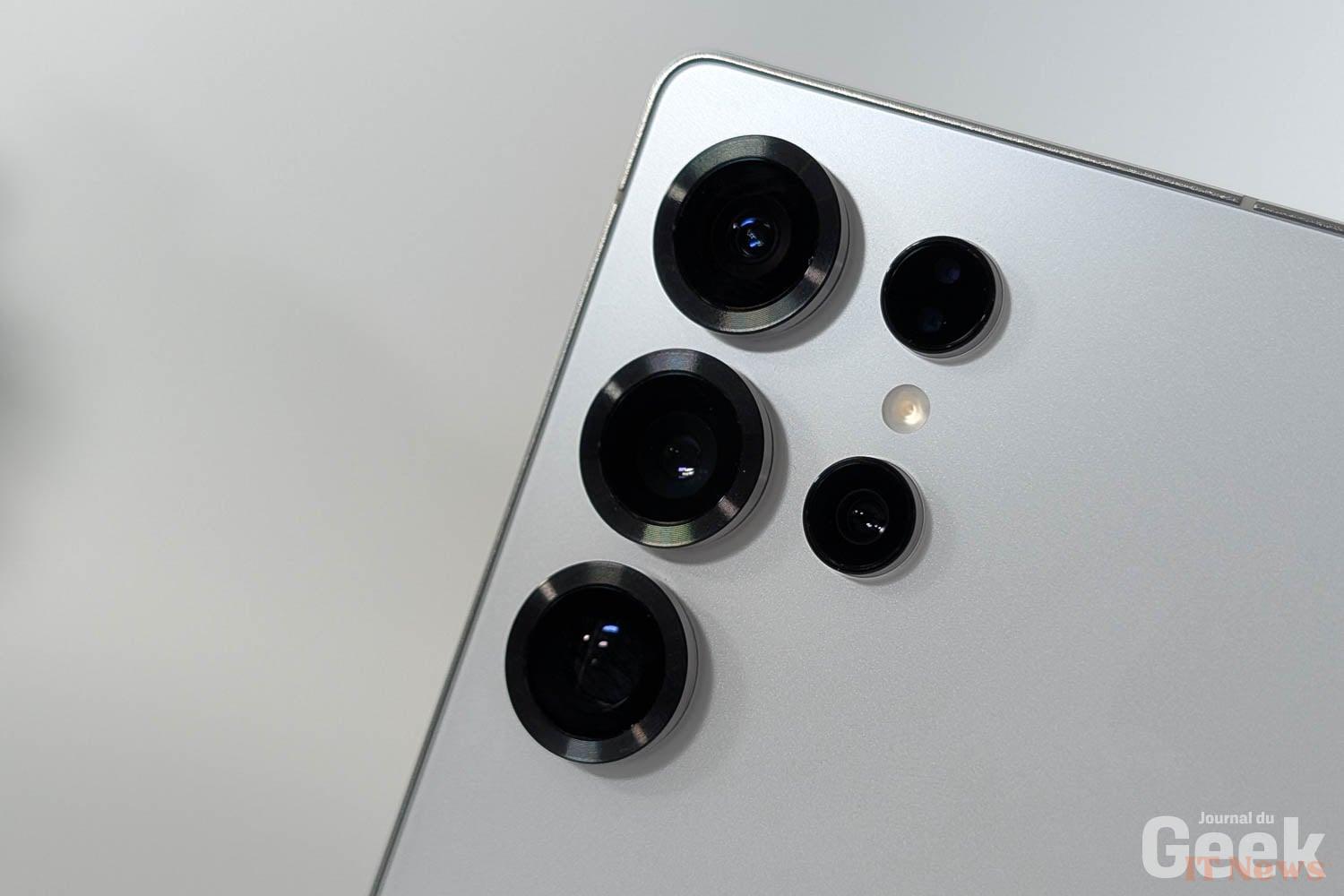
While most premium smartphones boast a trio of photo sensors (wide-angle, ultra-wide-angle and telephoto), the Samsung Galaxy S25 Ultra stands out by adding a fourth sensor. The South Korean manufacturer remains faithful to this configuration and the new feature of the year concerns the 50 Mpx ultra-wide-angle. For the rest, we find an impressive 200 Mpx sensor and two telephoto lenses: the first of 10 Mpx with a 3x optical zoom and the second of 50 Mpx with a 5x optical zoom.
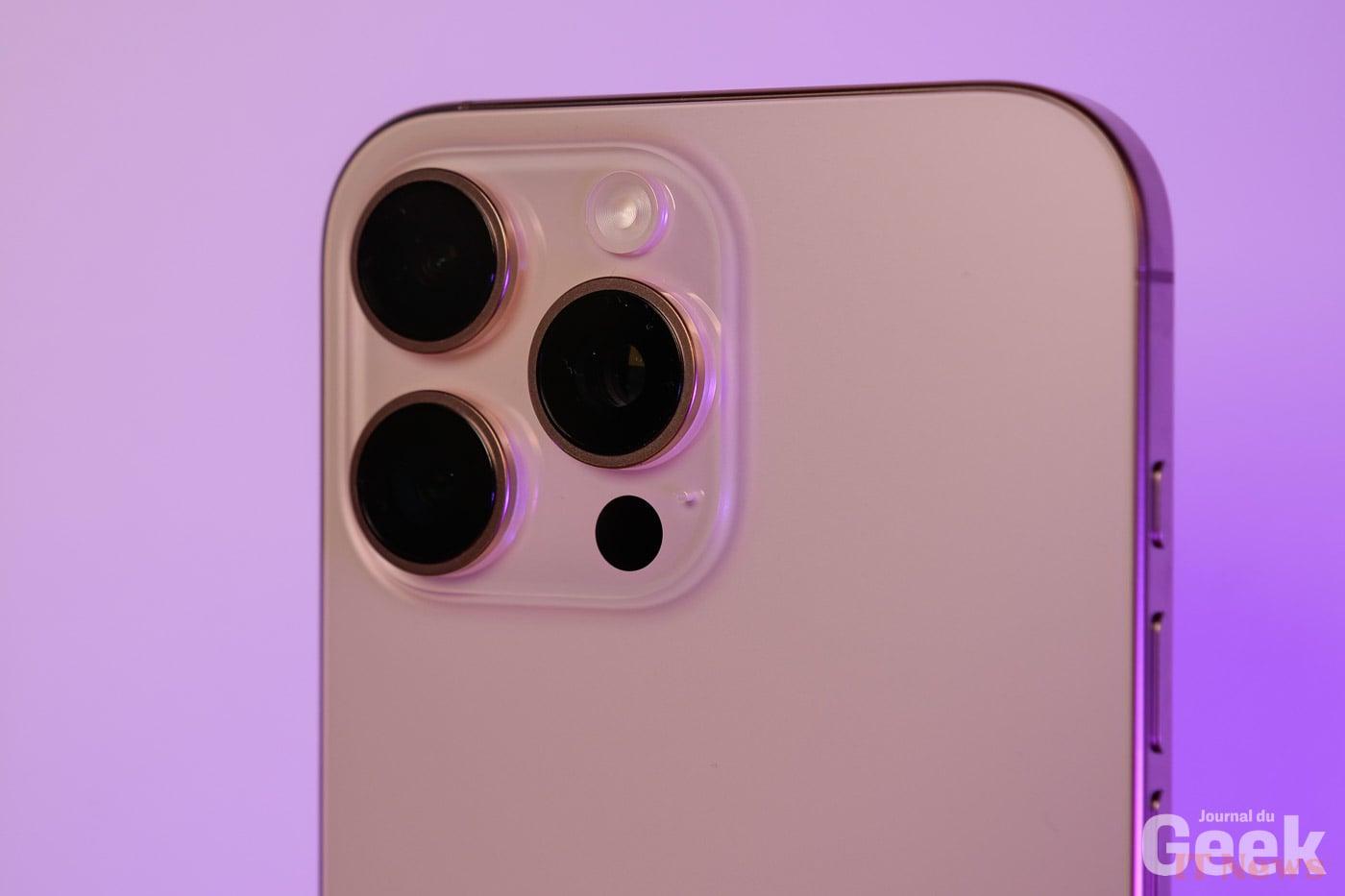
The presence of a second telephoto lens and a very high definition sensor offer a little more versatility to the Galaxy S25 Ultra, but that might not be enough. Apple also offers a very solid configuration to its iPhone 16 Pro Max, with a main sensor of 48 Mpx (f / 1.8), an ultra wide-angle of 48 Mpx (f / 2.2) and a telephoto lens of 12 Mpx (f / 2.8, 5x optical zoom). A trio capable of achieving good performances day and night, but also of shining in video with the Dolby Vision 4K format at 120 fps. While both Android rivals claim to capture up to 8K, Apple has an excellent reputation for mobile video.
Finally, photography is a priority for Google, which equips its Pixel 9 Pro XL with three photo sensors: a 50 Mpx main sensor (f/1.7), a 48 Mpx ultra-wide-angle sensor (f/1.7) and 48MP telephoto lens (f/2.8, 5x optical zoom). Google's model appears to be the most balanced of the three and the brand's expertise in this area, with advanced integration of AI in post-production, is capable of making a difference.
| Samsung Galaxy S25 Ultra | iPhone 16 Pro Max | Google Pixel 9 Pro XL | |
| Wide-angle | 200 Mpx, f/1.7, 24 mm, 1/1.3″, OIS | 48 Mpx, f/1.8, 24 mm, 1/1.28″, OIS | 50 Mpx, f/1.7, 25 mm, 1/1.31″, OIS |
| Ultra wide angle | 50 Mpx, f/1.9, 120˚ | 48 Mpx, f/2.2, 13 mm | 48 Mpx, f/1.7, 1/2.55″ |
| Telephoto (1) | 10 Mpx, f/2.4, 67 mm, 1/3.52″, OIS, x3 optical zoom | 12 Mpx, f/2.8, 120 mm, 1/3.06″, OIS, x5 optical zoom | 48 Mpx, f/2.8, 113 mm, 1/2.55″, OIS, x5 optical zoom |
| Telephoto (2) | 50 Mpx, f/3.4, 111mm, 1/2.52″, OIS, 5x optical zoom AutonomySamsung equips its Galaxy S25 Ultra with a 5000 mAh battery while the iPhone 16 Pro Max has a 4676 mAh battery. The Pixel 9 Pro XL does a little better than the Samsung model with its 5060 mAh battery. Since the three smartphones run on different operating systems (two on Android, one on iOS), we can say that they are rather close on paper and that the capacity gap is not necessarily a determining factor. Indeed, the iPhone 16 Pro Max already does better than the Galaxy S24 Ultra according to several tests, while the Samsung model already has a 5000 mAh battery. Samsung's component changes and optimizations could nevertheless allow the Galaxy S25 Ultra to get back in the race. As for the Google Pixel 9 Pro XL, we know that it is struggling a bit on this point and is not ahead of the iPhone 16 Pro Max. 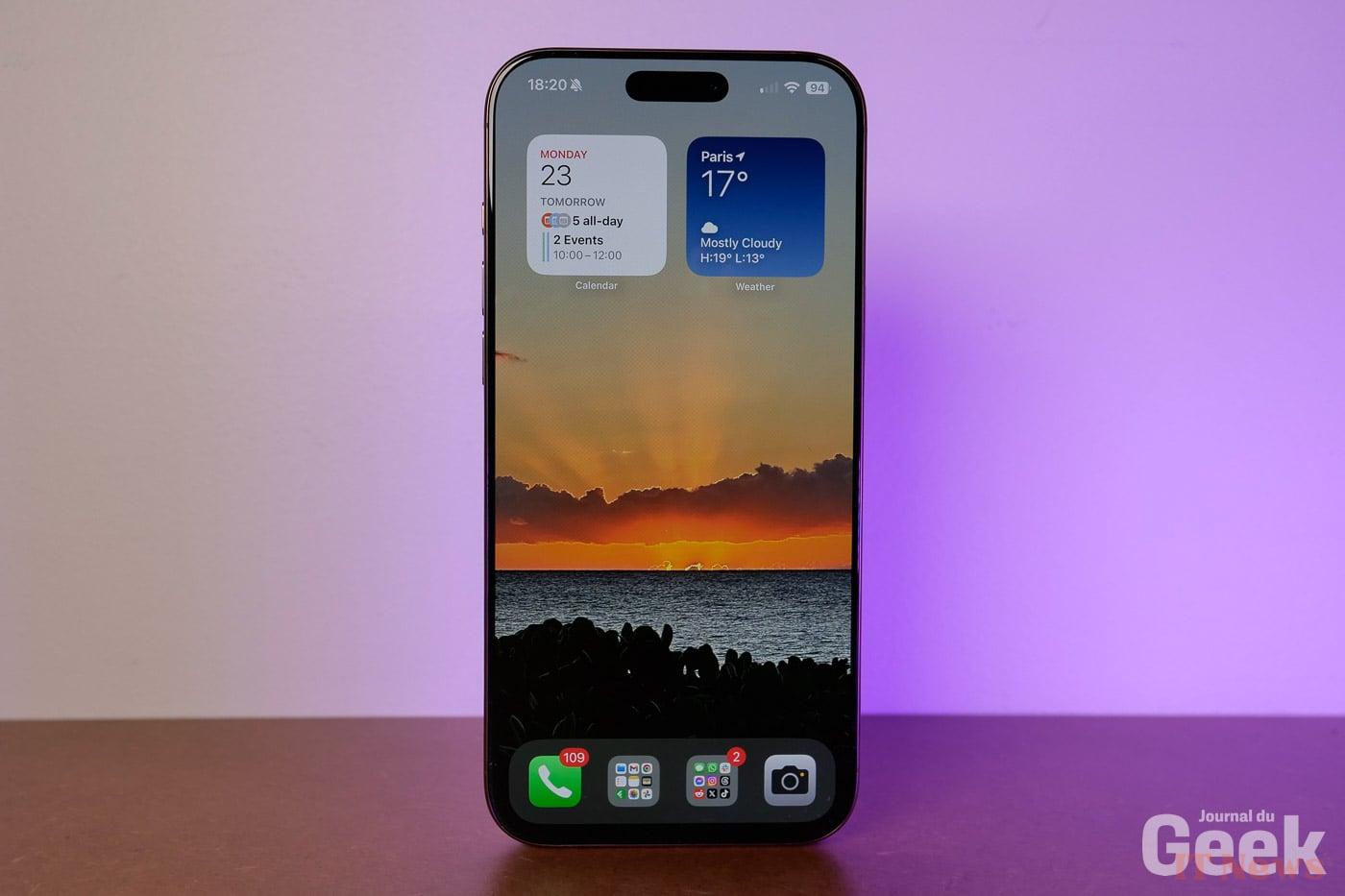 Regarding fast charging, the three models do not compete with the Chinese models and are content with relatively "slow" fast charging. The Samsung Galaxy S25 Ultra still peaks at a maximum power of 45 W in wired mode, compared to 27 W via USB-C for the iPhone 16 Pro Max. Note that Apple does not communicate on the subject and our colleagues at 01net noted a power peak at 41 W, but under very specific conditions. Apple's flagship model remains slower, but it stands out with its "MagSafe" wireless charging up to 25W. The Galaxy S25 Ultra is limited to 15W wireless charging and does not benefit from the magnetic back, despite supporting Qi2 technology. At Google, the Pixel 9 Pro XL is officially limited to 37W (measurements show, like the iPhone, that it can sometimes do a little better) in wired mode, 23W in wireless mode with a Pixel Stand and 12W in wireless mode with a Qi charger. Verdict: iPhone 16 Pro Max PriceFlagship models from Samsung, Google and Apple, these three smartphones are among the most expensive on the market. The most "accessible" is the Pixel 9 Pro XL, which Google launched starting at 1199 euros with 128 GB of storage. This storage capacity is low for a high-end model and is not available on the Galaxy S25 Ultra and iPhone 16 Pro Max. The Google Pixel 9 Pro XL was priced at 1299 euros when it was released with 256 GB of storage. A 512 GB version is also available in France, at 1429 euros. Finally, the most expensive variant includes 1 TB of storage and costs 1689 euros. At Apple, the iPhone 16 Pro Max starts directly at 1479 euros with 256 GB of storage. The price increases to 1729 euros with 512 GB of storage. Finally, the 1TB storage version is approaching the 2000 euro mark (1979 euros). The most recent is the Samsung Galaxy S25 Ultra, whose starting price is almost equal to that of the iPhone: 1469 euros. The model with 512 GB of storage goes to 1589 euros. Finally, the 1TB version is at 1829 euros for the launch of Samsung's 2025 flagship. It should be noted that the Pixel 9 Pro XL has been available for several months and can be found at slightly lower prices. Conversely, the Galaxy S25 Ultra benefits from the novelty effect and Samsung offers – at launch – double the storage for the same price (512 GB at the price of 256 GB and 1 TB at the price of 512 GB). At Apple, prices tend to vary less and this also explains why iPhones lose less value than Android smartphones. This trend is no longer as clear as in the past, but you will rather only have to go to the Apple store at resellers (or operators) to find a good deal. It should be noted that the Cupertino firm has just relaunched a 0% interest financing offer in France. Verdict: Google Pixel 9 Pro XL |


0 Comments