

Because tech never sleeps, 2025 has started so strong that it took us a little time to refine our predictions. Before moving on (already!) to February and looking ahead to the Mobile World Congress in Barcelona, the editorial staff of Journal du Geek is playing theories and predictions on five themes that are close to our hearts.
The Samsung Galaxy S25 Ultra will not be the best smartphone of the year
Sorry Samsung, we find it hard to believe that the announcement of the Galaxy S25 Ultra will be enough to be the best smartphone of the year. The exercise is delicate between the announcements at the beginning of the year (like Samsung) and those at the end of the year (Apple, Google, etc.), but the South Korean firm demonstrated last year its ability to shine in this market. Our colleagues at 01net.com have also designated the Samsung Galaxy S24 Ultra as the smartphone of the year 2024, despite some strong competition. For this new year, Samsung is content with a few tweaks and hopes to shine in terms of AI (Galaxy AI) to maintain its lead over a competition... which is already showing itself.
Honor is one to watch from the start of the year with its Magic7 Pro, while waiting for announcements from other Chinese manufacturers. The Xiaomi 15 Ultra seems sufficiently equipped to join the fight and we are keeping a close eye on the return of Oppo, which ended 2024 in style with the Find X8 Pro. Its possible successor could create a surprise and we must not forget the two American heavyweights that are Apple and Google. The first will launch the iPhone 17 around September and the series could finally rely on Apple Intelligence available worldwide to regain the top step of the podium. As for Google, the Pixel 9 proved very convincing in 2024 and much is expected from the Pixel 10 and its improved performance.
In a smartphone market that is on the rise again, manufacturers must give their best to maintain their market share and this is good for users. Moreover, folding smartphones will also have their say and they are expected to be thinner than ever in 2025.
Ultra-thin smartphones will shake up the market (S25 Edge, iPhone Air/Slim, etc.)
And since we are talking about thinness for smartphones, it is difficult not to mention what is very likely to be the trend of the year: ultra-thin smartphones. Rumors were flying in 2024 and Samsung confirmed at its January event by unveiling the Samsung Galaxy S25 Edge. There are still many elements to discover about this smartphone that will be released later in the year, but its flagship argument is its thinness.
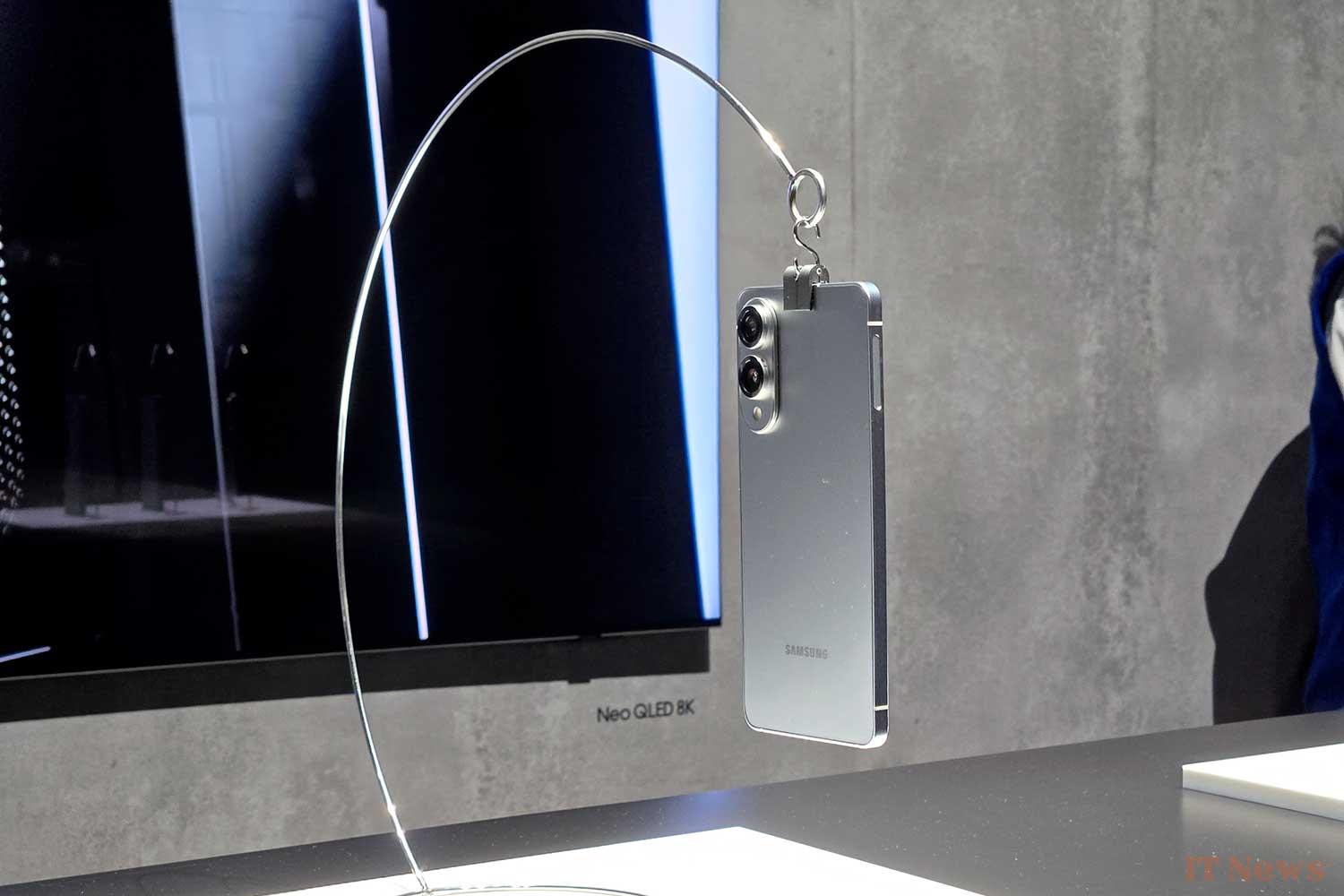
This model would have a thinness of only 6.4 mm (or around 6 mm) and is preparing to open the ball of ultra-thin models. Apple would quickly join its arch-rival by launching what is now called the iPhone 17 Air or Slim. This new iPhone would take the place of the current Plus variant in Apple's range and would be even thinner than the Galaxy S25 Edge. It would fall below the 6 mm mark with a thickness of only 5.5 mm, according to renowned analyst and Apple specialist Ming-Chi Kuo. The iPhone Air or Slim would easily beat the record for the thinnest iPhone ever, currently held by the iPhone with a thickness of 6.9 mm.
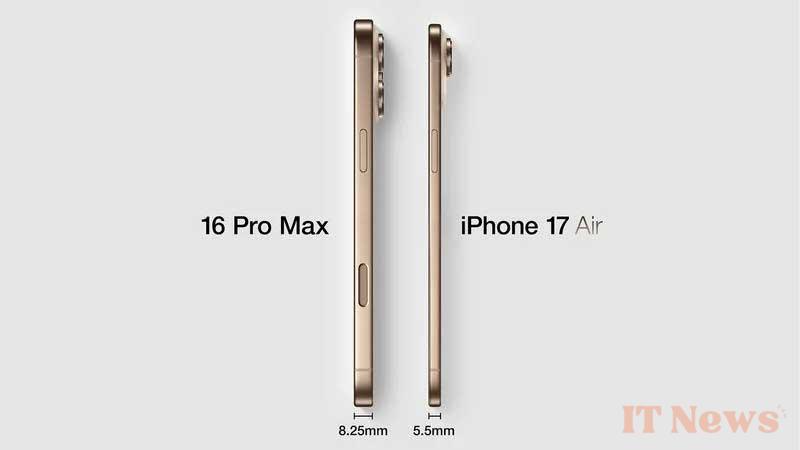
This future iPhone would be close to the 5.1 mm of the 13-inch iPad Pro, even if its thickness remains debated. At the end of the year, Mark Gurman of Bloomberg mentioned a smartphone 2 mm thinner than an iPhone 16 Pro… or 6.25 mm. The Slim or Air model would still be the thinnest iPhone ever produced by the brand with the apple.
And the other manufacturers?
As is often the case, Chinese manufacturers would not be left behind and Oppo has started to tease what it already presents as the "world's thinnest folding". The Oppo Find N5 would beat the Honor Magic V3's record of 4.35 mm by offering a thickness, once unfolded, equivalent to two one-yuan coins or four credit cards. According to estimates, this is equivalent to around 3.5 to 4 millimeters.
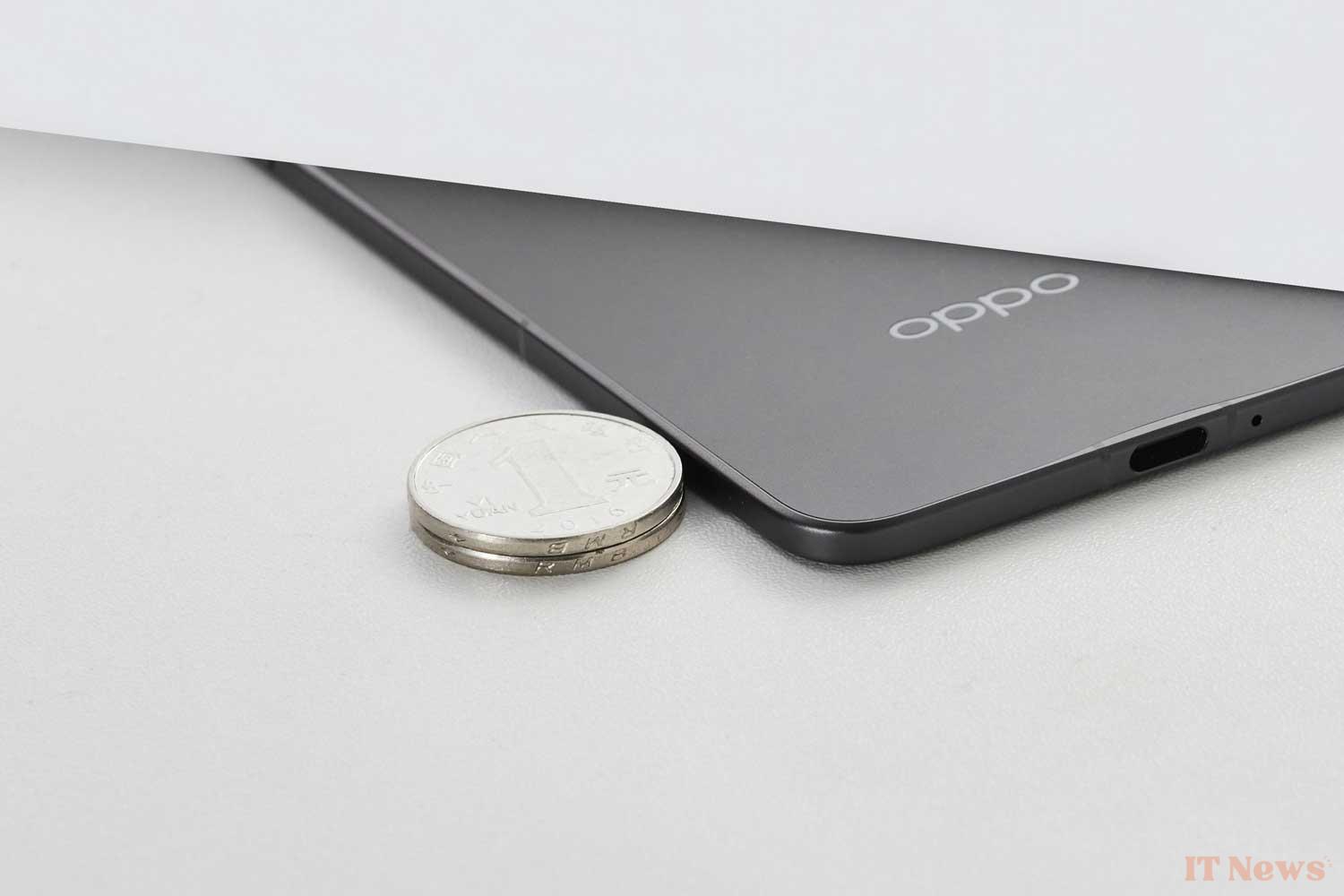
According to the essential leaker DigitalChatStation, other smartphone manufacturers will launch ultra-thin smartphones this year. Although they are not explicitly mentioned, Xiaomi or Vivo could unveil affordable models with a particularly thin profile. This promises to dynamite a market that is looking to offer new formats, especially since the near-disappearance of compact models.
SteamOS will be a hit and threaten (a little) Windows gaming
The Lenovo Legion Go S is a "revolutionary" console and it is not really for its characteristics. This portable PC console has nothing to be ashamed of in terms of its technical specifications, but its great particularity is that it exists in two versions: Windows 11 and SteamOS. Since the arrival of SteamDeck, Valve has proven that there is room for these portable consoles and the firm has decided to offer an operating system optimized for its consoles.
Other manufacturers have opted for Windows 11, the essential operating system for gamers... on PC. The problem is that a portable machine does not have exactly the same characteristics. If the Microsoft ogre has the advantage of game compatibility, its operating system is not always fully adapted to the screens of portable devices. That’s SteamOS, Valve is now offering it on non-Valve consoles, and this foray into third-party consoles can change a lot of things. As Valve explains in a press release the goal now is to move towards "new horizons for SteamOS beyond Steam Deck" and to challenge Microsoft on its own playing field. For the first time, a Linux-based operating system seems capable of threatening Windows.
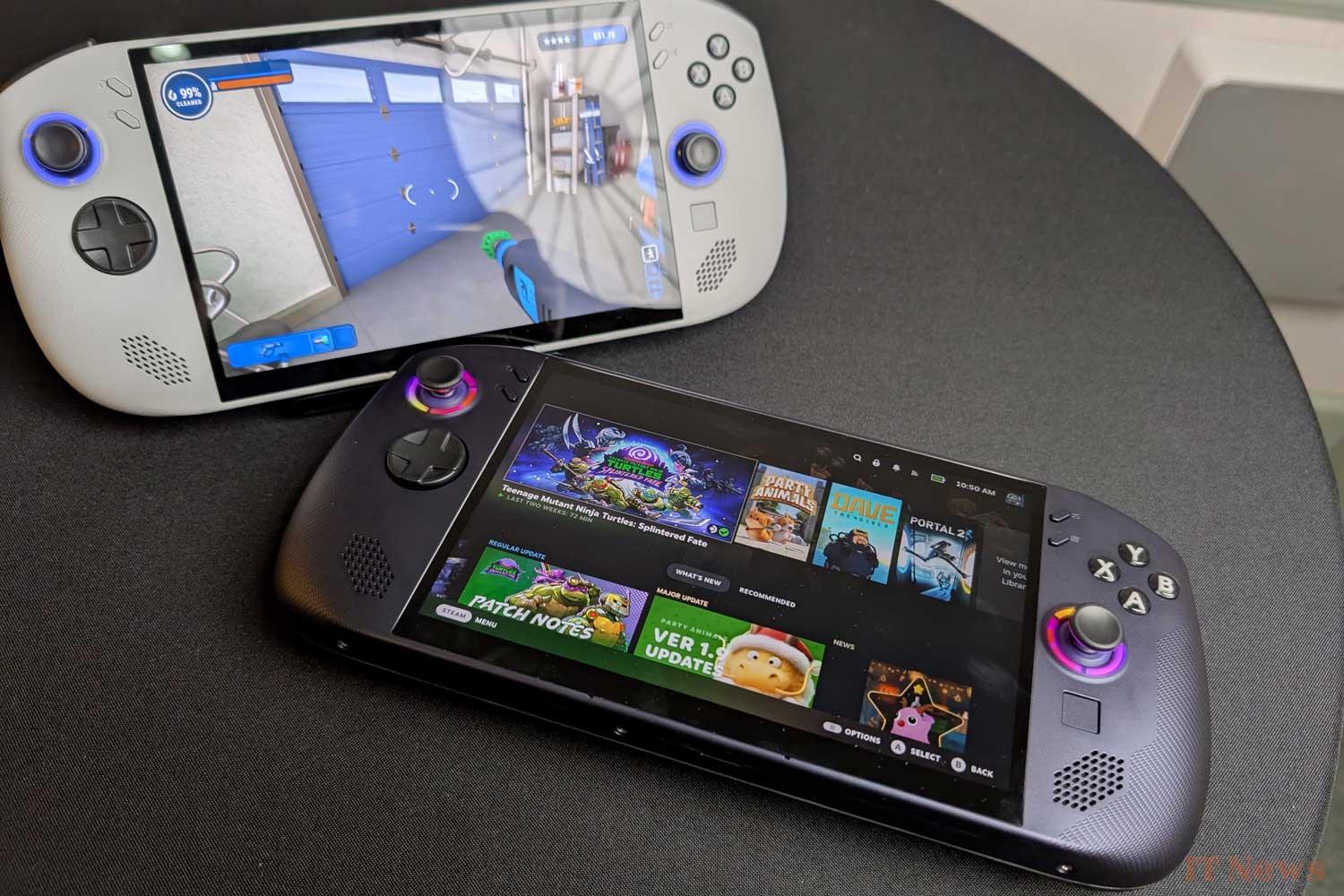
Certainly, there is still a long way to go and Microsoft is taking the threat seriously as the American giant seeks to improve the portable gaming experience. A mandatory step, otherwise SteamOS will gain market share, while some are already dreaming that SteamOS will arrive on PC to take over from Windows 10 at the end of its life.
"I like Steam announcements" and "I think it's an opportunity that could really help [Linux] on desktop computers", affirmed Linus Torvalds in 2013. Twelve years later, the father of the open source operating system Linux source could see its prediction come true.
Trade war, technology war… make way for the AI battle between the United States and China
It's hard to escape the madness surrounding DeepSeek at the start of 2025. Chinese artificial intelligence is the new sensation in the sector and it is causing an earthquake in American tech, to the point of pushing Uncle Sam's country to retaliate. It must be said that the United States saw itself well ahead of the rest of the world in this field, thanks to the success of heavyweights like Nvidia, OpenAI, Microsoft and Google. This handful of American leaders is now going through a crisis of confidence (Nvidia lost $600 billion in capitalization at the start of the week), because of a Chinese generative AI model trained with "only" $5.6 million. The figure is unverifiable, but it would be much lower than the colossal sums needed to train models like OpenAI's GPT-4 (estimated at around $80 million).
The wave is so strong, DeepSeek is number one in the App Store in the United States, that tech is catching fire and talking about a "Sputnik moment of AI". The term takes us directly back to the Cold War and it is difficult not to draw a parallel with the situation between China and the United States. For several years, the two superpowers have had complicated relations marked by a trade and then technological war, as evidenced by the tensions surrounding Huawei or TikTok. This "war" also concerns artificial intelligence and Beijing has every intention of challenging Washington's technological supremacy, showing rapid progress. For their part, the United States wants to do everything to continue to lead the race and DeepSeek could be just the beginning of this confrontation.
Read also: Is DeepSeek bursting the "AI bubble"?
The electric car will finally become accessible
Loved or hated, the electric car leaves no one indifferent and one of the debaters' favorite topics is its sale price. It must be admitted that the electric car is still not as affordable as a thermal car, but things should change this year. In 2025, more models are expected to fall below the symbolic 25,000 euro mark.
The Volkswagen ID.2 is already shaping up to be one of the models to watch this year, since this 100% electric city car (equivalent to a Polo) would cost less than 25,000 euros. The German manufacturer would be true to its name (Volkswagen means "People's Car") with this model, after having multiplied its references in more expensive segments. On the SUV side, we will keep a close eye on the situation of the small Hyundai Inster which could seduce with a formula starting at 25,000 euros.
In another register, Elon Musk has again promised the arrival of a more affordable Tesla. The boss of the American manufacturer has not said anything more on the subject and we do not know if we should really believe it.
Cocorico?
Manufacturers will also have the opportunity to liven up this year 2025, starting with Citroën with the ë-C3. The small electric car is already trading under the famous 25,000 euro mark (and even less than 20,000 euros with the ecological bonus), but it remains a budget and a variant at less than 20,000 euros is on the way. It will be launched in the first half of 2025.
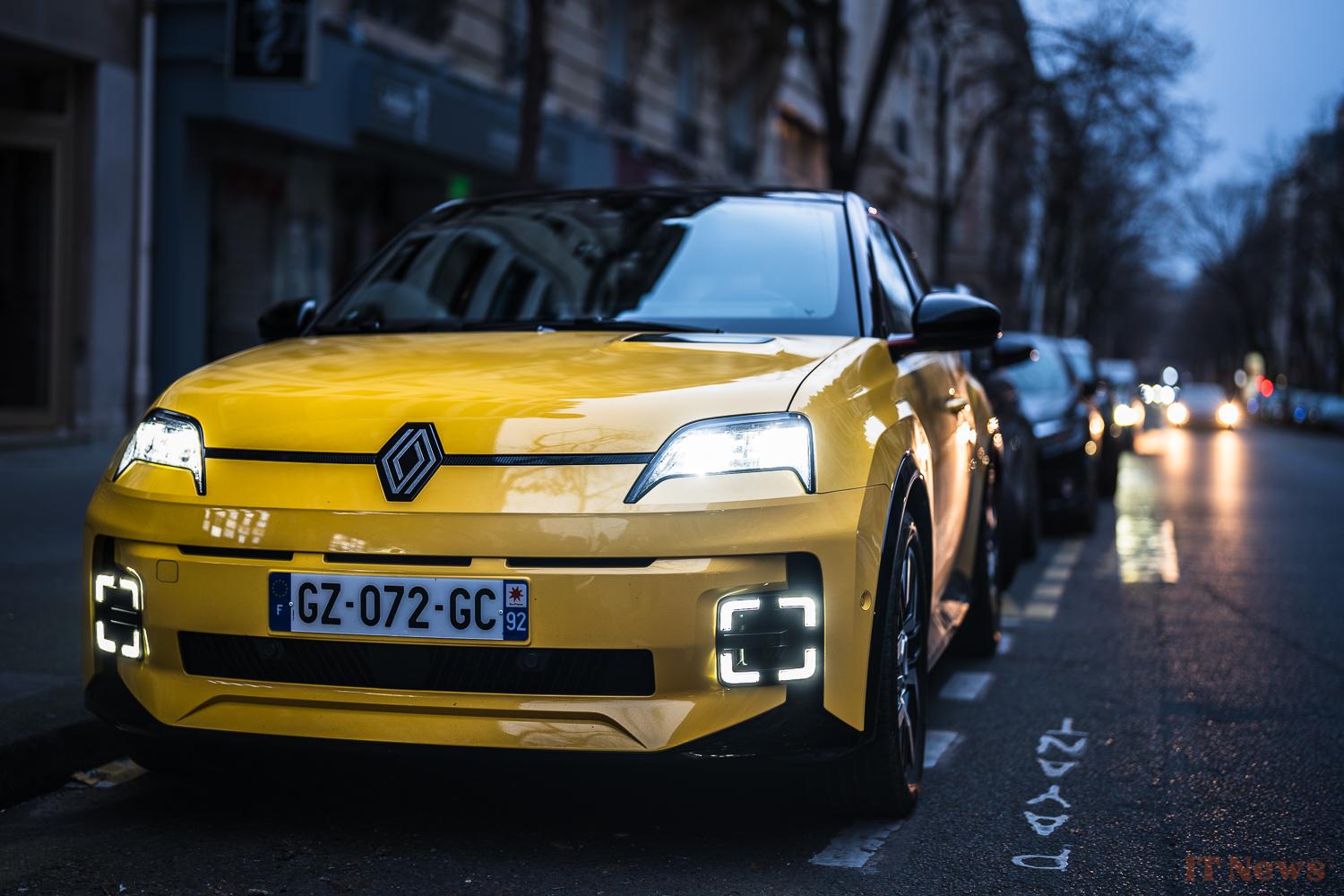
On the Renault side, a Renault 5 E-Tech will arrive in a less expensive version in spring 2025. It would be positioned just under the 25,000 euro mark excluding bonuses.


0 Comments