
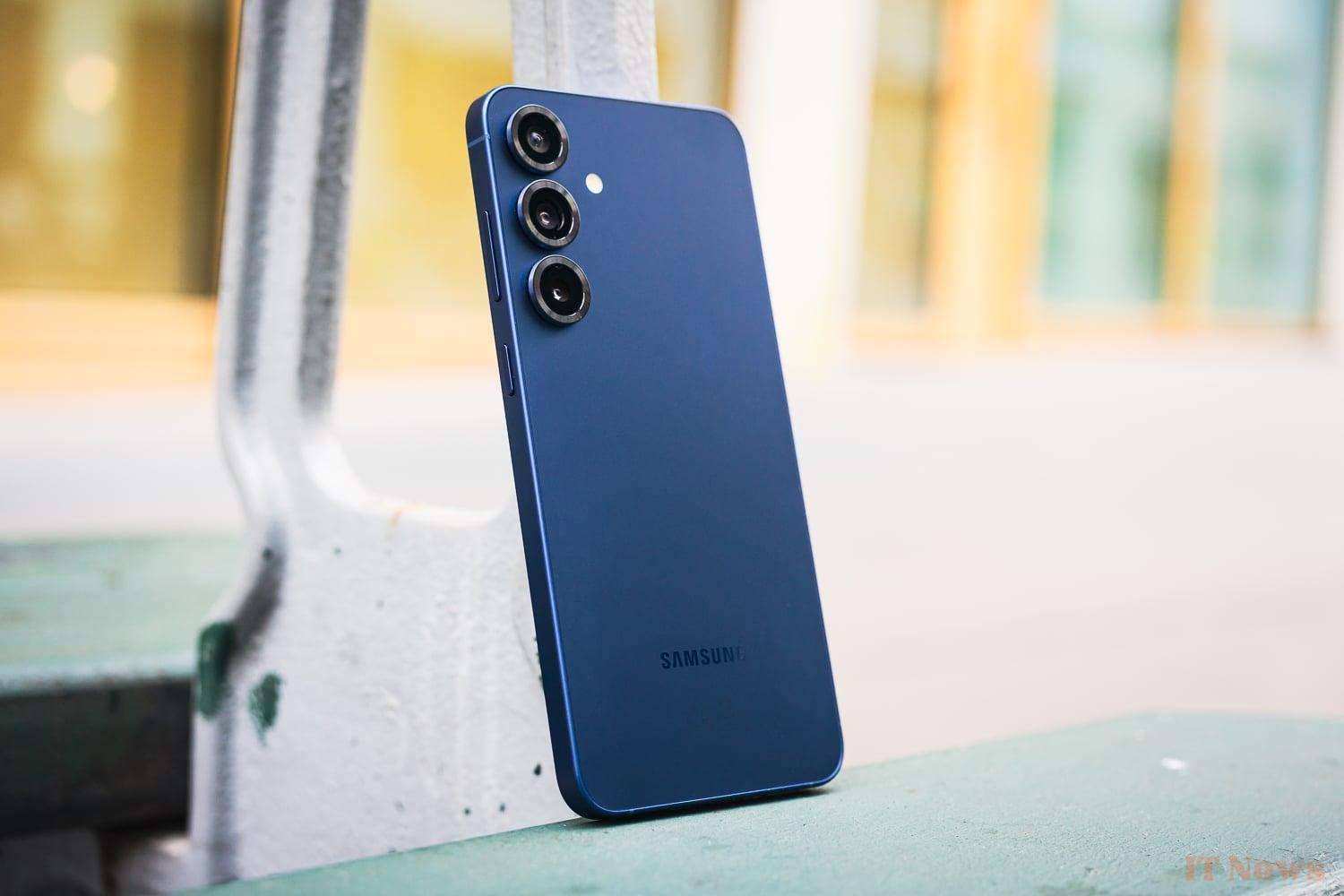
The Samsung Galaxy S25 Plus claims to be the compromise smartphone between the Galaxy S25 Ultra and the classic model. This "Plus" version thus borrows the design of its little brother, but a size, battery and charging speed close to its big brother. We are therefore on a high-end Galaxy smartphone which, like a tightrope walker, seeks the right balance.
The Galaxy S25+ is positioned against competitors who have already proven themselves such as the iPhone 16 Plus, the Google Pixel 9 Pro or the OnePlus 13. So many comparable references in terms of size, but also price. After two weeks of testing, here is our opinion on the Samsung Galaxy S25+.
Price and release date of the Samsung Galaxy S25 Plus
The Samsung Galaxy S25+ is available on the Samsung website at the recommended price of 1172.05 euros in its version with 256 GB of storage. But some resellers have already lowered its price. The two variants offered with 256 GB or 512 GB of storage (no microSD) both have 12 GB of RAM. The available colors are gray, light blue, midnight blue and sea green, to which must be added the three colors exclusive to the Samsung site: black, coral and rose gold.
Design: the design of an S25, the size of an Ultra
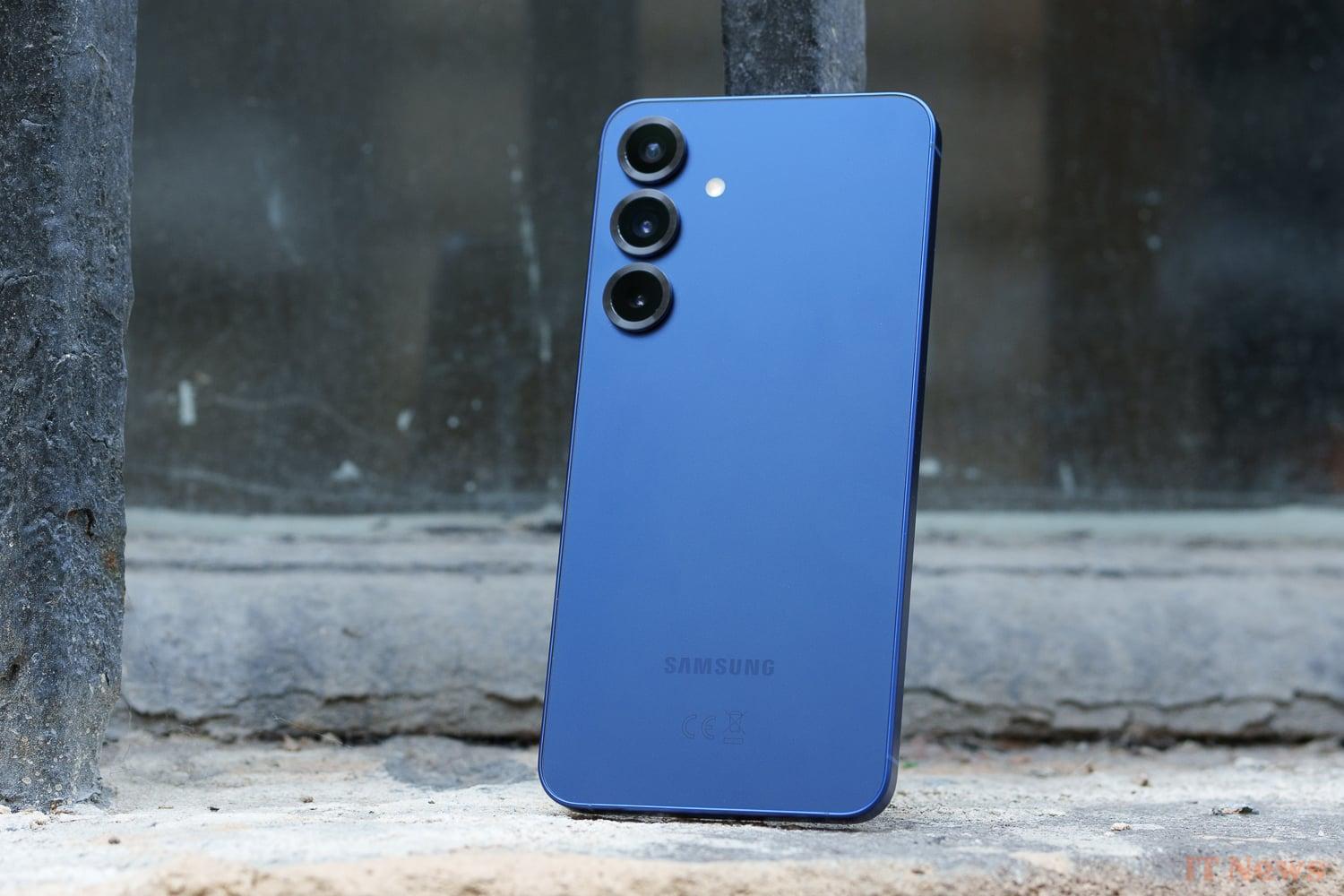
This year more than ever, Samsung has been content with the minimum in terms of hardware updates, preferring to focus on the software part. However, this does not mean that nothing changes. Thus, the S25 Plus is a little thinner than the S24 Plus (0.4 mm less), but also 6 grams lighter. Clad entirely in aluminum, the smartphone exudes quality. Both sides of the smartphone are protected by Gorilla Glass Victus 2. Unfortunately, the more resistant and less glare-prone Gorilla Glass Armor 2 is reserved for the S25 Ultra.
Your humble servant is usually more of a fan of compact smartphones, but the Galaxy S25+ may be large, but its weight and flat edges provide a good grip, which is not always found on smartphones with this 6.7-inch screen diagonal.
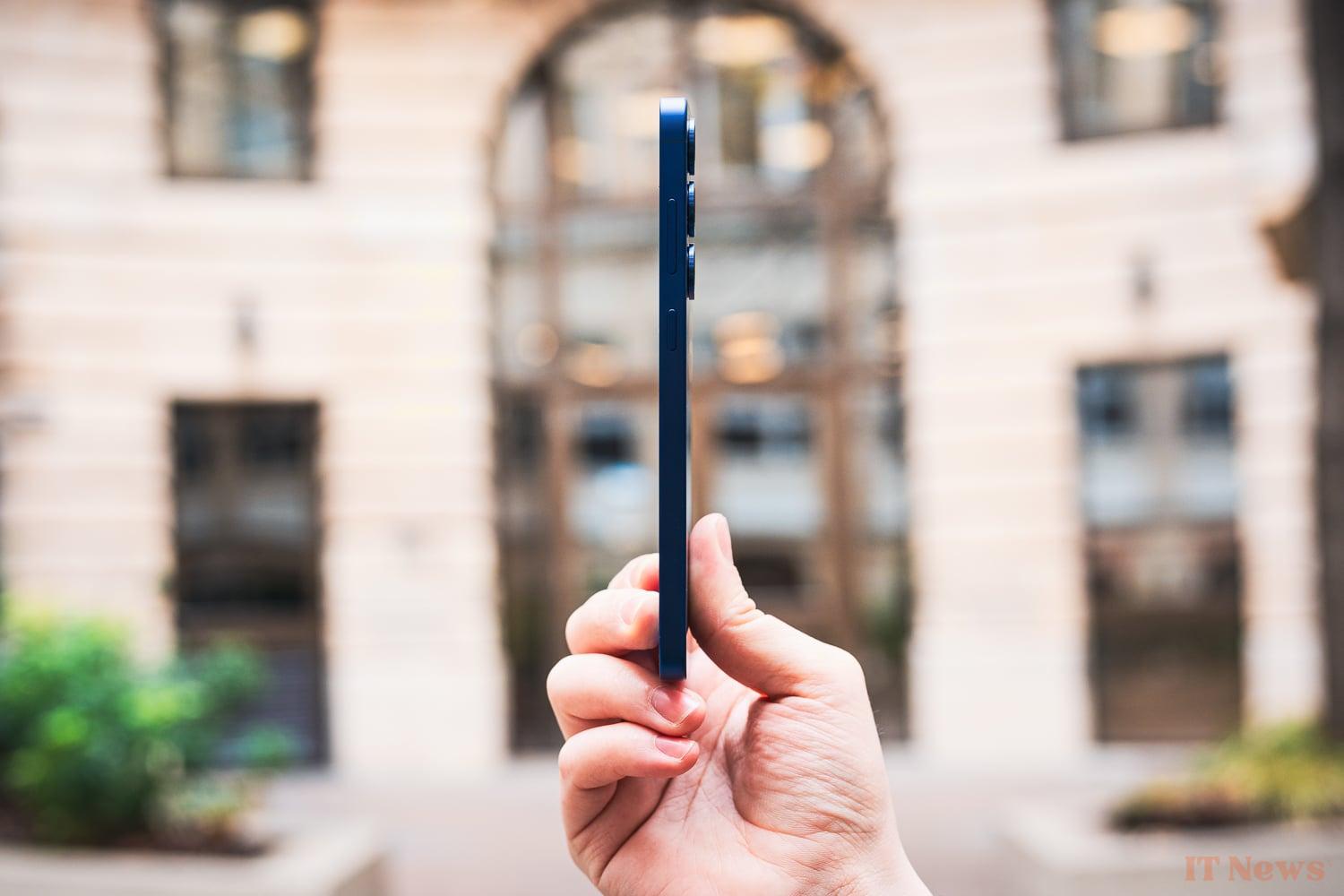
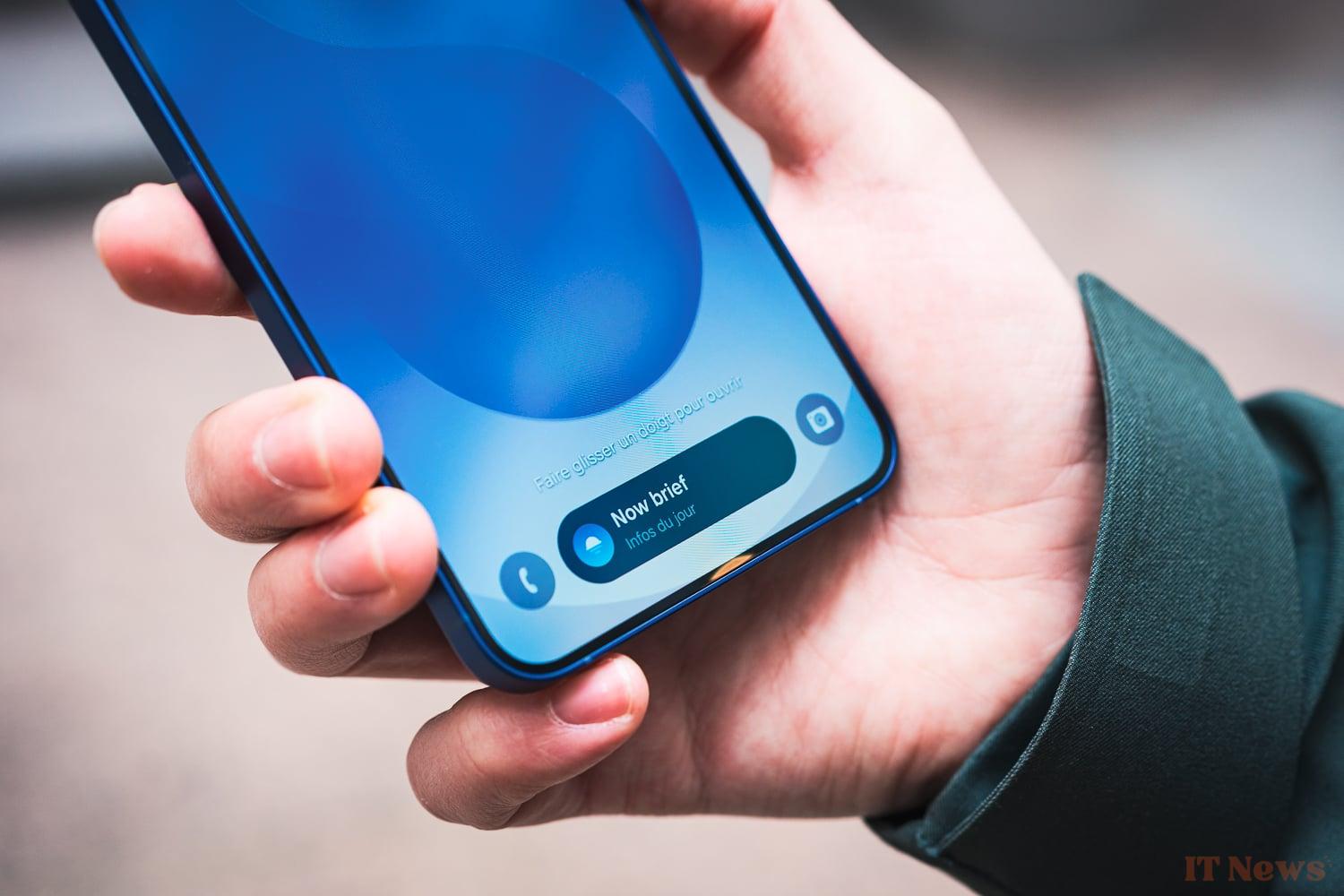
© Hanna Lavilic / 01net.com
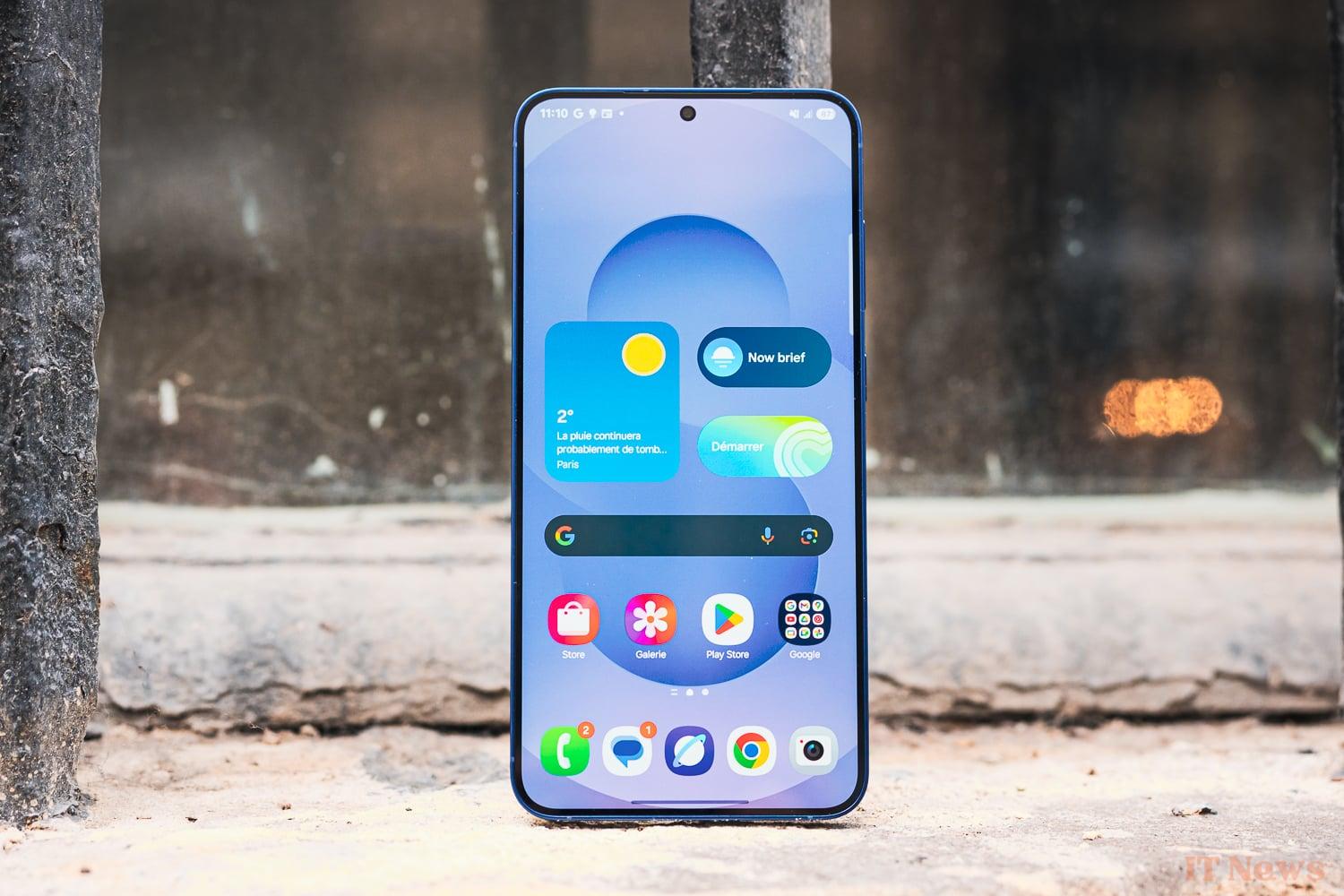
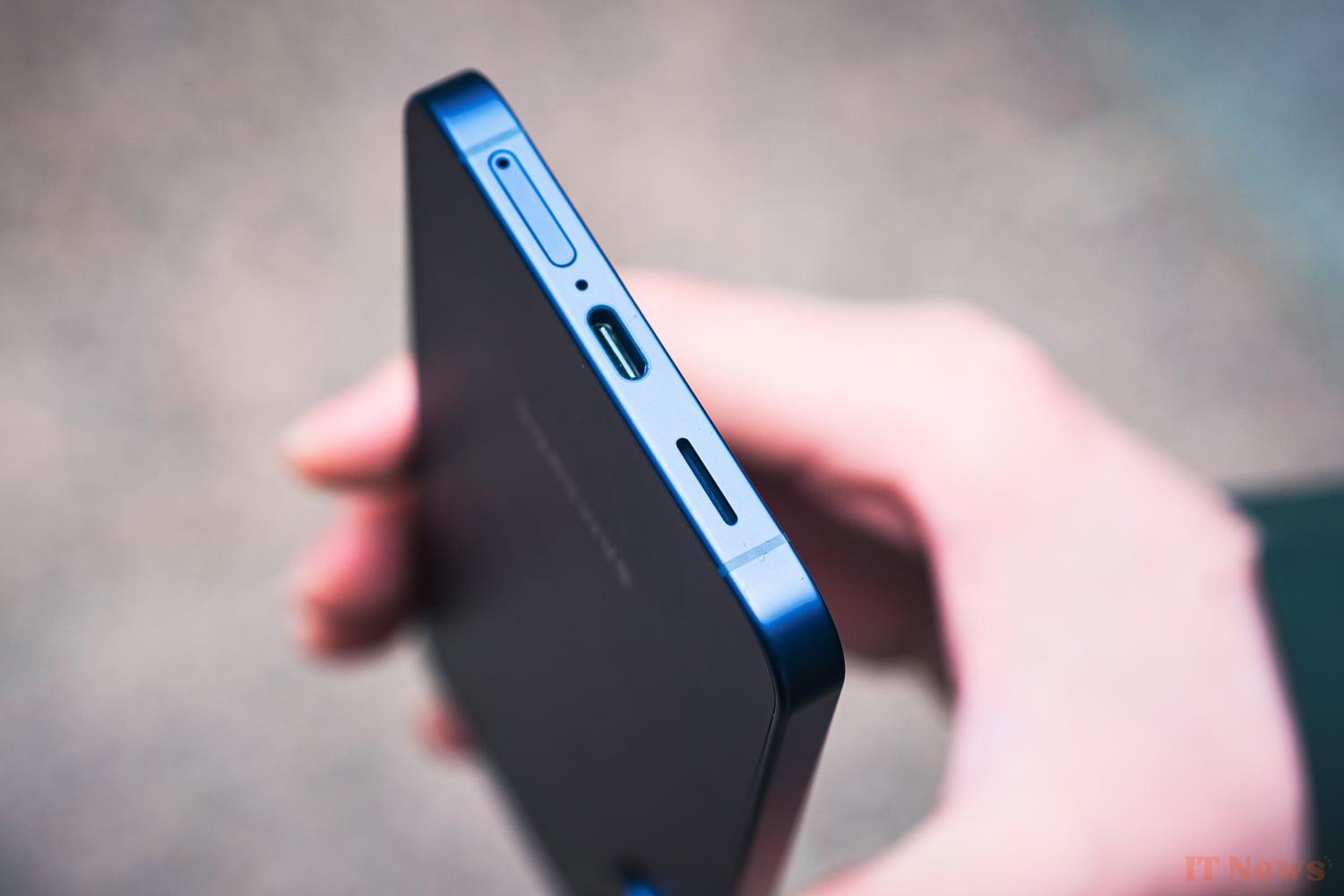
The buttons on the right edge are easily accessible and the SIM tray can accommodate up to two nano-SIM cards. The flat screen, the punch-hole housing the 12 Mpx front camera and the symmetrical black borders complete a very high-level design. Like any high-end mobile that should be in 2025, we find Wi-Fi 7, Bluetooth 5.4 and IP68 certification.
Screen: color drift
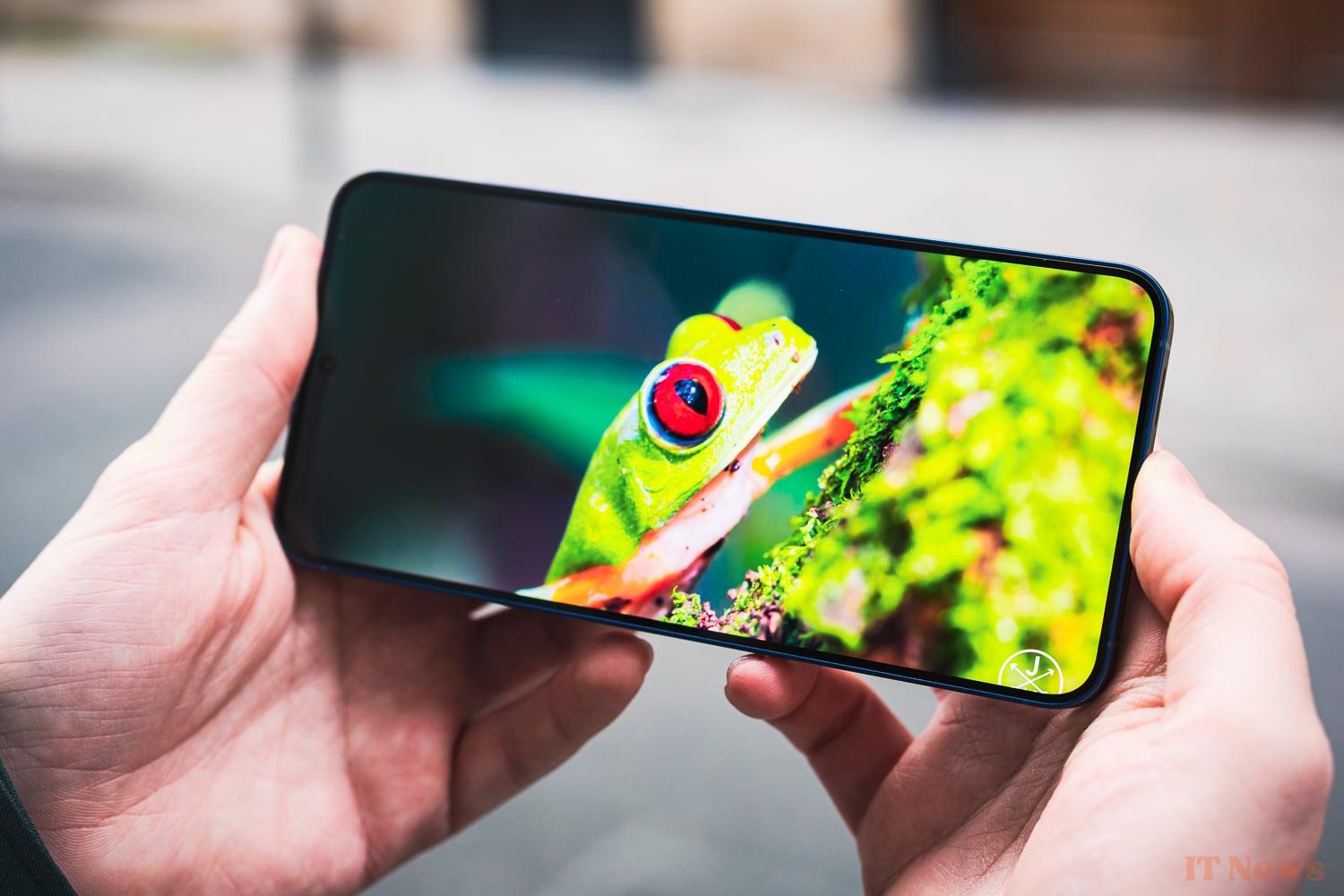
The Galaxy S25+ is equipped with a 6.7-inch OLED screen with a definition of 3120 x 1440 pixels and an adaptive refresh rate of 1 to 120 Hz. Its resolution of 513 pixels per inch offers a very precise image. Unfortunately, the same cannot be said for the colors. Indeed, the “Vivid” screen mode set by default displays a significant colorimetric drift with an average delta E 2000 measured at 5.38. The colors are certainly flattering to the eye, but we recommend the “Natural” mode which does a little better with a delta E of 4.05, according to our 01Lab.
The average brightness of the S25+ is very close to that of the S24+, with a measurement of our probe at 1524 cd/m2. The HDR peak light is quite conservative, with “only” 1442 cd/m2. The minimum brightness of 1.04 cd/m2 is excellent for being able to look at the screen in the dark without (too much) damaging your eyes. Finally, the display/size ratio is almost identical to that of the S24+, namely 89.5% and the screen supports HDR10+. The panel is generally excellent and very pleasant to look at, which will not surprise anyone given Samsung’s reputation in this area.
Performances: le retour attendre du Snapdragon
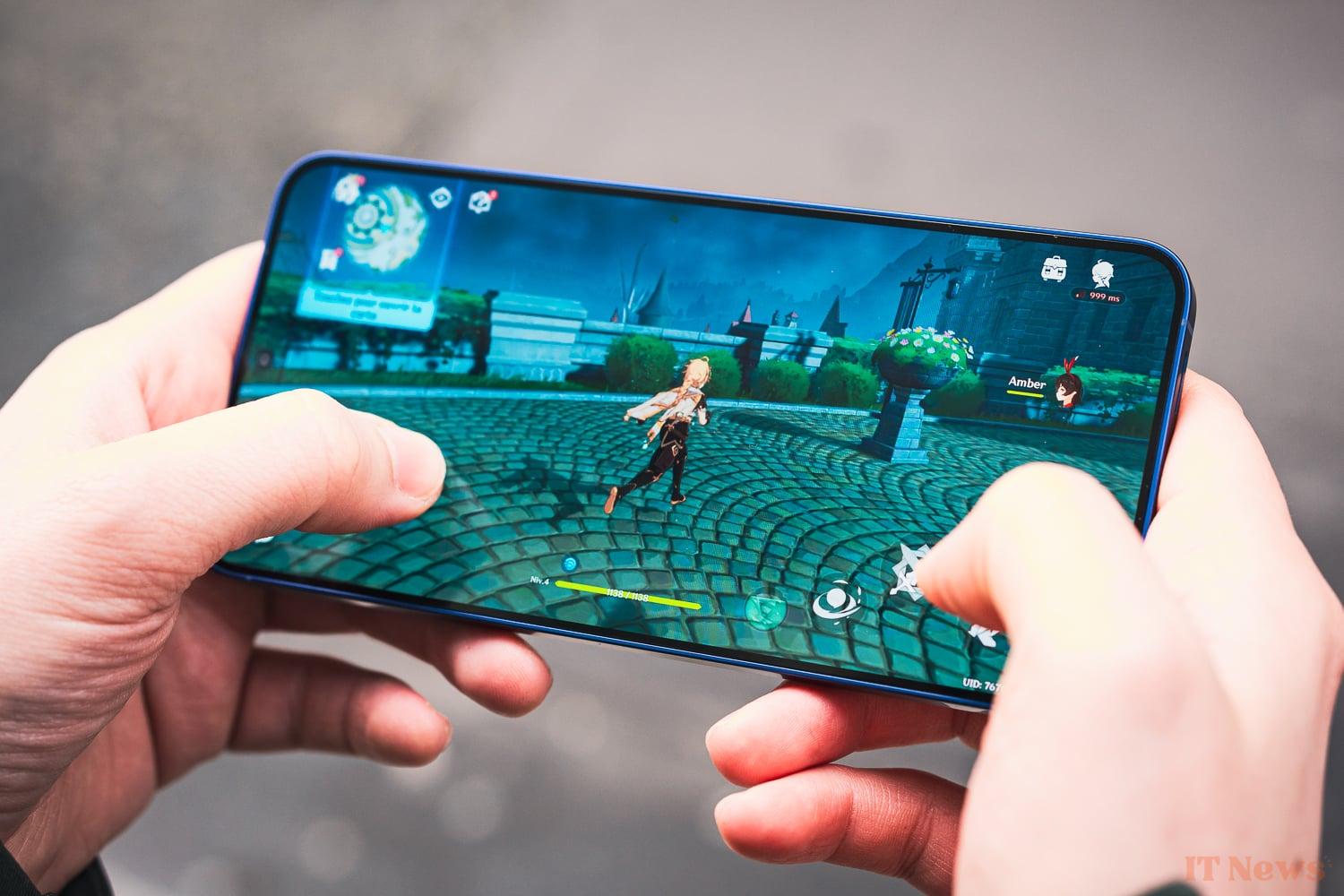
Last year, the European models of the Galaxy S24 and S24+ were equipped with the Exynos (2400) versions, and not the Snapdragon 8 Gen 3 like the international version. We’re better off this year with the “for Galaxy” Snapdragon 8 Elite across the entire S25 lineup, a chip that’s clocked higher than the base version. It’s all accompanied by 12GB of RAM.
As we have already seen on other high-end smartphones like the Honor Magic 7 Pro recently, the Snapdragon 8 Elite offers top-notch performance and allows the device to be responsive, both in everyday tasks and in demanding games. Thus, the S25 Plus is able to run mobile titles like Genshin Impact at 60 fps with flawless stability.
On the other hand, the phone is subject to “thermal throttling”, i.e. a reduction in its performance when it gets too hot. We are talking here about a stability score that indicates a drop in performance by half compared to maximum performance when the phone is under heavy load. But keep in mind that these test conditions are very rarely encountered in typical use of the phone. In addition, the thermal amplitude remains quite correct, namely 21.1°C.
Autonomy and charging: good, but could do better
The 4900 mAh battery of the S25 Plus is identical to that of its predecessor. However, the autonomy is improved by the Snapdragon 8 Elite chip, more efficient than last year's Exynos 2400. We subjected it to our new mixed autonomy test and it defends itself rather well, with a little more than 19 hours of autonomy. This is an hour and a half more than the classic S25 and thirty minutes less than the Ultra model. On the other hand, it is completely outdistanced by the OnePlus 13 which, despite its larger screen (6.83 inches), pulls ahead thanks to its 6000 mAh battery.
In everyday use, the Galaxy S25 Plus never let us down, even after a day of intensive use. On quieter days, we reached a day and a half of battery life without too much difficulty. If you are not always hooked on your phone and having 10% battery does not scare you, two days are accessible.
Like all smartphones now, Samsung's is sold without a charger in the box, but simply with a USB-C cable. It is compatible with 15 W wireless charging and 45 W wired charging. Using a compatible charger, we recovered 27% battery in 10 minutes. A full charge takes 1 hour and 19 minutes. For comparison, the OnePlus 13 and its 100W charge can recover 41% of battery in 10 minutes and 100% in just 39 minutes…
Interface: One UI 7, the real star
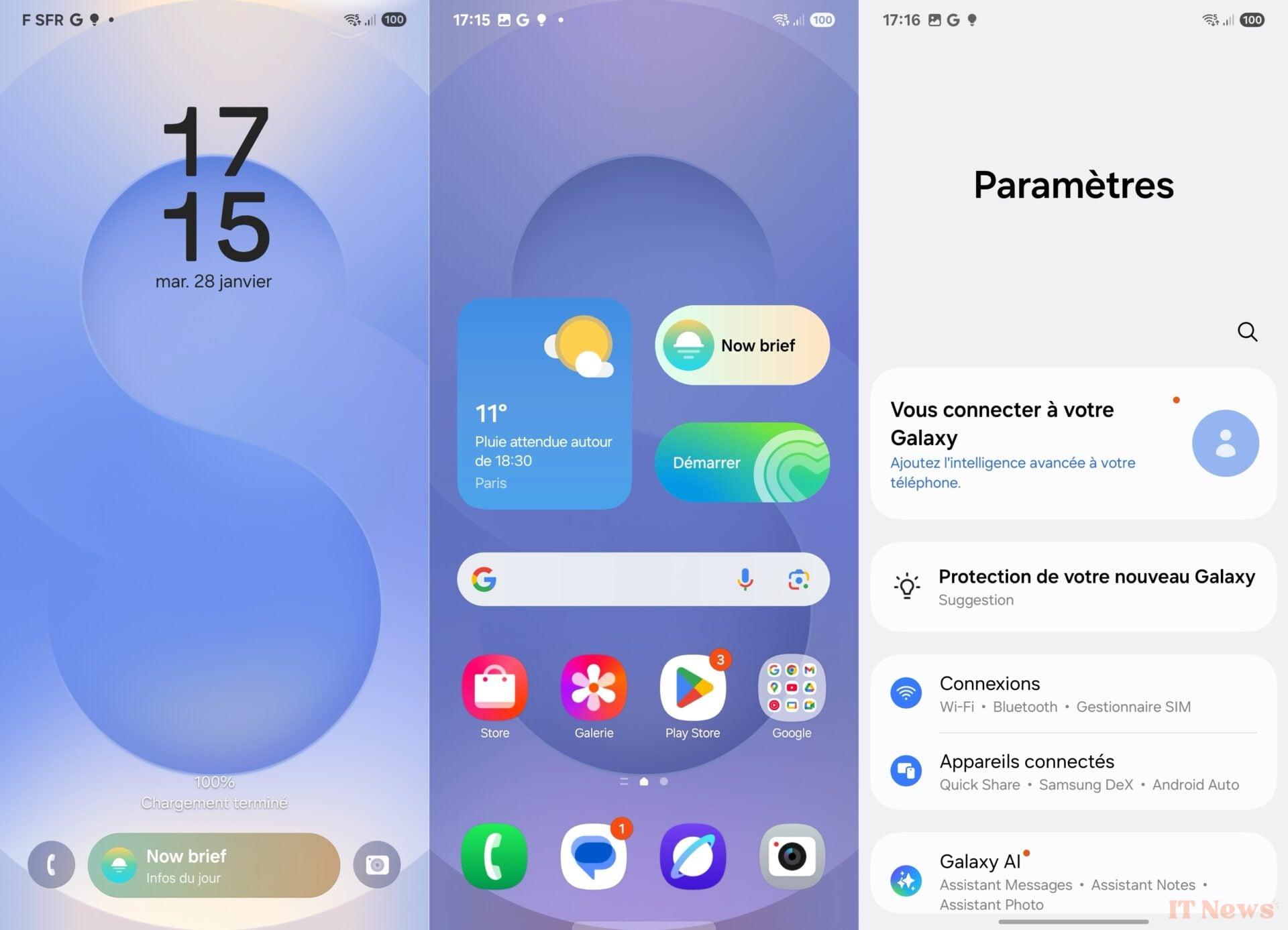
This year, Samsung has gone all-in on its new interface to extol the merits of its Galaxy S25. The smartphones run on One UI 7, based on Android 15. The new version of the interface gives it a big lick of paint by offering flatter and more colorful icons, rather aesthetic blur effects and a separation of notifications and shortcuts (a layout that can always be changed). Samsung has also chosen to put the navigation buttons by default and not gesture navigation. Again, you can adjust all of this in the settings.
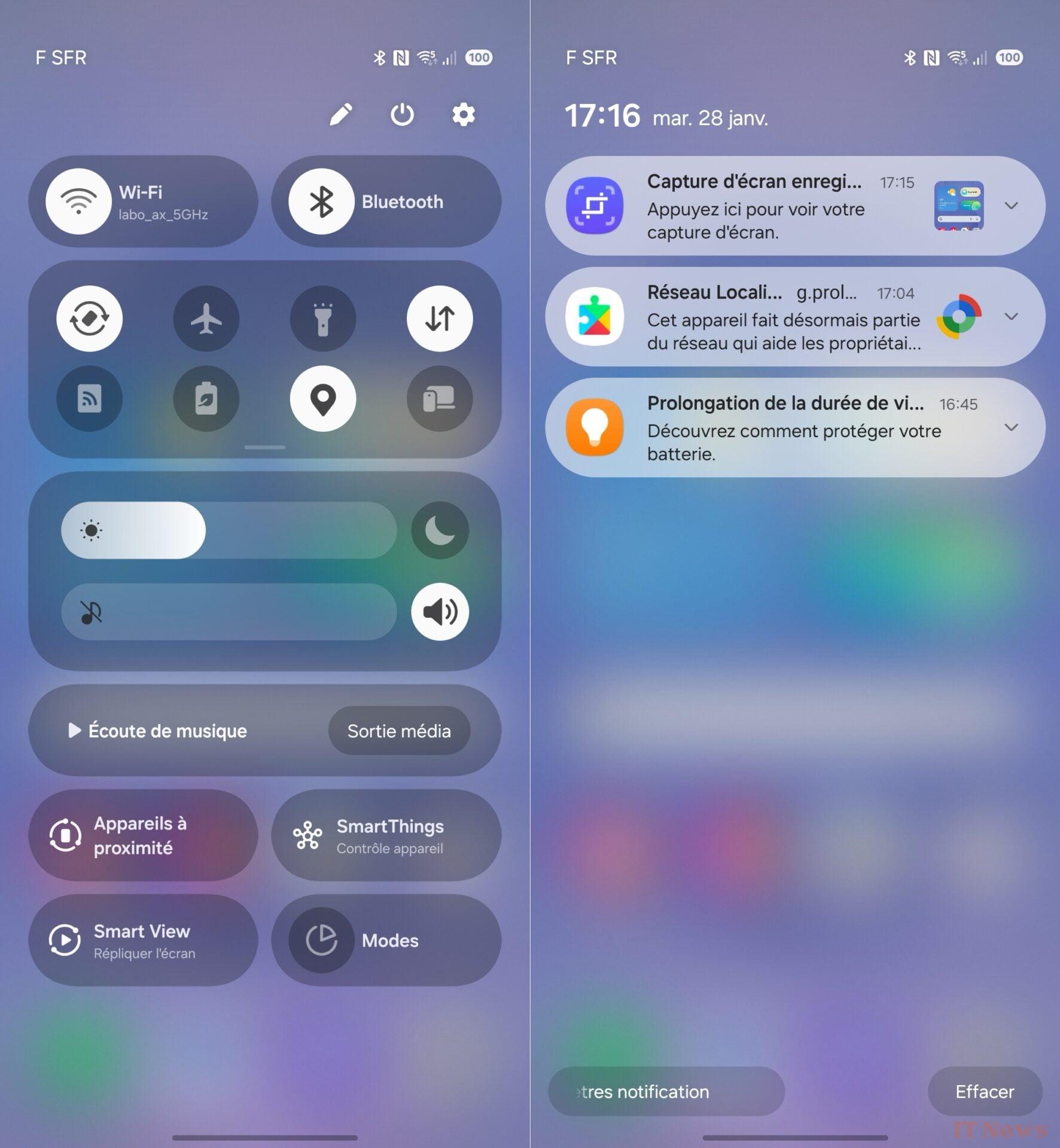
One of the most important new features is the "Now Bar" located at the bottom of the lock screen. It displays a preview of your currently used applications such as the media player or Google Maps navigation. In the same vein, we find the "Now Brief" feature that can summarize your day or alert you to upcoming events. This ranges from your calendar to the number of steps you've taken during the day or your next train.
Beyond these aesthetic refinements, other new features are to be found in the new "Galaxy AI" features boosted by artificial intelligence. This is the case, for example, with Google Gemini, which can now respond to your requests by "picking" from several applications, such as sending a Google Maps route to one of your contacts via the Messages application, for example.
The Samsung Galaxy S25 Ultra offers, like its predecessor, 7 years of Android updates and just as much security. If you want to know more about the One UI 7 interface and discover all this in video, we invite you to watch our dedicated video below.
Audio: du coffre
Without revolutionizing smartphone speakers, the two speakers of the Galaxy S25 Plus are compatible with Dolby Atmos and offer good power and clear sound. As is often the case, the poor relation is to be found on the bass side. Wireless headphones are always recommended to enjoy your media to the fullest thanks to Bluetooth 5.4. Indeed, Galaxy S users have long since said goodbye to the mini-jack socket.
Photo and video: a great versatility
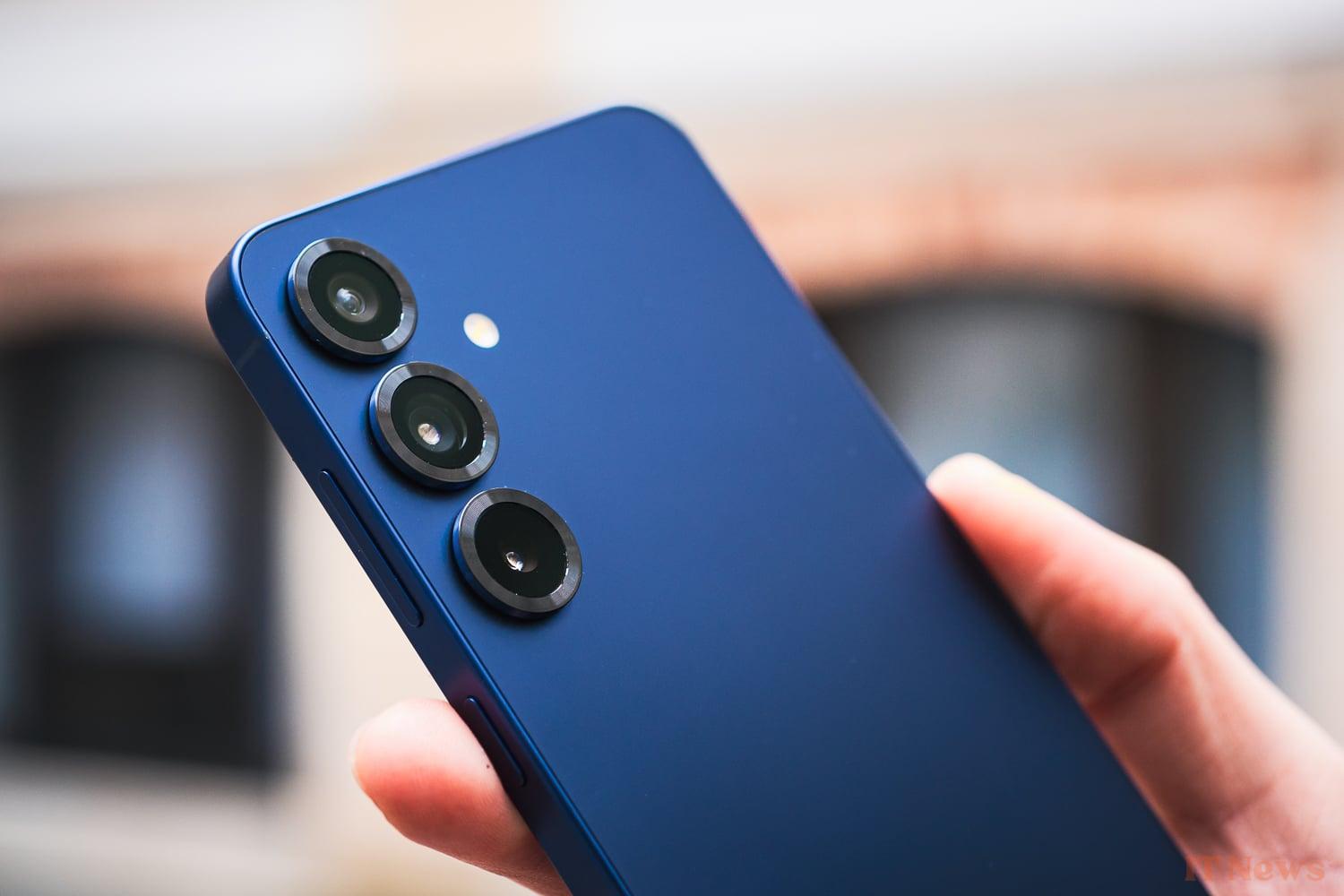
The cameras of the Samsung Galaxy S25+ are identical in every way to those of the Galaxy S24+. Thus, we find:
- A 50MP wide-angle, f/1.8 aperture, OIS;
- A 12MP ultra-wide-angle, f/2.2 aperture;
- A 10MP x3 telephoto lens, f2.4 aperture, OIS;
- A 12MP front camera.
Wide-angle




Wide-angle photos, Samsung Galaxy S25 Plus. – © 01net
We start with the wide-angle which is the “main” camera, but also the most used. Samsung has mastered its subject perfectly by offering 12.5 Mpx shots thanks to the “pixel binning” method which combines 4 pixels into 1 in order to capture more light and thus improve the overall quality of the image. The result is very convincing, with marked micro-contrasts, bright colors characteristic of Samsung’s photo processing and a perfect white balance. Even in backlighting, the Galaxy S25+ performs very well thanks to very well-managed dynamics that open up shadow areas as much as possible.

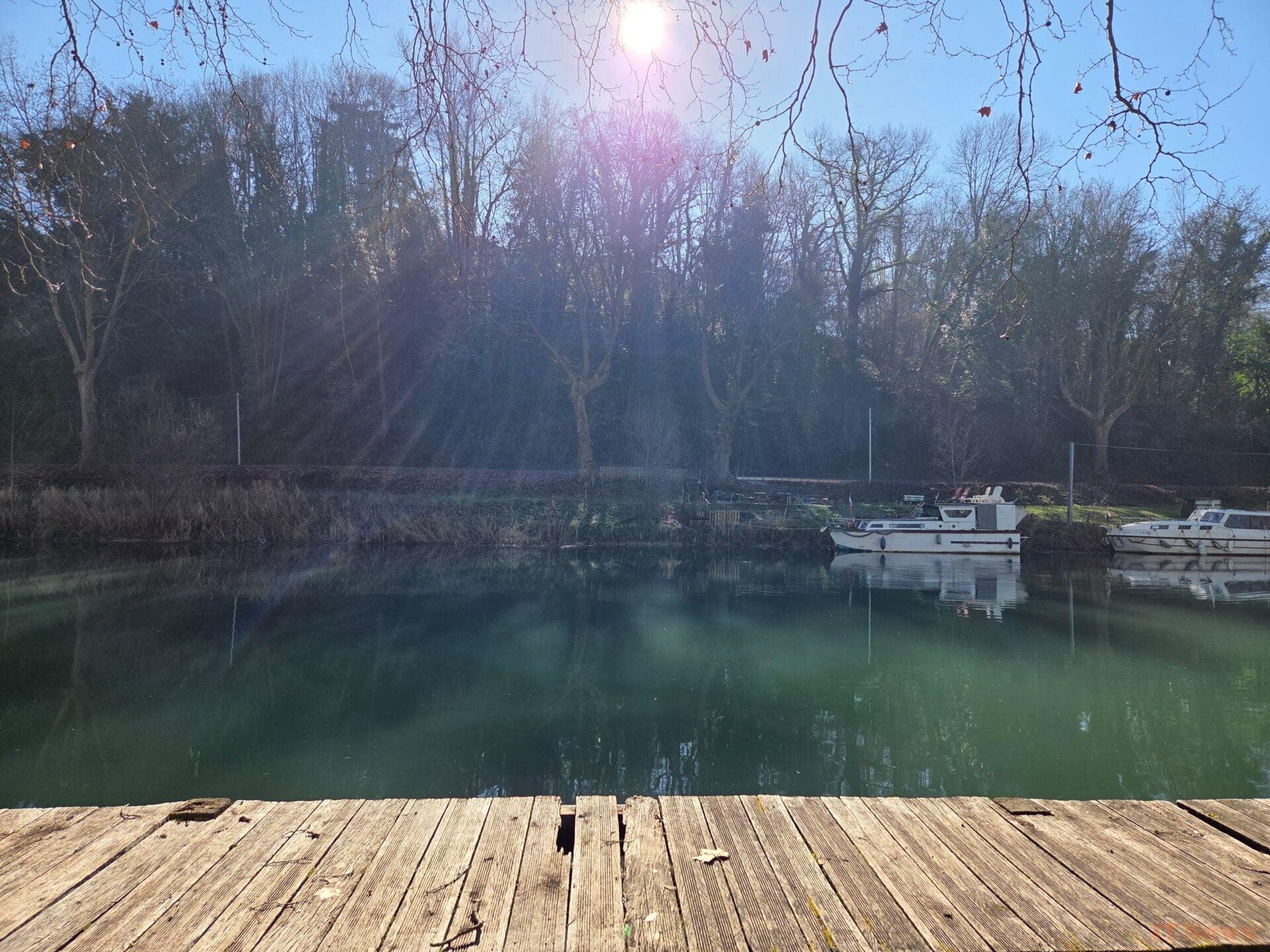

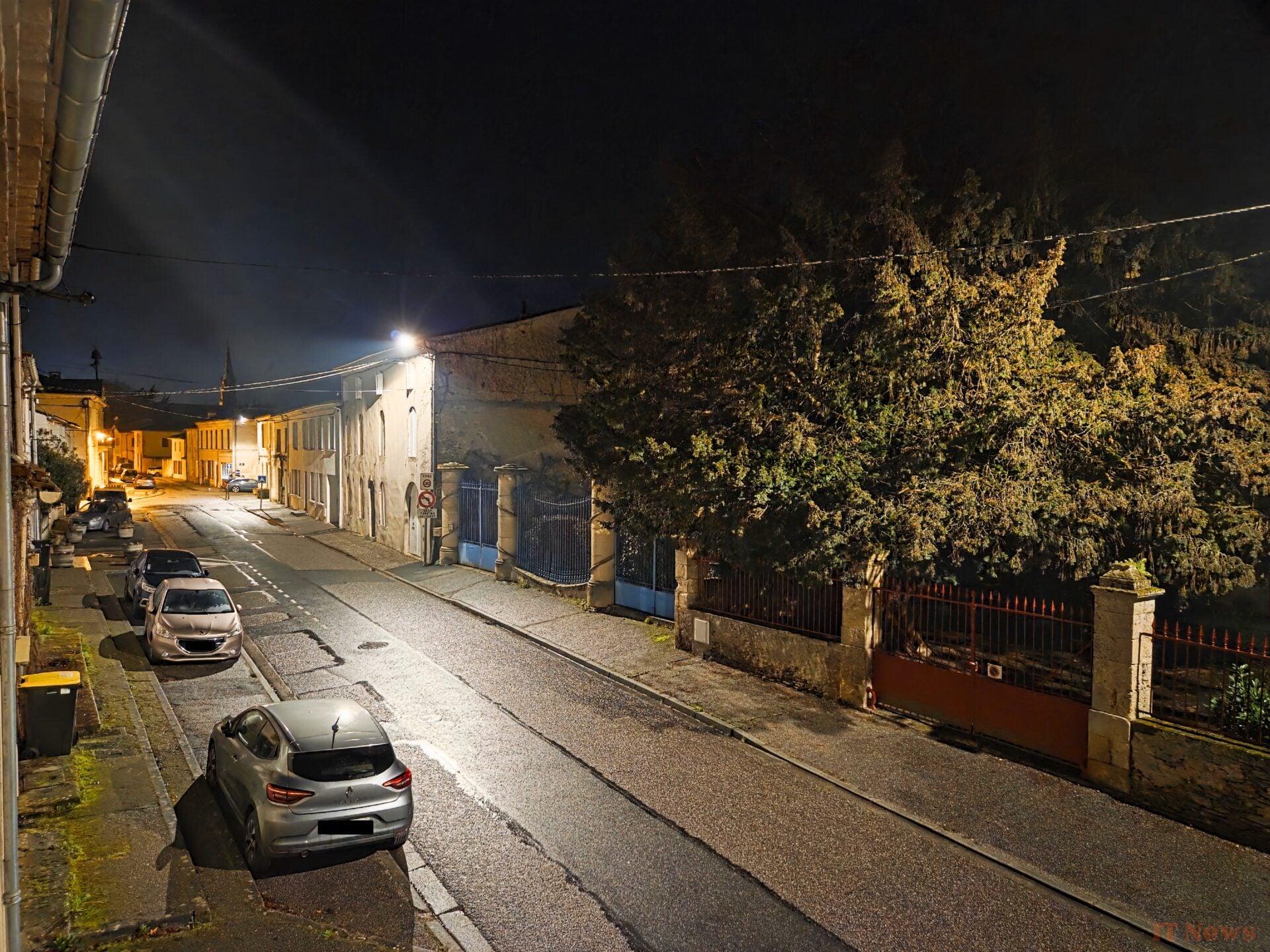
Wide-angle photos, Samsung Galaxy S25 Plus. – © 01net
Same price for night shots which in automatic mode require a longer exposure time (1 to 3 seconds), to capture more light and deliver a very convincing result. Digital noise is controlled and the colors are fairly faithful to what our eyes see. We can still see a bit of flare (parasitic diffusion) caused by the street lamp in the last photo, but nothing too bad.
Ultra-grand-angle



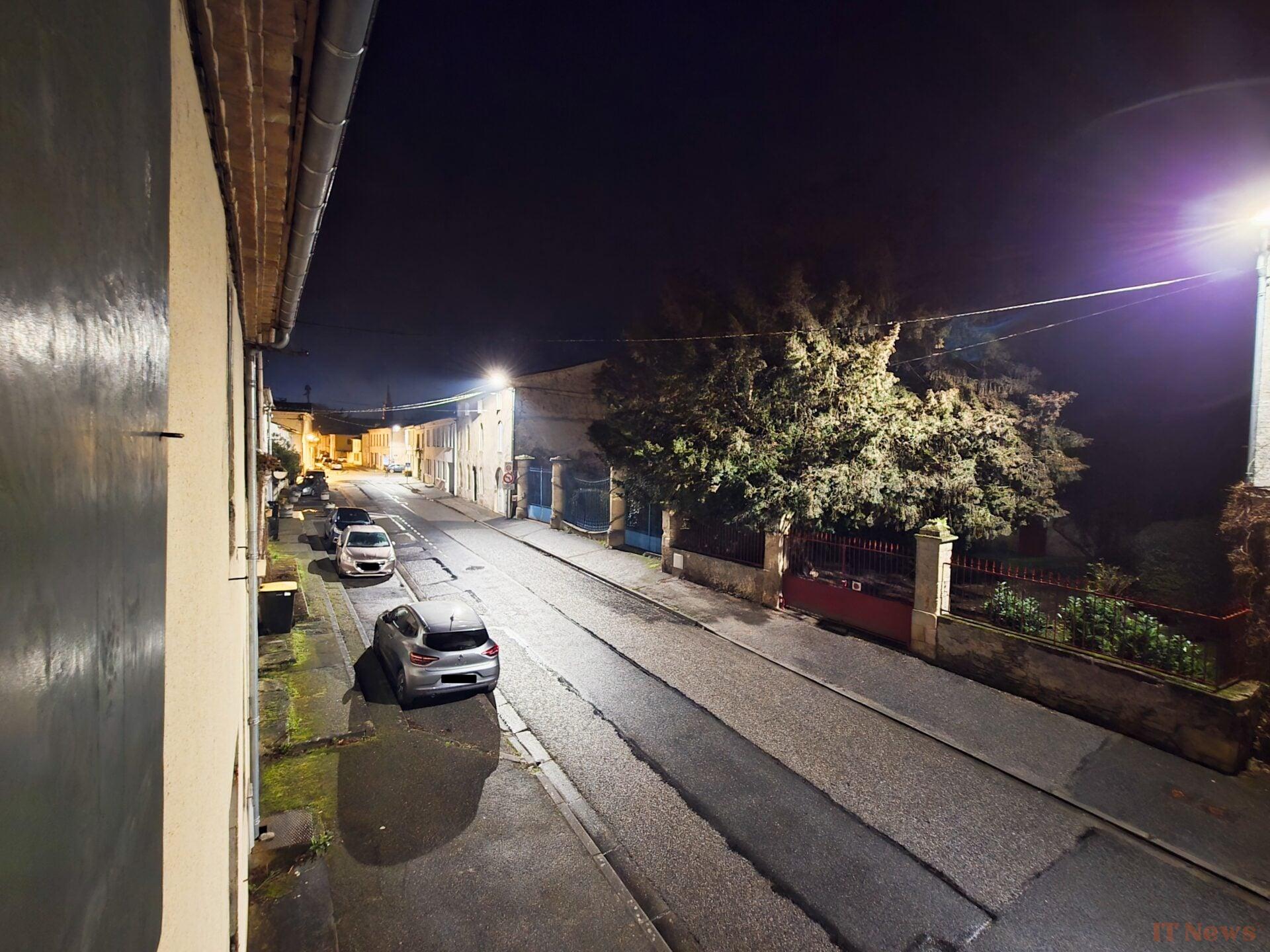
Ultra-wide-angle photos, Samsung Galaxy S25 Plus. – © 01net
Let's now move on to the ultra-wide-angle. This module maintains good colorimetric consistency with the wide-angle, but is (logically) not as precise. In the absence of pixel binning and with a smaller aperture, the sensor lets in less light. This is particularly noticeable in night photos, which lose precision. In daylight, it does very well and the loss of quality as well as the distortion in the corners are well managed by the software processing.
Telephoto and digital zoom


3x telephoto lens on the left, 10x digital zoom on the right. – © 01net
The Galaxy S25+ benefits from a 3x telephoto lens that is very practical when a subject is far away. However, its definition of only 10 Mpx quickly shows its limits. When looking at the shots more closely, the loss of quality is visible. The image on the right shows the x10 digital zoom, which performs quite well in broad daylight.
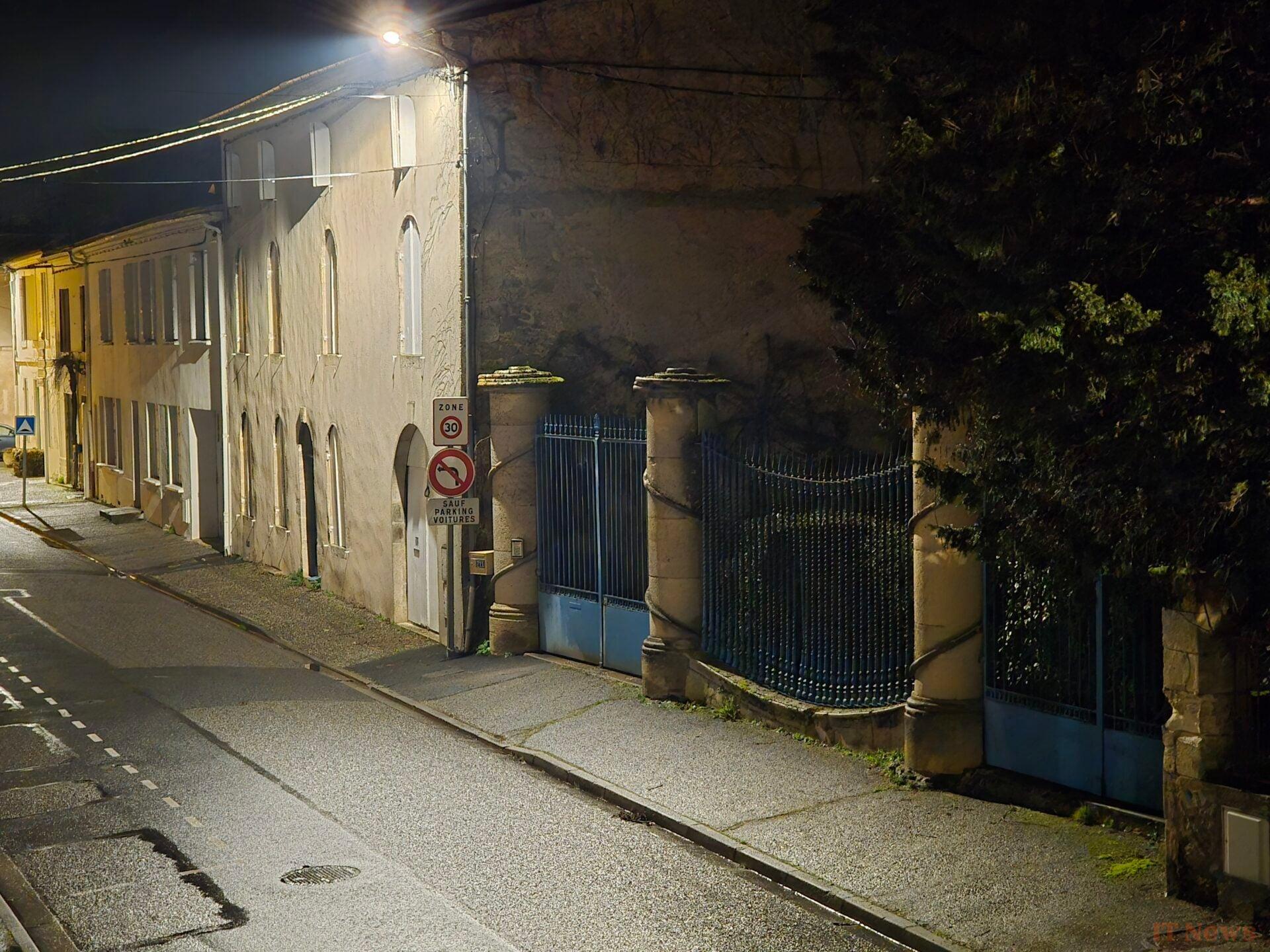
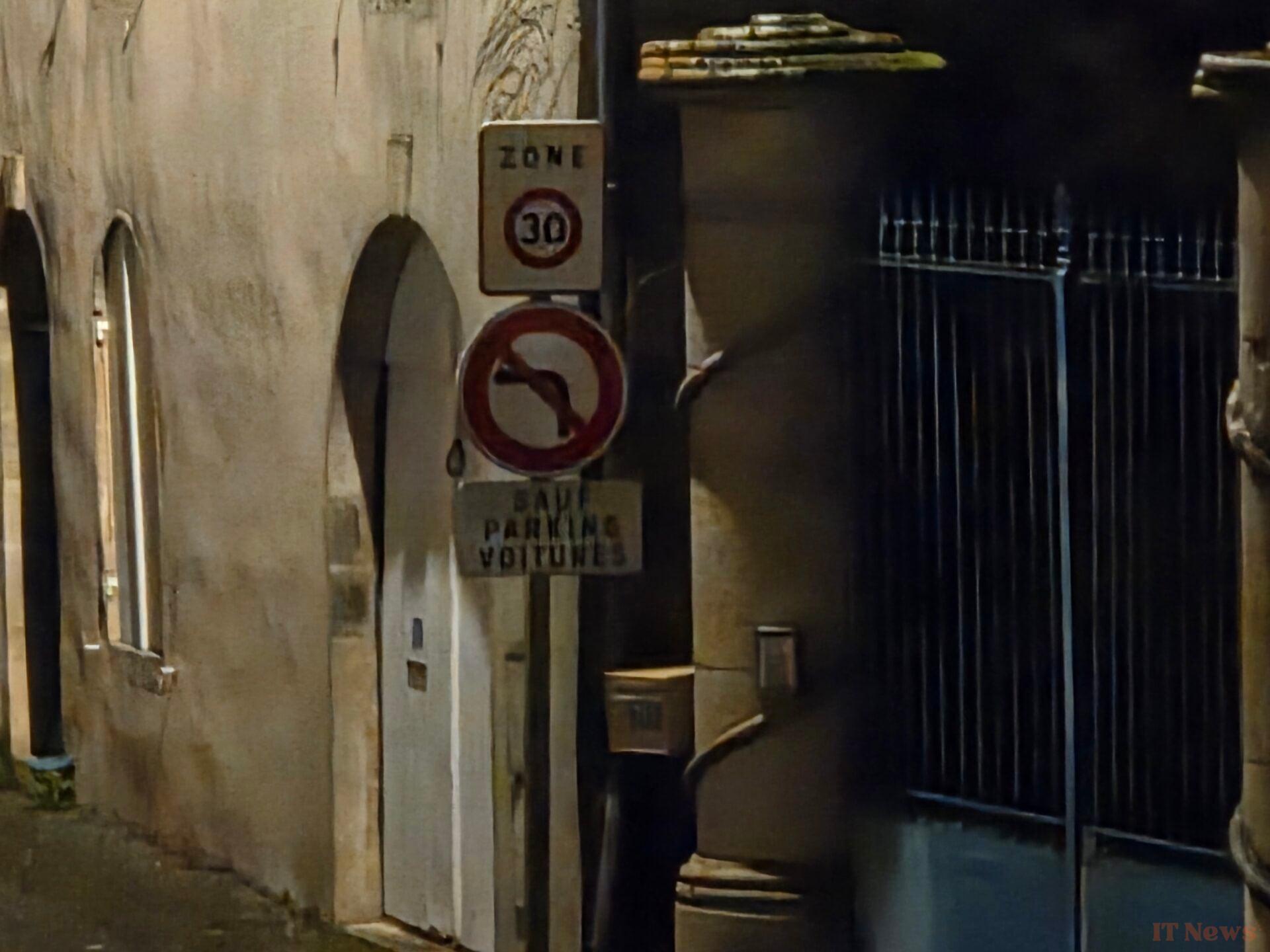
X3 telephoto lens on the left, x10 digital zoom on the right. – © 01net
We can’t say the same at night where the x3 telephoto lens is quite constant, unlike the x10 zoom which seems to have lost all hope.
Portraits et selfies




Portrait mode offers several zoom factors: x1, x2, x3 and x5. Since the background blur is managed digitally, we don't really see any difference in the bokeh between the different shots of the dwarf above. We also note that the autofocus has a little trouble positioning itself in relation to the hood located just behind.


Selfie with portrait mode on the left, night selfie on the right. © 01net
The front camera does its job well. The colors are natural and the rendering is sufficiently precise. In selfie-portrait mode, the clipping is effective. Night selfies trigger a flash that uses the screen to display a white color before capturing the shot. Enough to save some details, even if the rendering is far from perfect.
Video
The Galaxy S24+ can take videos up to 1080p at 240 fps, 4K at 60 fps and 8K at 30 fps with its main module. The front camera can film up to 4K at 60 fps. HDR 10+ is also supported.


0 Comments