
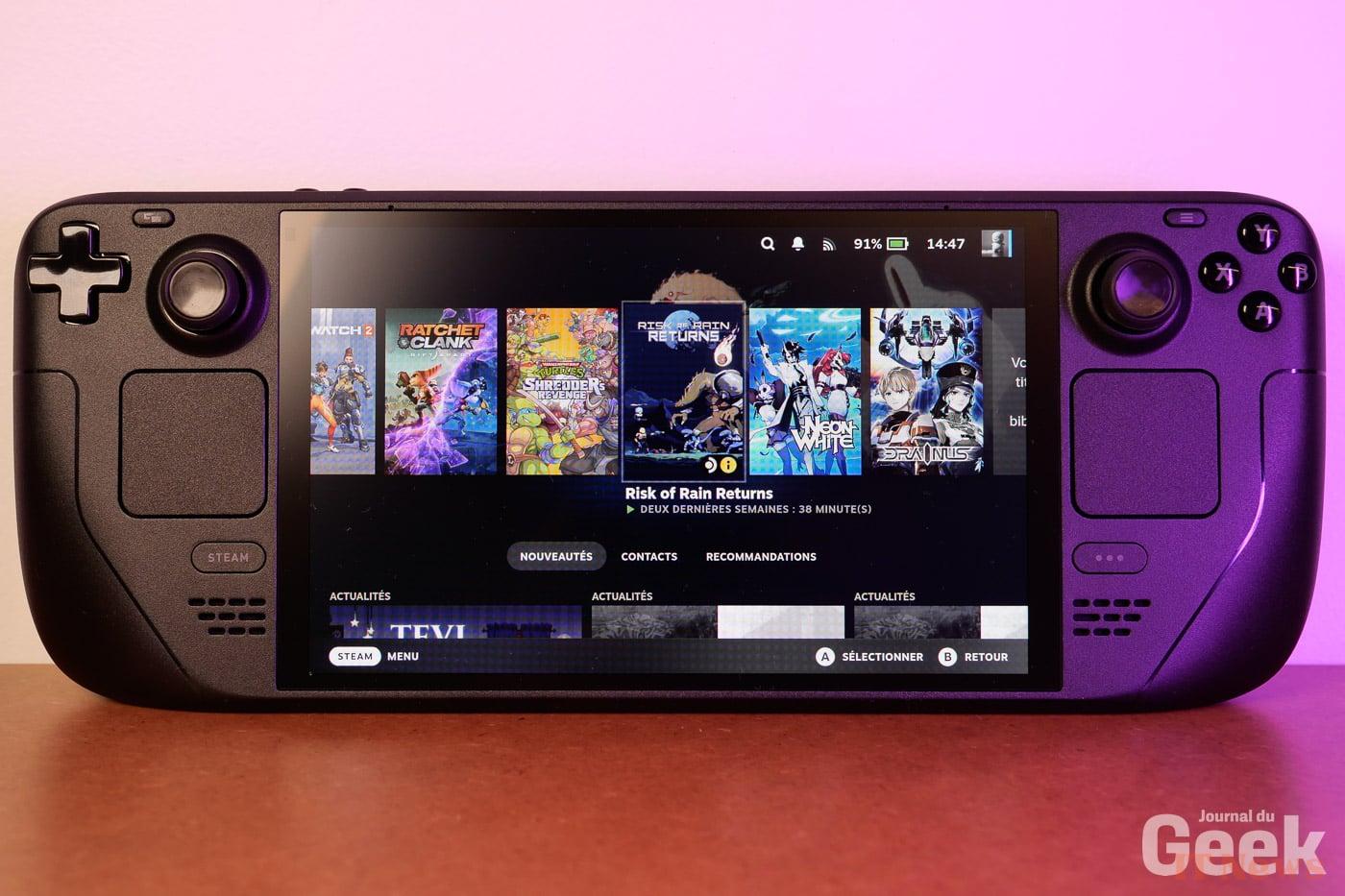
Released two years ago, the SteamDeck had the heavy burden of representing a new category of products that the most gamers among you could not ignore, the PC consoles. Indeed, since the release of the SteamDeck, competing products have multiplied with among others the Asus ROG Ally, the Lenovo Legion Go or more recently the Thomson Roxxor Infinity. With these last ones and because we are talking about the PC universe, we expected the SteamDeck to be quickly left behind in terms of power.
And that was not the case! Despite its new competitors, the SteamDeck is still in the race and compensates for its lack of power with a software part that is perfectly mastered today. At the very beginning, it was a little more complicated but after 6 months of updates, SteamOS is stable enough to prove that the user experience remains a key value when choosing. You just have to look at the overlays from Asus or Lenovo to understand that the SteamDeck can boast of being considered a console and not a PC like its competitors.
If Valve has been clear that we won't see a SteamDeck 2 anytime soon, it was in November that we were able to discover a new version of the SteamDeck, the SteamDeck OLED, a bit like the Nintendo Switch OLED with the Switch. And that's good, we just spent some time with the SteamDeck OLED and here's what we think of it!
The characteristics of the SteamDeck OLED
A quick reminder of the technical characteristics of the SteamDeck OLED:
| SteamDeck OLED | |
|---|---|
| Finishes and Colors | - Plastic finish - Black color - Limited version with a transparent black shell but only available in the United States |
| Screen | - HDR OLED screen - 7.4-inch diagonal - 10-point MultiTouch touch - HD+ definition of 1280 x 800 pixels (224ppp) - Format: 16:10 - Refresh rate: 90 Hz - Brightness of 1000 nits - 110% DCI-P3 - Response time 0.1ms |
| Chip | - 6nm AMD APU - AMD Zen2 architecture - RDNA 2.0 - Power from 4W to 15W |
| RAM | - 16GB LPDDR5 |
| Storage | - 512GB or 1TB NVMe SSD |
| Audio | - Stereo speakers - Microphone x2 |
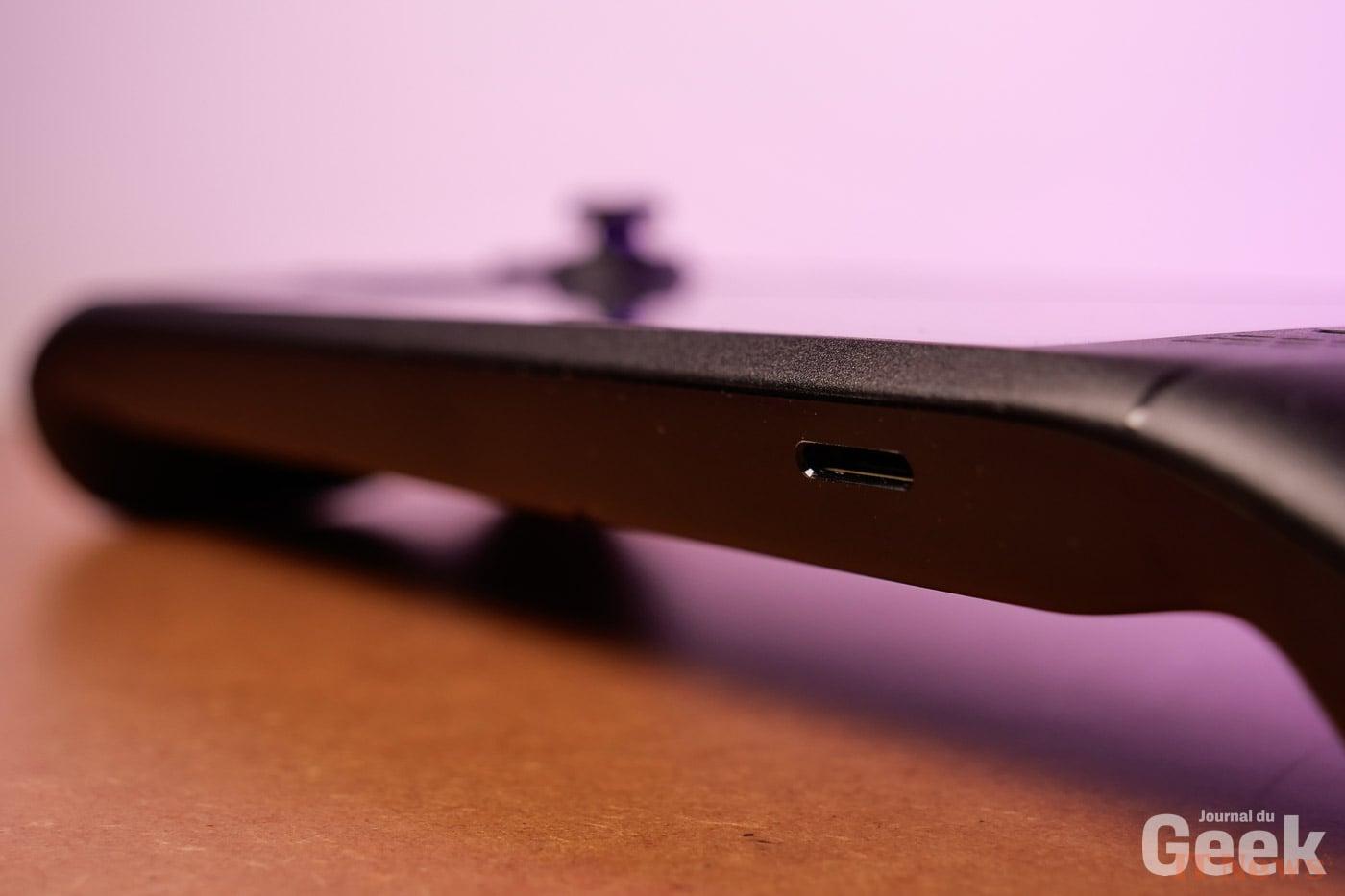
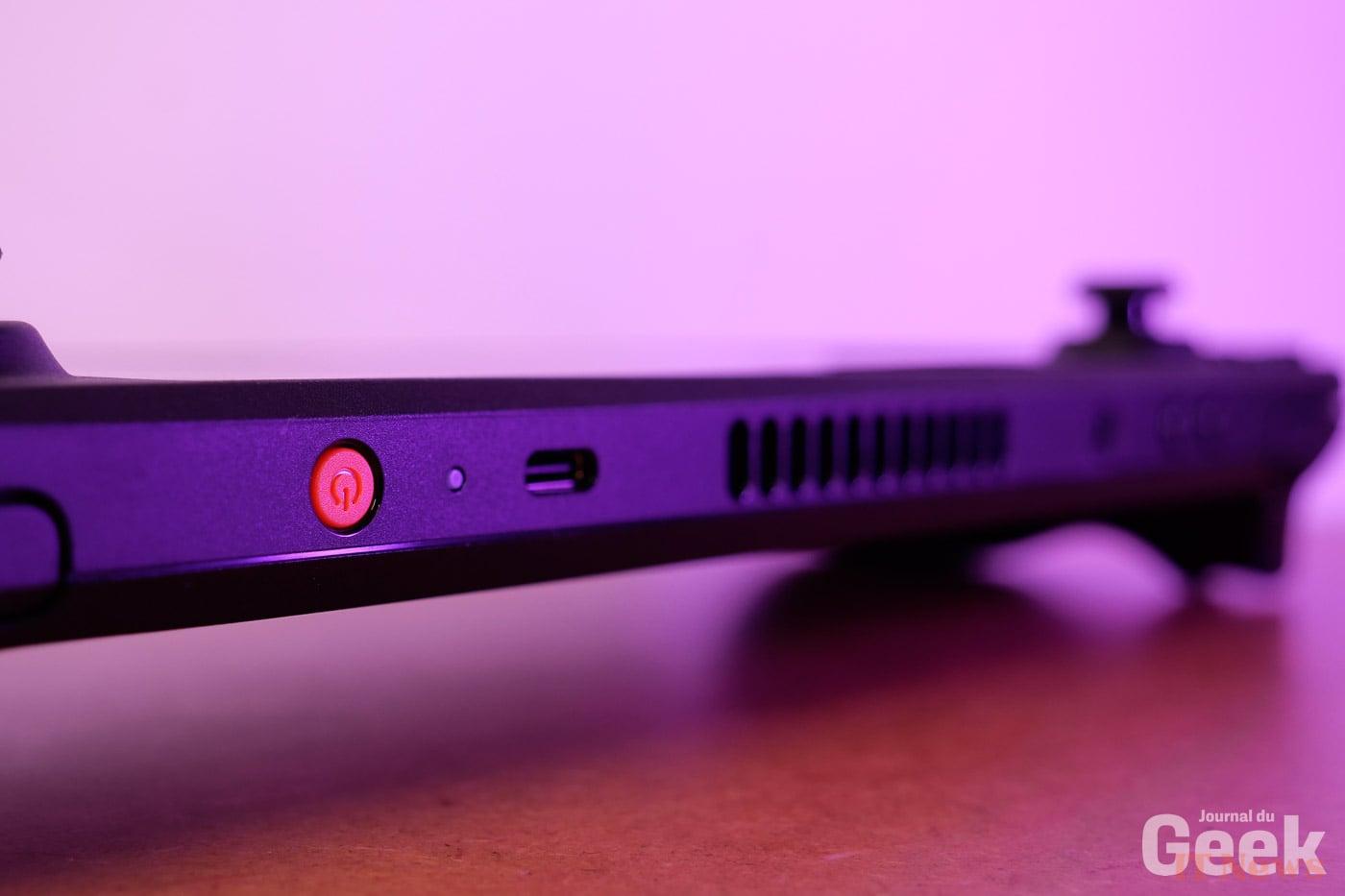
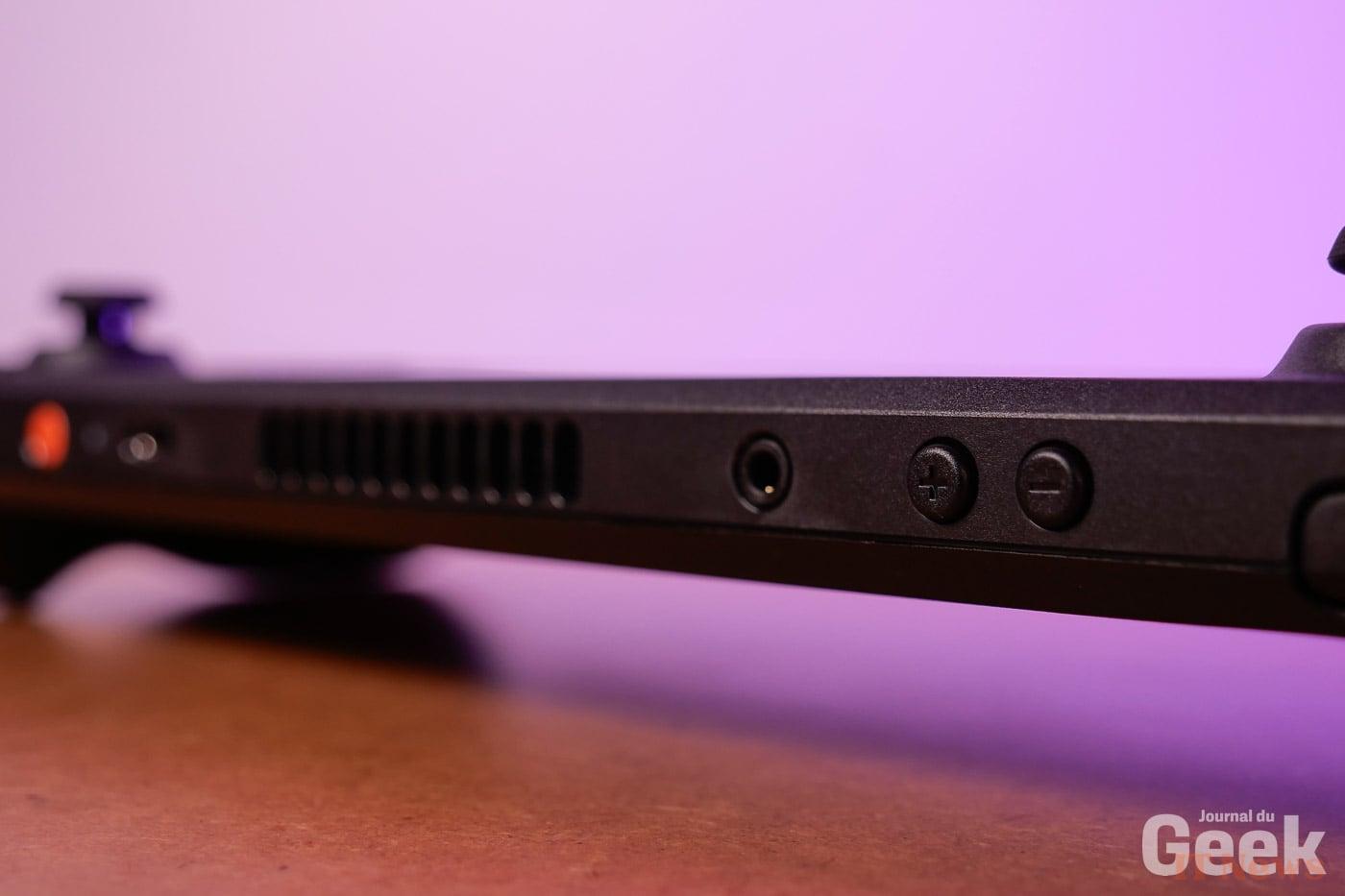
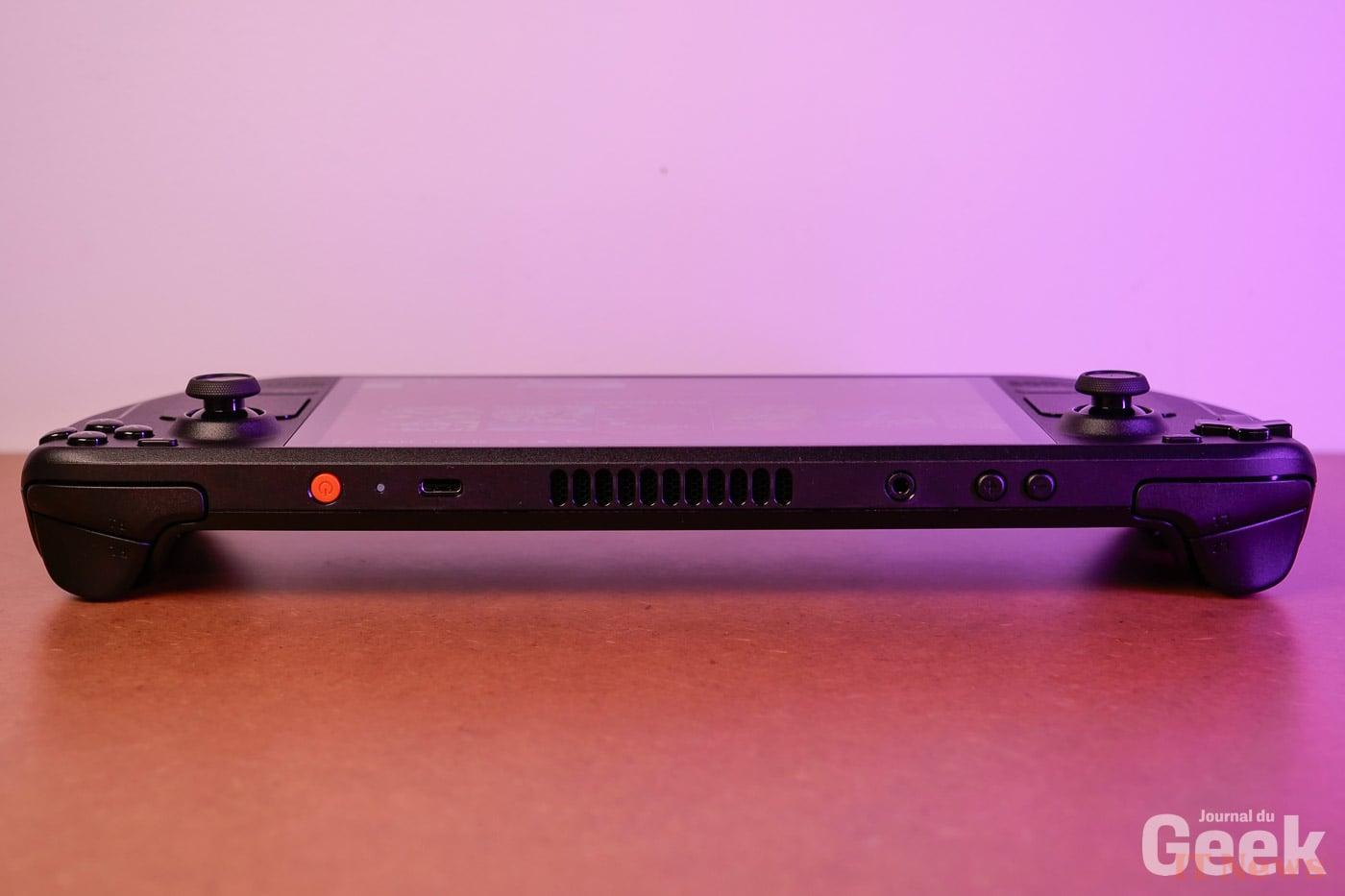
| Connections | - 1 USB Type-C port, Display Port 1.4, Thunderbolt 3, PD 3.0 - UHS-1 MicroSD card reader - 1 3.5mm jack socket - Wi-Fi 6E - Bluetooth 5.3 |
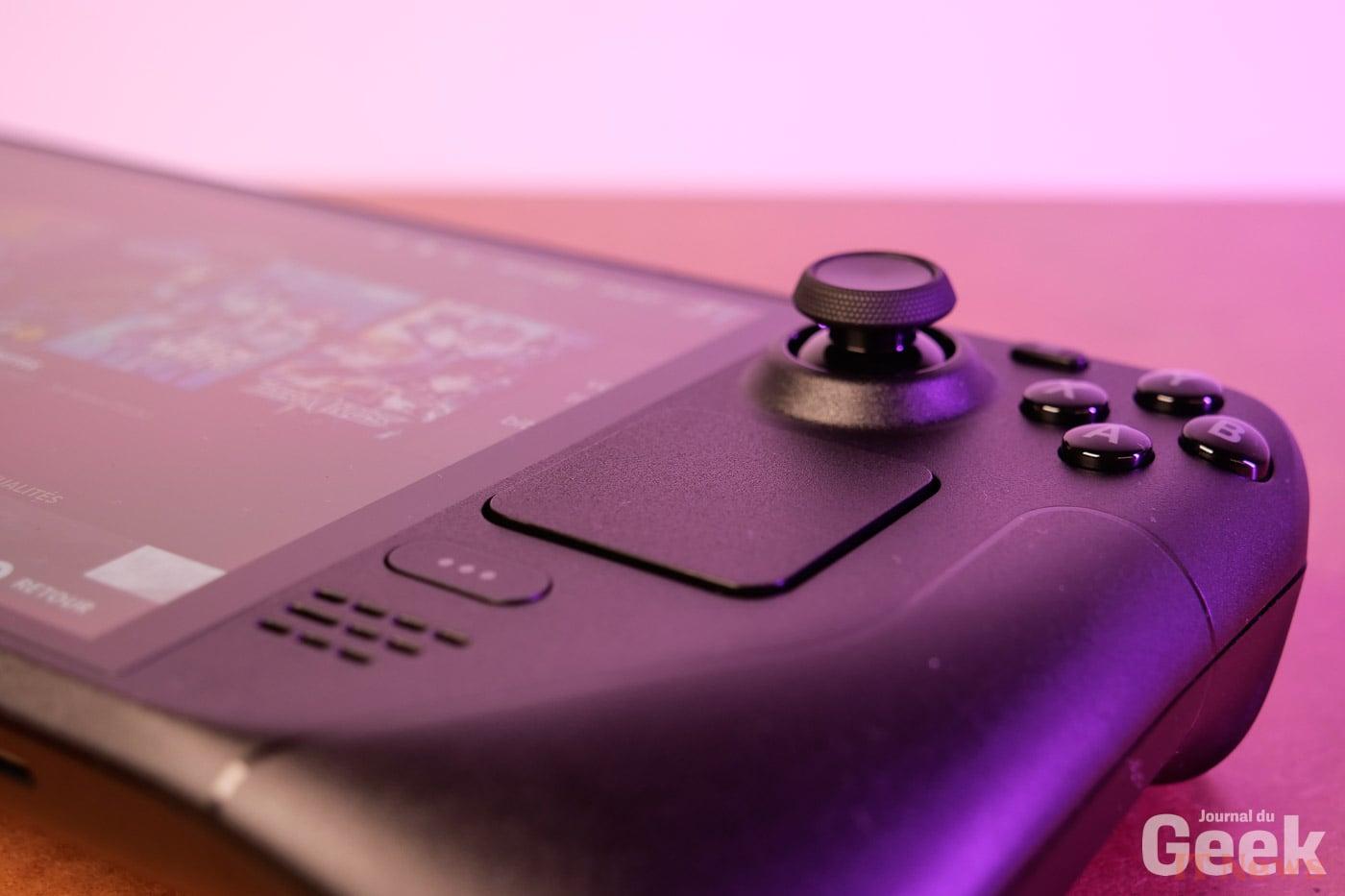
| Controller | - Integrated controller - 2 Analog sticks with capacitive touch - 1 D-Pad - 1 Trackpad - View and Menu buttons - A, B, X, Y buttons - LB, LT, RB, RT buttons - High-resolution haptic feedback - 2 32.5mm square trackpads with haptic feedback - Pressure sensitivity to configure the force applied to clicks - 6-axis gyroscope (IMU) |
| Biometrics | - N/A |
| Camera | - 1080p FHD camera |
| Battery | - 50 Wh lithium-polymer battery - 45W charger |
| Operating system | - SteamOS |
| Dimensions | - 298 x 117 x 49 mm - 640 kg |
| Price | - 569 euros (512GB) - 679 euros (1TB) |
| Availability | - November 16, 2023 |
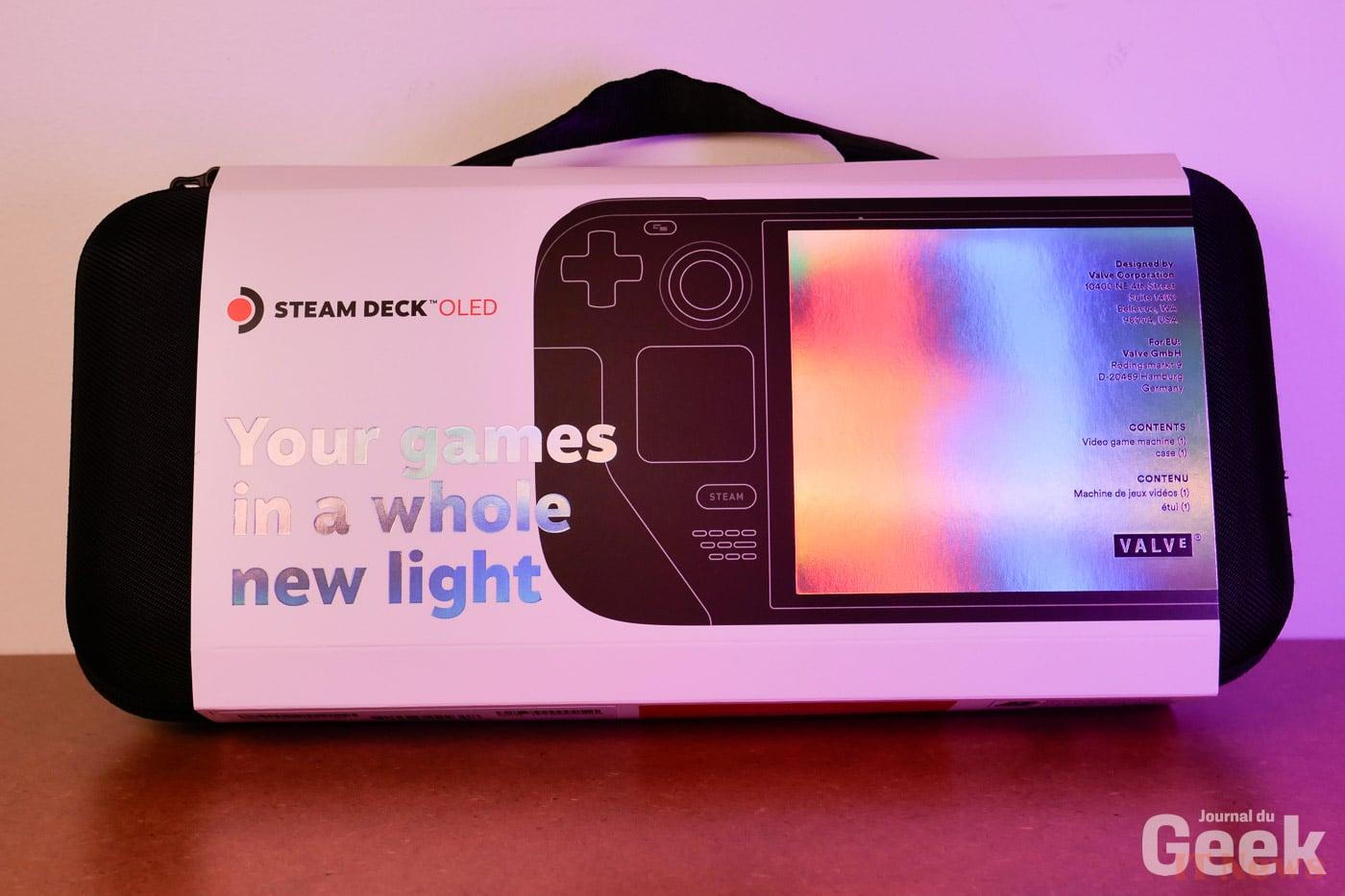
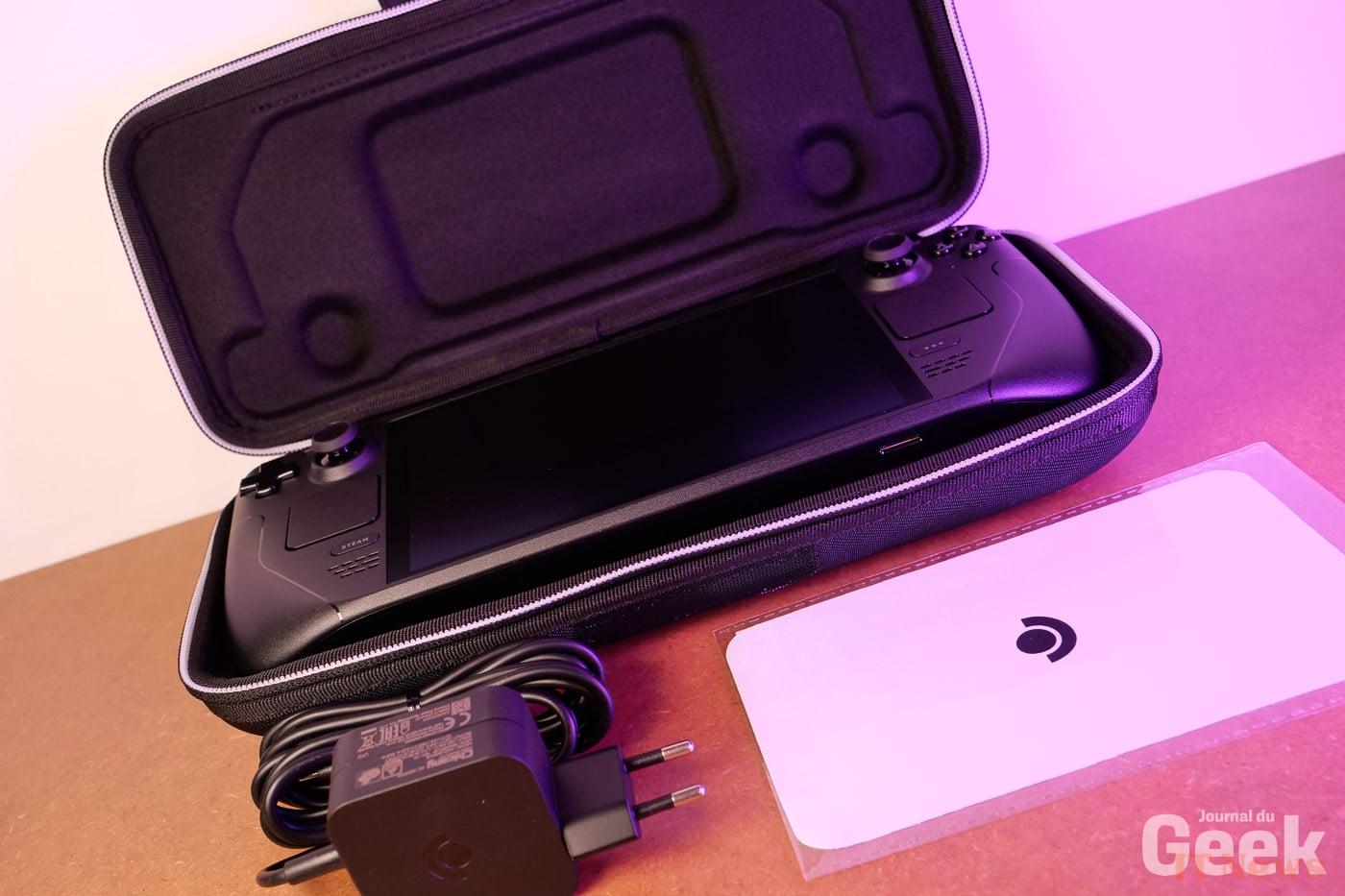
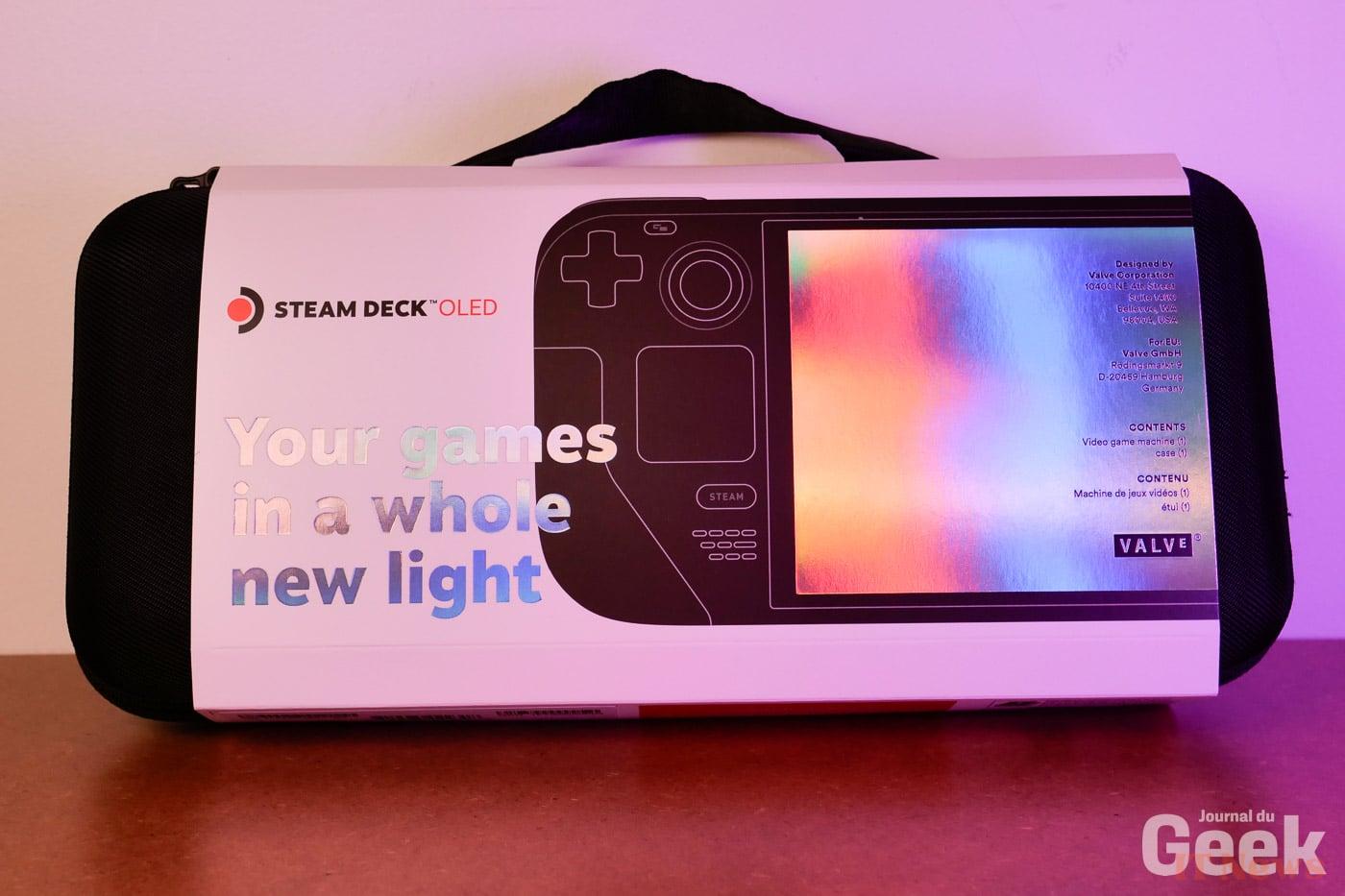
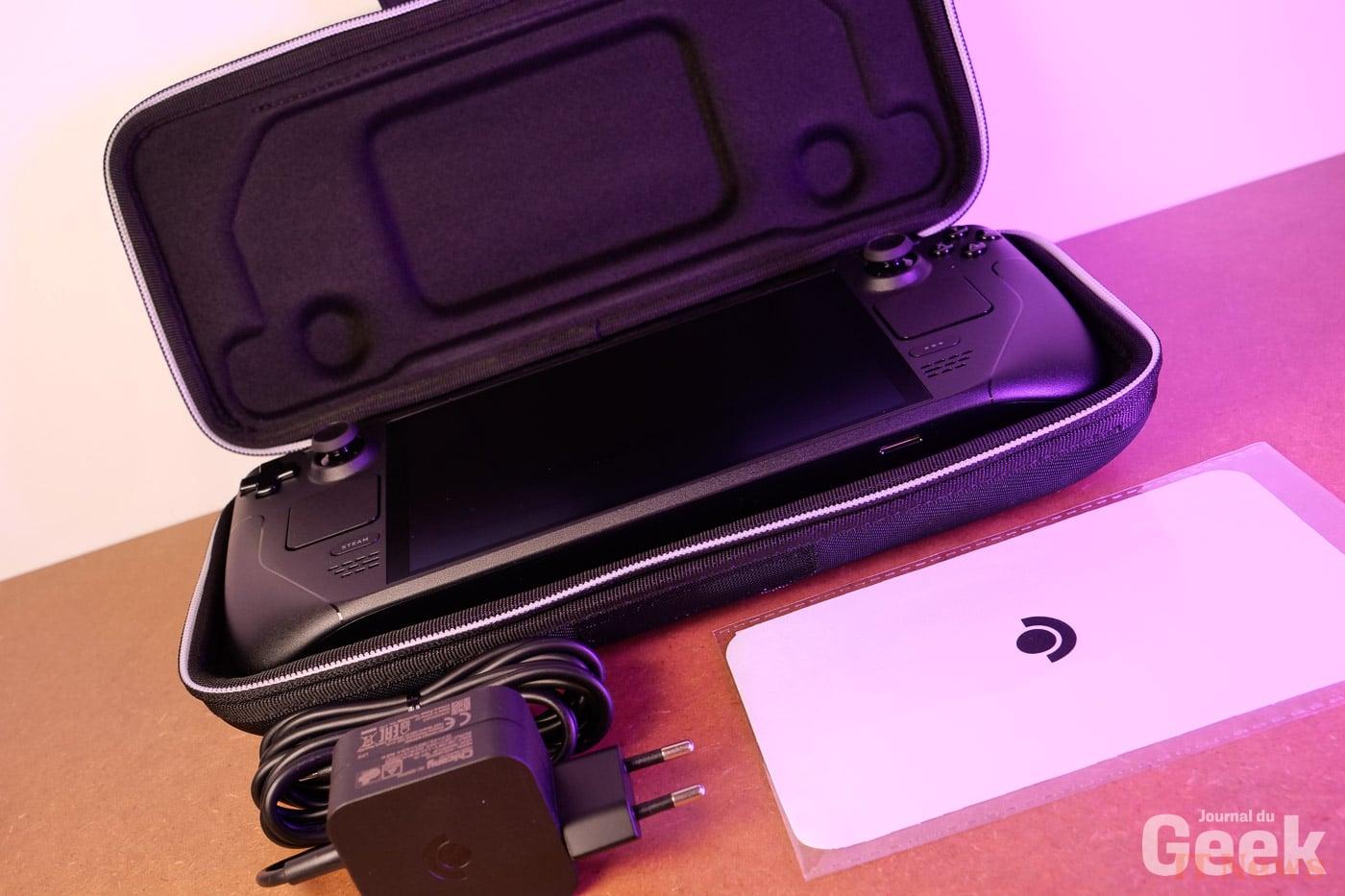
In addition to the SteamDeck itself, we find not only the 45W charger but also a protective case that offers a 2-in-1 function, and not the least. Indeed, if you don't need your charger and want a smaller and lighter case for traveling, it is integrated into the large case. Very well thought out on the part of Valve to offer a double case that can be adapted according to use. Practical.
The differences: OLED vs LCD
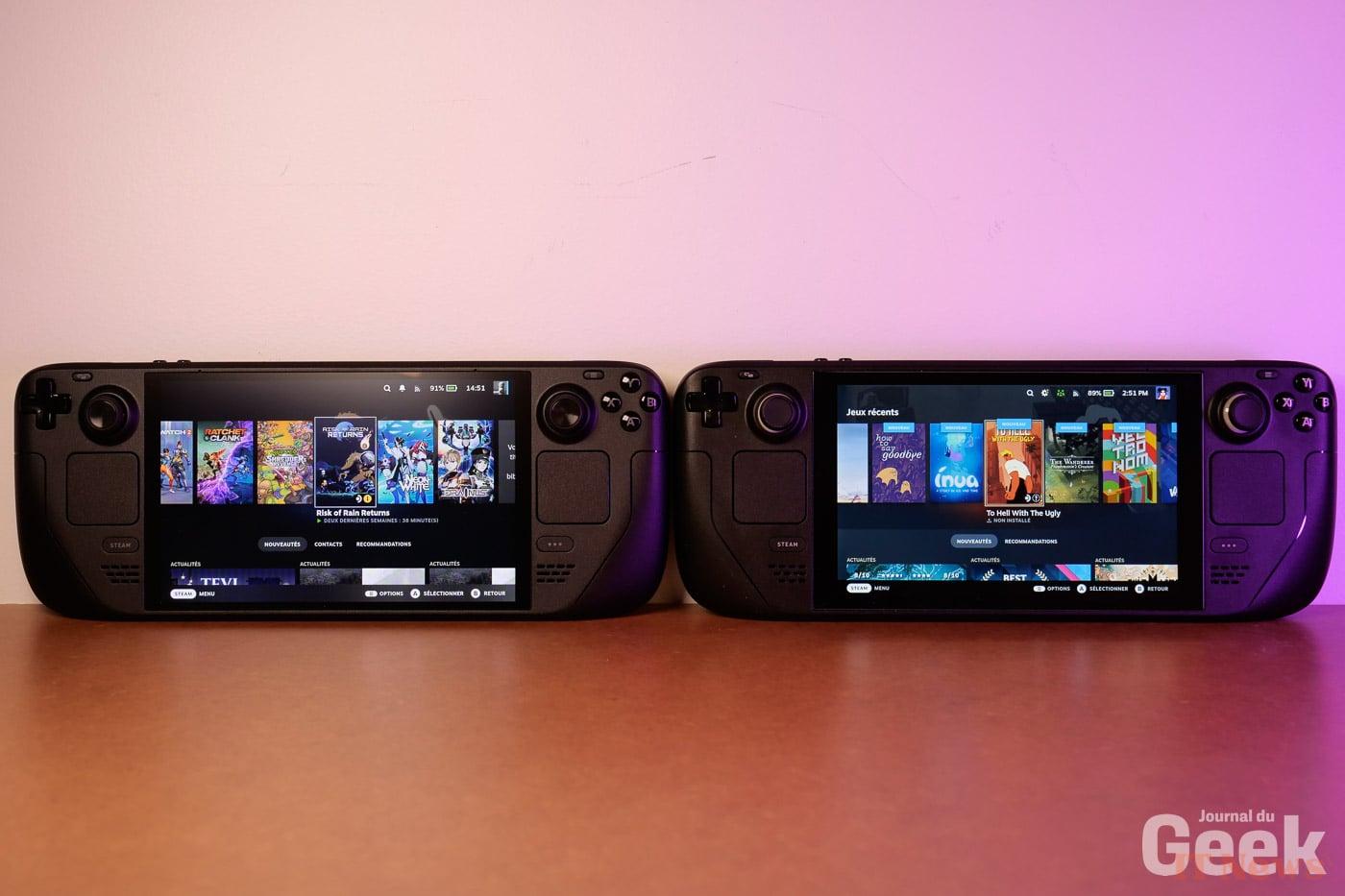
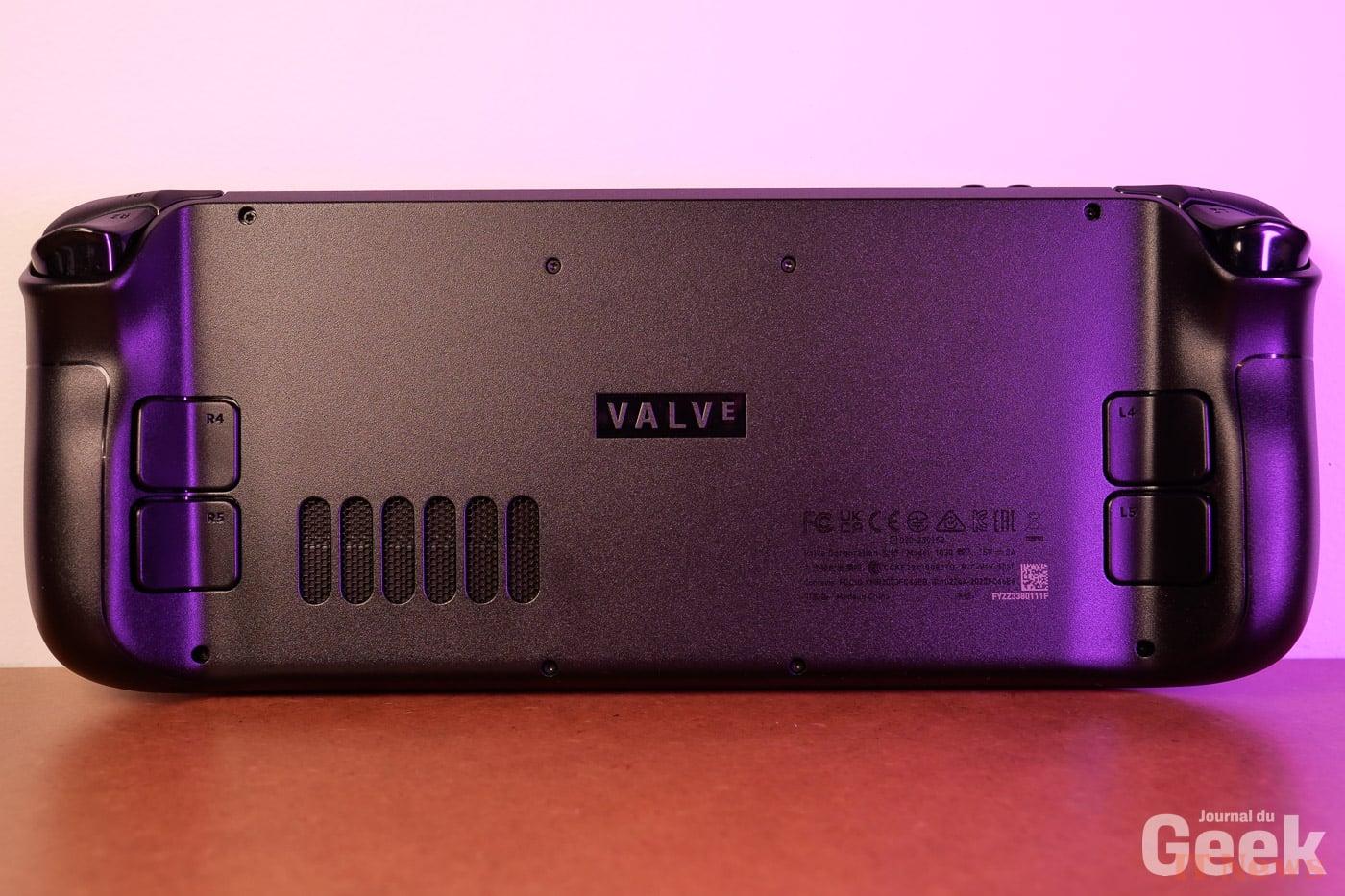
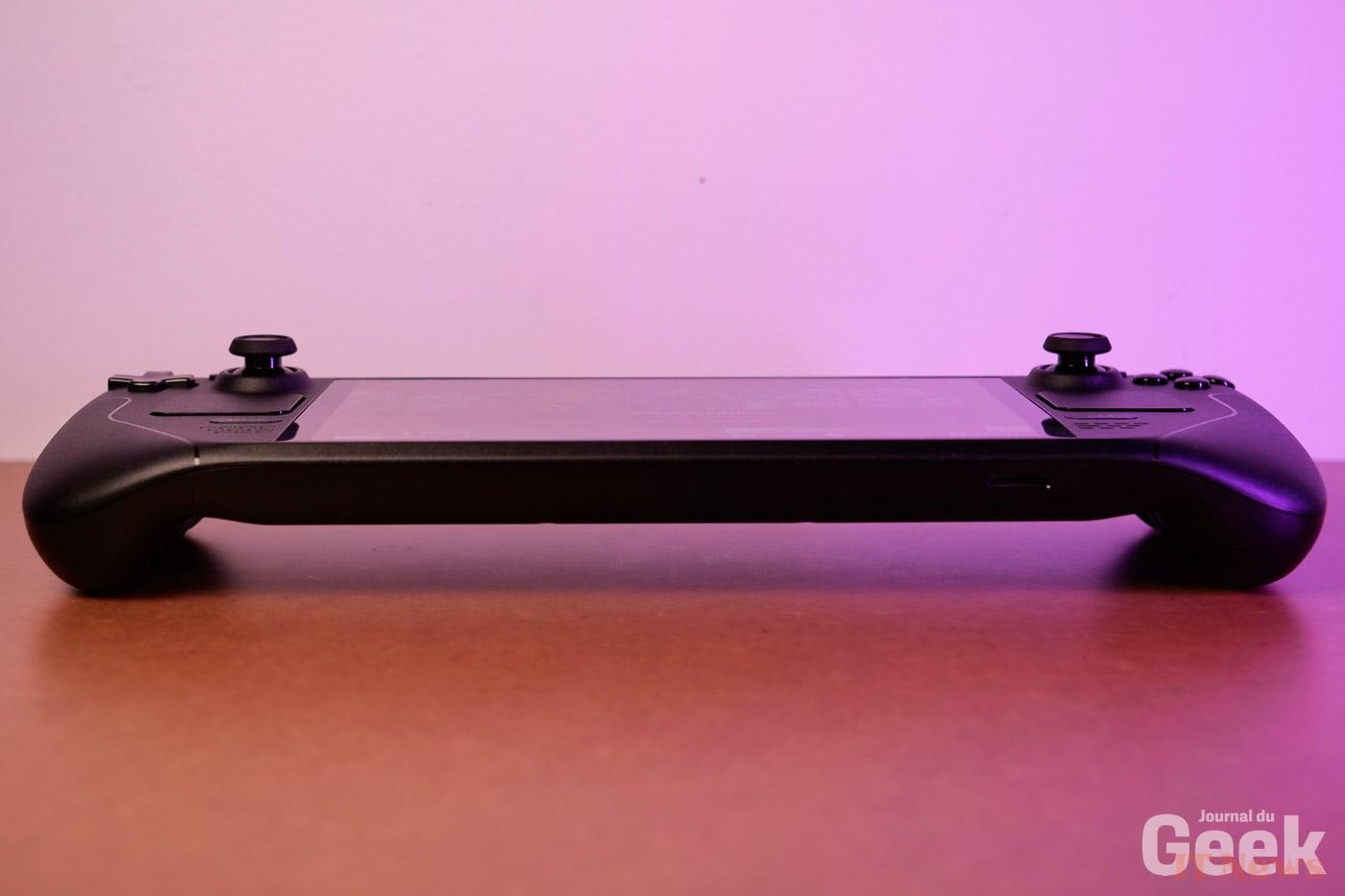
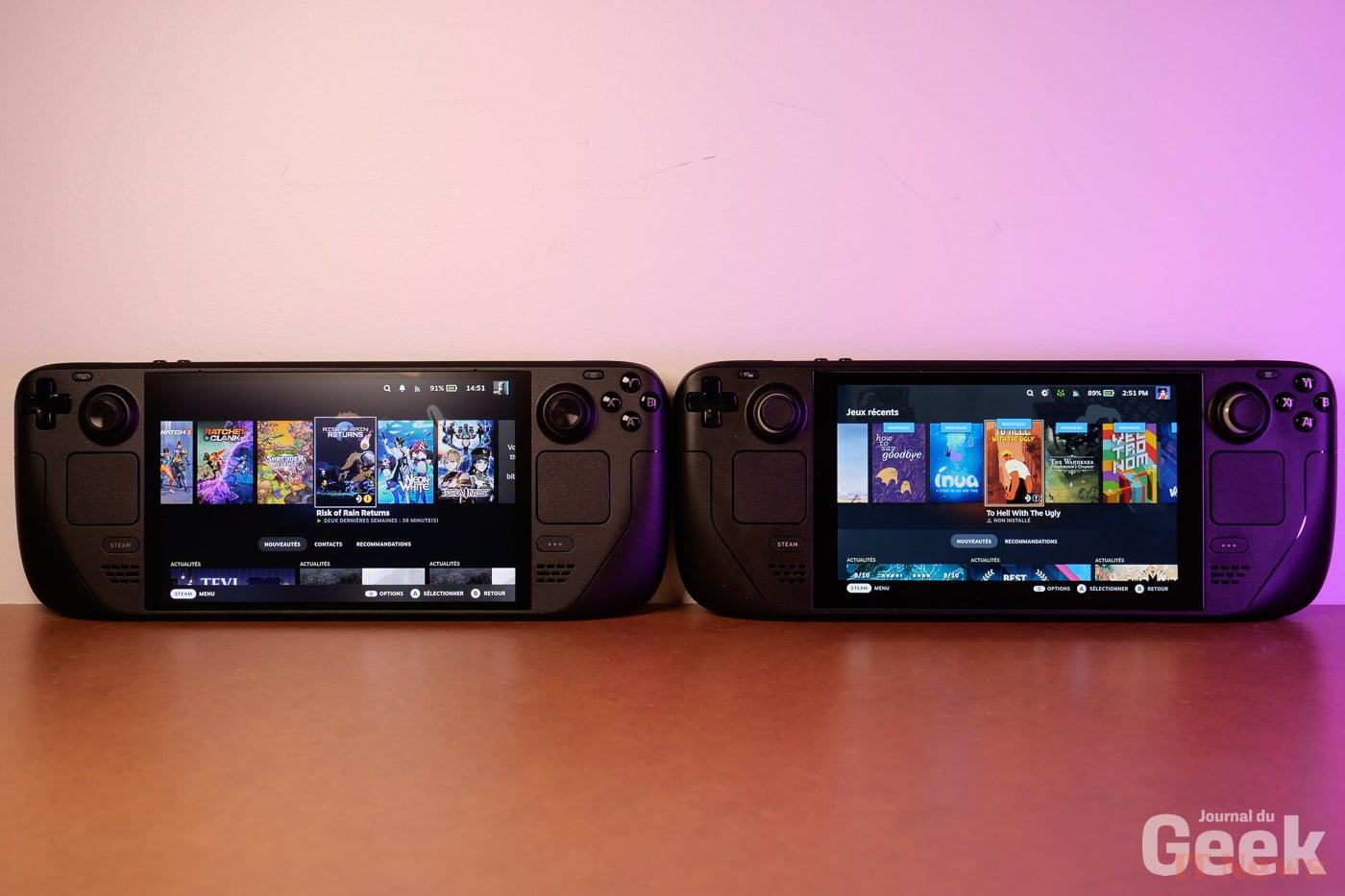
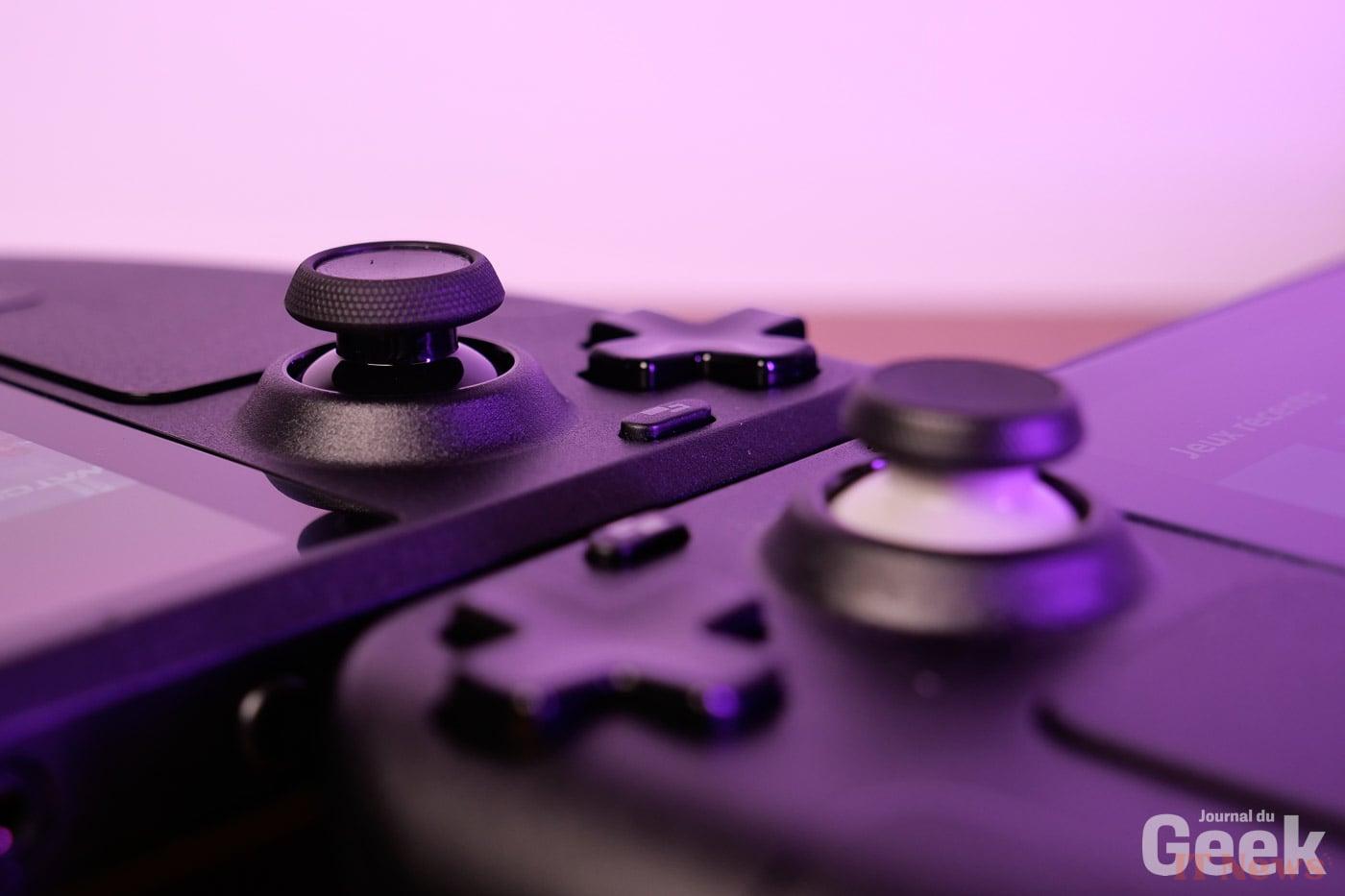
The first thing to remember is that the SteamDeck OLED is not a SteamDeck 2 but a refresh of the SteamDeck, in the same way that the Nintendo Switch OLED is compared to the original Switch. While some features have evolved for the better, the SteamDeck OLED offers exactly the same power as its predecessor. The same goes for the design.
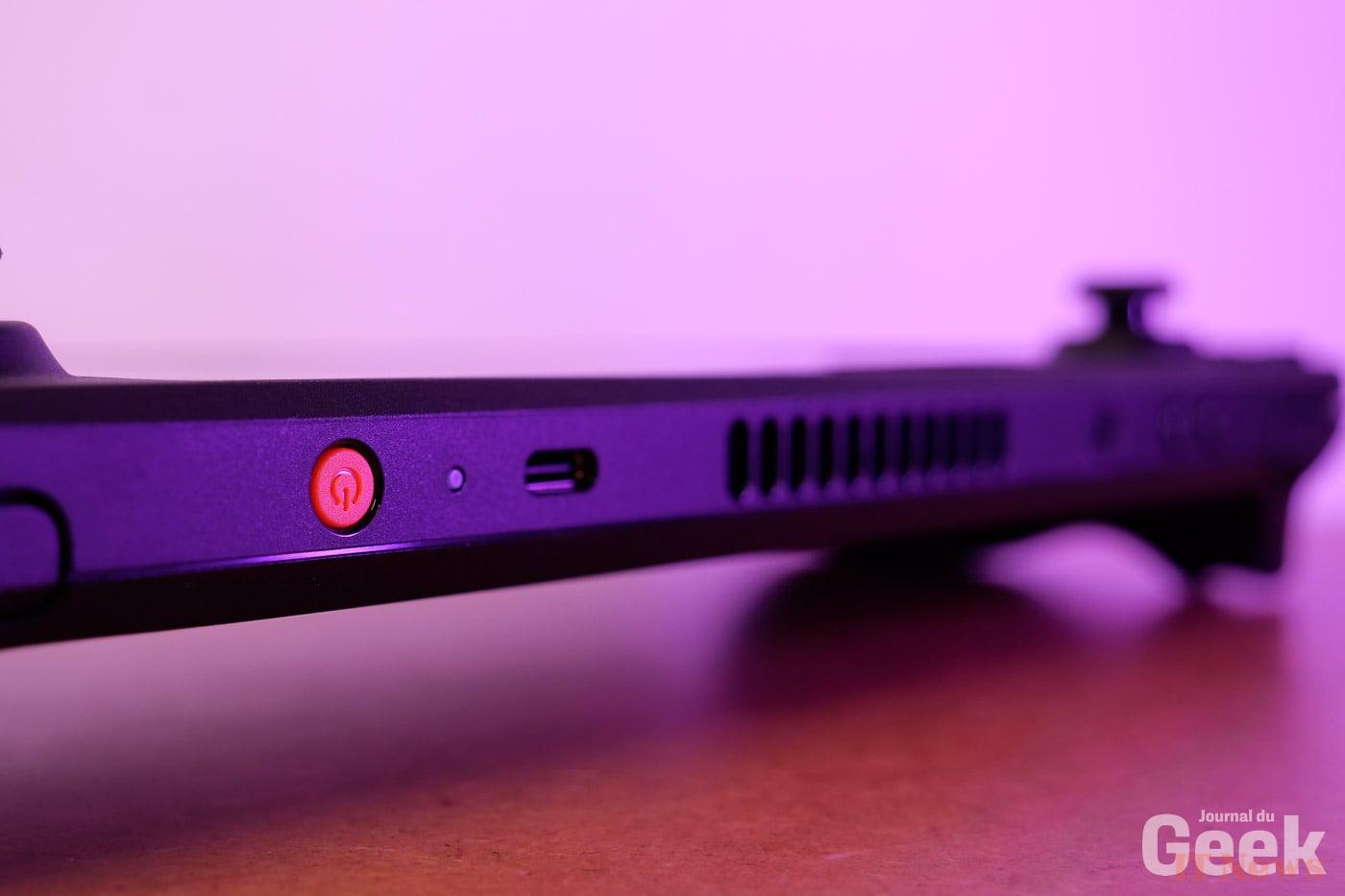
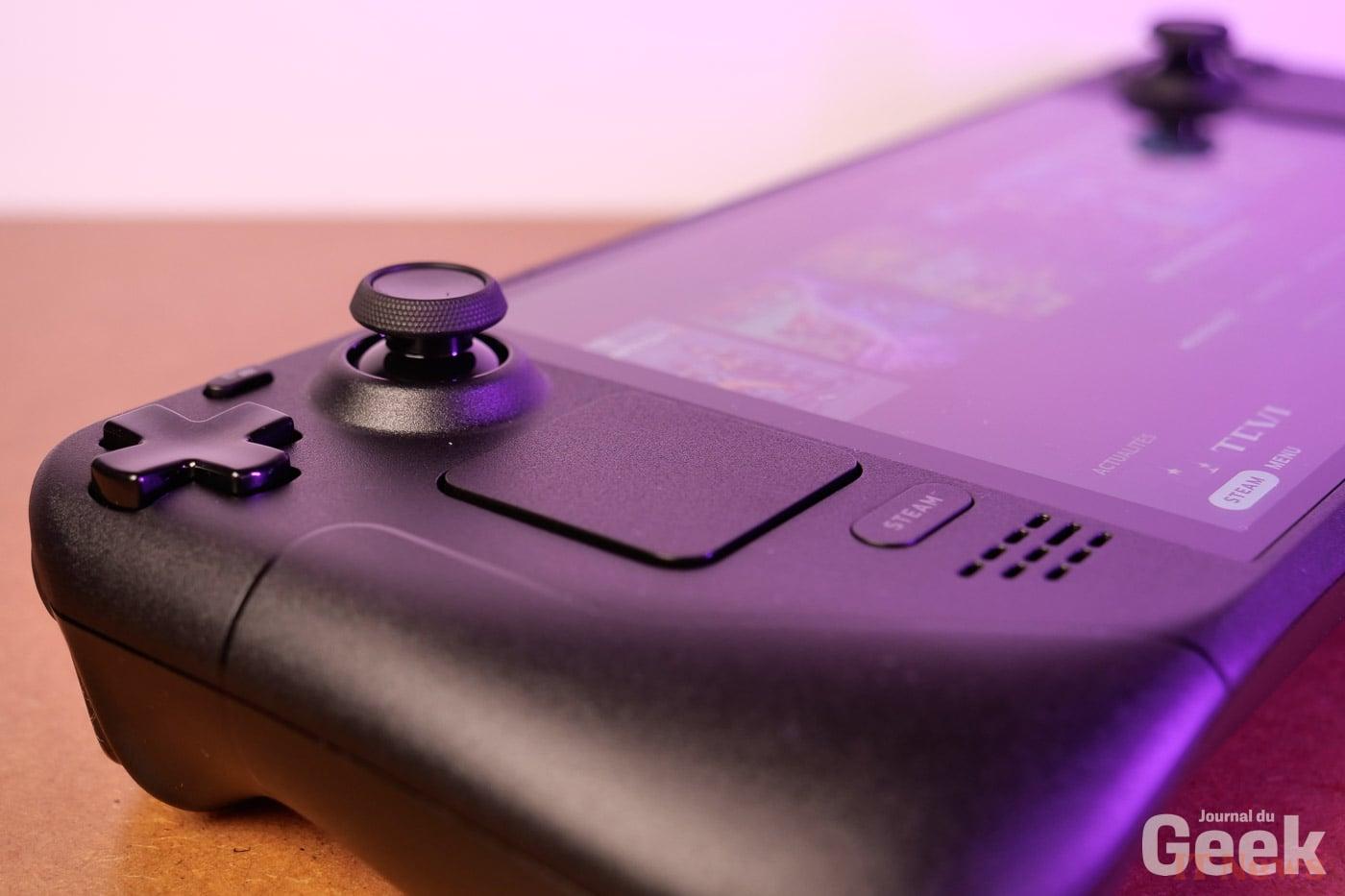
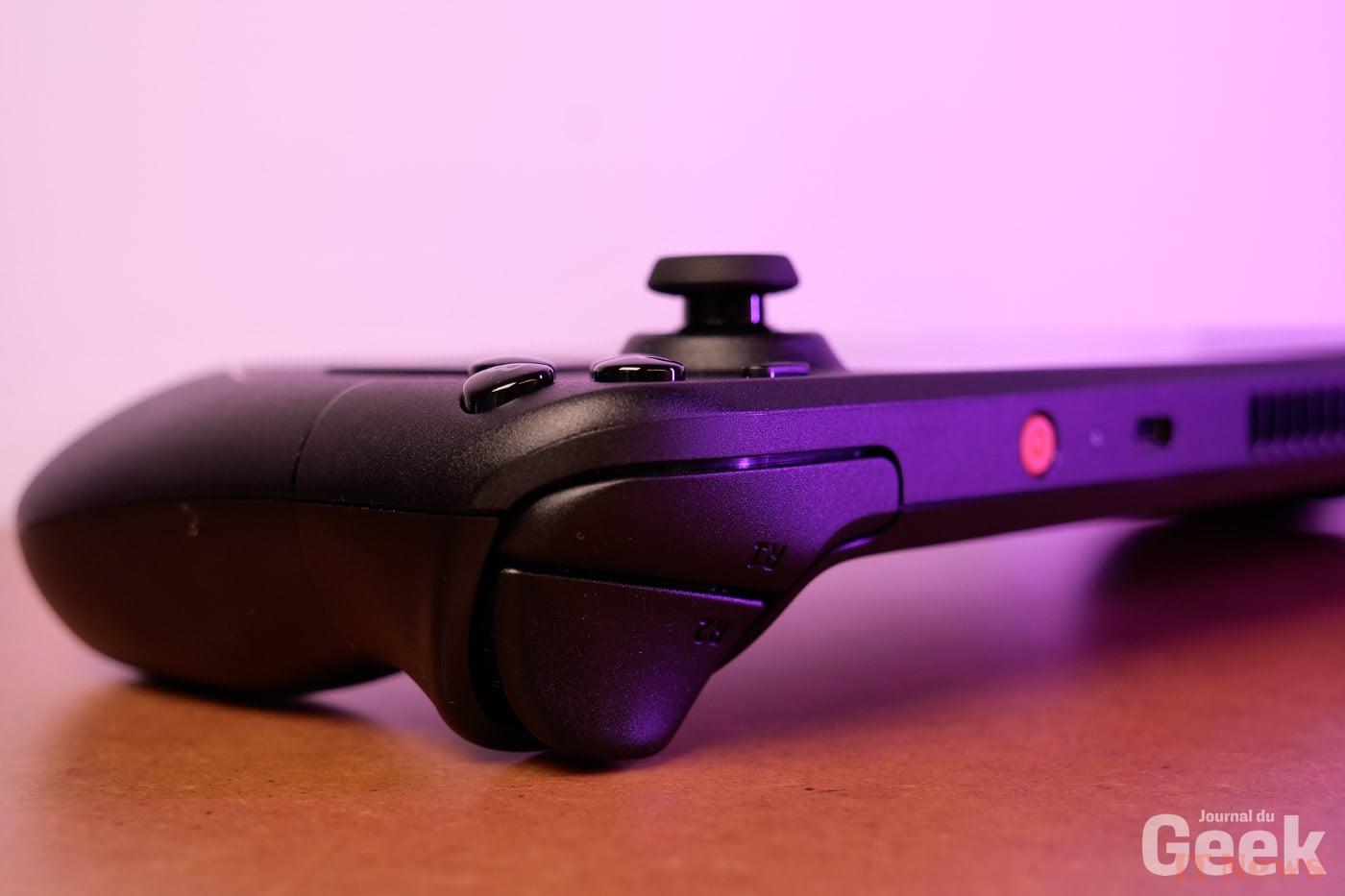
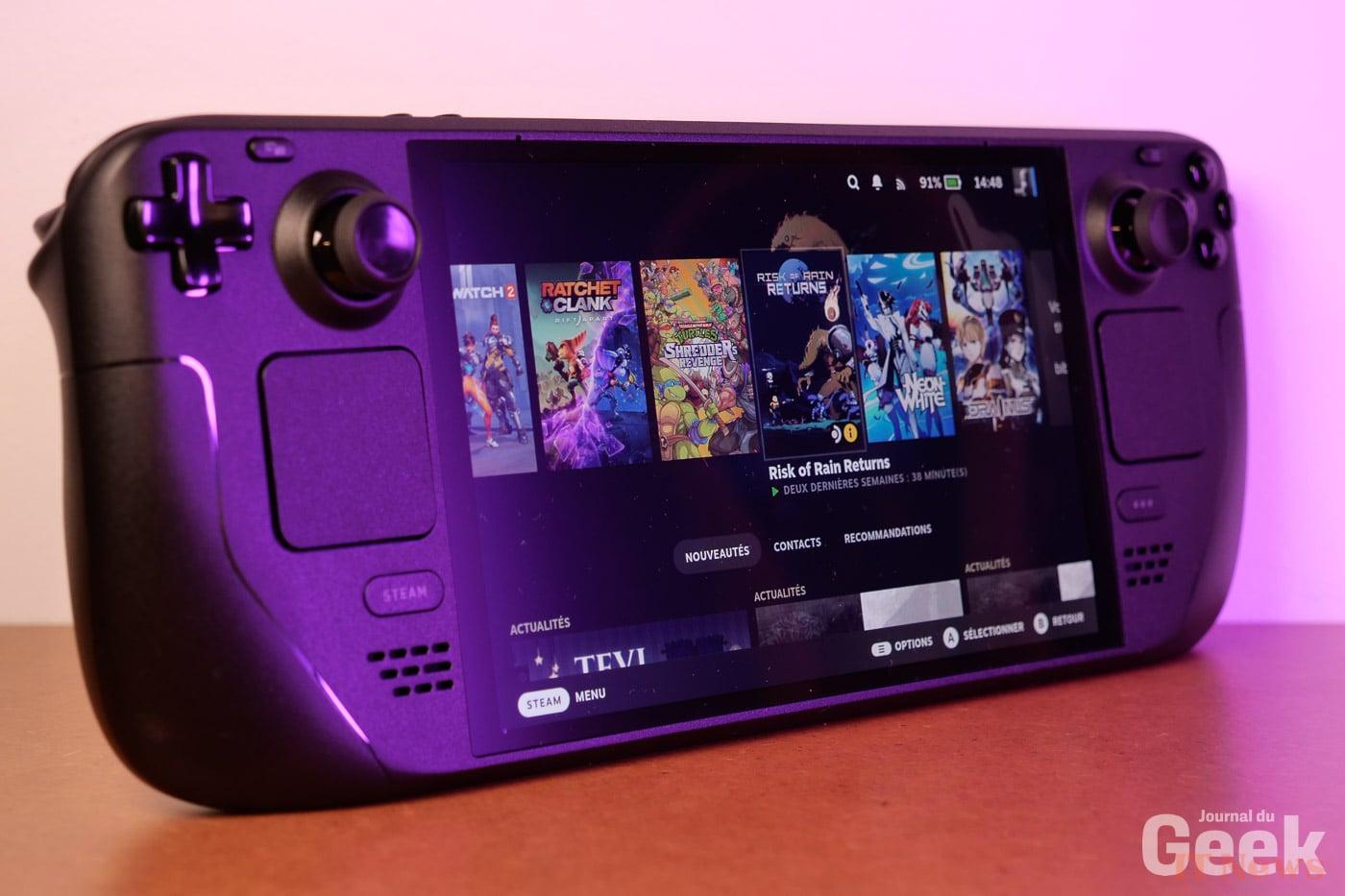
Moreover, at first glance, apart from the power button that turns orange, it is difficult to tell the difference between the base model and the OLED model. On the other hand, from the first time you hold it, you can feel a slight difference in the handling. Indeed, the SteamDeck OLED is 30g lighter. It is subtle but you can feel it in your hand. While the APU has not changed and therefore offers the same power, there are interesting developments such as Bluetooth 5.3 and especially WiFi 6E for faster downloads (up to 3 times faster) but also better network stability.
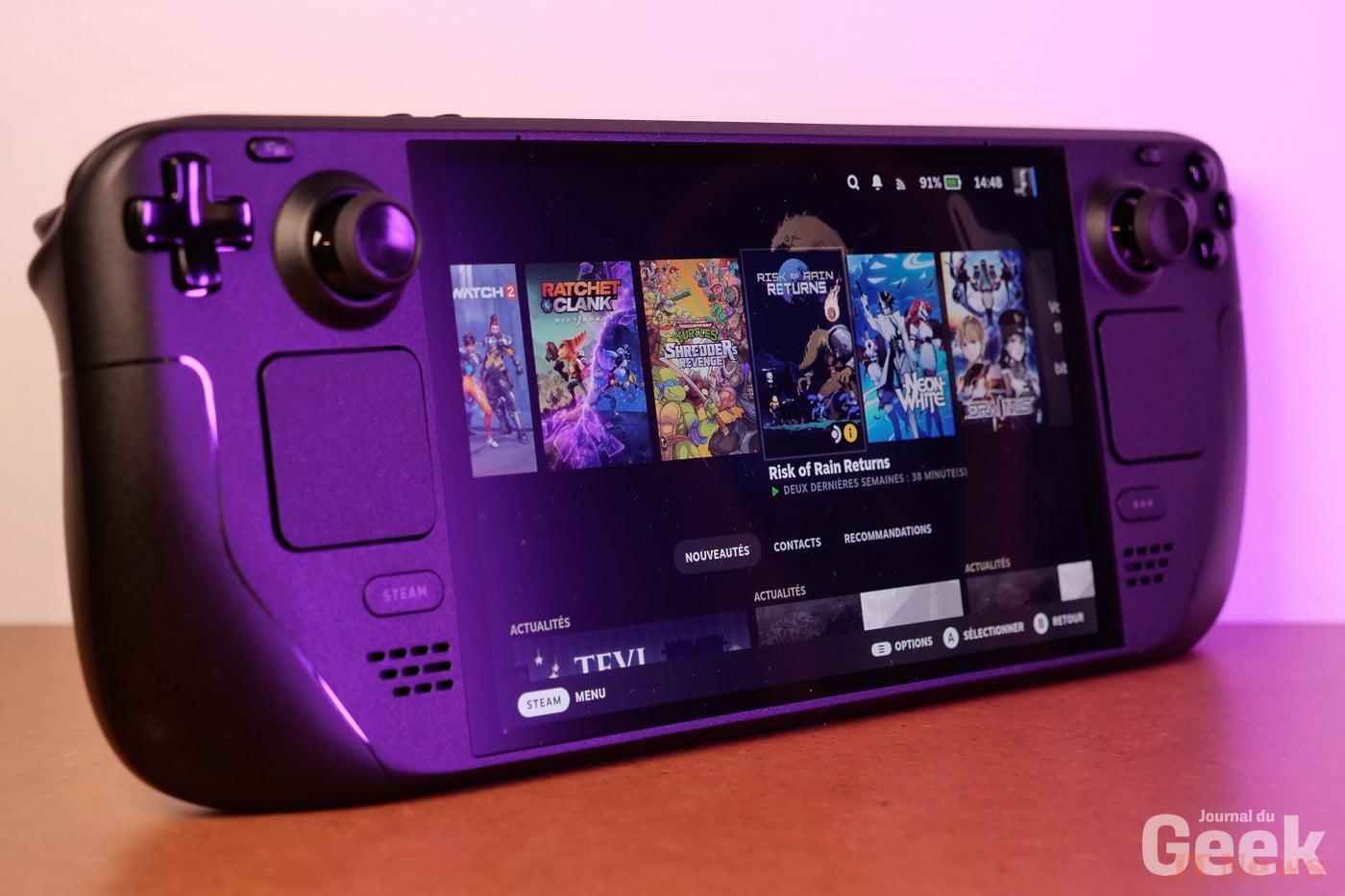
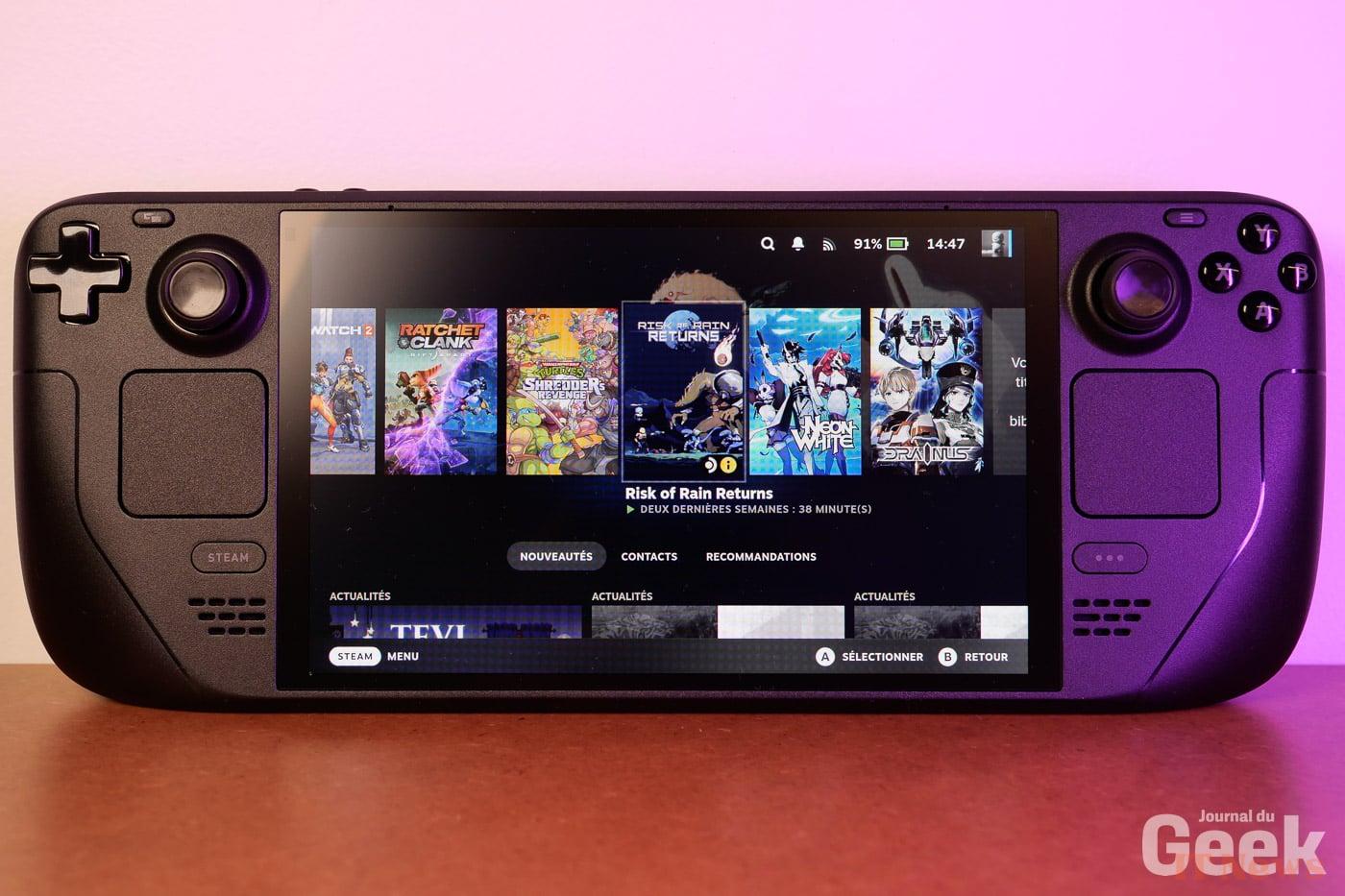
But that's not all, since the battery has now gone from 40Wh to 50Wh, which allows for more basic autonomy and even more thanks to the new OLED screen, which uses less energy than an LCD panel. Speaking of the screen, it is a little bigger because the edges of the screen are thinner and above all, in addition to the OLED panel, it offers a refresh rate of 90Hz, it is clearly not as good as 120Hz but largely sufficient to feel a better fluidity in the game and in the user interface.
If we find a similar APU between the two SteamDecks, that of the SteamDeck OLED has evolved somewhat with a 6nm engraving (against 7nm), this allows to be a little less energy-consuming but also to maintain a little better the frequency of the GPU for example, which results in more stable performances.
SteamOS, the heart of the matter
With all these small differences, we will have understood that Valve has listened to its headphones from the start and are therefore offering a new SteamDeck with everything that we did not necessarily appreciate about the first version or that was missing compared to the competition. But what struck us most in the end was to see that the games, in general, were much more stable in their performance. So, we suspected the effect of the new version of AMD's APU, but not only that...
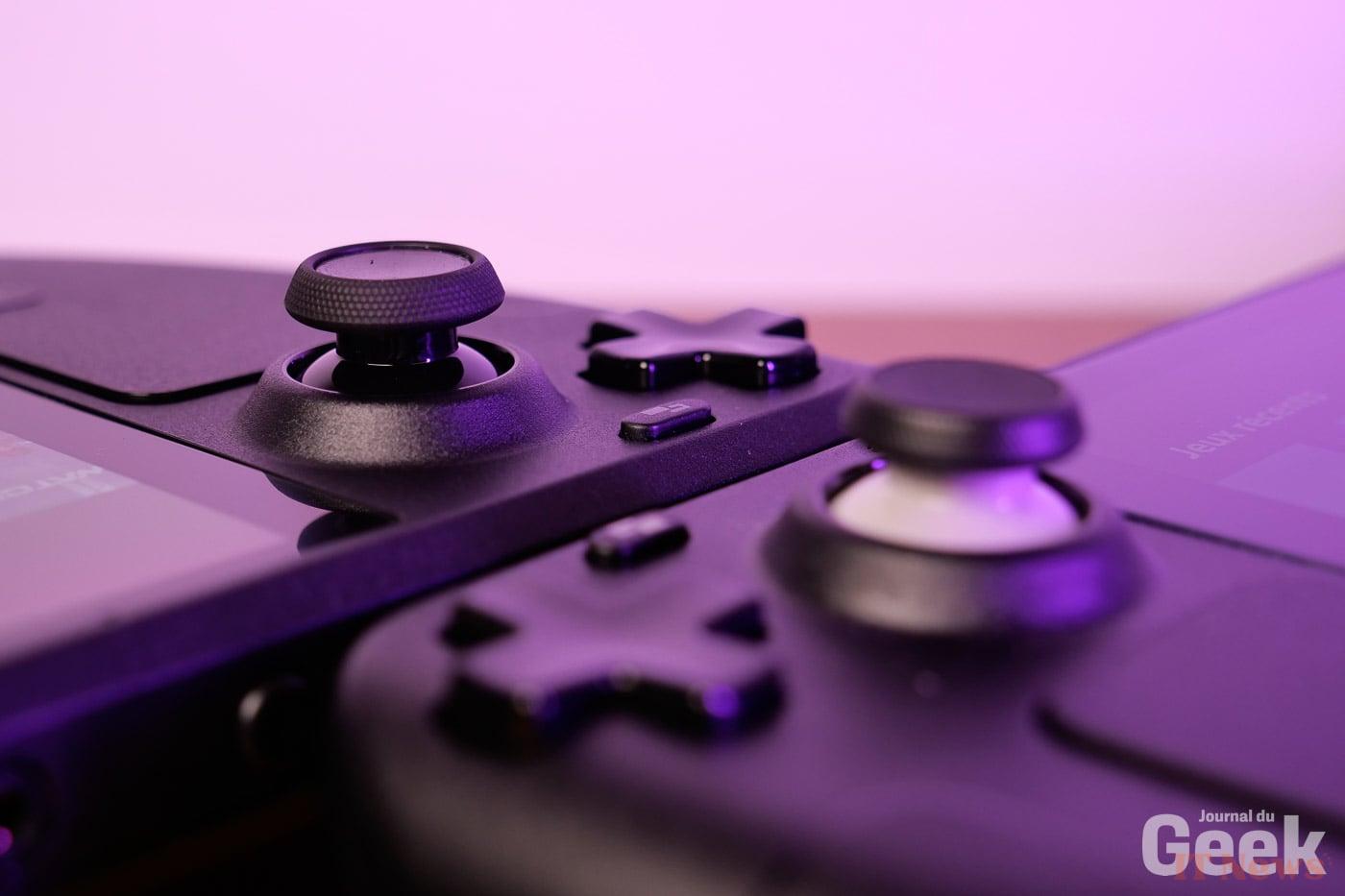
Indeed, we must not forget Valve's work with SteamOS which offers an OS designed for games and with which we really have the impression of having a console in our hands and not a PC. Just look at what the competition offers with often an overlay to Windows which means that we often alternate between the controller and the touchscreen, the virtual keyboard too small or too big, etc. The proof is, we lent an Asus ROG Ally to a SteamDeck user and it didn't work at all, despite the presence of the Epic Game Store, Xbox Game Pass or Battle.net
So, we can easily understand that SteamOS does not offer to launch other platforms like those we just mentioned but This is the price to pay for this console experience. In reality, there are ways to install these PC platforms under Windows but it is not native and it requires a few small manipulations that we do not have to do with an Asus ROG Ally or a Lenovo Legion Go for example… But to use all these machines for some time, SteamOS is so well thought out that we forget the other platforms, especially when we see that some games very specific to Windows arrive under Steam (we think of Microsoft games).
So yes, not all games are necessarily optimized for the SteamDeck, that is why Valve offers a program of "verified games" but even when this is not the case, it is often mainly due to fonts that are too small or a mouse interface still present. We think of Path of Exile for example, which is not verified but remains perfectly usable on the SteamDeck.
It's not for AAA but...
Over time, we will have understood that we are still in the world of PCs. Also, it is easy to understand that the more powerful the machine is, the more it will be able to run the most recent games. With a more recent APU, the Asus ROG Ally and Lenovo Legion Go are much better prepared to run the most recent games, which is normal.
And yet...
The SteamDeck does very well, even on super demanding games. For example, we think of Spiderman Remastered, God of War or CyberPunk 2077. But how does Valve come up with this sorcery? Simply because on a smaller screen, we already pay less attention to details, which allows games to be launched in "LOW". But that's not all, since the SteamDeck is limited to 720p, which saves resources. Needless to say, for indie games and emulators, the SteamDeck is the ideal machine.
Even Baldur's Gate III, the game of the year 2023 for us, passes quietly. We thank AMD's FSR technology which is no stranger to this.

Finally enduring
We will end on a slightly more technical part. As we said above, in terms of performance, there has not really been any evolution except for better general stability. On the other hand, the SteamDeck OLED now supports WiFi 6E, which will allow transfers two to three times faster, but above all a more stable network part.
And for the battery, the SteamDeck OLED offers a 50Wh battery, compared to 40Wh for the SteamDeck LCD. According to Valve, this is 30% to 50% more autonomy! In fact, we have to admit that we are somewhere there, but once again, everything will depend on your games. We were able to last more than 2 hours with Baldur's Gate 3 or Spiderman: Remastered, which is quite appreciable. Basically and to put it simply, we find the autonomy of a first generation Nintendo Switch and even if it is not the best of the best, we appreciate this progress, especially since it has not had an influence on the weight of the machine. On indie games, we were even able to reach 5h or 6h, which is more than enough.
Gallery



0 Comments