
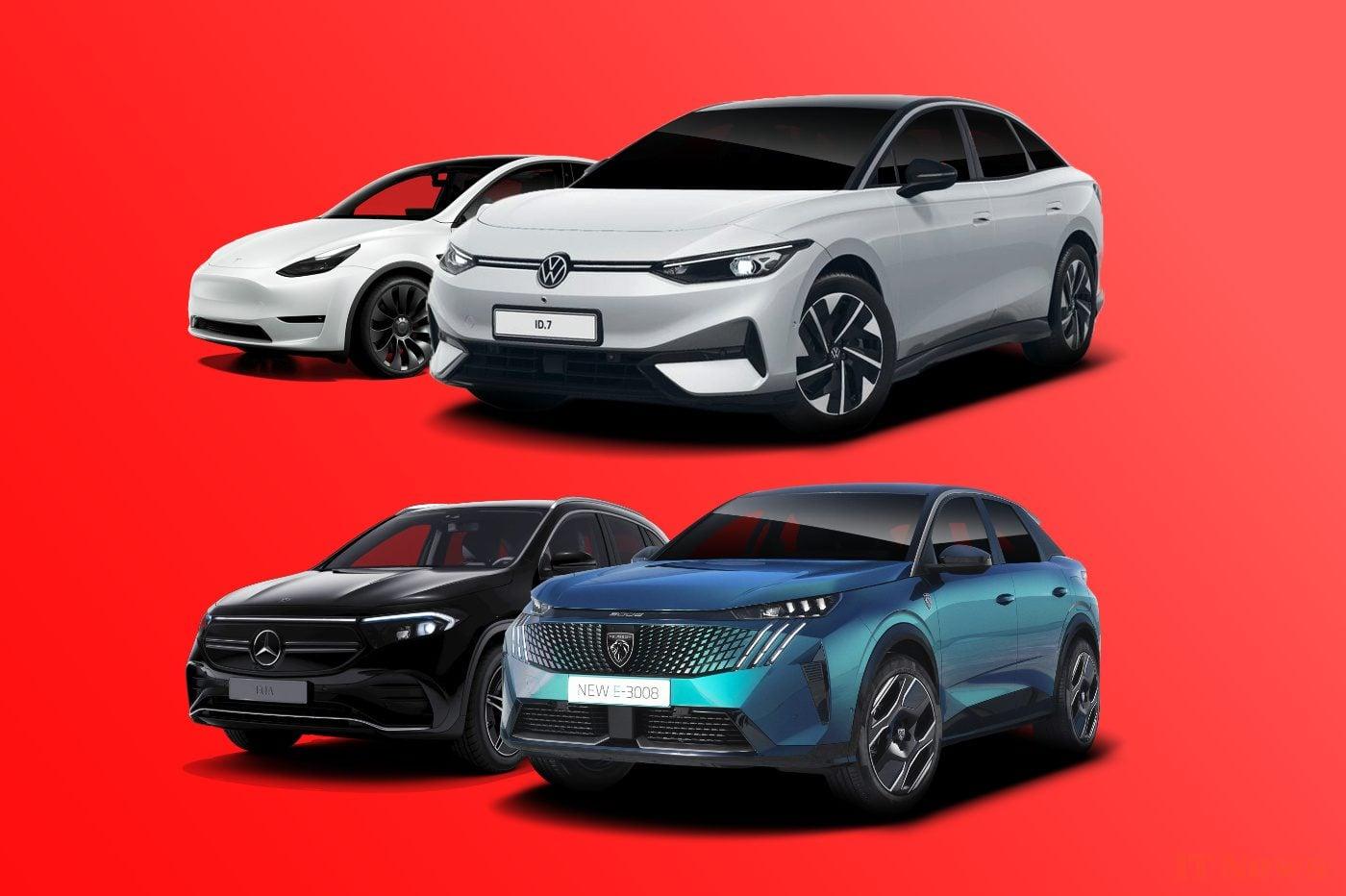
This is a blow that Peugeot would prefer to do without. The Court of Auditors recommends that the government exclude electric cars weighing more than 1,925 kg from the ecological bonus scheme. The Lion manufacturer, with its E-3008, is obviously not the only one affected by this measure, which could also affect other popular models such as the Volkswagen group's SUVs, at least those equipped with the 77 kWh battery. This concerns the Skoda Enyaq, the Volkswagen ID 4 and ID 5, but also recent models such as the new Ford Capri. What do they have in common? A weight of more than 2 tonnes, therefore above the 1,925 kg recommended by the Court of Auditors.
The Court of Auditors' objective is obvious: to reduce the envelope allocated to the ecological bonus and thus make savings. It is also a question of favouring more reasonable models in terms of design. At least that is what the administration's report indicates. "Removing the bonus on models over 1925 kg would be both consistent and efficient. The bonuses paid in 2023 for the purchase of cars exceeding this weight mobilized €281 million, leading, on all sales and on the basis of the 2024 scale, to a savings range of between €149 million and €225 million"
An increasingly reduced ecological bonus
For the time being, this is only a recommendation and there is no indication that this measure will actually be applied. If it were to be, this additional levy on government aid could shake up the market. And for good reason, it would give a significant advantage to the lightest family models like the Renault Scénic E-Tech or the Tesla Model Y, including its latest Juniper version.
This would also be a new blow to the ecological bonus that underwent a significant change last December. It is now limited to 2,000 euros for French households that are not among the lowest incomes and can go up to 4,000 euros for households with limited incomes.
Source: Cour des comptes


0 Comments