
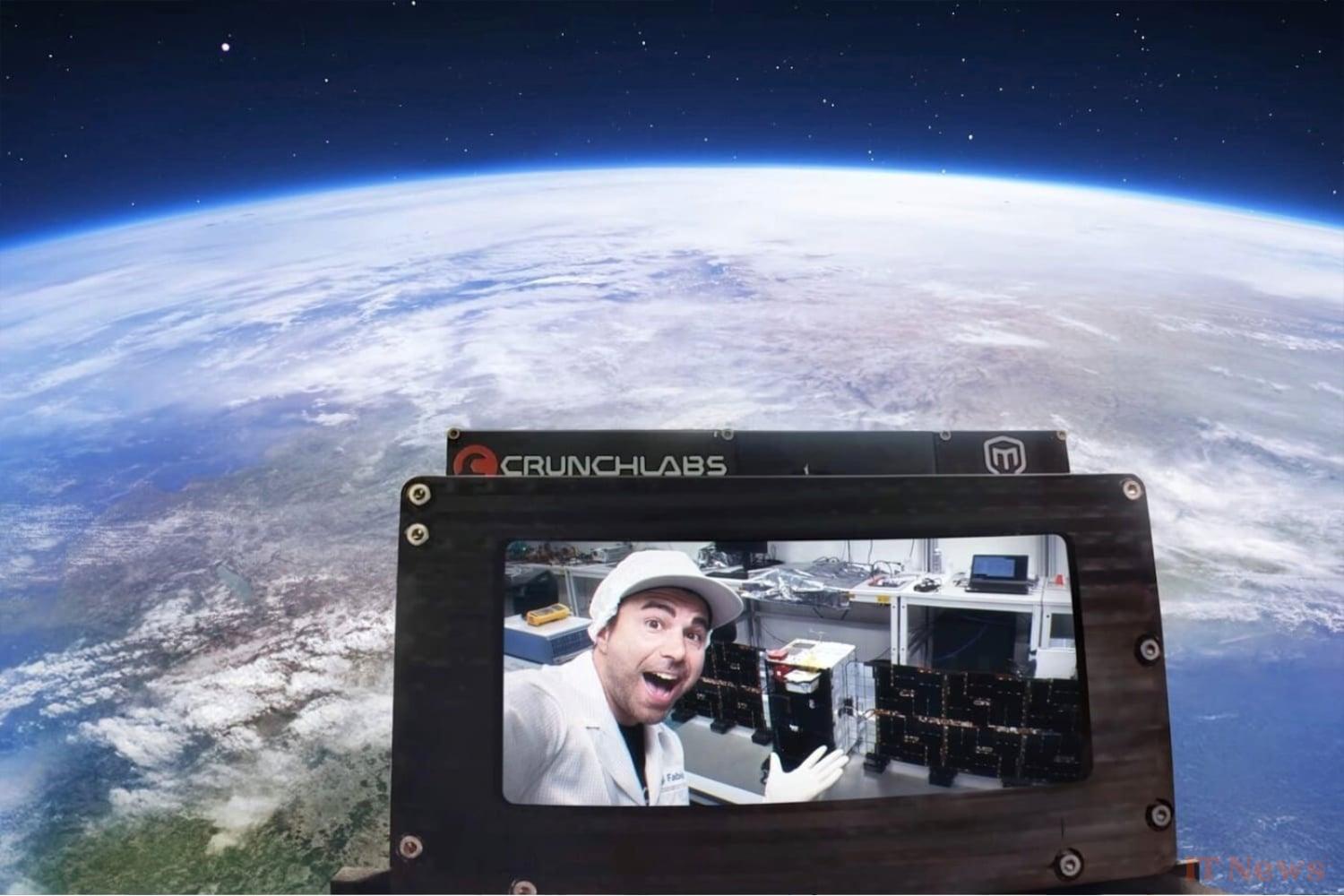
New marketing operation from low Earth orbit. Mark Rober, a former NASA engineer turned YouTuber, wanted to create buzz and promote his company CunchLabs. To do this, he teamed up with Google to finance the loading into a SpaceX Falcon 9 rocket of a small CubSat, a small satellite carrying a Google Pixel on board. The goal? To use the smartphone as a screen, to display selfies. A camera will then take pictures of this screen, and allow the lucky ones to leave with a photo of their own selfie, displayed from space.
Google responded favorably to the project and wants to share it with customers of its Pixel smartphone range. Otherwise, it will be Mark Rober's CrunchLabs users who will be able to benefit from it. They will be able to specify where on Earth they would like to see the shot captured with their selfie, in order to make the photo of the impossible even more personal. "One small step for humanity, one giant leap for your selfies", joked the YouTuber with over 63 million subscribers. For the photo system to last over time, Google and Mark Rober had to work on a radiation-resistant craft.
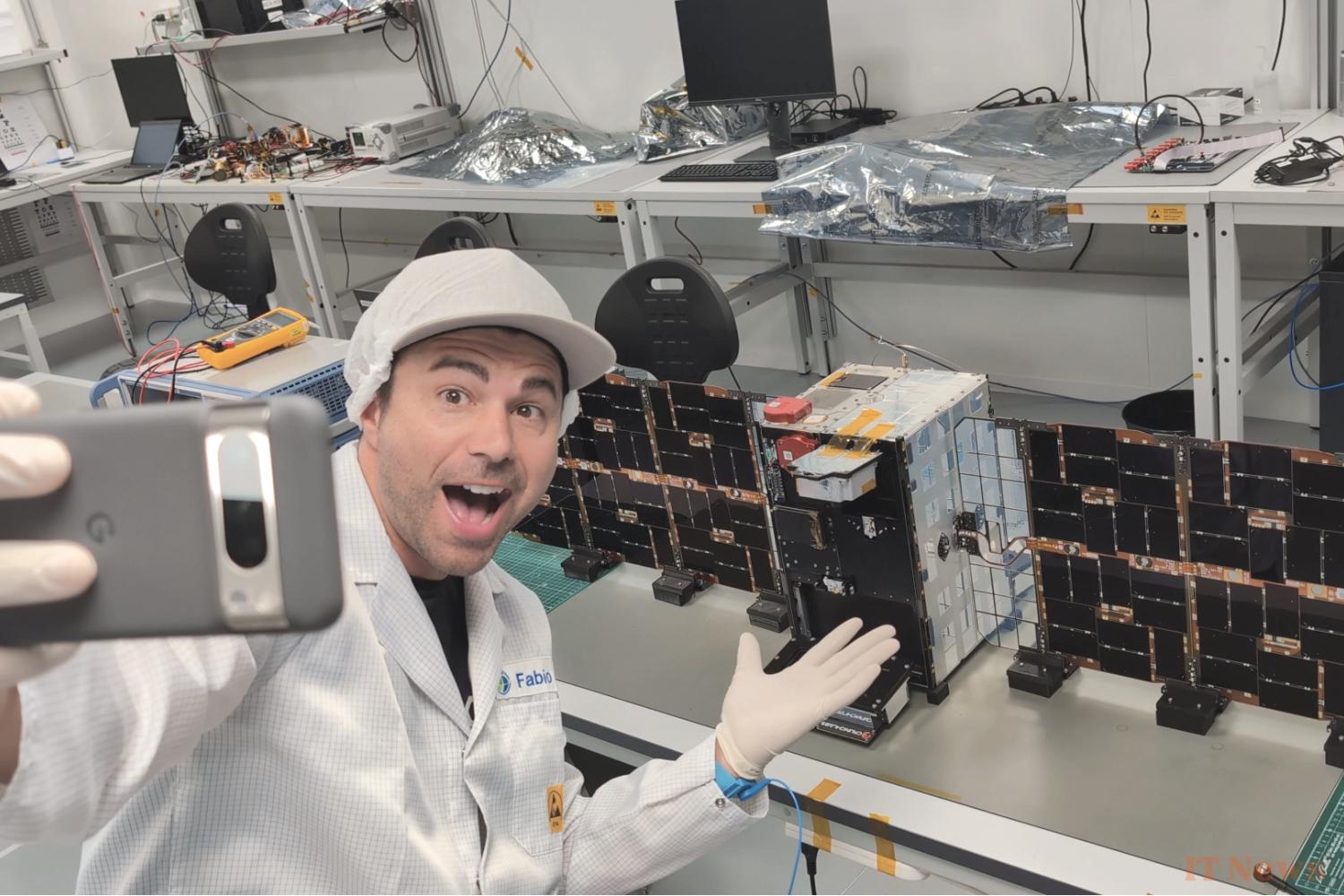
The small satellite took off from Vandenberg Space Force Base in California on January 14. SpaceX was in charge of the launch, with its Falcon 9 rocket. Of course, Mark Rober's Google Pixel wasn't the only payload on board the rocket's fairing. The aerospace company was able to integrate 131 satellites of different sizes (and different functions). The mission was called Transporter-12. It is part of a program to send satellites into low orbit that is particularly lucrative for SpaceX, and economical for companies and universities wishing to access space. With its reusable rocket, SpaceX controls its costs.
It should be noted that Falcon 9 cannot reach geostationary orbit, more than 36,000 kilometers from Earth, but loses its two boosters in doing so. The costs are therefore higher.
Soon, SpaceX will no longer be the only company in the United States (and in the world) to allow such customers to access space. Blue Origin, Jeff Bezos' company, has carried out its first launch with New Glenn, which will take the lead over SpaceX with a greater payload transport capacity in both low Earth orbit and geostationary orbit. The rocket will also be able to respond to interplanetary missions, or even take interstellar trajectories, thanks to a transporter carried in the fairing and named Blue Ring (equipped with three engines, two of which are electric).
The company Blue Origin has already experimented with taking YouTubers into space with them. It was not a question of sending smartphones, but rather their bodies. The lucky one was one of the comrades of the Dude Perfect channel, who reached space in 2022, during a suborbital flight made possible by the small New Shepard launcher. A video that has now been viewed 42 million times.


0 Comments