
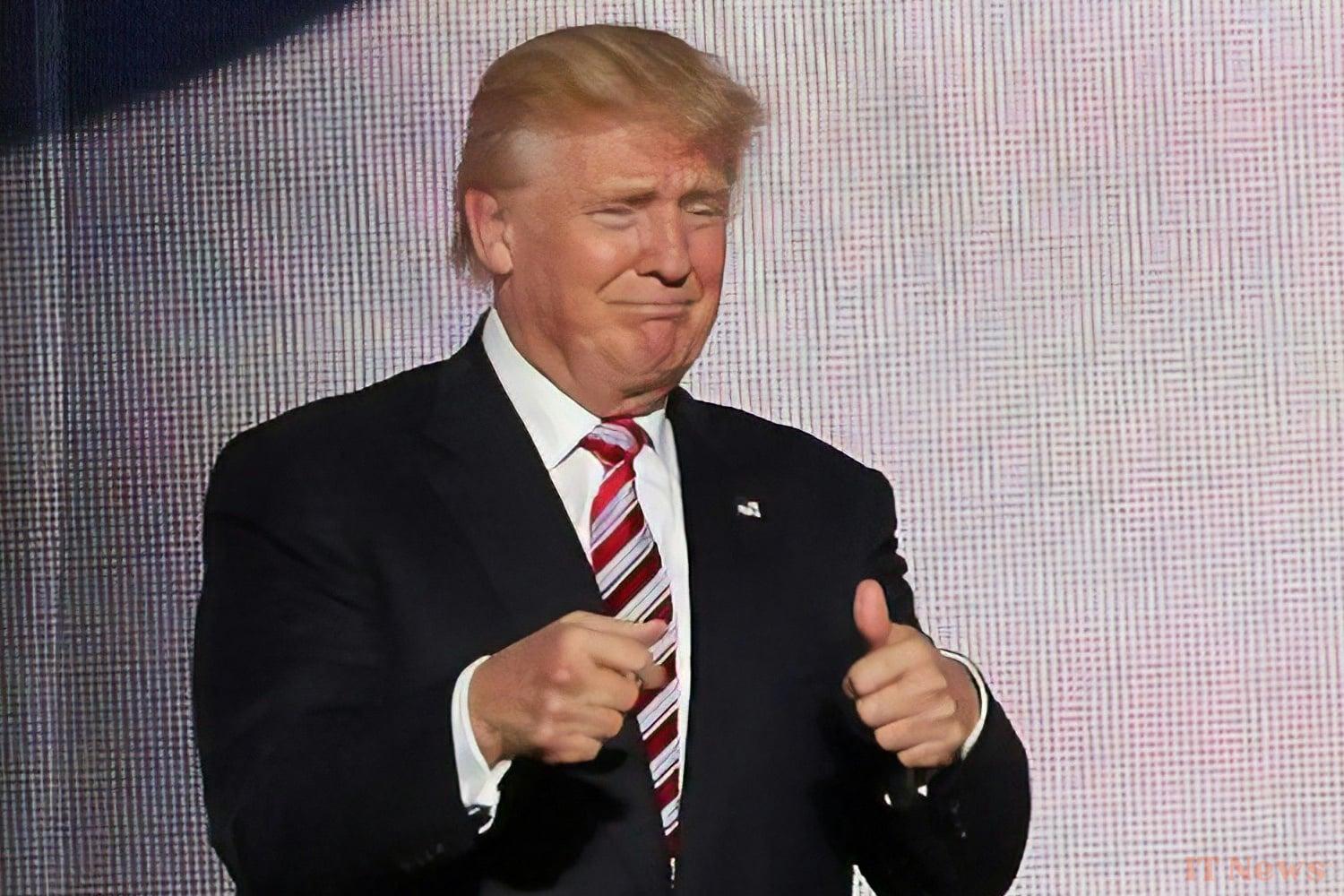
When the apostle of deregulation puts the full throttle on AI... This week, Donald Trump signed two executive orders that aim to unravel the embryonic legislation on artificial intelligence (AI) put in place by his predecessor, Joe Biden. While the first was among the dozens of executive orders signed upon his inauguration on January 20, the second was published on Thursday, January 23.
And others could soon follow, because Donald Trump's goal is to remove any obligation that would weigh on AI companies across the Atlantic. If this approach was announced and expected, it marks at least a real change whose turmoil can already be seen in Europe.
What do these two decrees say?
A few hours after returning to the White House, Donald Trump dealt a first blow to the meager regulation of AI giants in the United States, by cancelling, among other symbolic acts, Joe Biden's "AI Act". Adopted in 2023, the former Democratic president's decree aimed to reduce the risks associated with AI, while waiting for Congress to agree on a law - an event that ultimately did not happen, and is not likely to happen any time soon.
Because the text, which imposed very few safeguards, has simply been removed. The news must have delighted tech bosses, who were calling for a reduction in AI regulations in the country, like the American software publishers' lobby last November.
And while the industry leaders, most of whom were present at the inauguration ceremony, were hoping that the president would give them a completely free hand, they perhaps did not think that their wish would be granted so quickly. Because three days later, here we go again.
Another decree, published Thursday, this time aims to revoke all of Joe Biden’s previous government policies that constitute “obstacles to American innovation in artificial intelligence.” Without specifying which policies are concerned.
The decree explains that the administration will take stock of everything that has been done and that it will remove anything that hinders innovation. All without giving further details, which remains extremely broad. The text also provides that AI “promotes human flourishing, economic competitiveness and national security,” by being free of “ideological biases” – an idea defended by Donald Trump’s special advisor, Elon Musk.
The billionaire regularly denounces what he calls “woke AI,” an AI that is allegedly filled with “liberal biases.” The new decree finally calls for the deployment of an in-depth action plan on AI, within 180 days.
What does this change in practice?
Donald Trump's approach is far from being a surprise: the billionaire, who has often presented himself as a great defender of the "deregulation" of tech giants, had announced it during his election campaign: for the one who was still a candidate, the Biden decree on AI and the security standards in this area were a brake on innovation, a way to impose "radically leftist ideas on the development of this technology".
Joe Biden's 2023 text imposed certain reporting obligations, in particular on companies developing the most powerful AI models like OpenAI, Google, and other tech giants. For example, these companies were required to "provide the (US) government with details about the operation of (their) systems before they are released to the public." They were also required to share the results of their security tests, particularly for models that posed "risks to national security, the economy, public health or safety."
While it is not known how, in practice, this obligation was actually respected by all the players in the sector, some of them complained about having to communicate what were "trade secrets" to the administration. According to them, this would establish a right of scrutiny over innovations in the private sector, which until now had remained within the walls of companies. For small businesses, this obligation could also be onerous, according to critics of the decree. In 2024, the Republicans even described the text as "dangerous".
For others, the restrictions or requirements of these laws were delaying progress in this area, in the context of the technological race with China. Some Trump supporters, such as Marc Andreessen, the venture capitalist who sits on the board of Meta, the parent company of Facebook and WhatsApp, lamented the existence of these “onerous regulations, while the rest of the world is happy about them and China is happy about them,” reports the Associated Press.
These arguments have clearly convinced Donald Trump, who explains in his second executive order that the administration will review all the orders and directives relating to AI issued by his predecessor.
The end of an era of concern about the “dangers” of AI?
With these two texts from Donald Trump, the AI giants are at least freed from their obligations to share information with the government. And they could be exempt from other "constraints". This is the direction that the American federal administration seems to be taking, which would therefore leave it to the private sector to develop AI, with its own security controls.
This constitutes a danger for Max Shier, an American computer security expert who was interviewed by the information site specializing in cybersecurity Dark Reading. For the latter, "private companies should not be allowed to govern themselves or develop their own ethical use standards." "There must be safeguards that do not prevent small businesses from participating in innovation, but that still allow for some oversight and accountability. This is especially true in cases where public or national security is or may be threatened," he adds.
However, Trump's two executive orders will not impact state laws in the United States, which will continue to apply. In California, where many AI companies are headquartered, for example, the local legislature has adopted a law on AI transparency and on the use of deepfakes.
But these two texts from the new president, coupled with the announcement of Stargate, the $500 billion AI project, truly mark the end of an era. The days of worrying about the “imminent danger of AI” that in 2023 led many figures – including Elon Musk – to call for a moratorium on AI for at least six months are long gone. Now, the message seems to be: full throttle on generative AI, with no speed limit (read: no regulation)! Especially since Donald Trump has appointed David Sacks as head of AI (and cryptocurrency) issues. The venture capitalist is known to be a harsh critic of any regulation of the technology.
Europe is worried
And this change of direction further deepens the differences between the European Union and the United States. While Brussels adopted the European regulation on AI last year, which imposes safety standards and prohibits the use of AI for social control, for example, Washington seems to have a new credo of freeing the AI giants from any burden... while funding them massively. A double standard that worries many politicians and experts.
This is the case of MEP Axel Voss (EPP) who believes, on LinkedIn, that "values such as democracy, humanity and the rule of law will no longer play any role in the future. Trump is building the "digital atomic bomb" that is leaving humanity behind - probably without even realizing it".
For the German politician, the "strategy of the (27 EU countries Editor's note) is still stuck in the last century. We must now join forces and set priorities if we want to survive digitally". Will this umpteenth call for the "awakening of Europe" be heard this time?


0 Comments