
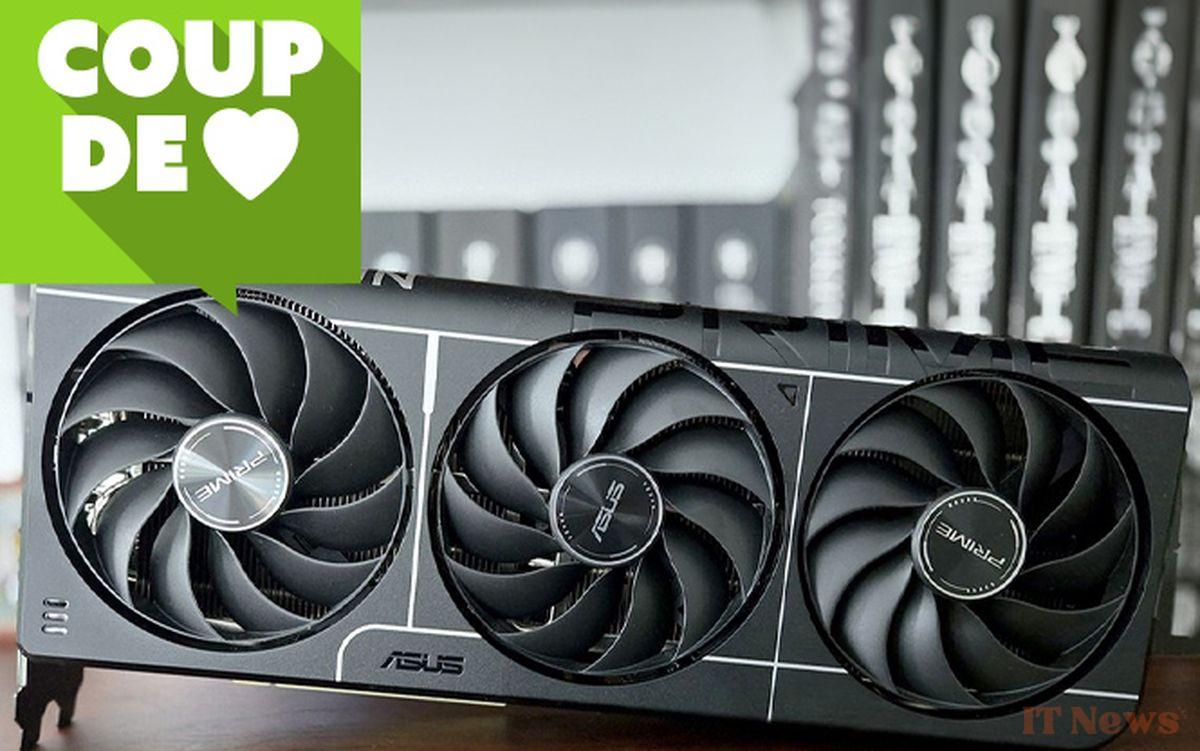
The AMD Radeon RX 9060 XT at 16 Gb is eagerly awaited after a nice, but not particularly engaging, 5060 batch. What does it really deliver? We took the measurements.
NVIDIA is experiencing a complicated launch of its RTX 50 series, particularly for the 5060 Ti and non-5060 Ti models, which had to undergo a BIOS update to work on certain older configurations, in addition to driver stability issues. Faced with this, many are waiting for AMD to step up to the plate with the entry-level RX 9060 XT. But do they have what it takes to keep up with all this waiting? The answer is in this test.
Price and availability
The AMD Radeon RX 9060 XT is available in two versions: 16 GB of VRAM or 8 GB of VRAM: 319 euros for the 8 GB version or 369 euros for the 16 GB version. The former is therefore priced the same as the RTX 5060, while the latter is cheaper than the RTX 5060 Ti 16 GB. A very aggressive pricing policy.
| AMD Radeon RX 9060 class="column-1">Engraving | 4 nm | |
|---|---|---|
| Computing units | 32 | |
| AI accelerators | 64 | |
| TGP | 160 W | |
| GDDR memory | 16 GB GDDR6 | |
| Memory bus | 128 Bits |
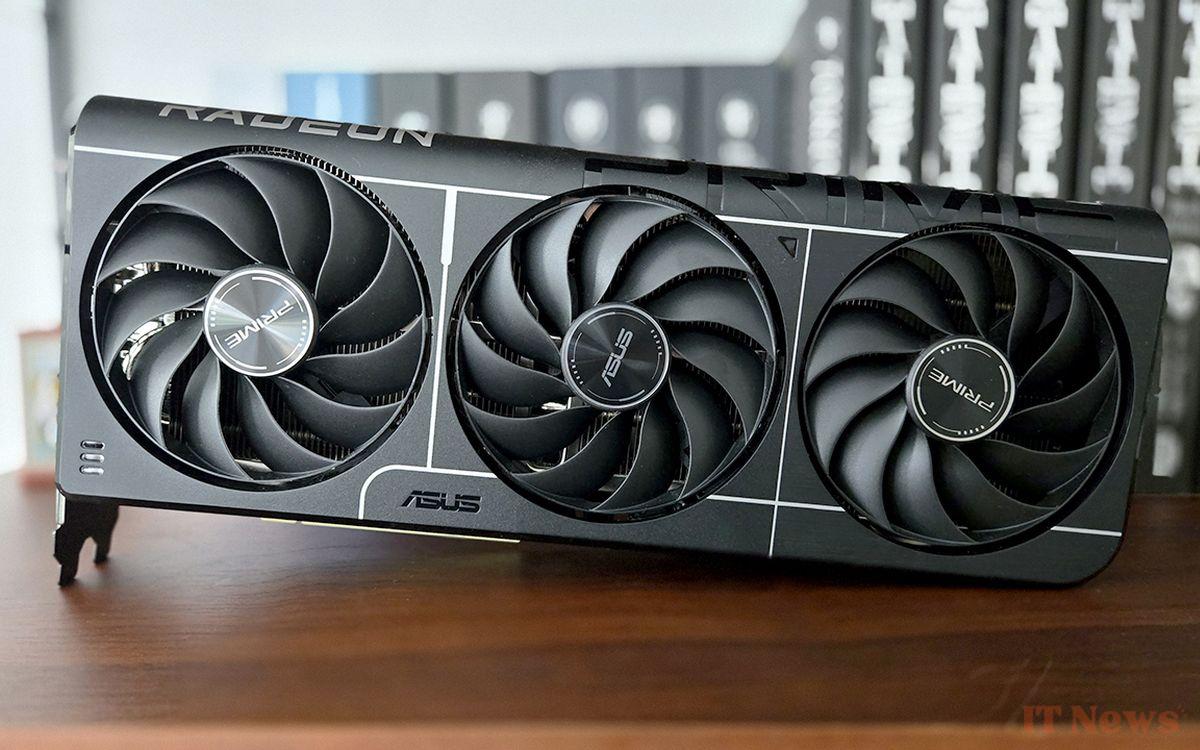
We have tested the Asus Prime version of the RX 9060 XT with 16 GB of VRAM. This version will be sold at MSRP upon release.
Here is our test configuration for the RX 9060 XT:
- CM: ROG Strix X870-I Gaming WiFi
- CPU: AMD Ryzen 9 9800x3D
- Cooling: Corsair iCue H100i RGB Elite
- RAM: 2x16 GB Corsair Vengeance DDR5-6000 MHz
- SSD: MSI Spatium M580 PCIe 5.0 2 TB
- PSU: Corsair SF1000L 80 Plus Gold
Design, consumption, and heating
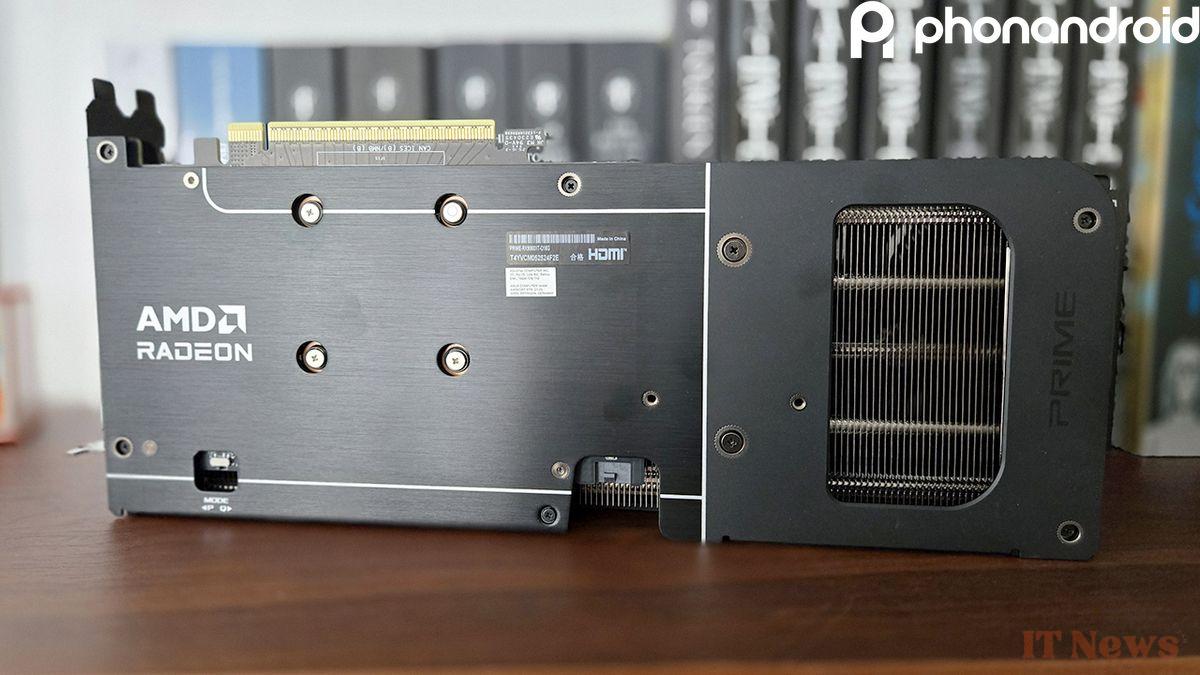
The Asus PRIME we received for testing is, it must be said, very basic. As is often the case with these MSRP models, plastic reigns supreme in the construction, and you won't find RGB lighting anywhere. Nothing problematic: we still prefer to have the most optimized price possible. The design features three active fans for two occupied slots, which is quite aggressive for a card in this performance range.
At idle, the RX 9060 XT gives us the pleasure of consuming only 6 watts in total, with a temperature of 38°C that is quite manageable. Launched at full power, the announced TGP is exceeded at 175 watts consumed, but the temperatures remain very good with a GPU hotspot at 72°C for a VRAM at 72°C also.
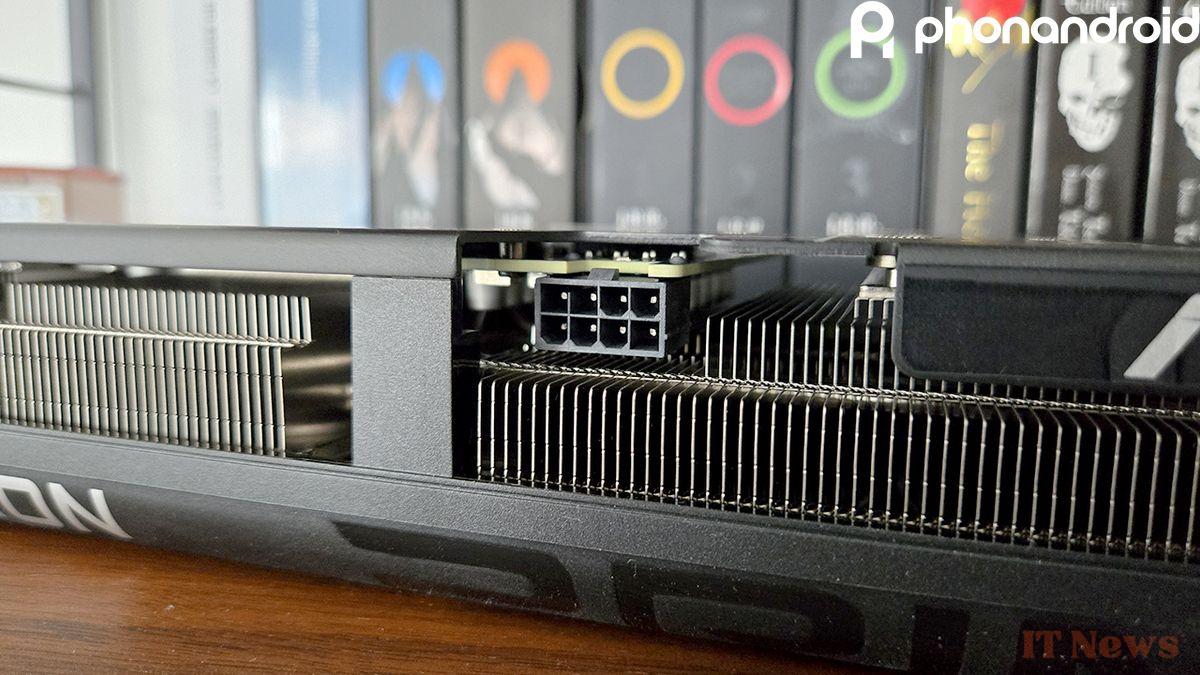
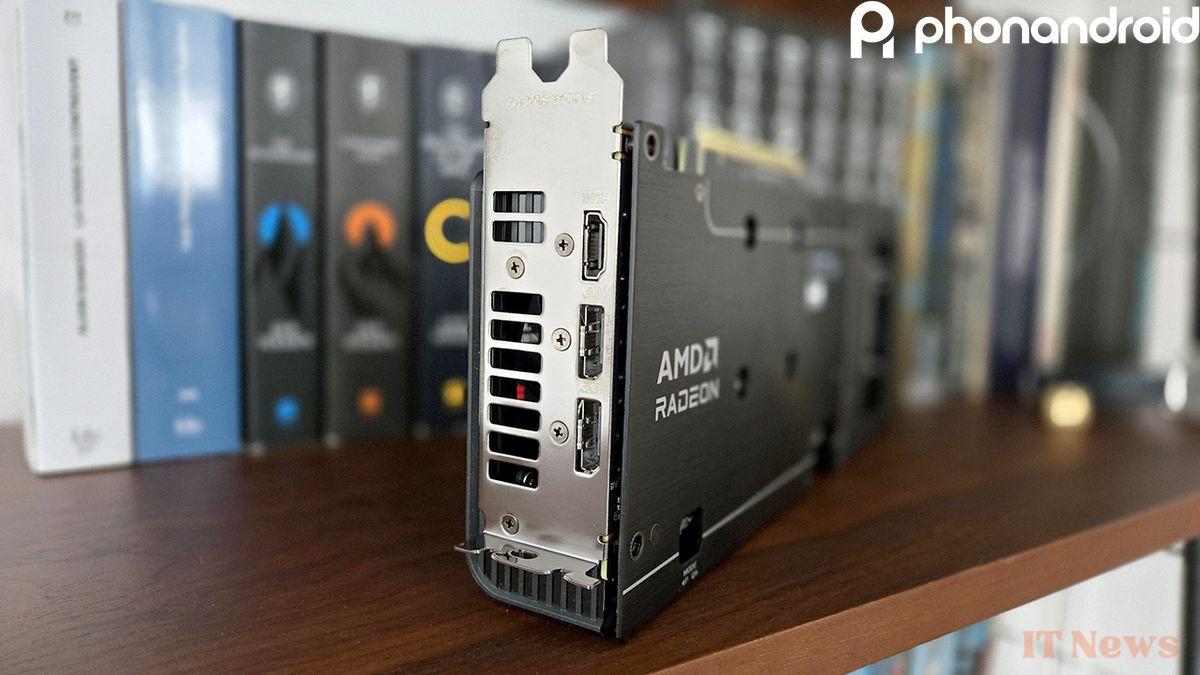
In terms of connectivity, it's still perfect. A simple 8-pin PCIe port is enough to power this graphics card, whose recommended power supply is only 450 watts.
Creative calculations and artificial intelligence
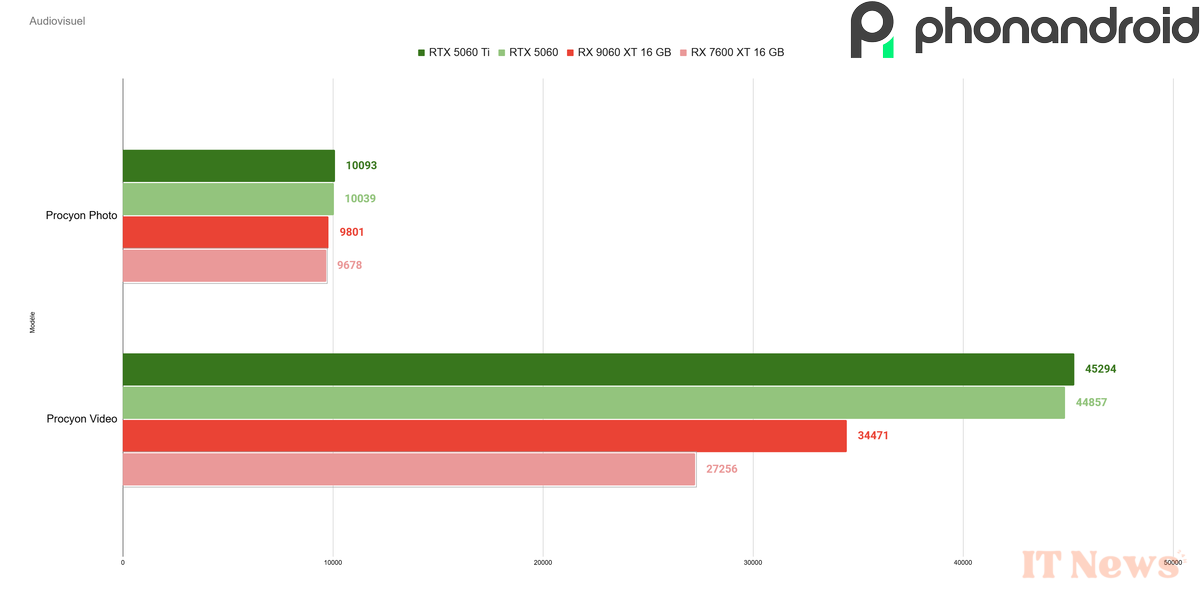
In photography, as is often the case, we're on a par with all the cards we compare. But in video, AMD still has some work to do. The RX 9060 XT offers 23% lower performance than the RTX 5060.
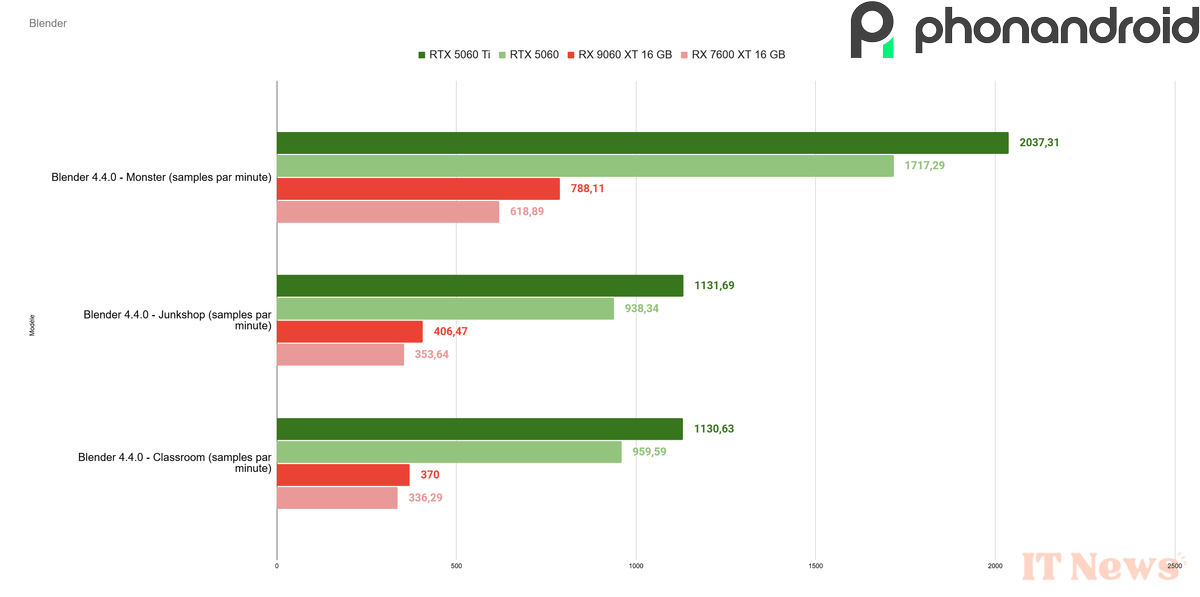
In Blender, NVIDIA remains the absolute king of its domain. 54% less than the RTX 5060 on Monster, 56% less on Junkshop and 61% less on Classroom… It still stings.
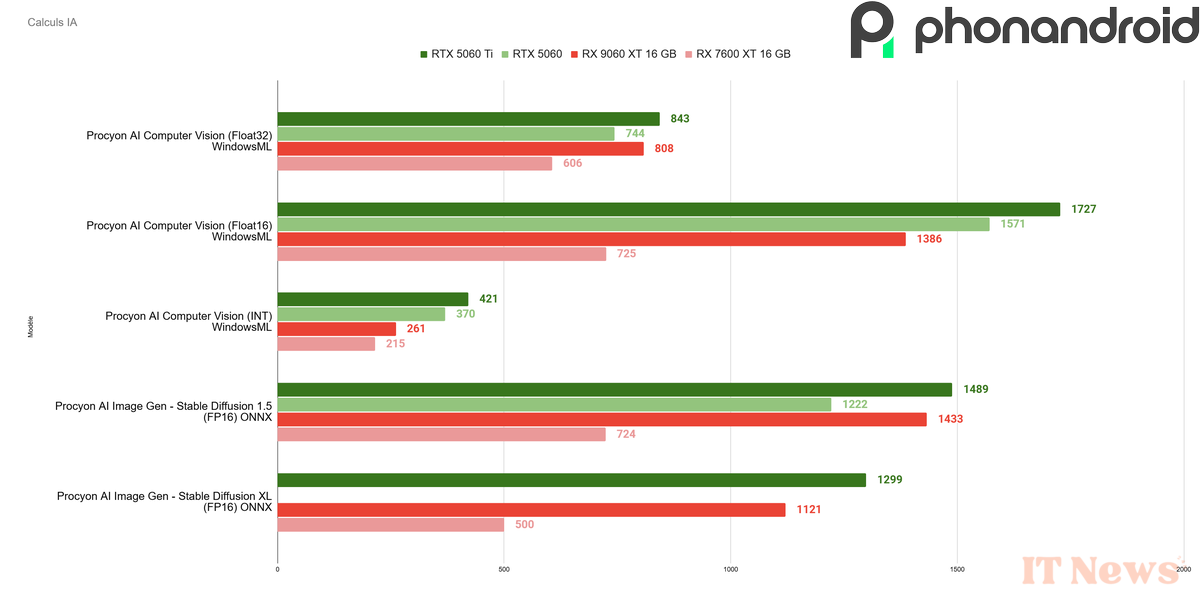
AI calculations are improving at AMD, although they are still lagging behind. Here, the RX 9060 XT manages to be equivalent in Float 32, but drops by 12% in Float 16 and by 29% in integers. On a Stable Diffusion creation, the 16 GB RX 9060 XT manages to equal the 16 Gb RTX 5060 Ti in the normal version, but loses by 13% in the XL version. The 5060 lacks VRAM to run this last test.
Measurements in 1440p and 1080p VS RTX 5060, RTX 5060 Ti 16 GB and RX 7600 XT 16 GB
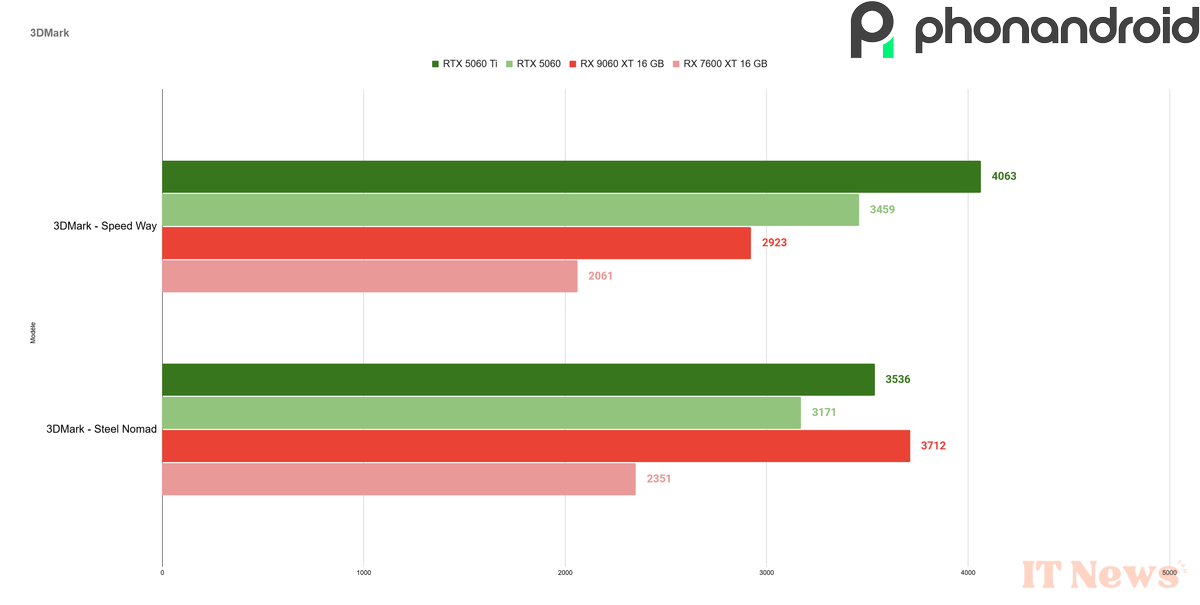
On Speed Way, dedicated to ray-tracing performance, the RX 9060 XT is inferior by 15% compared to the classic RTX 5060 and much more compared to the 5060 Ti. However, on Steel Nomad dedicated to pure raster, we can see that AMD's latest outperforms both the 5060 and the 5060 Ti by a small 5%. That's famous.
To test in real conditions, we used 9 titles:
- Alan Wake 2
- Baldur's Gate 3
- Black Myth Wukong
- Cyberpunk 2077
- Flight Simulator 2024
- Hogwarts Legacy
- Horizon Forbidden West
- Marvel Rivals
- Ratchet and Clank Rift Apart
These games were selected for different reasons. Some, like Alan Wake 2, Black Myth Wukong, or Cyberpunk 2077, push even the most recent graphics cards to their limits. Others, like Marvel Rivals, are a good indicator for modern competitive gaming. But above all, all these titles are compatible with a large majority of technologies on both sides, DLSS and FSR. Note that for these comparisons, the lowest common denominator is chosen: if a game supports DLSS Frame Generation, but not FSR3 Frame Generation, then the measurements are made in simple DLSS/FSR for the same comparison base. Ray-tracing is always pushed to the limit, or in path tracing when available or similar.
Also read – Nvidia RTX 5090 review: a true graphics revolution!
When possible, we will also compare the performance increases between the different DLSS/FSR/XeSS technologies. Unfortunately, these scores cannot be compared between solution X and solution Y, since they do not have the same impact on performance for the same visual rendering. Comparisons will therefore be made on a similar technology, when the results of other technologies are presented for information purposes only.
Alan Wake 2
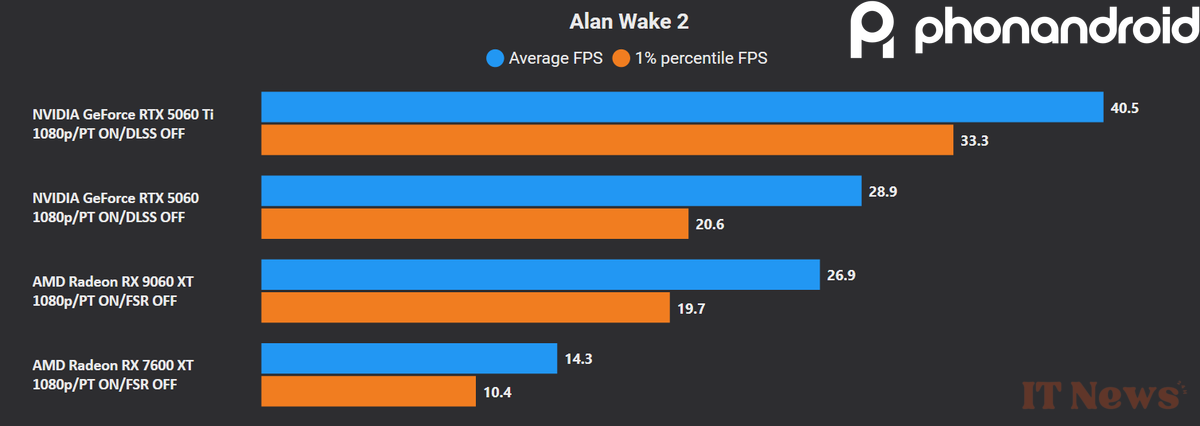
In 1080p, with path tracing enabled, the RTX 5060 Ti remains well above 50% compared to the RX 9060 XT, which is essentially on par with the classic 5060.
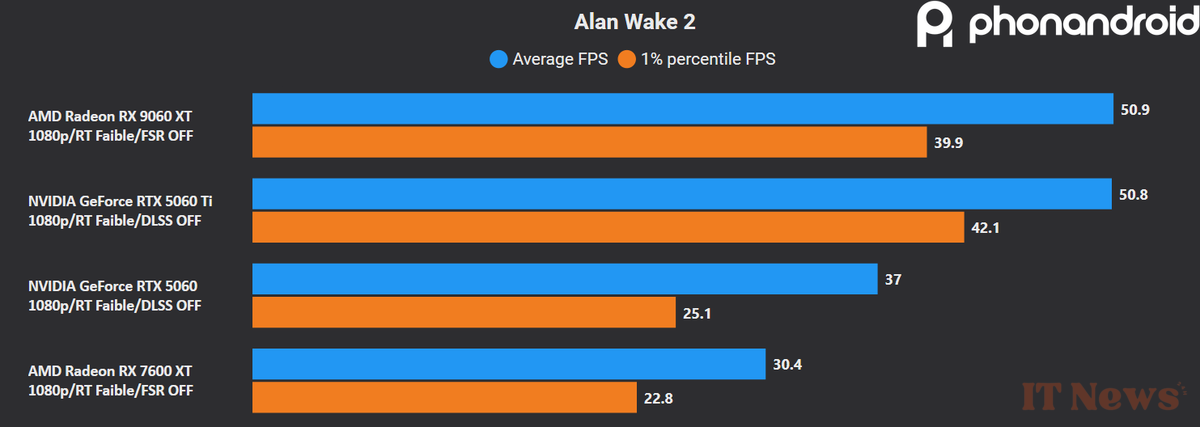
In Low RT, without path tracing therefore, the RX 9060 XT and RTX 5060 Ti are on par with a slight advantage to the 5060 Ti on the 1%. The 5060 is once again lagging behind by 25%.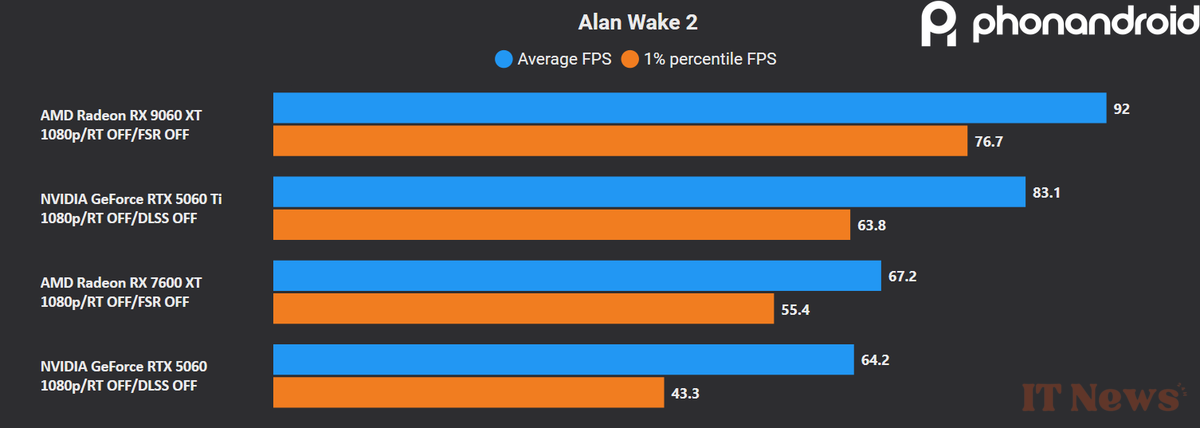
In pure rasterization, the RX 9060 XT is 11% higher than the 5060 Ti 16 GB, while the RTX 5060 finishes at the bottom of the basket even against the RX 7600 XT 16 GB.
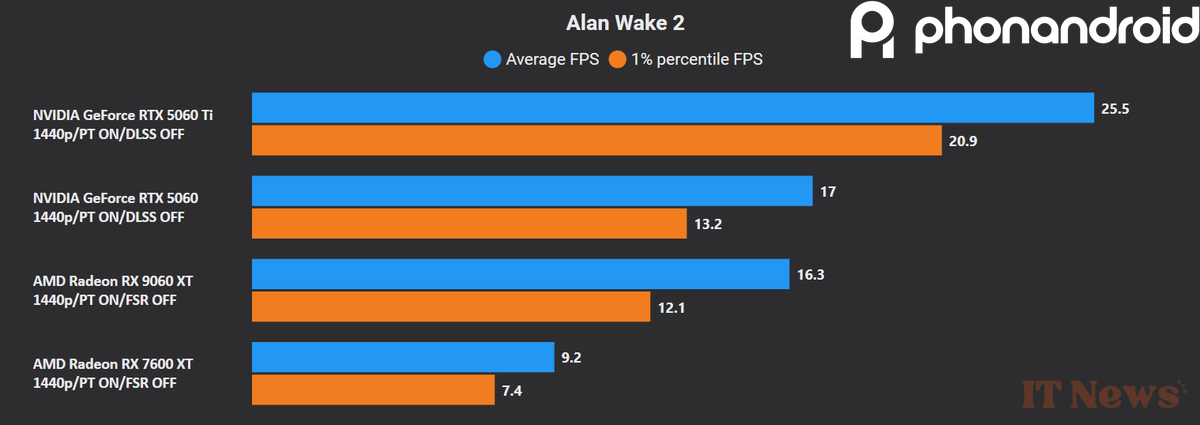
In 1440p, with path tracing enabled, the RTX 5060 Ti is largely playable using DLSS. The RTX 5060 and RX 9060 XT are relatively equivalent, with the 16GB of VRAM allowing AMD's card to better handle the onslaught.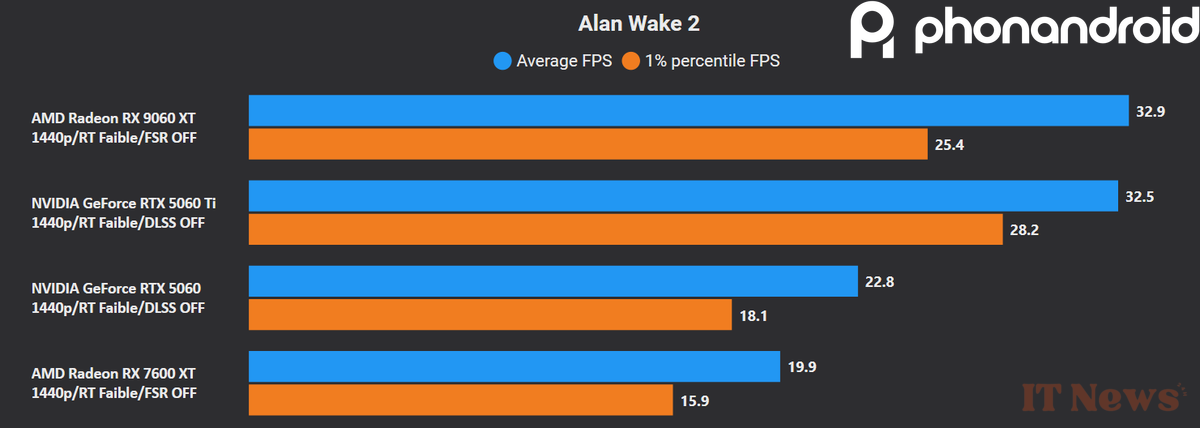
In Low RT, the 9060 XT and 5060 Ti are on par, with the green team having an advantage at 1%. Both are natively playable, but will offer the best experience with DLSS or FSR enabled.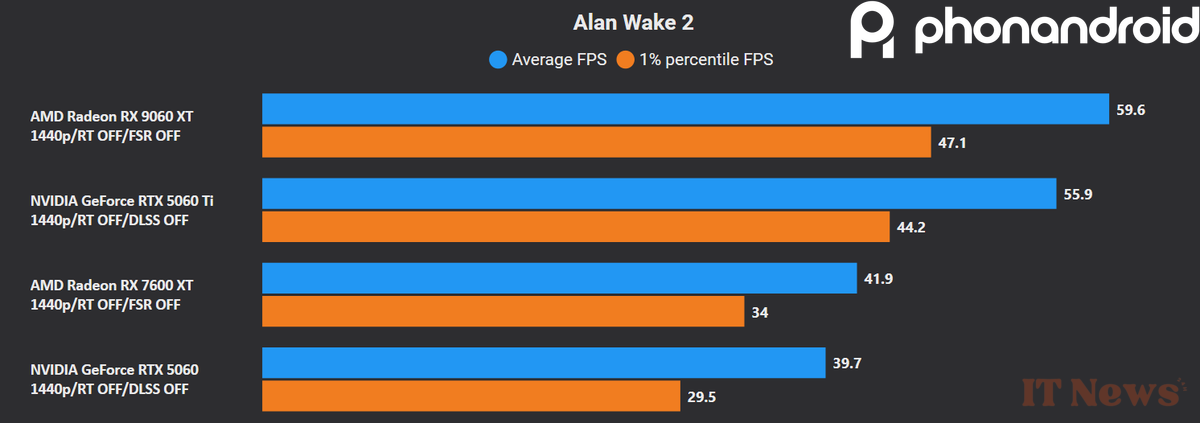
In pure rasterization, the RX 9060 XT is 7% ahead of the 5060 Ti, while the classic 5060 collapses due to a lack of VRAM.
Baldur’s Gate 3
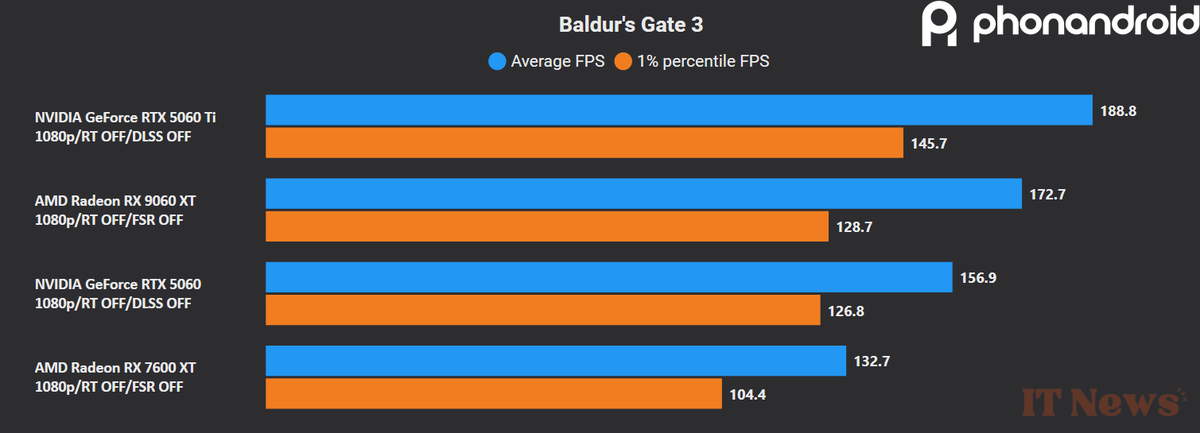
In 1080p, the RX 9060 XT is almost perfectly between the RTX 5060 Ti and the RTX 5060, with a 10% difference between the three cards.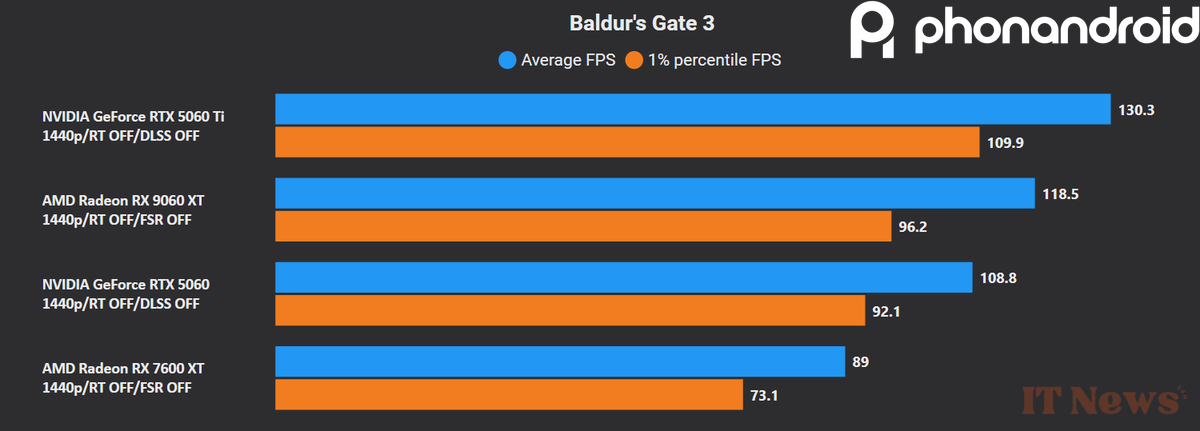
In 1440p, the difference is essentially the same.
Black Myth Wukong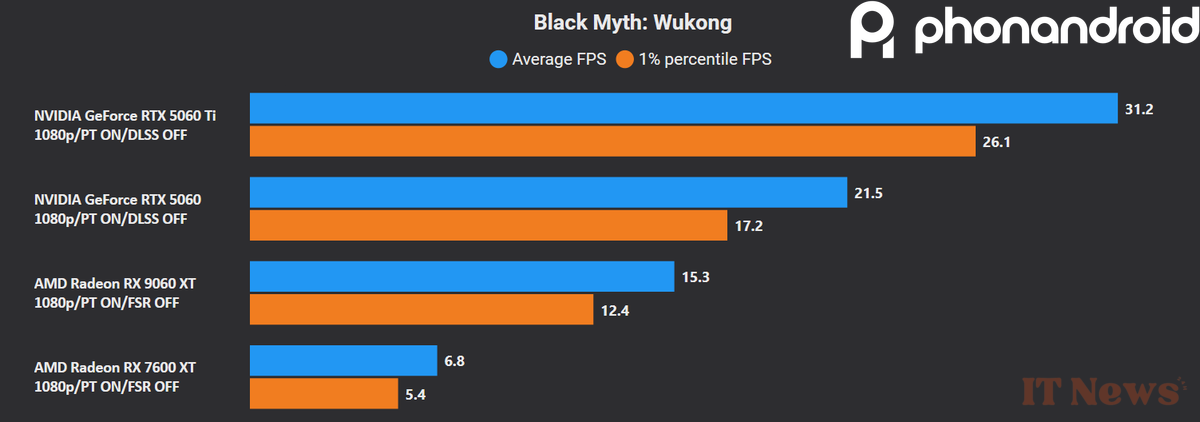
In 1080p, with path tracing enabled, the RTX 5060 Ti remains ahead, offering double the performance of the RX 9060 XT. The classic 5060 is also superior. It should be noted, however, that all these cards display sufficient performance for the game to be usable with DLSS and FSR, even natively in the case of the 5060 Ti.
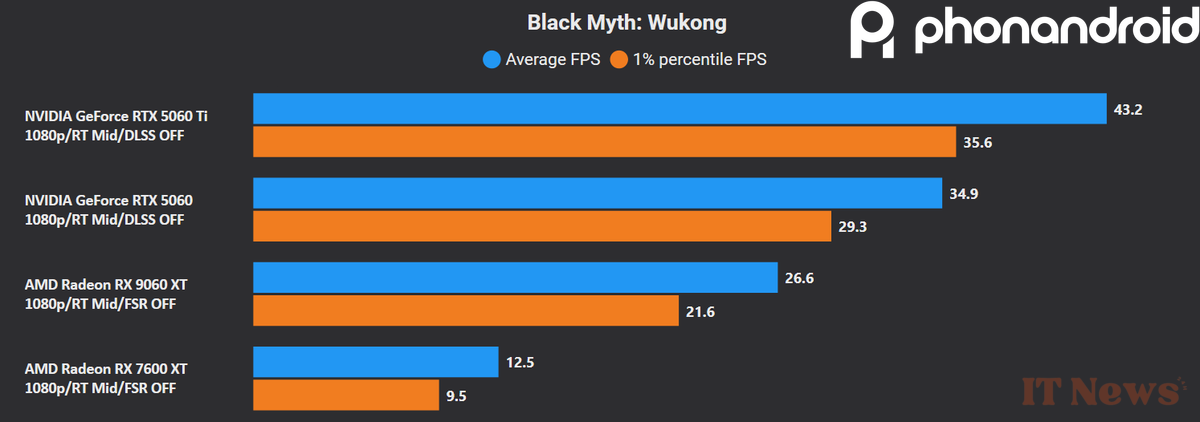
In RT Mid, the 5060 Ti maintains its 62% lead over the RX 9060 XT, which compares more favorably to the RTX 5060, although it is still 31% behind. However, we can observe an excellent evolution compared to the 7600 XT with doubled performance.
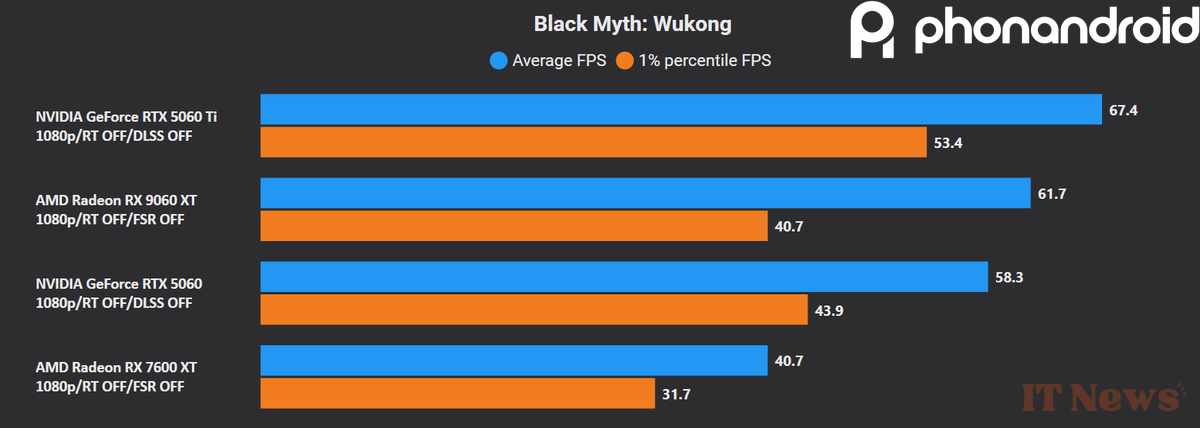
Without ray-tracing, the RTX 5060 Ti also remains above 10% with a 1% promising a more stable experience. The RX 9060 XT is more equivalent here to an RTX 5060, which also maintains a small advantage on the 1%.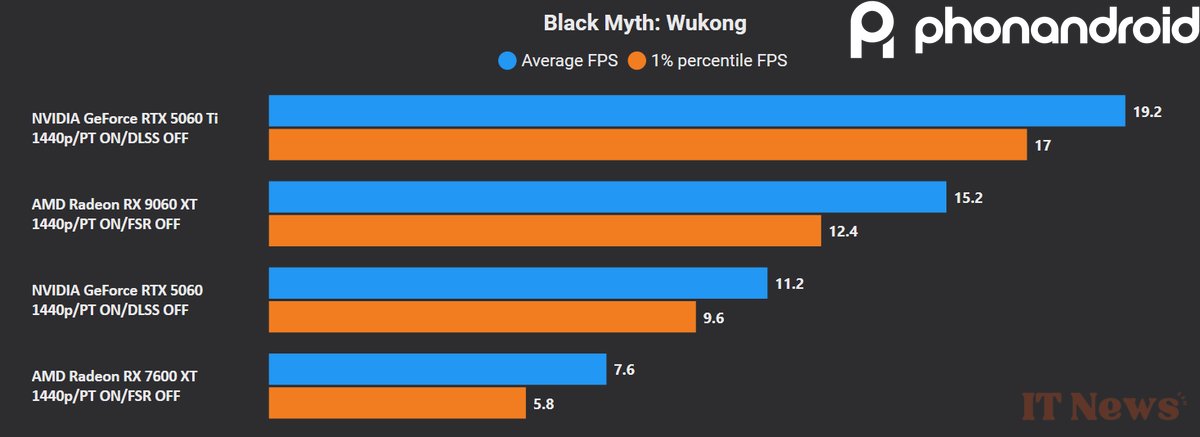
In 1440p, path tracing activated, the 5060 Ti still does better but the 16 GB of VRAM of the RX 9060 XT allows it to surpass the classic 5060. Only these two 16GB cards will offer a clean DLSS/FSR experience.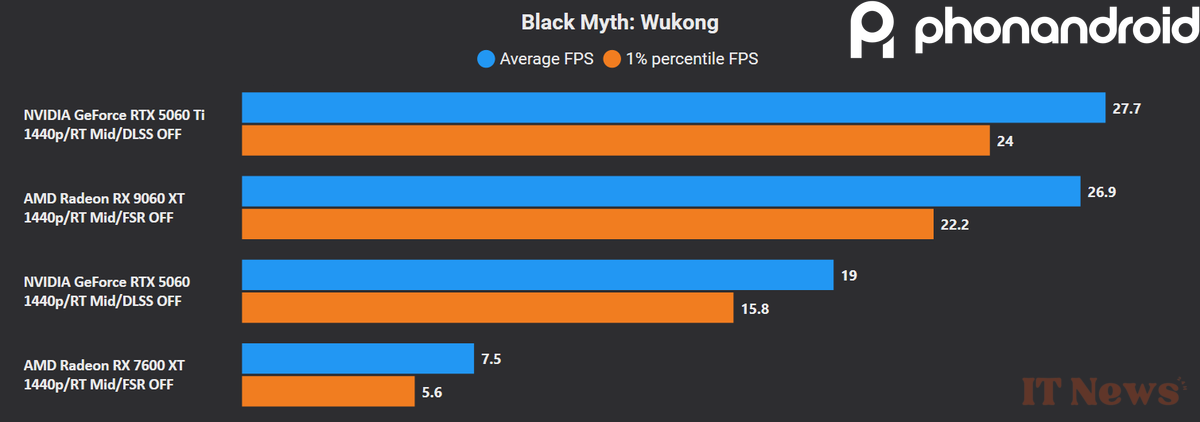
In RT Mid, the gap narrows between the 5060 Ti and the RX 9060 XT, which essentially offer the same 40% higher performance compared to the RTX 5060. That being said, all modern cards can count on DLSS/FSR here.
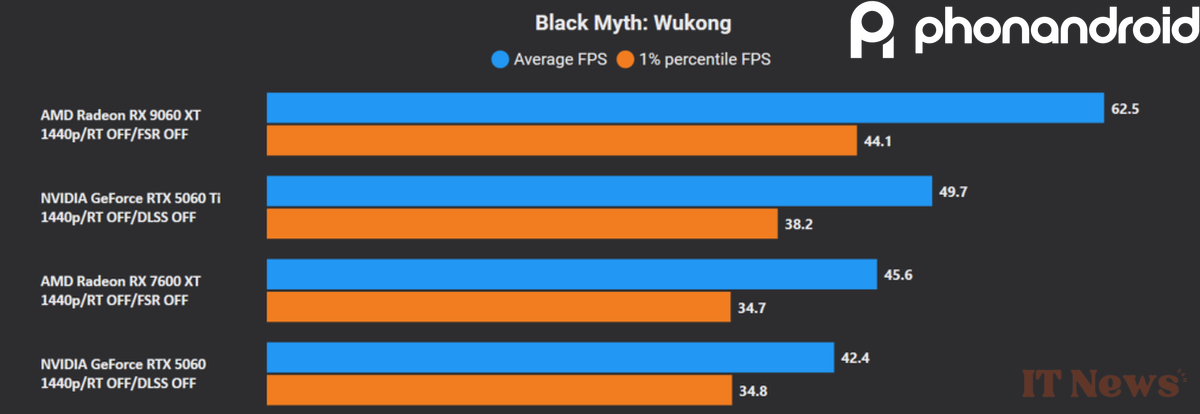
In pure rasterization, the RX 9060 XT easily takes the lead from 26% against the 5060 Ti, when the 5060 completely crushes against all cards with 16 GB of VRAM.
Cyberpunk 2077
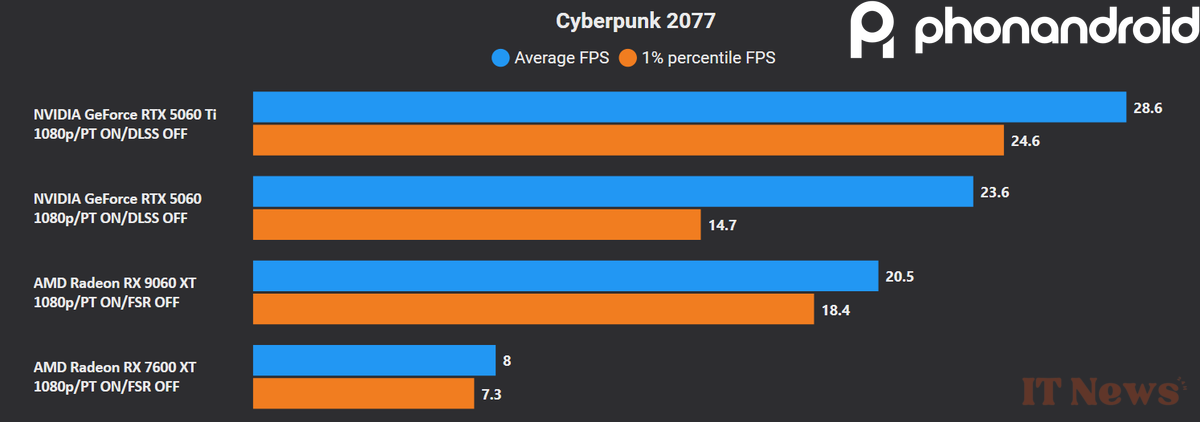
With 1080p path tracing enabled, the RTX 5060 Ti is the only one to offer a passable experience natively. The RX 9060 XT falls short of the 5060 in pure performance, but the 1% clearly shows that AMD's card will offer greater stability.
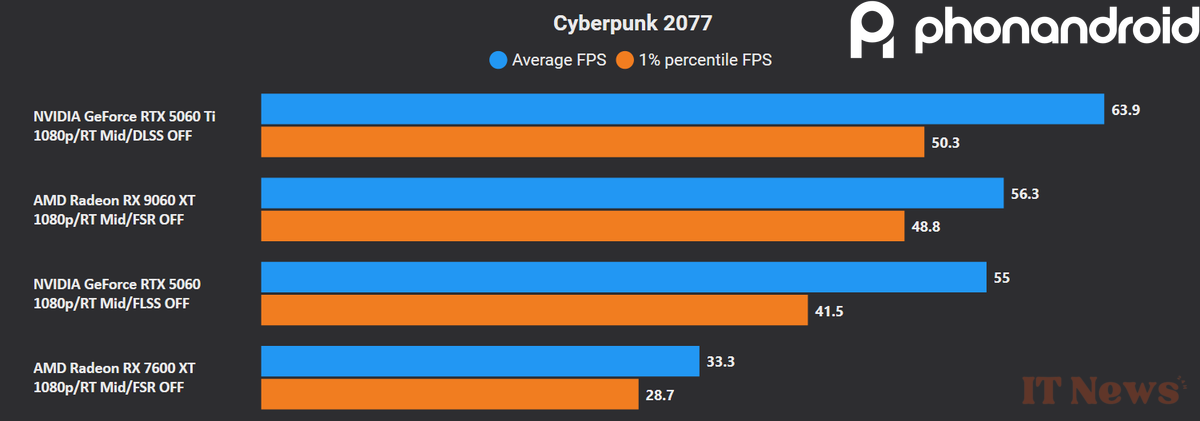
In RT Mid, the RTX 5060 Ti remains 13% higher, while the RX 9060 XT is on par with the 5060 while offering a more stable experience.
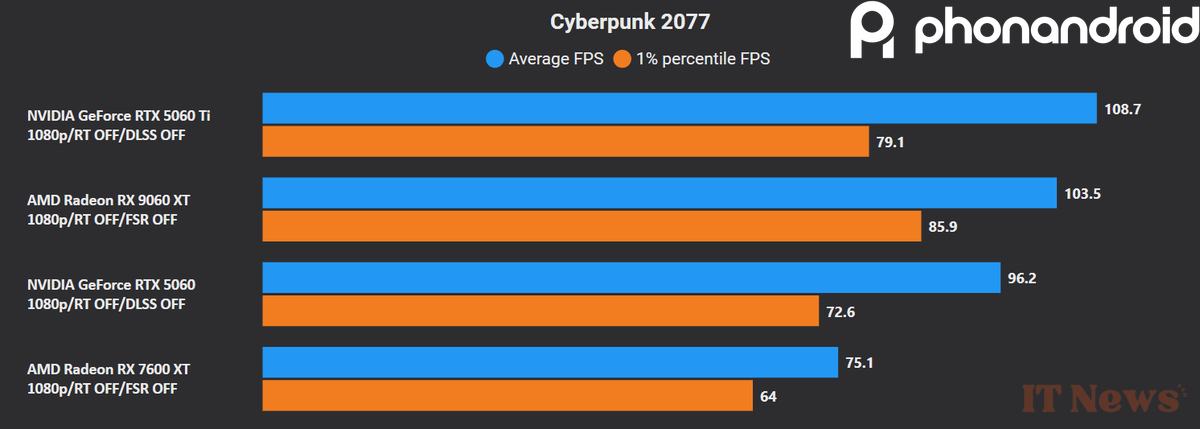
In pure rasterization, the RX 9060 XT essentially places itself in the middle of the 5060 Ti and the classic 5060 with a margin of 5%, with the advantage of stability once again. 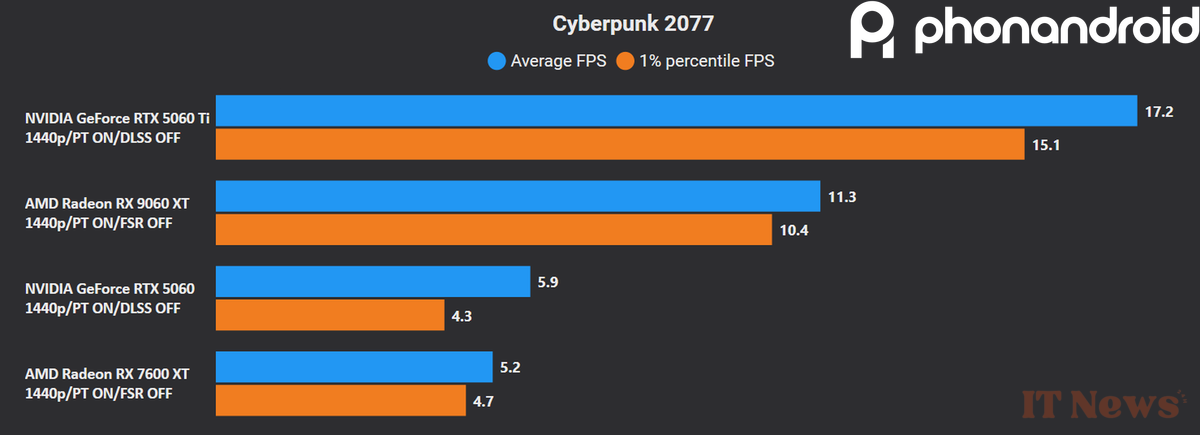
At 1440p with path tracing, only the RTX 5060 Ti offers a viable experience with DLSS. The RX 9060 XT, however, performs much better than the RTX 5060, which is completely slowed down by its 16 GB of VRAM.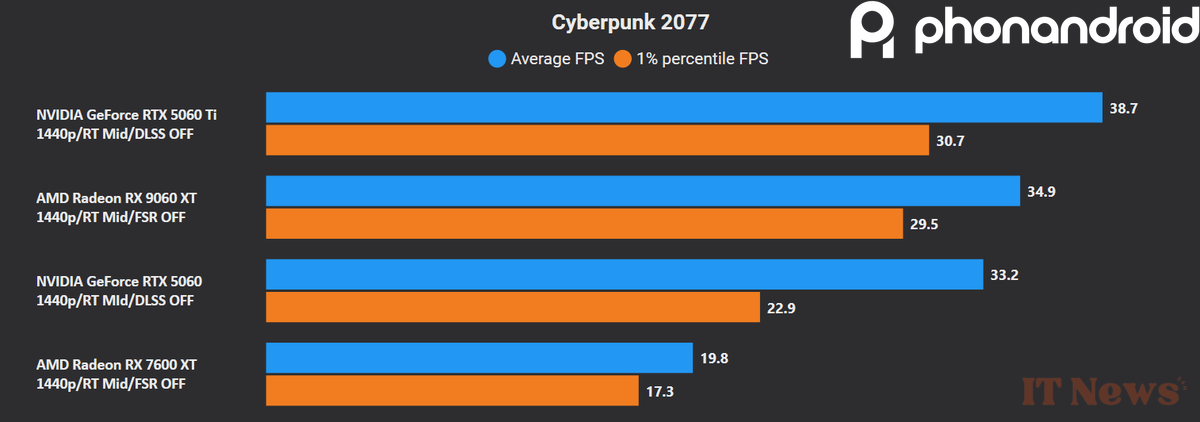
In RT Mid, the RTX 5060 Ti remains once again 11% higher, while the RX 9060 XT is on par with the RTX 5060, while offering greater stability.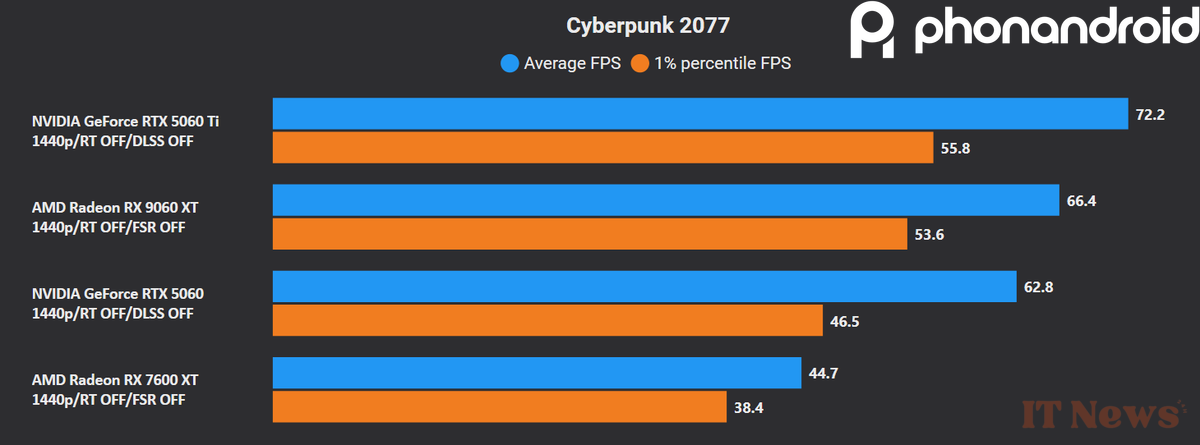
In raster, the RTX 5060 Ti retains first place by 9%, while the RX 9060 XT essentially places itself between NVIDIA's two offerings again.
Flight Simulator 2024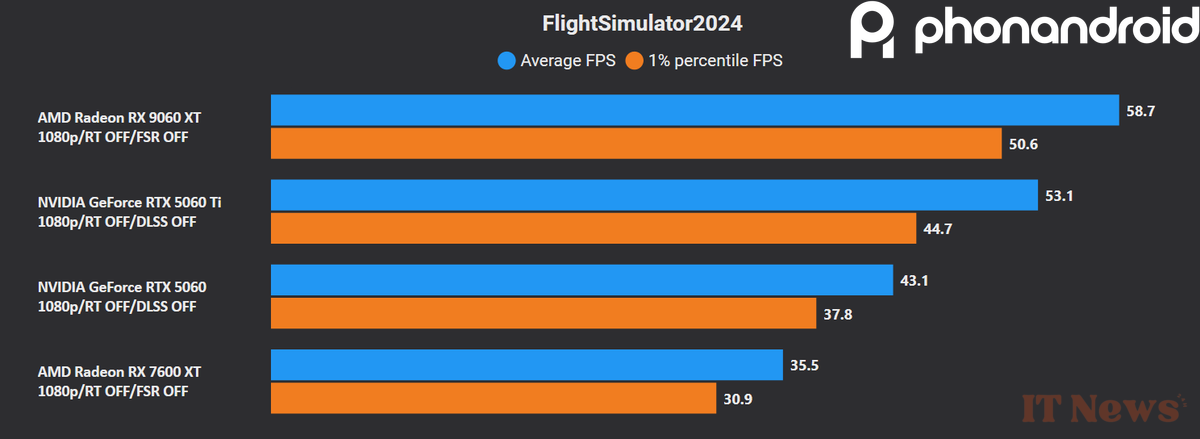
At 1080p, the RX 9060 XT takes the lead over the RTX 5060 Ti by 10% and essentially places itself between NVIDIA's two offerings, with an advantage over the RTX 5060.
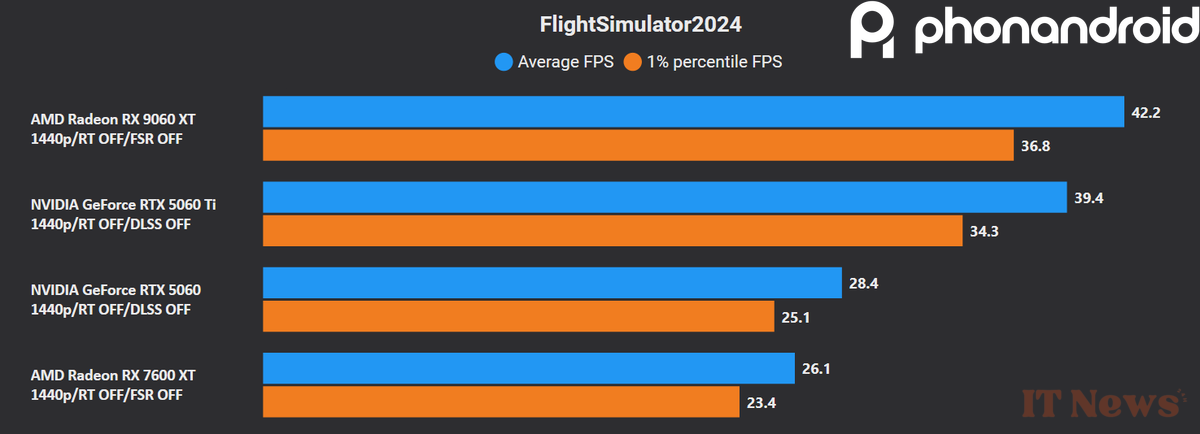
At 1440p, the observation remains essentially the same, although the gaps are reduced.
Hogwarts Legacy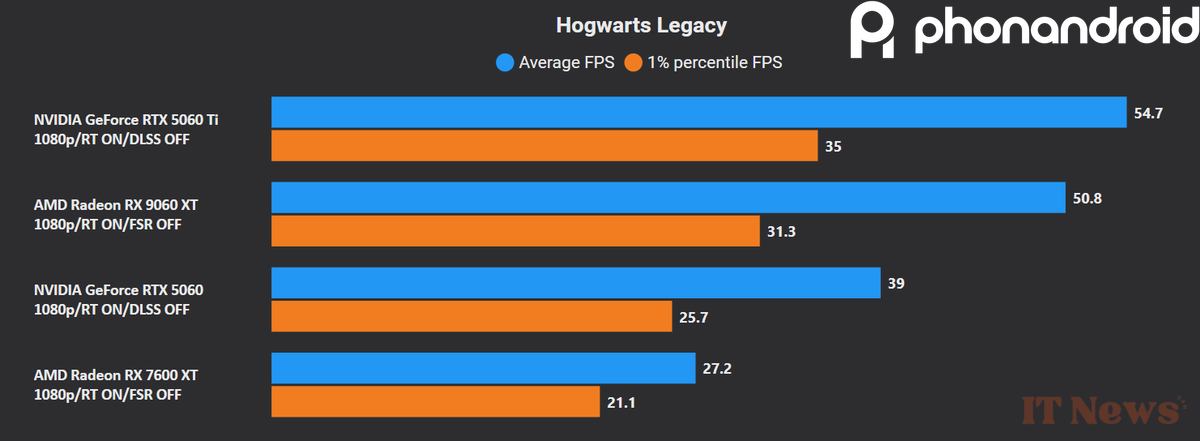
At 1080p, with RT at its maximum, the RTX 5060 Ti narrowly holds the lead at 8%. However, the RX 9060 XT offers a much more comfortable experience, 30% better than the RTX 5060 thanks to its 16 GB.
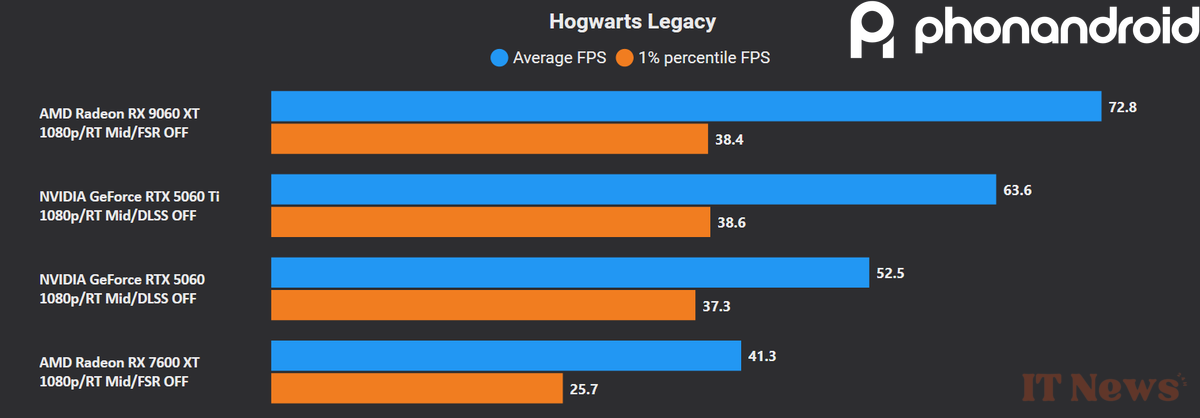
In RT Mid, the 9060 XT takes the lead by 14.5% against the RTX 5060 Ti and leaves the RTX 5060 far behind.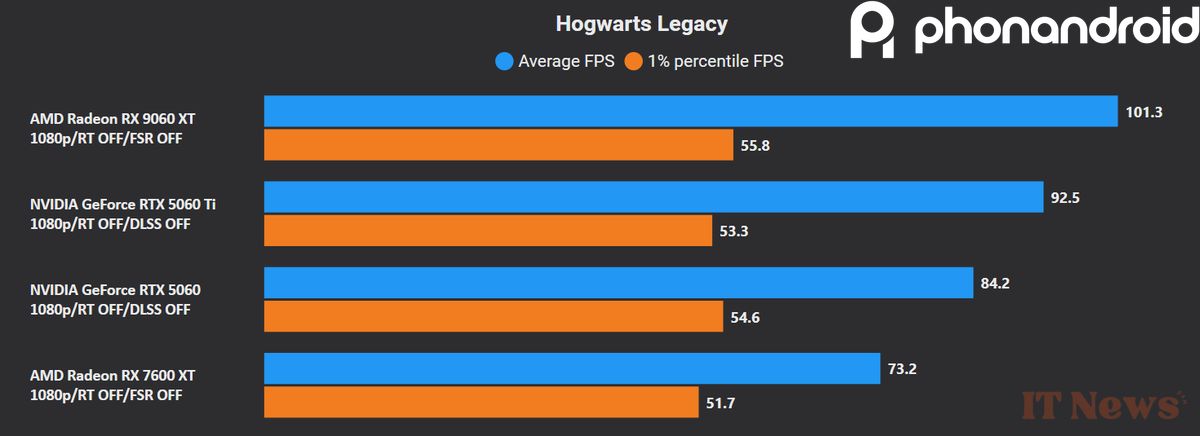
Without raster, the 9060 XT is still 9.5% ahead of the RTX 5060 Ti, when The RTX 5060 is behind by 20%. 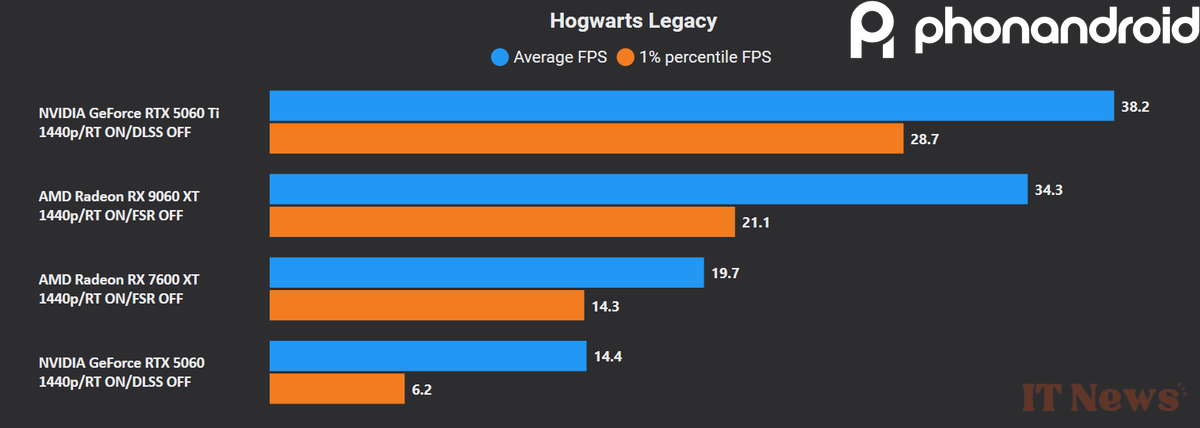
At 1440p, RT still at max, the RTX 5060 Ti remains ahead by 11%. However, it should be noted that the RTX 5060 and its 8 GB of VRAM are completely crushed and unplayable.
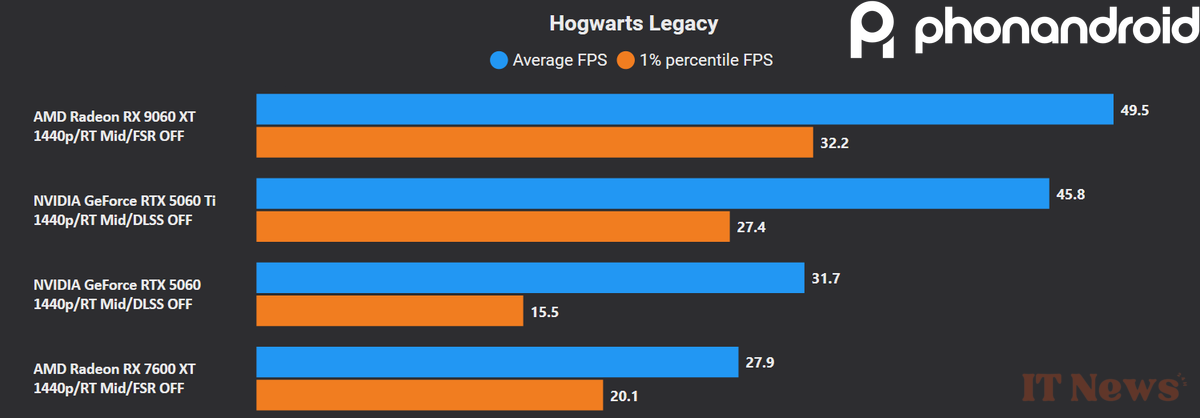
In RT Mid, the RX 9060 XT regains the lead by 8% against the RTX 5060 Ti, while the RTX 5060 regains some color while lacking stability.
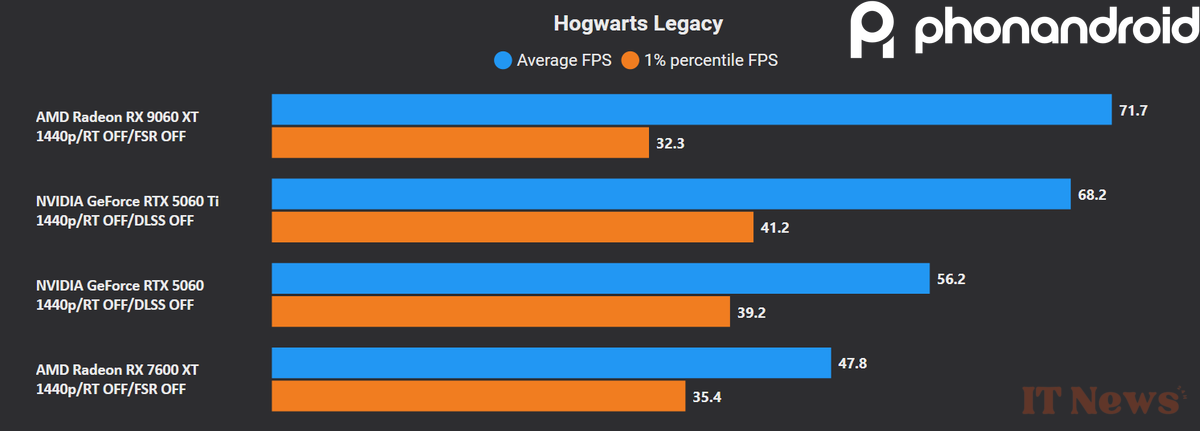
Without ray-tracing, the RX 9060 XT is theoretically in the lead again, but the RTX 5060 Ti sends essentially the same average FPS while keeping the experience more stable. The 5060 does much better, but remains behind by 21%.
Horizon Forbidden West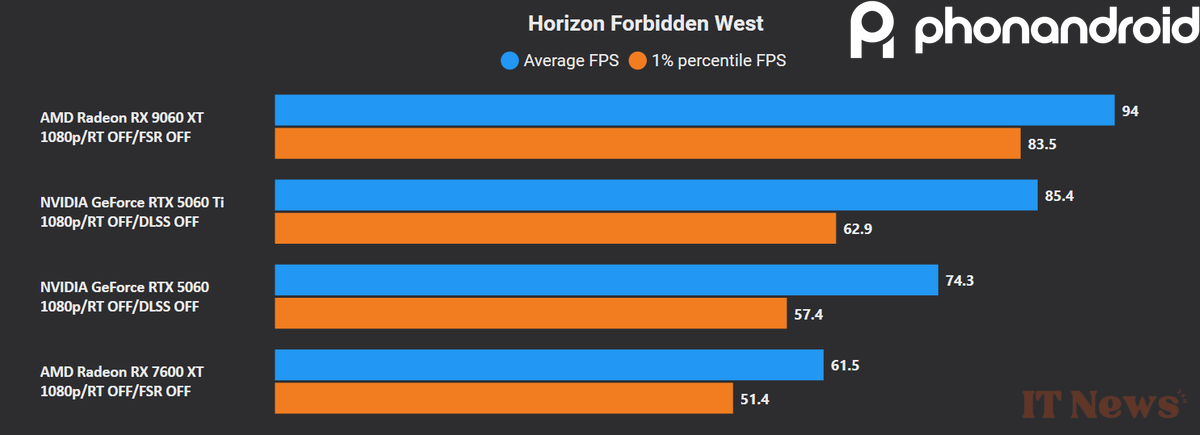
In 1080p, the RX 9060 XT is again 10% ahead of the RTX 5060 Ti, and much more stable.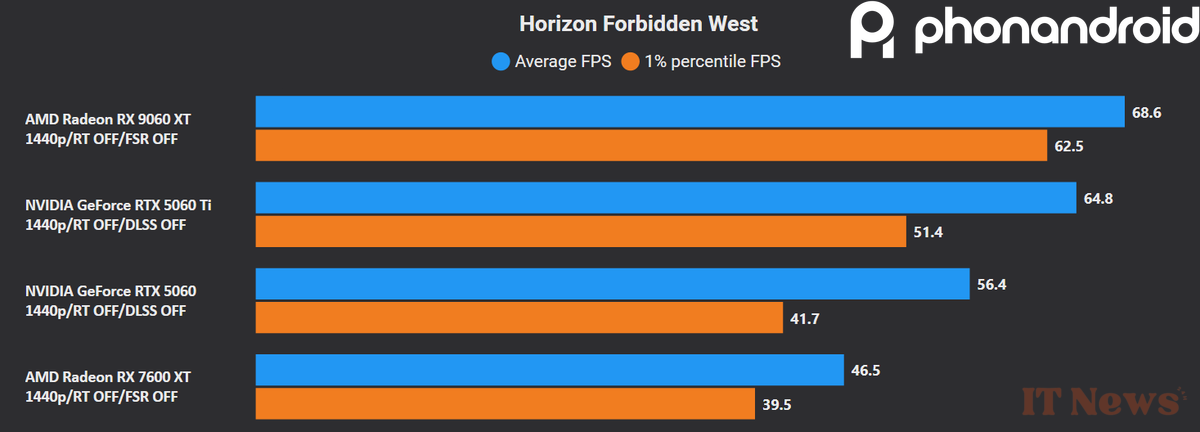
In 1440p, the same observation with a more subtle lead of 6% with stability still bigger.
Marvel Rivals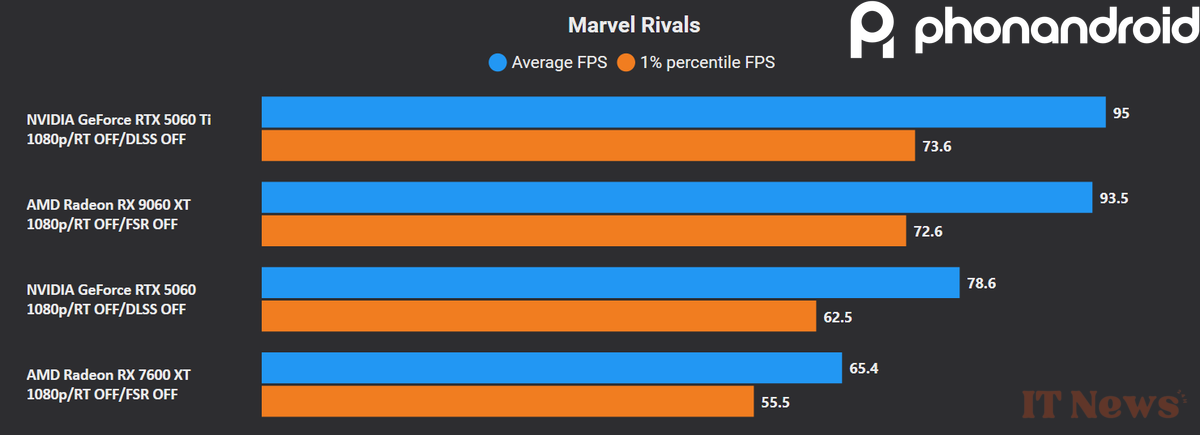
At 1080p, the RX 9060 XT and the RTX 5060 Ti are essentially the same cards. The RTX 5060 is 19% lower.
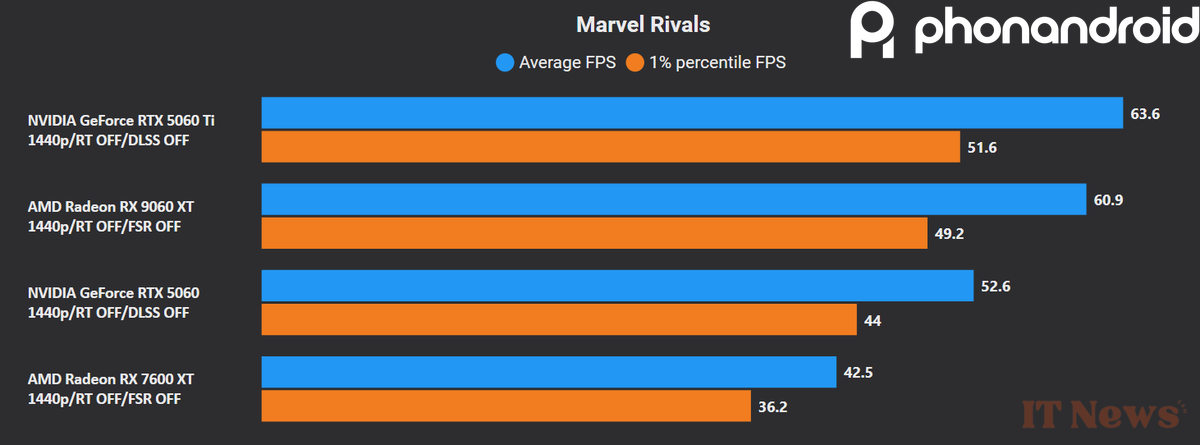
In 1440p, same observation with an RTX 5060 lagging by 16%.
Ratchet and Clank Rift Apart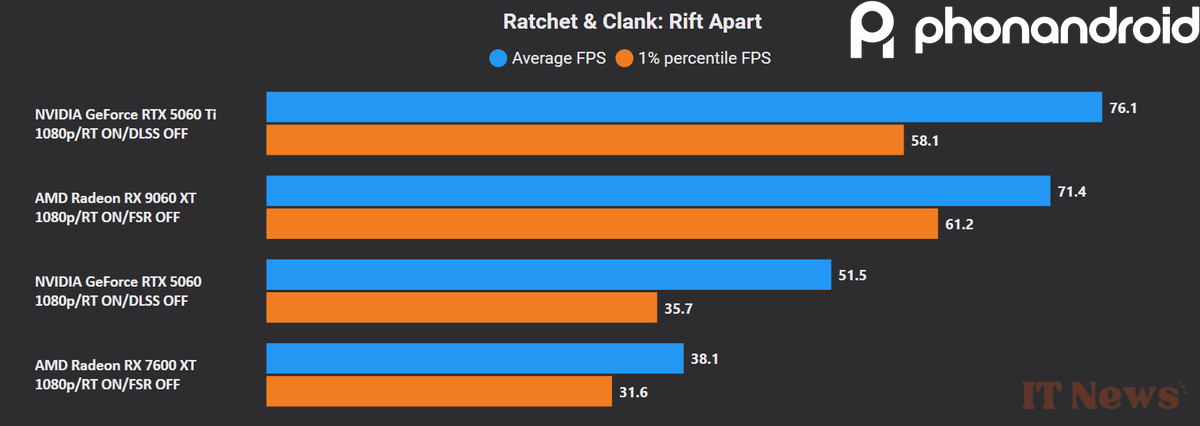
In 1080p, RT pushed to the maximum, RTX 5060 Ti is slightly higher by 7%, when the RTX 5060 remains behind by 38%.
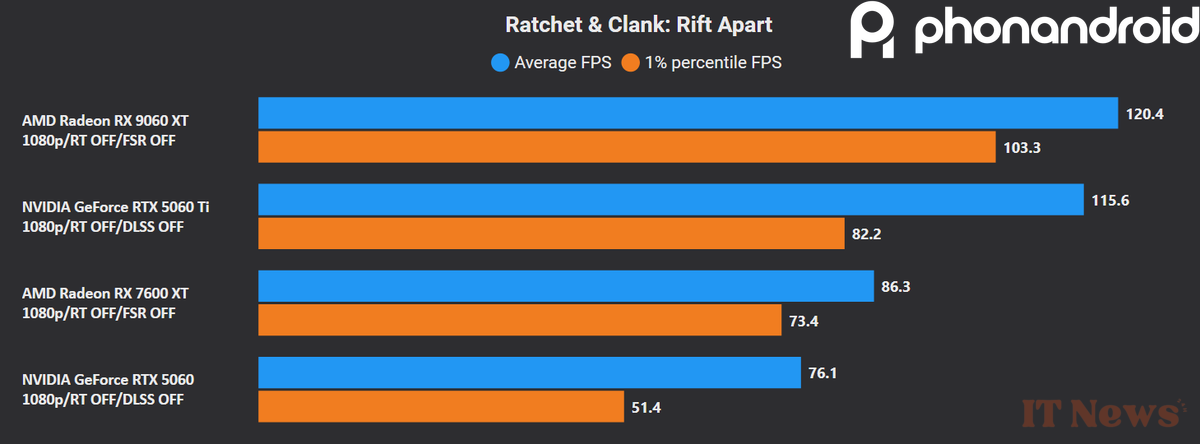
In pure rasterization, the RX 9060 XT regains the lead by 4%, with much greater stability than the RTX 5060 Ti. The RTX 5060 remains far behind.
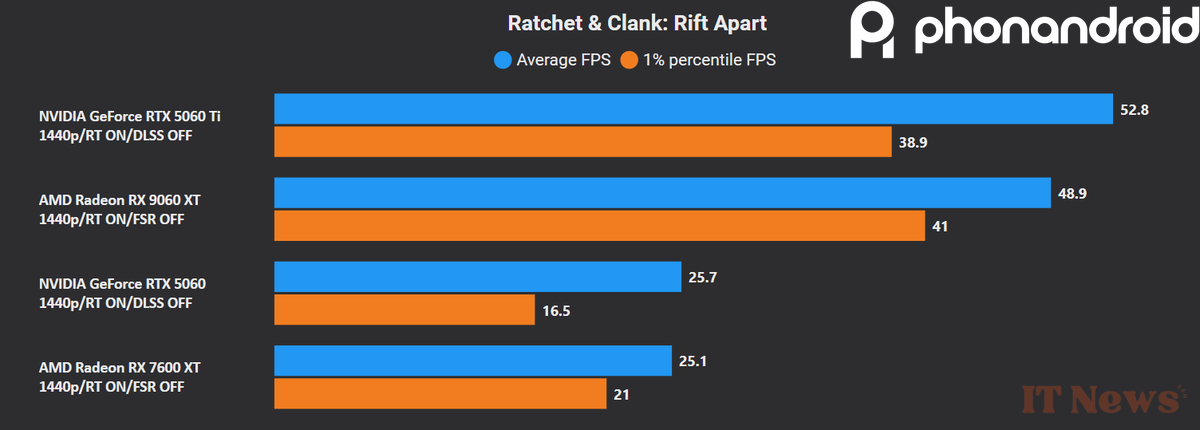
In 1440p with ray tracing, the observation is essentially the same as in 1080p.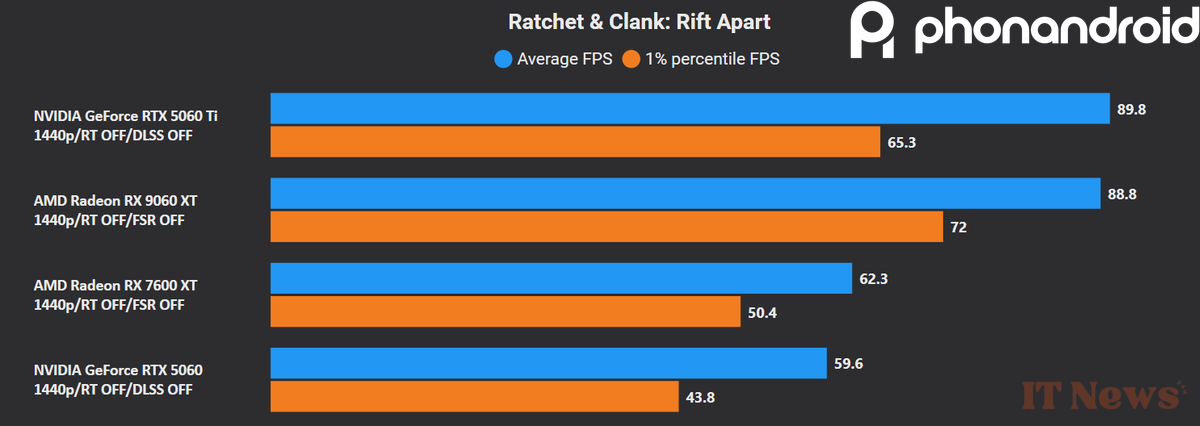
In pure rasterization, equality is counterbalanced by greater stability for the RX 9060 XT.


0 Comments