
Is the time of trade shows and other major tech events over? Every year, more and more major manufacturers are skipping these types of events and even CES, which was a must-attend event a few years ago, is no exception to this new rule. Does this mean the death of the tech world's flagship trade show? A look back at the 2025 edition.
AI at the heart of CES
Unsurprisingly, the two most spoken and heard words in Las Vegas for a week were: artificial intelligence or AI in the language of Shakespeare. This is not surprising, of course, since the word suitcase has been used in every sauce and in every tech conference for over 18 months, but it is now an integral part of every product pitch, whether it is a small household gadget or a passenger transport vehicle.
On the consumer product side, we will now have to rely on AI applications elsewhere than on our smartphones, particularly on our laptops, but also and above all on our televisions. Until now, AI on TVs was mainly used to improve the image by generating additional pixels, on upscaling tasks, for example. From the next OS updates, AI will take up more and more space, whether in the organization of the interface, but also in the way of interacting with our televisions. More advanced search functions, on-demand image enhancement options, the possibilities are numerous and manufacturers seem ready to exploit them.
The big trends at CES
We expected to see connected rings everywhere and it was another accessory that flooded the show: connected glasses. In the wake of Meta's Ray-Ban, many players are looking to position themselves in this growing market. And on this point, there are many innovations. We think for example of Hallyday's connected glasses which project a small screen that is placed in the viewing angle and provides real-time information to the wearer. But the young start-up is not the only one to have distinguished itself with this type of product. Players such as Essilor or Zeiss have also shown up with their in-house technologies. While marketing seems possible for most of the products shown, it seems obvious that this market is in the process of being structured and that connected glasses will develop over the course of the year.
The other sector that is taking up more and more space at CES is home automation, which now occupies an entire hall of the show in Las Vegas. In home automation, the stars of CES this year are small domestic robots: robot vacuum cleaners, robot lawnmowers, robot window cleaners, in short, all these assistants that save time and make life more comfortable.
The difference with previous years is that all of its products seem to be reaching maturity with performances worthy of the name. This is particularly the case for new generations of lawn mowers that no longer need a guide wire to operate. They now work with advanced sensors, such as Lidar or cameras.
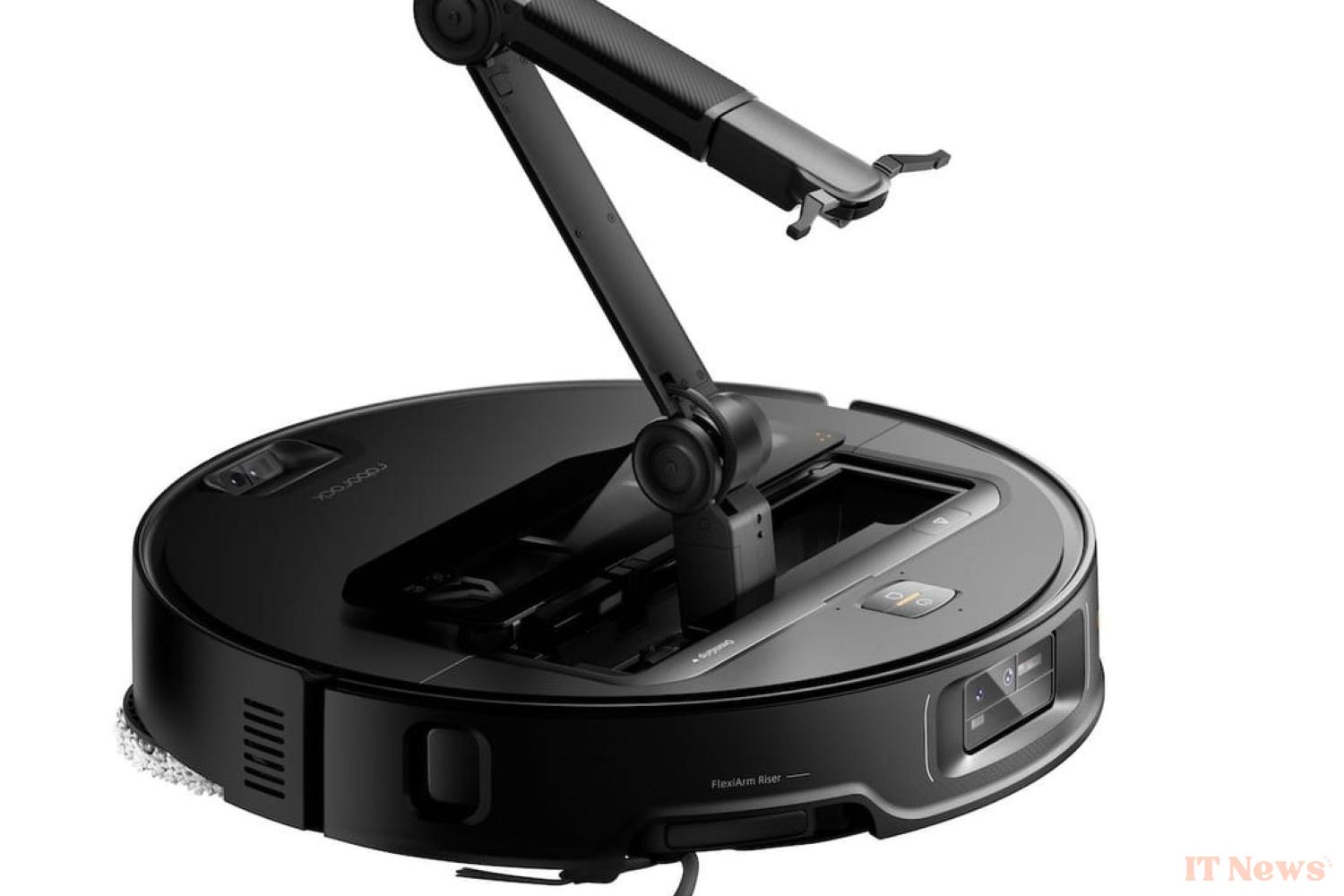
As for more traditional robots, progress is also notable with some really interesting developments, particularly in robot vacuum cleaners. At Roborock, for example, the Saros Z70 has a robotic arm that can pick up and store all the small objects lying around on the ground. At Dreame, the new model, the X50, manages to pass obstacles and small steps up to 6 cm high. Not enough to revolutionize the category, but new development avenues that prove that developments are still possible, even on products with a priori limited capabilities.
OLED vs LCD: the match is on again!
Those who declared OLED the winner of the duel between it and LCD should be wary. The good old LCD may not have said its last word. For a few years now, miniLED technology has allowed it to offer much better contrasts while achieving high diagonals, and if it cannot reach the depth of OLED blacks, it has nothing to be ashamed of in terms of image quality. But at CES 2025, this classic OLED vs LCD duel entered a new dimension. On the LCD side, a new technology has come to shake up the market: RGB local dimming, or the possibility of using classic red, green and blue LEDs to generate light and not just relying on blue LEDs for this task. Hisense seems to be at the forefront of this new technology and TCL also has its solution. The result, as it appeared on the demonstration models, seems promising with very deep blacks and an unprecedented level of contrast on LCD. This on panels up to 116 inches diagonally...
However, has OLED lost its competitive advantage? More expensive, the technology dear to LG, but also to Samsung for three years, could boast of better image quality. Above all, for a few months, it seemed able to correct one of its rare defects with very effective anti-reflective filters. But there remained a weakness. A weakness that CES 2025 seems about to send back to the past: brightness. Indeed, whether on White OLED or QD OLED, panel manufacturers announce constant progress in terms of brightness every year. Progress that is more or less verified in the tests... But this year, OLED seems to have reached a technological milestone. LG has abandoned its MLA, Samsung has changed its process on the QD OLED with the S95F and the result is the same in both cases: an announced explosion of brightness with values close to 4000 nits. This figure, unimaginable just a few months ago, will of course have to be verified by the 01Lab, but in the meantime, the OLED vs LCD duel has resumed with renewed vigor.
The big absentee from the show: the electric car
Are car brands done with CES? For the first time in several years, manufacturers seem to have shunned Las Vegas. Very few of them were present at the show and, among those who made the trip, none presented a new vehicle.
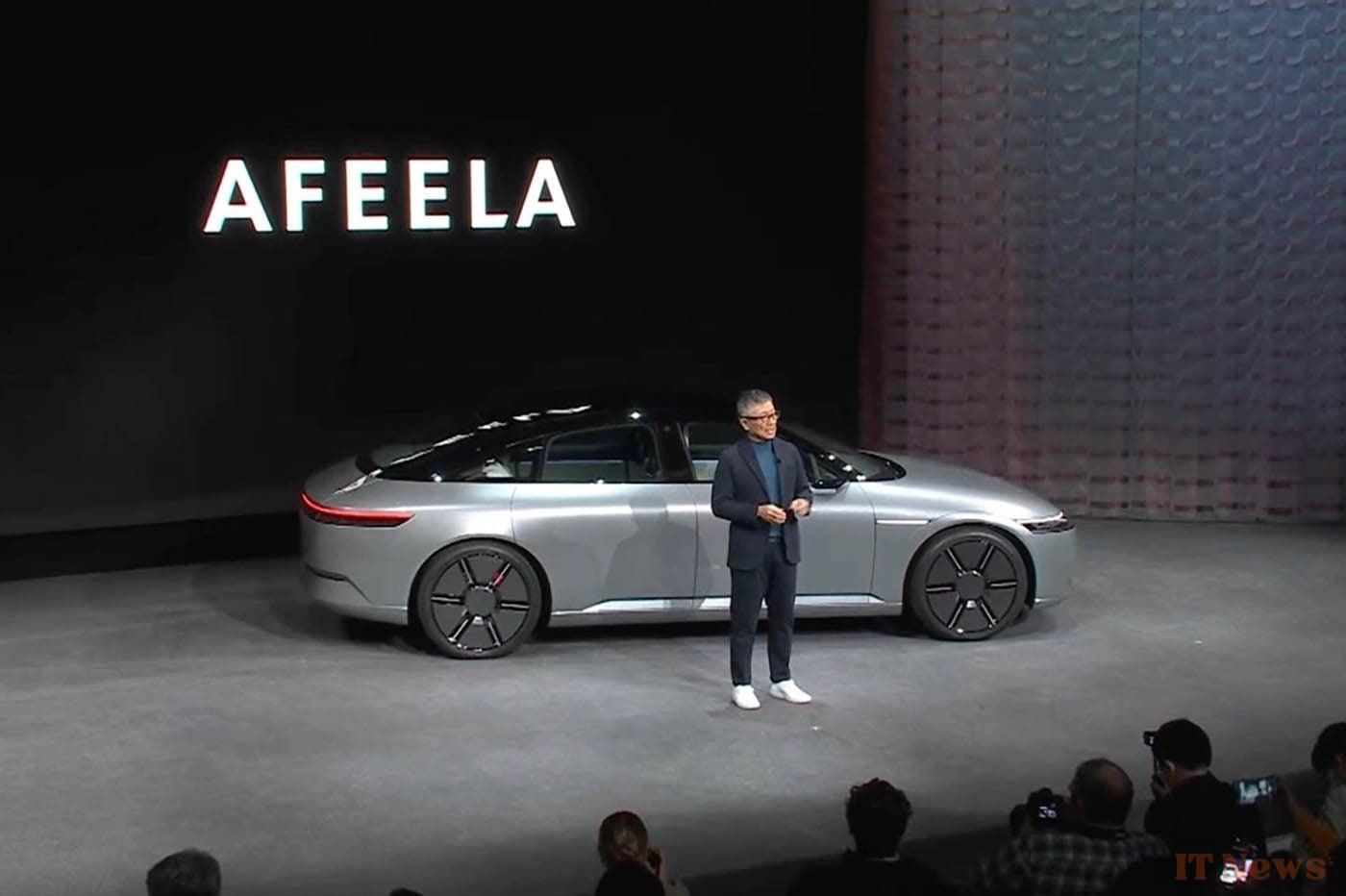
Certainly, there is Sony which, with its Afeela 1 developed in partnership with Honda, has made official the final version of its autonomous car, but it will not arrive until next year and only in California at first. When we add to these initial limitations a price of at least $93,000, we understand that Sony's electric car is not likely to arrive here anytime soon.
On the other hand, the Japanese partner, Honda, presented two concepts, an SUV and a sedan, which finally mark the brand's electric turn. A little late? Conversely, the brand that is not late is Xpeng, which already sees where it wants to be in a few years. The young Chinese manufacturer distinguished itself with a very notable concept: an SUV capable of holding an individual transport drone in its trunk. Finally, among the most recognized manufacturers, it was BMW that managed to stand out by taking advantage of the show to unveil its next interface. Named Panoramic iDrive, it will equip all BMWs from 2025. Visually very successful and customizable, it promises to give a boost to the interior of German cars.
Nvidia leaves its mark on CES
But what we will probably remember in a few years from this CES 2025 is neither a technology nor a product, it is to what extent it has established Nvidia as the most powerful tech brand of the moment. This began at the official opening of the show, since it was the brand's iconic CEO, Jensen Huang, who hosted the traditional inaugural conference of the show.
But above all, the Santa Clara brand seems to have more than one foot in all the major technologies of the years to come. From AI of course, where its GPUs are a reference, to the automobile industry, where it has become a key player, through robotics with its Cosmos project or even video games. If the RTX50 caught the attention of observers, Nvidia was simply everywhere, even when it wasn't there. As proof: even the Switch 2, which was much talked about in the last days of the show (and which has still not been announced) should include Nvidia...


0 Comments