
Meta has entered the generative AI race with the delicacy of a bull in a china shop: without nuance, and doing as much damage as possible! The craze of Mark Zuckerberg’s group for the past year or two has been to impose interactions with AI bots on users of its social networks and messaging services, whether they like it or not.
Fake lives, real problems
A statement set the powder keg alight this week, that of Connor Hayes, vice president of product for generative AI. He announced in the Financial Times that Meta intends to integrate profiles of AI bots pretending to be humans: “[they] will have bios and profile pictures, and they will be able to generate and share AI-powered content on the platforms.” And it is a priority for the company.
During a rather quiet period in news, this statement was picked up everywhere, including in our columns, and it circulated a lot on social networks. It illustrates how Facebook and Instagram are drifting more and more towards the dehumanization of exchanges, while their basic function is to allow humans to connect and exchange with each other. Seeing Meta bots with their big boots burst onto social networks is not very exciting — especially since the pollution of AI bots (spam, scams of all kinds) already exceeds the alert level.
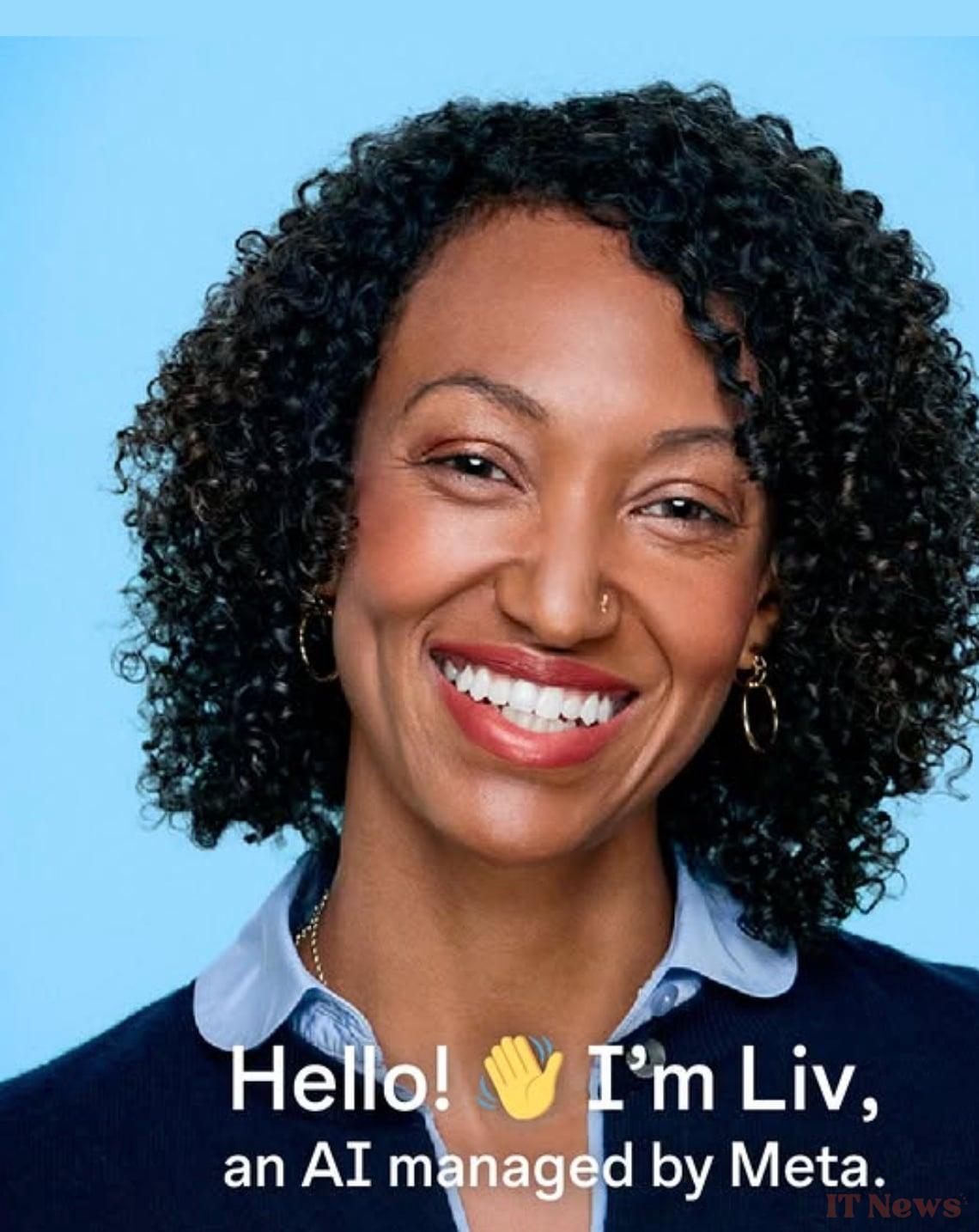
In the wake of Connor Hayes' comments, users began to spot the antics of several bots labeled "an AI managed by Meta". We can at least recognize that the company is announcing its colors. Particularly caricatured bots, which share completely fake and misleading images and texts generated by AI.
"Liv" has gone viral in recent days: this "proud queer black mother of two and truth seeker" presents herself as "your most authentic [sic] source for the ups and downs of life". Among her publications, photos of her "children" with strange hands that are never the same from one image to the next, or even a (fake) donation of clothes accompanied by an encouragement to "help your community". The insult added to the caricature.


However, these bots have not appeared in recent days. They have actually been around for over a year, quite discreetly because their posts hardly make waves. In fact, most of them haven’t posted anything since April 2024. It wasn’t until Hayes’ statement that users noticed them and despaired at such emptiness.
A spokesperson for Meta, Liz Sweeney, explained that there had been confusion between the VP of Generative AI’s comments and the presence of these bots. “The recent Financial Times article was about our vision for AI characters on our platforms in the long term, not the announcement of a new product,” she told 404media. "The profiles mentioned come from a test we launched (…) in 2023. They were managed by humans and were part of an early experiment we conducted with AI characters."
In fact, these famous profiles have indeed been deleted. But others will arrive, according to Meta's announcements, and there is no guarantee that they will be more relevant or engaging. Past experience shows that it may be complicated.
Source: 404media


0 Comments