
In just a few decades, computing and digital technology have evolved at breakneck speed. Using these technologies on a daily basis has become a given. To entertain ourselves, inform ourselves or carry out administrative procedures, we no longer have a choice but to be overconnected.
While this dependence on digital technology is regularly criticized, we have had no trouble getting used to this change in lifestyle to the point of no longer knowing how to do without it. Whether it is quick entertainment on TikTok, online games or medical monitoring, taxes and other paperwork: digital technology is investing our lives in all directions.
Social networks and video games are now an integral part of our daily lives, whether we are geeks or not. The 2022 digital barometer established by the French government lists no less than 82% of daily Internet users for whom the Internet is essential, while 62% also play video games.
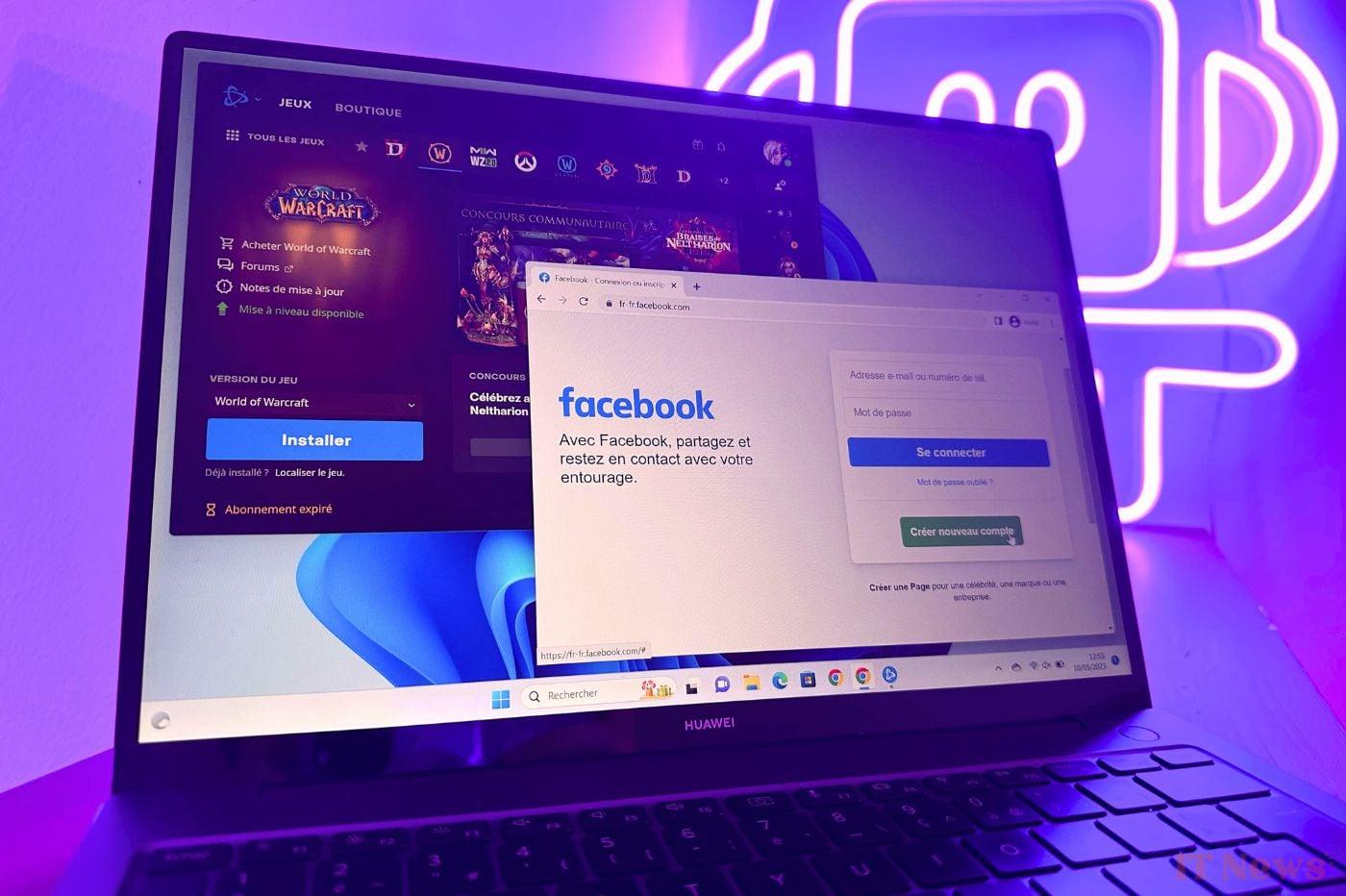
These media also share a more intimate link than one might think. With the arrival of virtual reality and the metaverse, the line between video games and social networks seems increasingly thin. However, in reality, video games and social networks have never ceased to inspire each other.
The advent of online games
At the end of the 90s, the concept of a social network did not yet exist. To do this, we had to wait for the explosion of Facebook, which finally surpassed MySpace in 2008. However, technophiles were already communicating with each other by other means. Forums, chatrooms, MSN… digital socialization was emerging.
Some even used these tools to organize the first online role-playing games. The first traces date back to certain French forums such as TourDeJeu in 2001. Far from being the most optimal way to set up an RPG campaign, this innovative tool nevertheless allowed friends from all over the world to have fun, no matter how far apart they were. Faced with this new way of playing, it only took a short time before discovering the first online games, strictly speaking.
Players quickly discovered Realm Online (1996), EverQuest (1999) or QuakeWorld (1996) and Counter-Strike (1999) to name but a few. These pioneers, among many other titles, helped launch a movement that is still booming today.
On November 23, 2004, World of Warcraft entered the market and established itself as a real commercial behemoth. It alone proved that online games that were still niche at the time could become real blockbusters. At the time, the producer recalled Executive Holly Longdale: “The social aspect is so important that it becomes a pillar of gaming,” a first for an industry that has so far been focused on the gameplay experience.
Gaming and the importance of belonging
Once online gaming has become mainstream, it is no longer limited to RPGs of all kinds. The purely role-playing dimension is gradually transitioning towards an increased social experience. Virtual worlds are multiplying and becoming increasingly accessible, like browser games like Habbo Hotel or their integration on Facebook in 2007.
It is from this generalized access via the social network that online games are gaining wider exposure to the general public. Mark Zuckerberg's platform is taking full advantage of their popularity to boost its number of regular users.
This dazzling success can certainly be explained by the power of games as a social vector. The line between the two is particularly thin, but they all share the same goal: to share an experience with other users.For Holly Longdale, the charm of online games lies “in these social links that encourage sharing and working together towards a common goal.”
Today, Discord is becoming a major player in the industry, allowing gamers to easily engage with their friends but also with communities based on their interests. The platform is not limited to video games with widespread use in the world of work and education since the Covid-19 pandemic.
The benefits of virtual social interactions are unanimous according to this user testimonial shared with us by Discord: “At any time of the day or night, wherever we are, there will always be members connected to our server to chat by text or voice in a friendly manner. It creates a strong sense of belonging to a family and has a great impact on our daily lives”.
The networks of tomorrow are already games
Now that the big players in technology are trying to impose the metaverse in our daily lives, it is clear that the networks of the future intend to be inspired by video game concepts. Why limit our digital interactions to photos on Instagram when it is possible to meet in a virtual world? The metaverse now hopes to gamify the most boring aspects of our daily lives, by opening virtual worlds to business or shopping for example.
MMORPG players have spent hours and days improving virtual skills, so the metaverse hopes to emulate this motivation in real life. In fact, networks in reality can fundamentally be called games. Yet the nature of the experience is entirely different from that of a “classic game.”
“When you’re in a game, you’re working with other people, tackling challenges, and thinking about what activities and achievements you’re going to undertake,” Longdale explains. But while social media allows us to highlight certain aspects of our lives, games form stronger social bonds. “In some ways, I would describe World of Warcraft as more than a social network, it’s like an extended family,” adds the executive producer. Players collaborate or compete and even meet during real-life events.
Social relationships as a common source
Whether it’s video games or social networks, online platforms are evolving today through their ability to create social ties. “I think social networks have many applications within communities and we are constantly learning from how they work,” analyzes Holly Longdale.
Because we have to admit that even in 2004, World of Warcraft has all the makings of a social network. This is also what the executive producer states: “I sincerely think that it is a social network, because we stay in constant contact with the members of our guilds, we are invested in their daily lives.” Sharing is almost more personal than on a usual social network. “We are a kind of social network apart, this virtual family is the reason why so many players are still present in the game today.”
These digital interactions have become our daily life and social networks intend to gamify their uses to blur the boundaries. Since we are increasingly solicited by our screens, these applications hope to find ever more innovative ways to attract our attention. Time is precious and the networks hope to be part of every minute spent.


0 Comments