
With the growing success of small connected devices such as Apple's AirTags, Ultra Wide Band (UWB) technology has gradually become part of our daily lives, although its name may still seem mysterious to many.
If you've already come across the UWB option on your smartphone or heard about ultra-secure digital car keys, it's because this technology is slowly but surely being introduced into our connected devices. However, its operation and its applications remain largely unknown. So let's take the time to discover what lies behind these three letters, how they work, and what this technology can actually change in our daily lives.
What is Ultra Wide Band?
Ultra Wide Band technology refers to a short-range wireless communication protocol that is distinguished above all by its ability to locate an object or person with great precision, on the order of a few centimeters. UWB does not replace Wi-Fi, Bluetooth, or NFC: it coexists with these standards and complements them by meeting specific needs, mainly around location and very short-range data transmission.
Unlike 5G mobile networks, which are sometimes labeled "Ultra-Wideband" in the United States but are based on a completely different technology, UWB operates in a very specific field. Whereas Bluetooth or NFC are practical for exchanging data in close proximity or making contactless payments, UWB is essential for uses requiring responsiveness, precision, and security.
While it appears to be a recent addition to everyday life, it has actually existed since the 1960s, initially reserved for military and government use. Since the end of the 2010s, it has gradually been introduced into consumer products.
How does Ultra Wide Band work?
UWB uses a principle that is ultimately quite similar to that of sonar... but with radio waves. Each device equipped with UWB emits billions of radio pulses per second, over a very wide frequency range: between 3.1 and 10.6 GHz. By measuring the exact time it takes for a pulse to travel from one device to another, it becomes simple to calculate the distance between them, with a precision that puts most other common wireless technologies to shame.

This method, called "time-of-flight," relies on pulse-mode communication, not on continuous modulation of power or frequency as with Wi-Fi or Bluetooth. Thanks to its very wide bandwidth (hence the term "ultra wide band"), UWB can quickly transmit data packets, up to several hundred megabits per second depending on the frequency used.
In addition to this speed, UWB is distinguished by its excellent resistance to interference. Working at very low power, its signals pass below the "noise" generated by other radio technologies. Thus, it is possible to allow several standards to coexist without disrupting communications.
What is Ultra Wide Band really used for today?
While UWB spent its first decades confined to the military sector, its presence is now extending to consumer devices, and no longer just in the industrial or logistics sectors. The applications already available offer a glimpse of its potential, which is only waiting to explode in the coming years.
Object trackers: when finding your belongings becomes (really) precise
The market for connected object trackers undoubtedly represents the most visible showcase of UWB today. Products like Apple's AirTag or Samsung's Galaxy SmartTag+ leverage UWB's centimeter-level precision to locate your keys, your wallet, or even your bag within a radius of several dozen meters. Unlike traditional Bluetooth, which blurs this location over one or two meters, UWB allows you to display on your smartphone screen the precise direction to follow to find the object in question. The result? No more hunting for the remote control or the bag that disappeared under the sofa; objects report their position without guesswork.

This precision makes UWB an ideal solution where GPS (unsuitable indoors) or Bluetooth show their limitations. We can already imagine it in other contexts: easily finding your luggage at the airport, or your bike in a crowded parking lot.
Digital car keys: when security moves up a gear
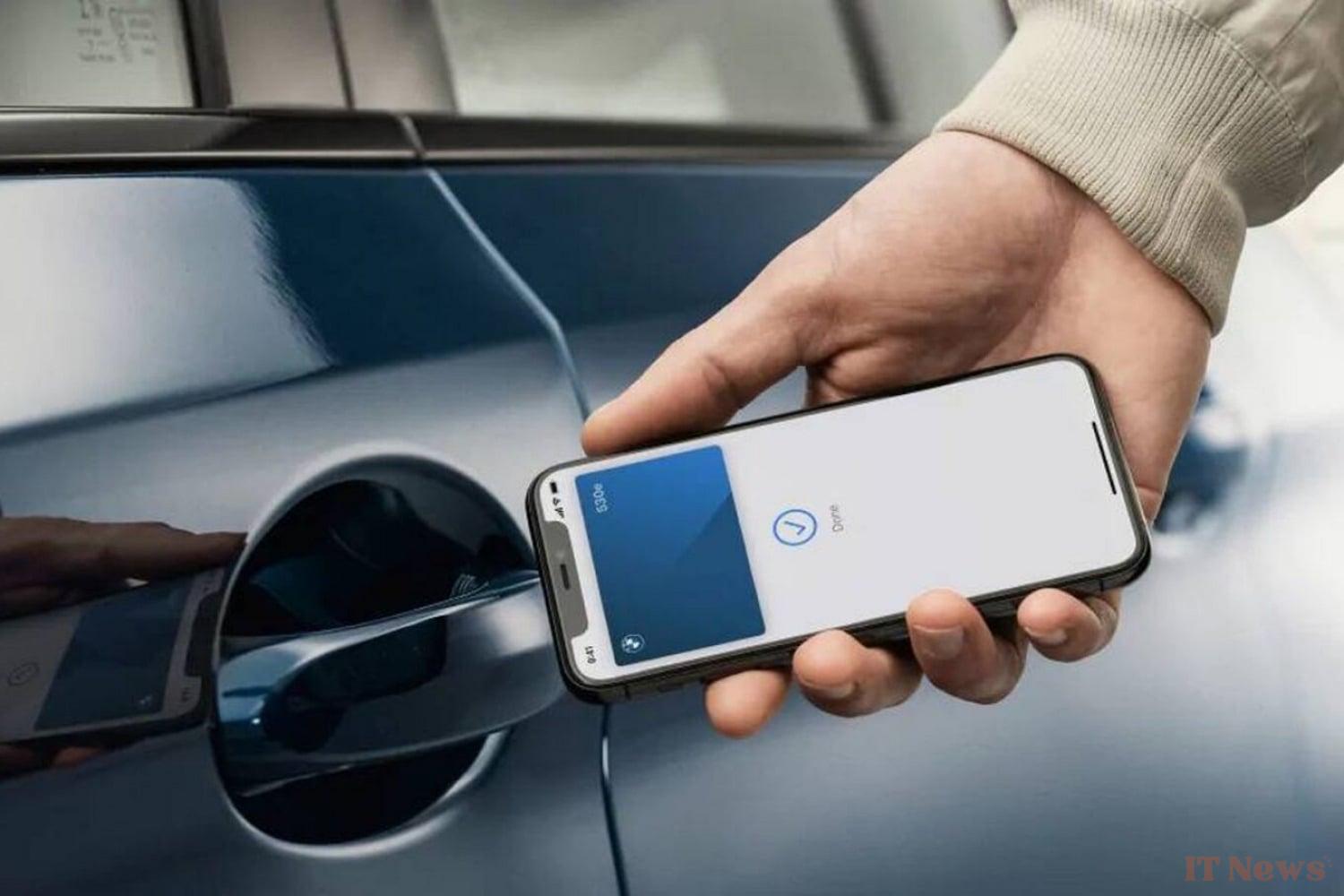
Car manufacturers are also starting to integrate UWB technology to improve and secure access to their vehicles. No more RFID badges or remote controls vulnerable to hacking: UWB allows the car to detect the exact presence of your smartphone (or smartwatch) and trigger the automated opening as you approach. The system's precision (a few centimeters) makes relay fraud, which involves hacking wireless signals to steal a car, virtually impossible.
BMW, Audi, Ford, and Hyundai are moving down this path, while Apple already offers the use of the iPhone or Apple Watch as a digital key. The prospects are broad: automatic switching on of the headlights upon arrival, instant customization of the vehicle's settings according to the detected user, and all this without taking a single object out of your pocket.
UWB and connected home: automation at your fingertips
In the world of the smart home, UWB opens the door to presence detection that is much more effective than what current systems offer. Imagine your home instantly detecting your entry into a room with your UWB-enabled phone: the lights turn on, the music starts, or the door unlocks, depending on your configuration.
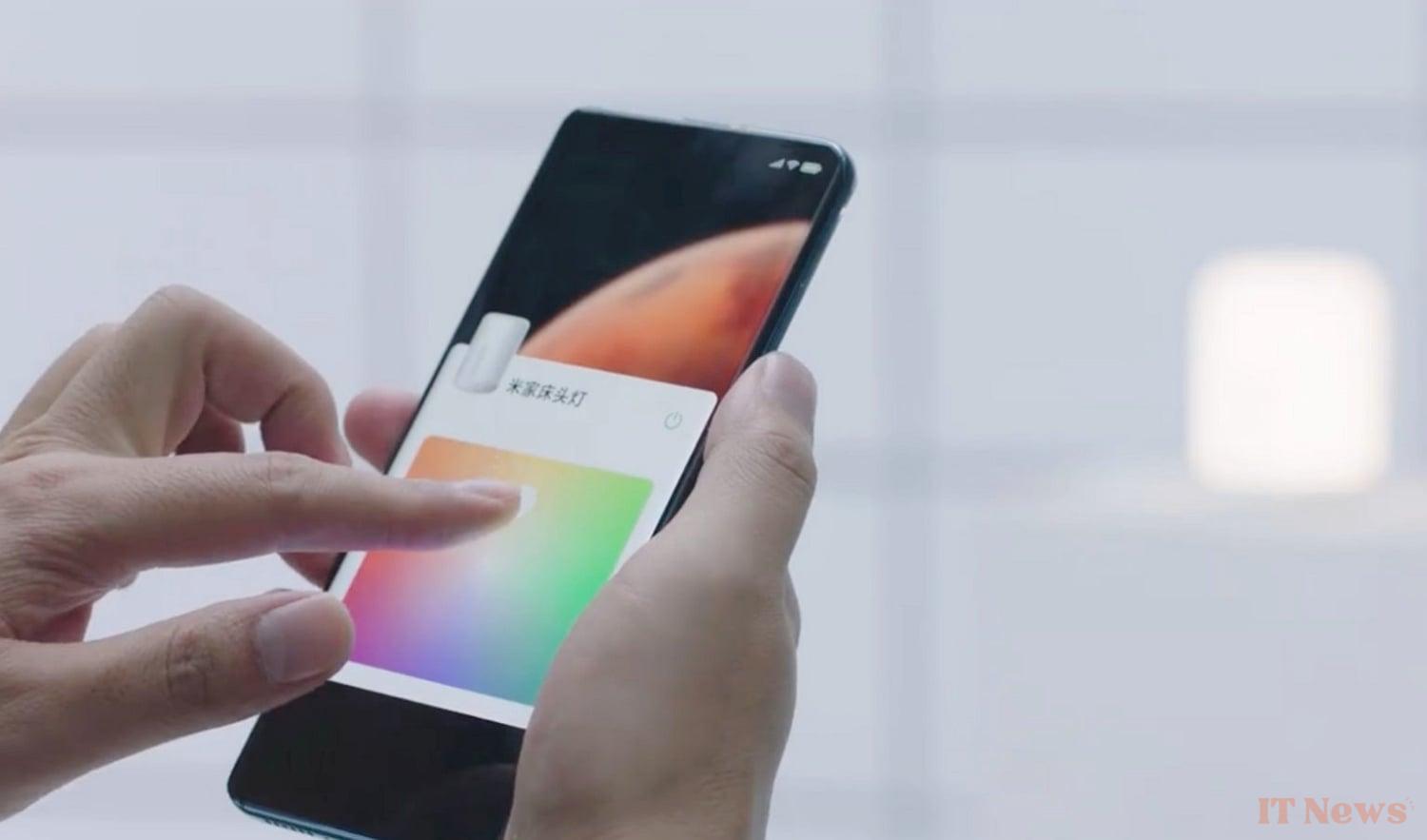
Instead of relying on inaccurate motion sensors or often-wavering Bluetooth, the home can actually interact with you and follow you from room to room. Even finding your phone is child's play: just ask a voice assistant, which will locate the device precisely, without fumbling.
UWB in industry, logistics, and sports: amazing professional uses
In industrial buildings, warehouses, and factories, the use of UWB is already a tangible reality. Its ability to track thousands of packages, carts, or tools across large areas greatly simplifies inventory management and prevents costly losses. Companies like Boeing and specialized startups like Kinexon are using it to optimize productivity, with real-time tracking down to the centimeter.
This reliability is also appealing to logistics. For giants that move hundreds of thousands of items every day, the ability to locate any object in real time, without any possible confusion, represents a major efficiency lever.
UWB has also found its place on sports fields, particularly in American football. UWB antennas integrated into balls and worn by players send their location up to 2,000 times per second! Precise tracking opens the door to enhanced statistics, but also to increasingly reliable refereeing thanks to the ability to verify every movement or offside. This technology is already establishing itself as a key player in the evolution of connected sports.
UWB in smartphones: file sharing, location tracking, and soon more?
Aside from object trackers and digital keys, UWB has made a place for itself in certain high-end smartphones. At Apple, all iPhones since the 11 series (excluding the SE) and Apple Watches since the 6 series are equipped with UWB chips. On the Samsung side, the Galaxy S21+ range and above, some Z Folds, and even the Motorola Edge 60 Ultra range offer this standard. Google followed suit with its Pixel Pro and the Pixel Watch 3.
For now, the majority of smartphones on the market are not yet UWB compatible, due to a lack of mass adoption by manufacturers and the cost of the technology. But the trend is clearly moving in this direction: as uses develop (file sharing, interaction with connected objects, ultra-precise location), UWB will become established in more and more phones, just like Bluetooth, which was once reserved for premium models.
UWB's communication speed, combined with its highly precise location, allows for even more intuitive file transfers. Simply point your device at another compatible smartphone to see it appear at the top of the sharing list (Airdrop at Apple, Nearby Share at Google/Samsung). Even though Wi-Fi remains faster for large volumes of data, UWB adds a dimension of precision and ease of use that radically simplifies everyday exchanges.
UWB, Bluetooth and NFC, what are the differences?
At this point, one might wonder why add UWB alongside Bluetooth and NFC, which also meet short-distance connection and exchange needs. In fact, it all comes down to specialization: Bluetooth offers a good range (a few dozen meters), but remains less precise and susceptible to interference. NFC, on the other hand, requires being practically glued to the target device (a few centimeters), but it proves to be extremely economical to integrate.

UWB is positioned between these two extremes: it covers an average distance, up to 200 meters depending on the environment, but above all it is unbeatable in precision and speed. Its cost and power consumption currently prevent it from being found in simple or very inexpensive objects, but this will change over time and with production volumes.
When speed, security, and ultra-precise location are priorities, UWB ultimately has no rival. To open a door without error, secure access to a car, exchange files without misdirecting the recipient within a group, or automate the operation of a connected home, no other consumer wireless technology offers this level of performance.
Security, confidentiality, and adoption: the latest challenges of UWB
One of the strengths of UWB lies in the security it offers. Its precision significantly reduces the risk of relay attacks, car theft being a prime example. The weakness of its emission and the technical complexity of the signals make it relatively less vulnerable to interference and traditional hacking.
Nevertheless, the technology is not without its critics, especially when it comes to privacy. It's easy to imagine the dangers of non-consensual tracking, in businesses or elsewhere, if no regulations are put in place. The debate is not over and will require legal oversight as it becomes more widespread.
But above all, the main obstacle currently remains adoption. UWB still only powers a fraction of devices on the market. Its cost, the need for an active component (battery, dedicated chip), and the lack of use cases for the general public beyond object tracking limit its diffusion. But as standardization progresses (via the FiRa Consortium, for example) and smartphone manufacturers integrate it into more models, we can expect UWB to become as central a feature as Bluetooth or NFC.
What does the future hold for UWB?
While its main consumer use for now remains precise location tracking via trackers and digital keys, there are signs that UWB is set to disrupt many other areas. Imagine navigating a shopping mall guided by arrows on your phone, instantly locating your vehicle in a crowded garage, or automatically syncing all your connected devices when you arrive home.
Applications in shared transportation (Uber, Lyft, etc.) are also expected: no need to search for your driver in the crowd, UWB will allow instant identification between driver and passenger. At the same time, the widespread use of UWB could redefine file sharing, augmented reality, or the automatic interconnection of everyday objects.
As you will have understood, Ultra Wide Band is not a simple technological evolution. It is a true paradigm shift in the way our objects communicate and interact. Precision, speed, security: these advantages make it a key component of the next generations of connected objects, from the home to the smartphone, from the car to industry.


0 Comments