
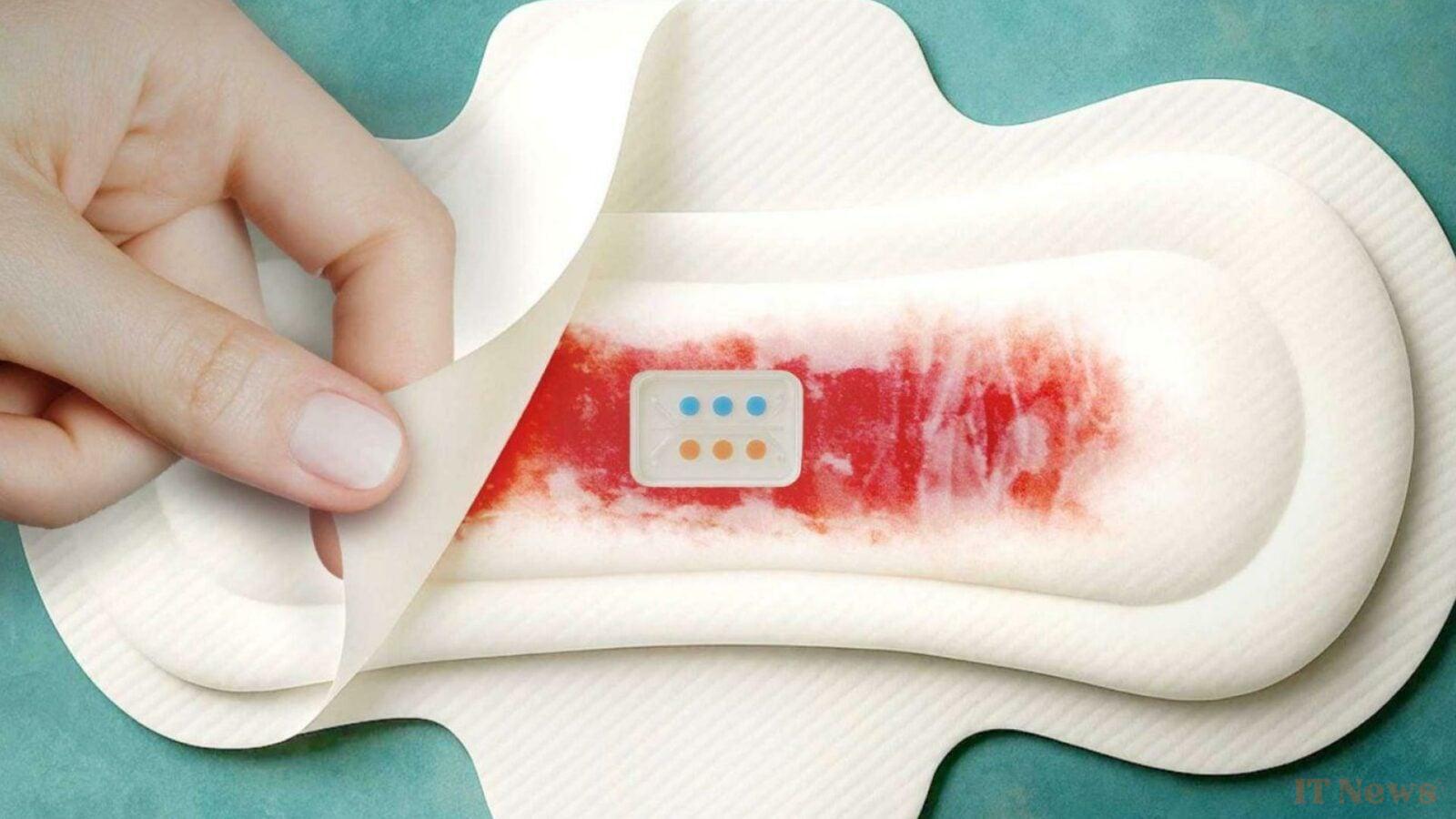
Researchers at the prestigious ETH Zurich recently presented a system for identifying numerous biomarkers in menstrual blood. Integrated directly into sanitary napkins, this technology could enable numerous medical tests to be performed easily and non-invasively, thus facilitating the detection and management of various potentially serious health problems.
Periods are generally considered a major inconvenience. However, in addition to playing a decisive role in reproductive health, they represent a veritable wealth of medical information. This blood contains hundreds of different proteins, some of which can be used as biomarkers to detect diseases such as endometriosis or ovarian cancer.
The team behind this work therefore decided to take advantage of it with a new concept called MenstruAI. "Until now, menstrual blood was considered waste. We demonstrate that it is a valuable source of information,” explains Lucas Dosnon, lead author of the study at the University of Zurich.
An easily accessible and non-invasive test
The principle is quite similar to that of the Covid-19 self-tests, widely used during the pandemic — but with blood instead of saliva. The idea is to bring a sample into contact with a strip of paper coated with a specific antibody. Once the two are combined, they produce a colored marker whose hue and intensity depend directly on the concentration of the protein being sought.
The ETH researchers then designed silicone capsules containing these reagents. They are designed so that a precise volume of blood reaches the sensor—a crucial point to ensure the integrity of the test. And above all, they are small and flexible enough to be easily integrated into a standard sanitary napkin, without making it uncomfortable. Once the napkin is used, all that remains is to interpret the markers. The “diagnosis” can be carried out with the naked eye or using a specialized mobile application, which analyzes the color of the indicators to establish a small health assessment.
In an initial feasibility study, the researchers conducted tests on three separate proteins: CRP (a marker of inflammation), CEA (a tumor marker often associated with different types of cancer), and CA-125, often elevated in people with endometriosis or ovarian cancer. In all cases, the results were very satisfactory. And the cherry on the cake: it is technically possible to extend the concept to many other proteins associated with a host of potentially serious diseases, to detect them easily, inexpensively, and non-invasively.
A real potential for public health
Before getting there, however, the authors plan to launch a larger-scale study by offering their product to a sample of several hundred people. Thanks to the data collected, they will be able to rigorously compare the results of their analyses to those of the reference methods used in medical laboratories. This will allow them, in particular, to evaluate the homogeneity and reliability of the results. This is still a difficult point to judge for the moment, because the composition of menstrual blood can vary considerably depending on the time of the cycle and from one patient to another.
If this new study proves conclusive, the institution will then be able to consider designing a full-fledged commercial product. The goal: to make it accessible to women from all walks of life, particularly in disadvantaged countries where access to healthcare is more difficult. If this small device reaches maturity, it could well make a substantial difference in public health.
The text of the study is available here.


0 Comments