
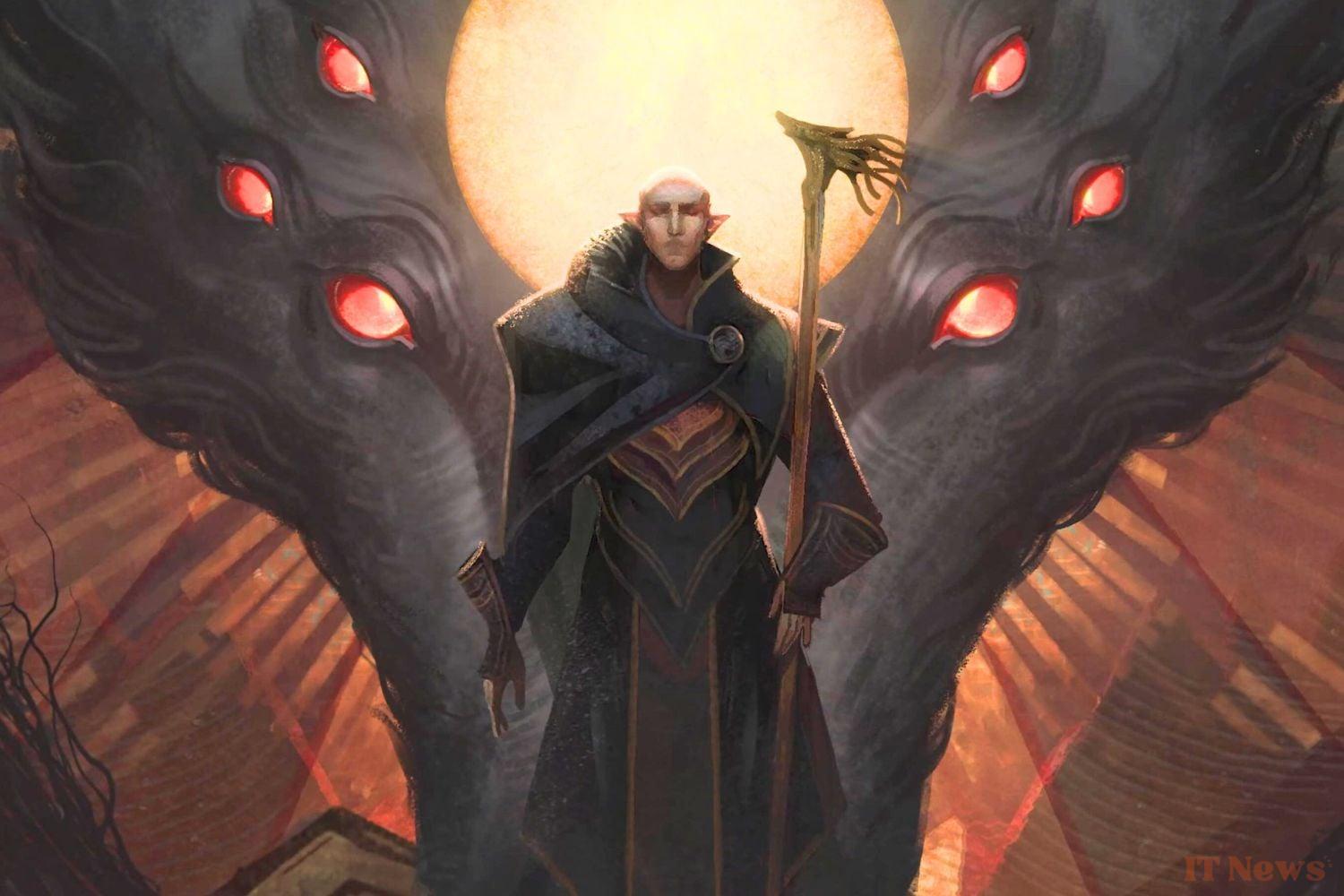
Nine years, that's the time that separates the release of the last DLC of Dragon Age Inquisition from this Dragon Age: The Veilguard. An unbearable wait for players given the revelations made in the additional content "The Intruder" and its open conclusion.
Dragon Age: The Veilguard has experienced a more than tortuous development, parasitized by several projects within BioWare, Mass Effect: Andromeda and Anthem in the lead. At the end of 2022, the experienced Mac Walters, the title's production director, left the studio, causing even more concern within the community.
I'm taking advantage of the offer
Finally, this fourth episode of the saga has indeed reached us. Is this the sequel that finally manages to gain unanimity among fans, 15 years after Origins? Is BioWare managing to make us forget the decade-long desert crossing to give birth to a memorable Dragon Age: The Veilguard? Not really…
A really problematic artistic direction?
What would a BioWare game be without a character editor? This is obviously the very first step to take before diving into the new hell that Thedas has in store for you. The different peoples are represented: Elf, Qunari, Human and Dwarf. It's up to you to decide which race you want to assign to your hero, Rook, but also what background.
The faction chosen for the protagonist will influence some interactions with your companions and different characters in the world. The impact is not as significant as in Baldur’s Gate 3, a game with which Dragon Age: The Veilguard suffers from comparison, but we will come back to that later.
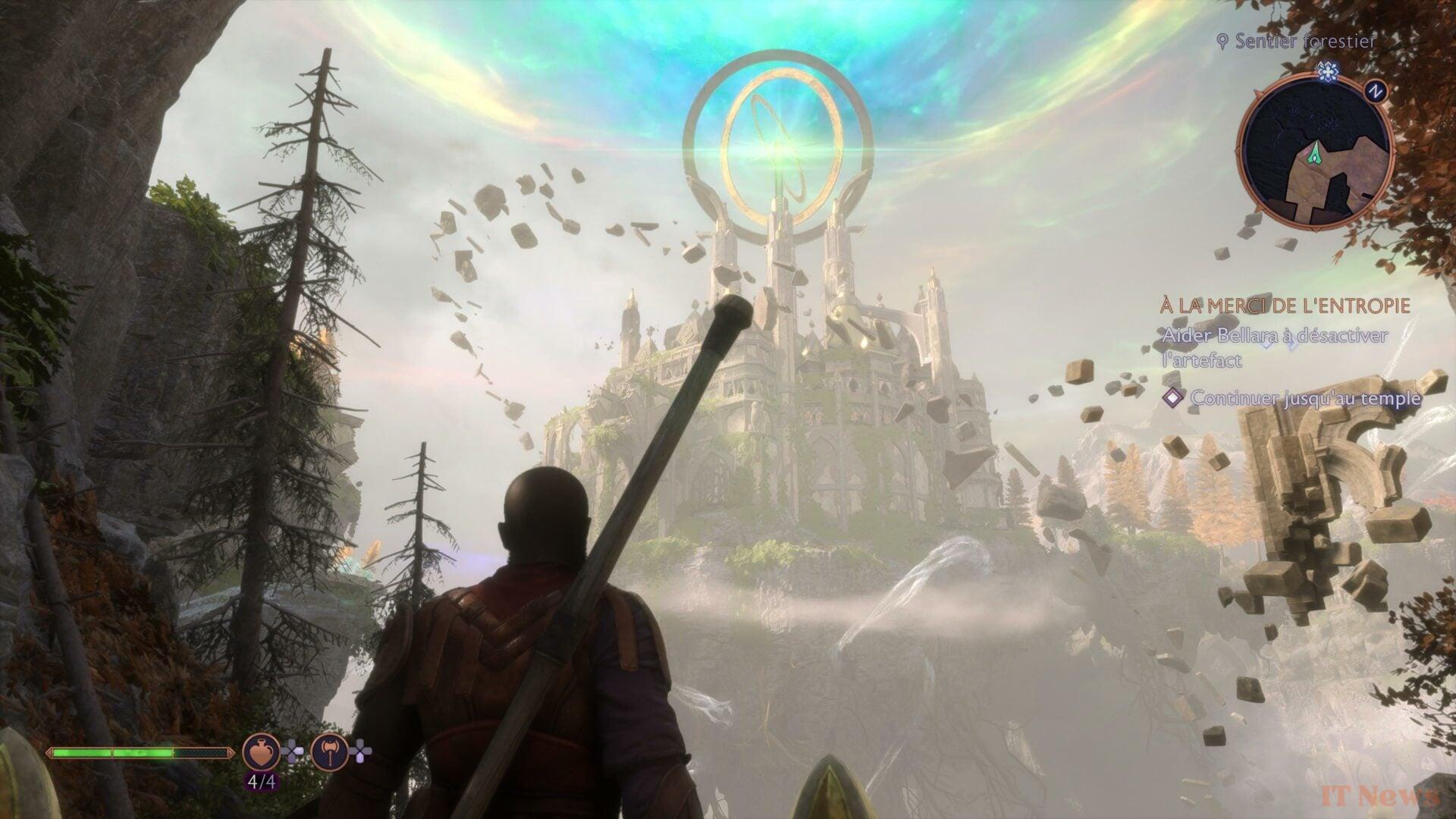
The character editor is particularly comprehensive. It allows you to change the dimensions of all parts of your hero's face as well as his body proportions. The choice of hairstyles is relatively wide. We just regret that the voice ranges available for a male character, even the lowest, are not really suitable for an old hand. Don't be afraid to make a mistake when designing Rook, since you will have access almost from the beginning of the adventure to a transformation mirror to change the latter's appearance.
The game starts directly with the gameplay sequence shared by BioWare a little earlier in the year, the same one that had caused controversy because of the much smoother, more colorful artistic direction and the antithesis of Western RPGs (including Inquisition itself) of recent years.
This new DA, without a bad pun, is ultimately not that shocking, probably because the comparison with the previous episodes is a little more difficult because of the technical gap between each title. In reality, the artistic direction surprising above all for its lack of harmony.
The characters are rather realistic, although some companions appear much more caricatured than others, notably Lucanis. The environments, themselves, seem to come straight from any free-to-play RPG or even a certain Godfall. The chests look more like those from Fortnite and their opening animation will surely destabilize you the first few times. This heterogeneity gives the impression that BioWare does not really know where to go and it does not do The Veilguard any good.
At least, on a purely graphic level, the title is up to par. The characters' faces are fine and the facial animations are well-made. Another good point for an action RPG, the weapons and armor appear neat and detailed. Note that the title does not suffer from any slowdown on PS5, neither in Fidelity mode nor in Performance mode.
Solas sets sail

If you played its latest expansion, you know that Solas is actually Fen'Harel, an ancient elven god who seeks to tear the veil to restore his people's immortality. Problem is, his action would sow chaos in the world, which is why Rook (that's you) and Varric try to stop him. This initial synopsis alone justifies rushing to Dragon Age: The Veilguard for die-hard fans of the license.
Unfortunately, after a well-paced first sequence, the storyline quickly runs out of steam, the time to complete missions for each faction of northern Thedas and recover your seven companions. The story gets interesting again once the team is well formed and the threat to the world increases, without ever being completely captivating due to a lack of strong sequences.
The lack of impact of the different peoples and ethnicities on each other, a point on which Origins shone, also proves to be a little frustrating, but not as much as seeing Solas so much in the background. It’s hard to understand why BioWare didn’t put the cornerstone of its story much more forward, as if the studio hadn’t taken the measure of the fans’ attachment to it.
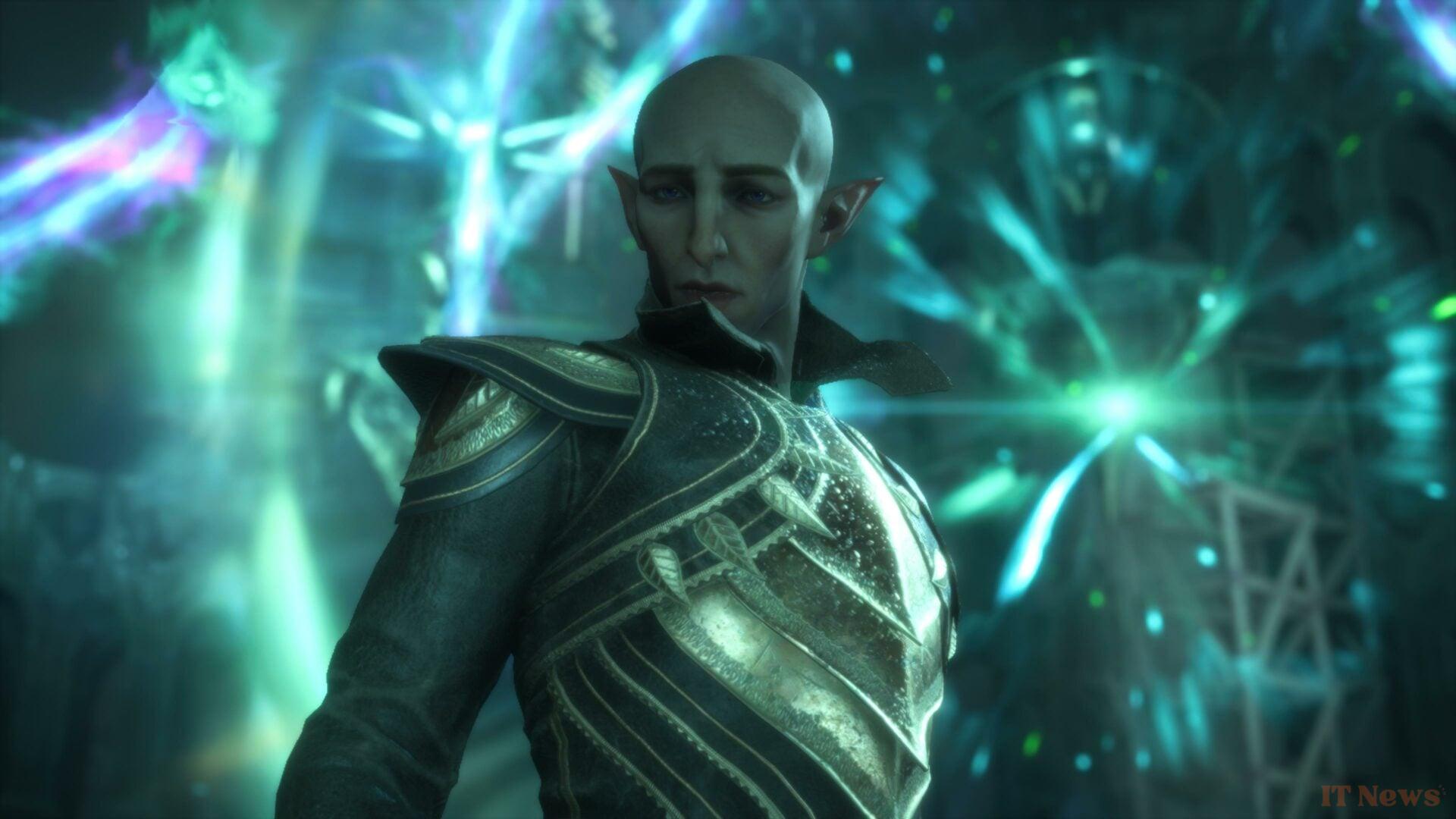
Too bad, because the former ally of the Inquisitor shines in each of his appearances on screen. His calm, his condescension and his eloquence, especially in French, make Solas a more charismatic character than ever. His fleeting interventions (and the rare team discussions) immediately create the sensation of finding Dragon Age again. The very last hours of play put Solas back at the center of the story, as we would have liked to have been the case throughout the adventure. We understand better why Dragon Age: Dreadwolf became The Veilguard…
Ultimately, the epilogue of the epic leaves the same feeling as that of Inquisition: the impatience to see a sequel arrive that serves as a climax for the saga after such a striking conclusion. A sad observation.
Baldur’s Gate 3, is that you? Not really
BioWare obliges, the dialogues with more or less impactful choices are part of it. Generally, three answers are offered to you before going further in a discussion. Note that your original faction can offer you an additional dialogue option.
A few choices have important consequences, but the missions and the scenario have much less branching than a Baldur’s Gate 3. At important turning points in the story, Dragon Age: The Veilguard shows itself to be binary in the choices offered and the consequences remain very predictable, when they are not announced out of the blue. Moreover, the major decisions only present themselves to you in the last hours of the game, which are clearly inspired by Mass Effect 2.
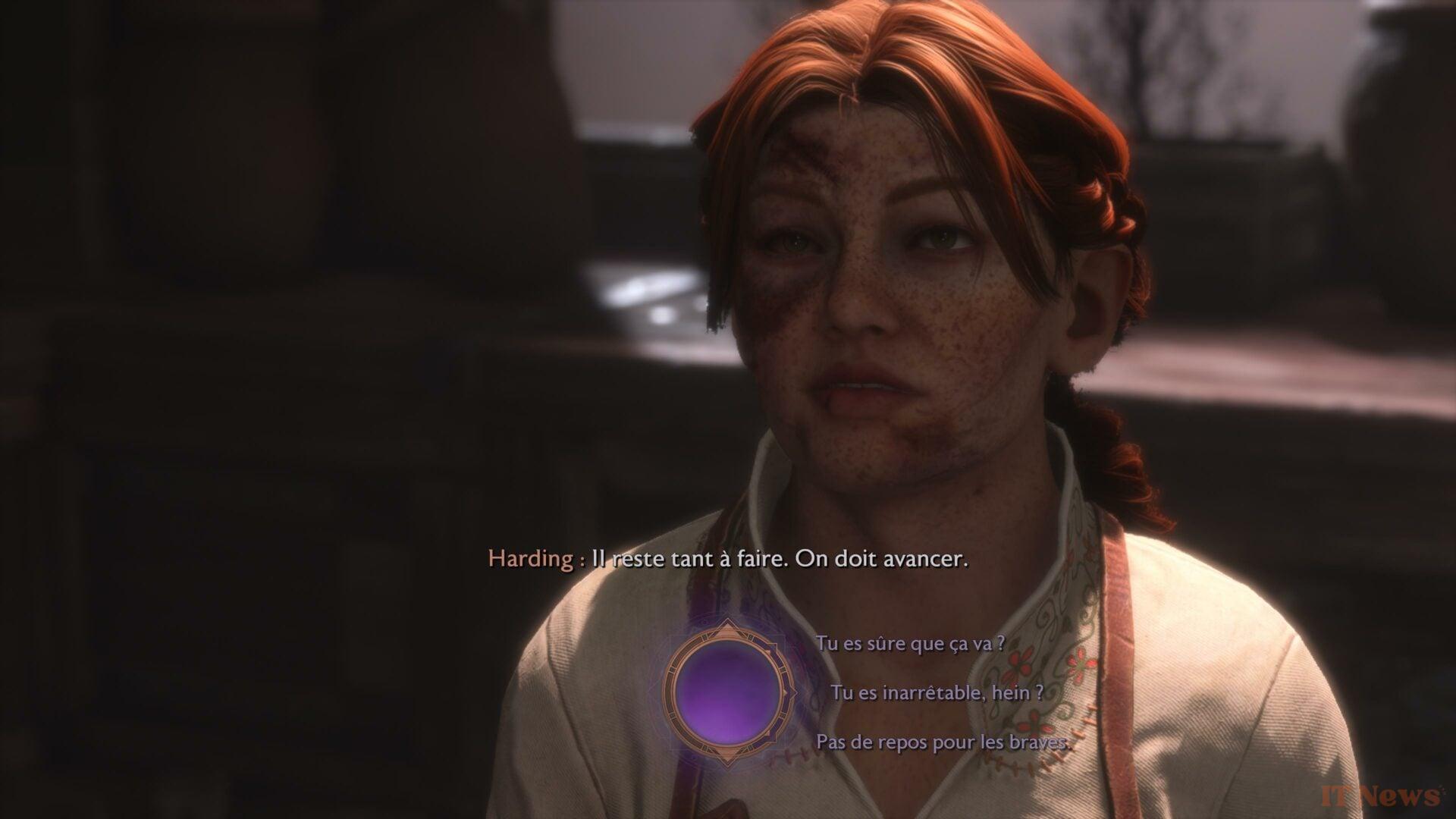
Moreover, there is never really a bad decision, only a bias to have, and it is quite regrettable. We would have liked the game to sometimes call on our knowledge of its rich lore and especially on our analysis of the situation to make a good decision, but this is not the case. Moreover, there is almost no conversation where our gift of the gab allows us to avoid combat, except at a specific moment in Rook's epic.
In reality, it is above all your actions, namely the completion of the quests of the different factions and those of your companions, which will impact the story. Helping an ally will make them stronger both psychologically and in combat, while carrying out missions for a faction will increase their power gauge. Moreover, we would have appreciated a little more subtlety in the way the game tells us how to have a good ending.
The storyline is also let down by minimalist staging. Most of the missions and important dialogues end quite abruptly, leaving little room for emotion. The untimely loading times don't help either. Each beautiful and long cutscene with high-flying staging is savored, since there are almost none except at the beginning and in the epic final hours of the adventure.
Dragon Age: The Veilguard is only worthy of its subject and its current video game standards at that moment, as if the important thing was not the journey, but the destination. This half-hearted achievement is a bit sad to see when you know BioWare's past and especially when you see that the studio still knows how to offer strong moments like during the epilogue.
You will discover this conclusion after 40 hours in a straight line and about 60 hours by completing a reasonable amount of side quests. Yes, you have to invest yourself to enjoy the best moments of Dragon Age: The Veilguard.
Striking companions in Dragon Age The Veilguard
If there is one thing on which we recognize the studio's touch, it is on the construction of the companions. Each of your life allies has their own demons, which you will have to fight alongside them through a series of dedicated quests. The companions are all very touching and the dialogues with them are particularly interesting not only to learn more about their past, but also about their emotions, superbly transcribed by the quality of BioWare's writing. Rook himself expresses his feelings in a rather moving way and never lacks wise advice to support his friends.
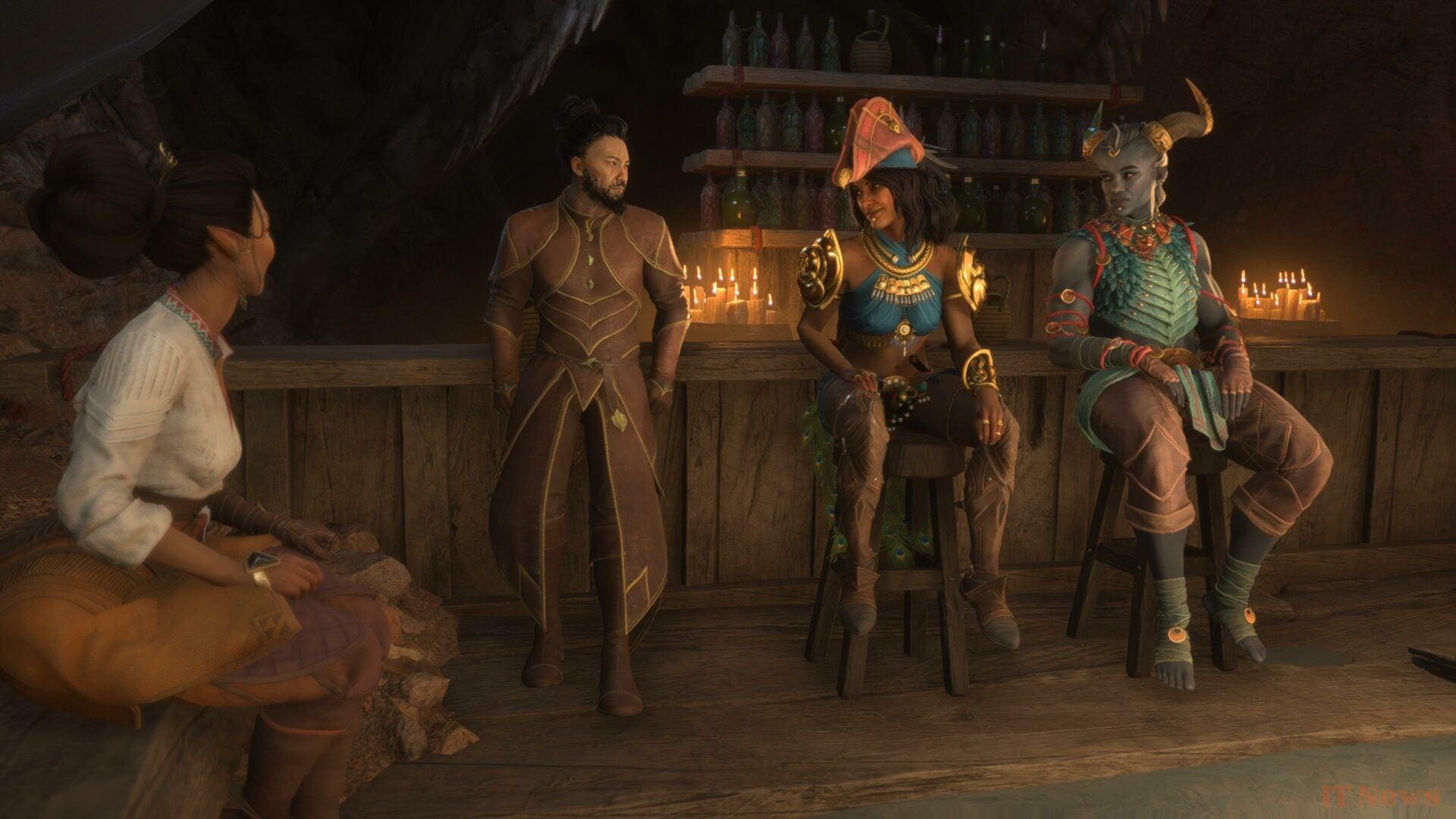
We even become attached to characters who are not part of our group. Moreover, Dragon Age: The Veilguard is truly inclusive, which should not cause controversy knowing that the very essence of the saga is to see races and companions very different from each other put their preconceptions aside in order to work towards a common goal.
Note that romances are indeed part of it, but moments of complicity with your other half are rarer than in Inquisition. The one experienced on a personal level remained strangely platonic for almost the entire game and the two characters had already declared their love for each other after almost no strong shared moment. Strange.
A structure from another time
Gone are the Free Marches and other semi-open areas teeming with points of interest from Dragon Age: Inquisition. In this new opus, BioWare returns to its roots with a linear structure. Too linear. The cities and dungeons of Dragon Age: The Veilguard are all extremely compartmentalized. The verticality and the few chests and objects hidden here and there on the secondary paths, which are also narrow, are not enough to mask this pitfall. A word of advice: don't try to swim to discover the surroundings... your character will drown. Symptomatic.
In addition, multiple quests take place in a particularly restricted perimeter, so the weariness of seeing the same environments over and over again quickly sets in. We don't enjoy crossing the cities or dungeons of Dragon Age: The Veilguard, especially when the fights follow one another almost without respite in the latter. The lack of identity and charm of the places visited does not help matters.
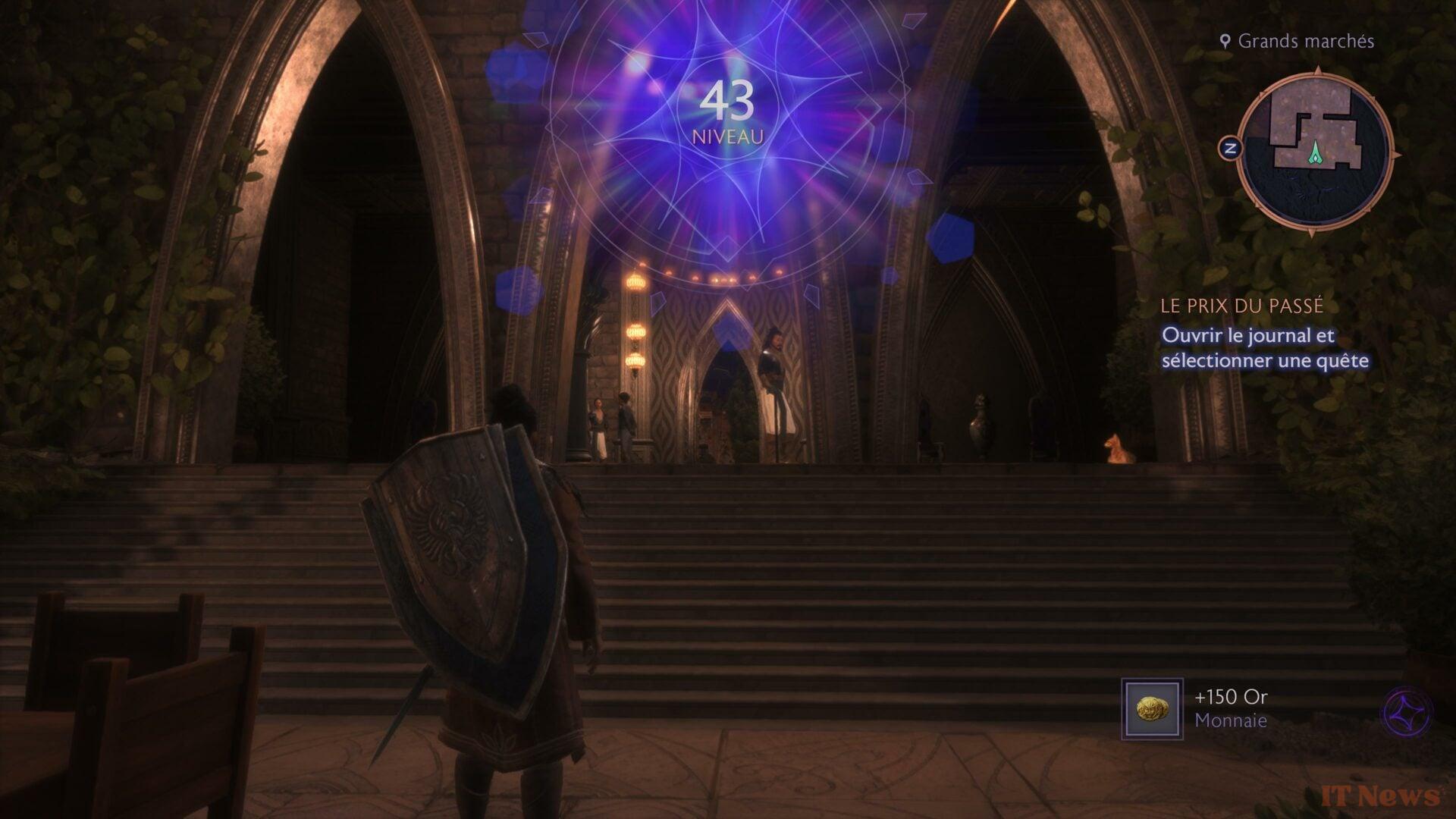
Dragon Age: Inquisition had its flaws, but at least it offered a strong sense of travel and a certain change of scenery. The pleasure of arriving in a new city was definitely there, since you could appreciate its scale and style from a distance before entering it.
You can say goodbye to all that. Travel is done by fast travel or the Crossroads, an area in which there are portals to the different locations of the story. Once the few quests taking place in the Crossroads have been completed, we are almost certain that players will no longer pass through this place to travel, but simply for fast travel.
BioWare surely thought it was doing the right thing with this level design close to that of Dragon Age Origins, but forgets that the game, as cult as it is, will soon celebrate its fifteenth anniversary. The not-so-old-school, but rather antiquated structure of Dragon Age: The Veilguard pales in comparison to modern RPGs. It would surely have been more relevant to find a fair balance between Origins and Inquisiton, or to take the structure of the latter by relieving it of its abundant quests. Did BioWare want to tend towards this formula before revising its ambition downwards because of chaotic development? Perhaps.
A “God of War” gameplay, on paper
If Dragon Age: The Veilguard does not hold up to the best role-playing games of recent years in terms of level design, its combat system, however, is modern. The clashes take place in real time. Your character has a classic attack, a heavy attack and three skills to trigger with a shortcut on the controller or your keyboard. To be able to use them, you have to build up your rage gauge enough by attacking enemies. The same goes for the ultimate attack, a skill that takes much longer to charge and is obviously devastating.
You should also take a look at the enemy's shakedown gauge, which gradually increases as you attack. Once it's full, you can launch a supreme blow, as the game calls it, to inflict heavy damage. Attacking is good, but defending yourself counts too. Like many recent action games, Dragon Age: The Veilguard includes a parry and a perfect parry.
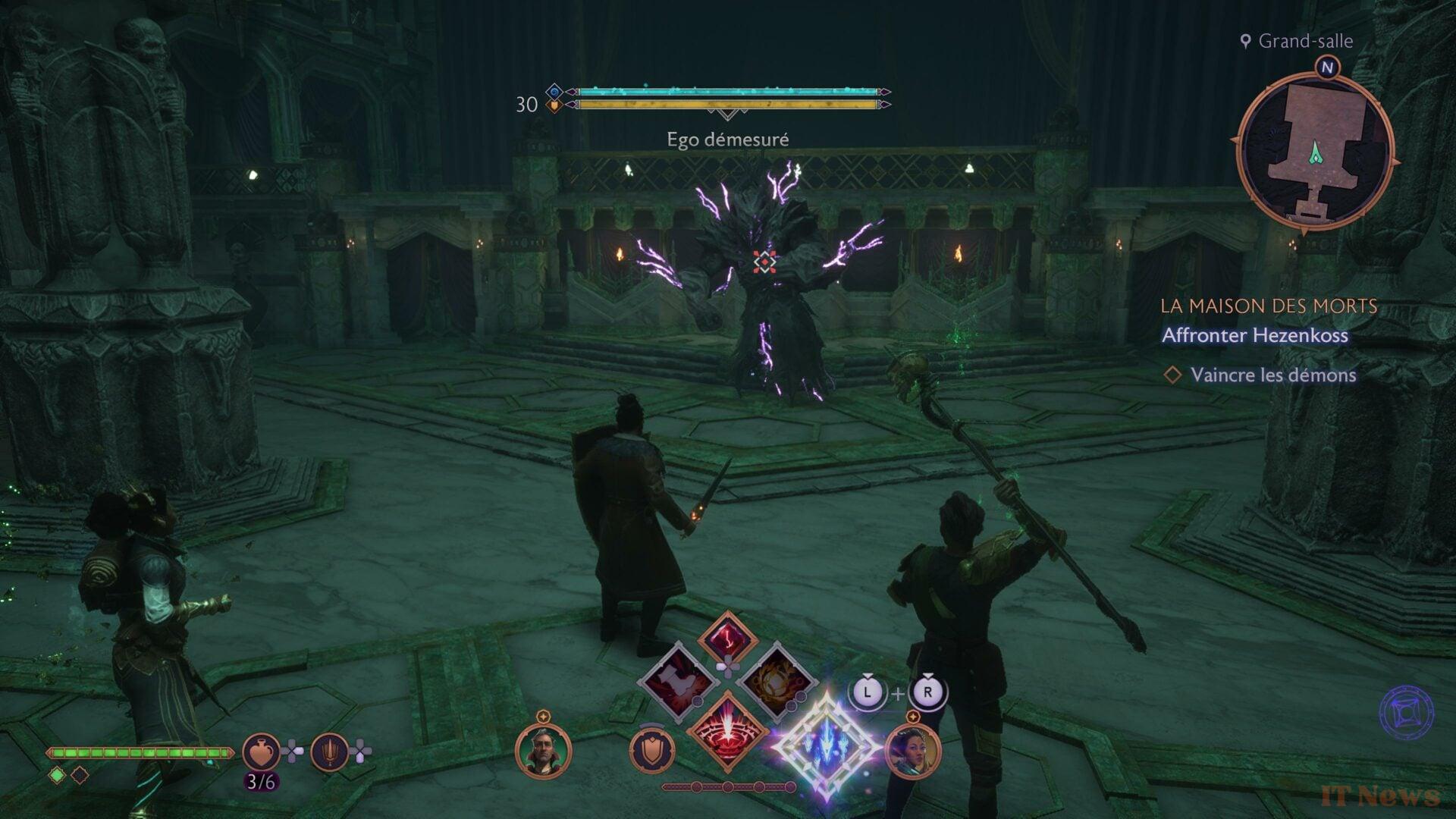
Rest assured, we find the active pause in place since Origins. When you open the skill wheel, the action freezes and you can choose the abilities to cast, both your own and those of your allies. It is usually necessary to do this to create a detonation, an effect triggered when two synergistic skills are used.
There is a rather pleasant feeling of power in combat the more skills you unlock. The active pause allows Dragon Age: The Veilguard to distance itself a little from God of War, because yes, we can feel that BioWare is directly inspired by it. The shield counter animation really looks like that of God of War, as does the shield throw animation for the ranged attack, inspired by Kratos' movement with his axe. Even the death animation looks like that of the bearded hero. The Veilguard even goes so far as to borrow some terms from the Santa Monica games, such as Rage or the rune system to equip to trigger different effects.
The same goes for completions when an enemy's shake gauge fills up. Also note that, like Atreus, your companions can no longer die, no matter what happens to them. The only tension with them lies in the cooldown time of their skills, either to heal you or to start or end an explosive combo called detonation, capable of inflicting heavy damage. Overall, BioWare draws its inspiration from God of War and God of War: Ragnarok, which is not a problem since the result is far from bad...
When weariness sets in...
The problem is that this combat system fails to provide long-term enjoyment for several reasons, starting with its imprecision. There is a slight latency in triggering the sprint or jump, two actions that are nevertheless important in combat, especially depending on your class. The timing of the parry is difficult to pin down against certain opponents because of sometimes strangely calibrated hitboxes. To make matters worse, the camera is so far from the action that it is sometimes difficult to read the opponent's pattern. Too bad in a game that relies so much on the perfect parry and dodging.
You will still quickly learn when to trigger the parry against whom, not because of the precision of the system, but because of the poverty of the bestiary. Expect multiple mini-bosses and "swap color" bosses, that is to say opponents with the same pattern only different in their color and name. There are a lot of bosses, but the unique ones can be counted on the fingers of one hand.
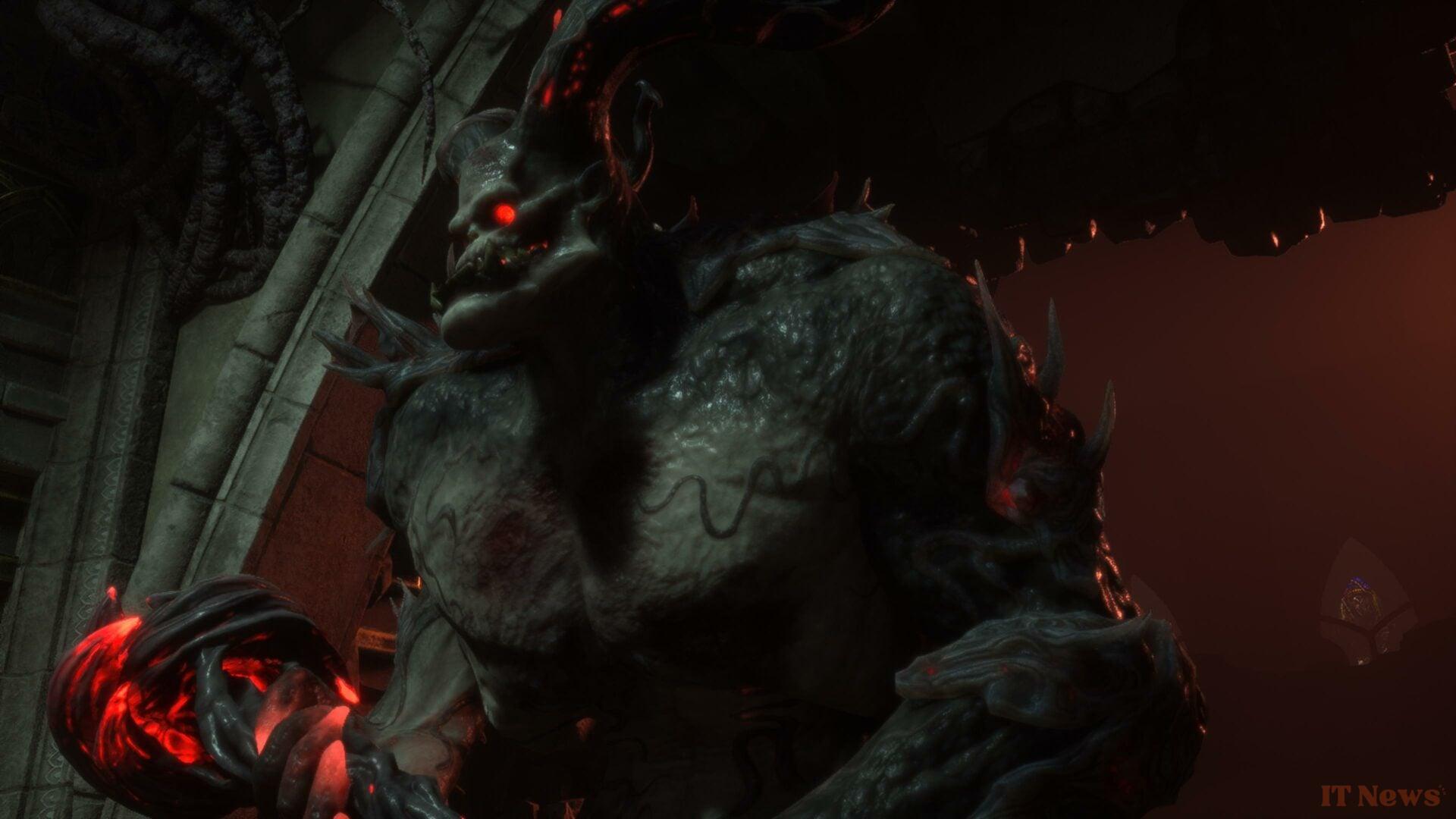
As a result, after twenty hours of play, you no longer really enjoy fighting. In addition, other flaws come to mix with the clashes, like a skill that does not launch from the active pause, a completion that hits off because of the scenery or a camera that goes completely crazy.
Even on high difficulty, we rarely come out of the clashes proud of having overcome a great challenge, but rather relieved that it is over, especially when we have just dropped one of the many "HP bags" of the adventure. A regrettable observation while the title still shines with its animations in combat and its sound design transcribing very well the impact and the power of the attacks.
Strangely, some clashes supposed to be epic also lose their flavor because of the absence of music. However, BioWare has secured the services of Hans Zimmer and Lorne Balfe for the compositions of Dragon Age: The Veilguard, but their compositions are surprisingly discreet.
In any case, hearing a track from start to finish during a cutscene is quite an achievement, given how succinct the scenes are. Clearly, this is not the work on which their work shines the most.
Almighty Rook
Dragon Age: The Veilgurd nevertheless offers a pleasant feeling of increasing power as you progress through the skill tree. Rook's evolution is done by gaining experience in combat, but also by completing quests. Each class has three specializations.
For example, the Warrior can go for the Slayer specialization, reserved for heavy attacks, Champion for the shield and perfect parries, and Death Slicer, specialized in necrotic damage. Regardless of your class, you can only have one specialization at a time. Fortunately, nothing prevents you from recovering an invested skill point at any time to reallocate it elsewhere. No need to go farming any object to give an NPC to do it.
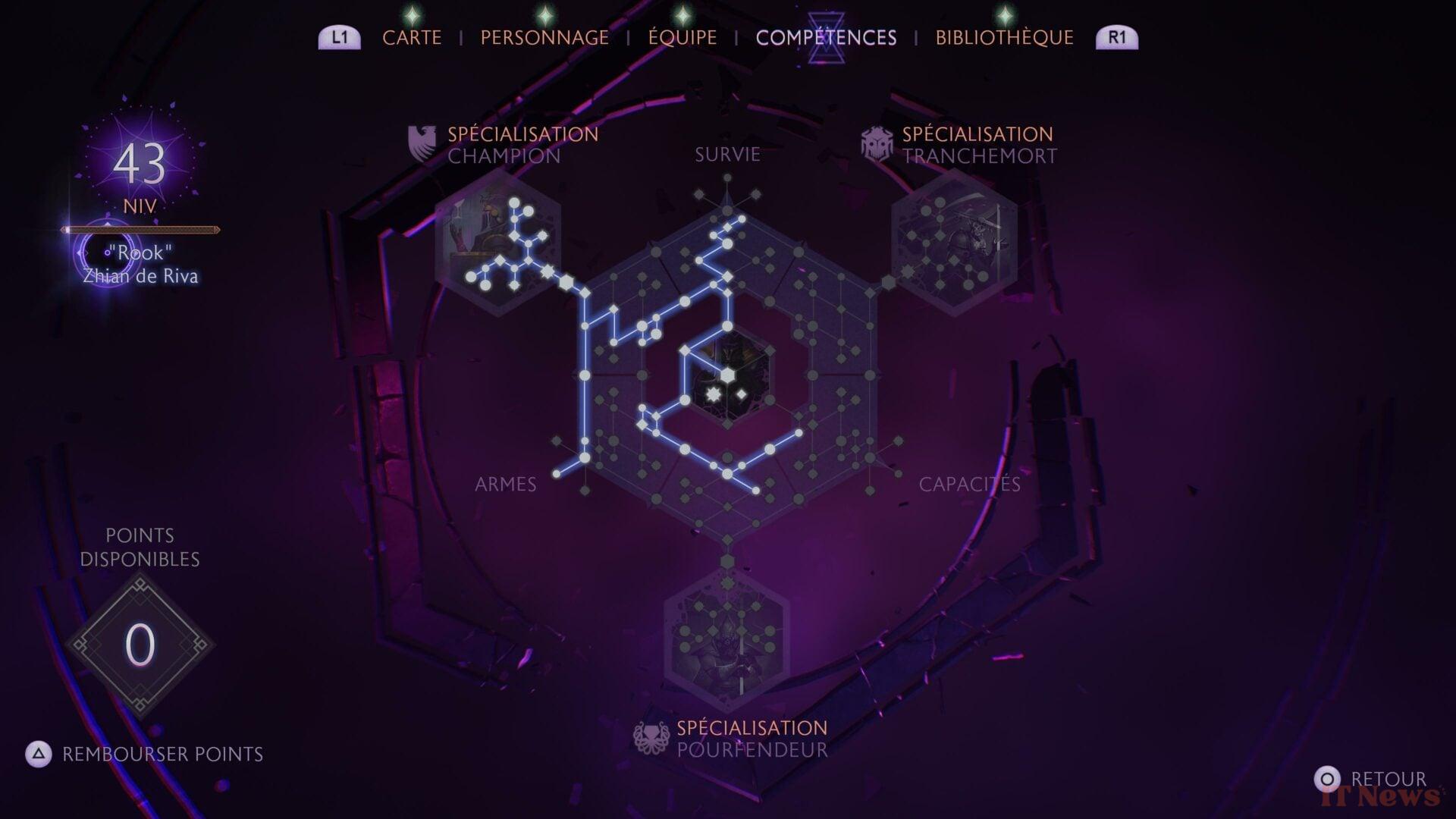
The skill tree has many passive bonuses and several abilities to unlock. Enough to shape your own playstyle, since you can't get everything. A little clarification: there isno two-handed sword in this opus, even for the Warrior! This may be a detail, but for die-hard fans of Dragon Age accustomed to this type of weapon, it means a lot.
Companions also have their own skill tree, much less extensive than Rook's. A few upgrades can also make a significant difference in combat. Obviously, your equipment also influences your performance. Weapons, shields and other rings that can be recovered from chests or stores almost all have stat modifiers in addition to their basic function (attack, defense and ability damage).
Upgrading equipment allows you to strengthen its attributes, but also to unlock new modifiers. We appreciate that loot appears in reasonable quantities, not forcing us to open the menu every two minutes to analyze our new equipment like in Nioh.


0 Comments