
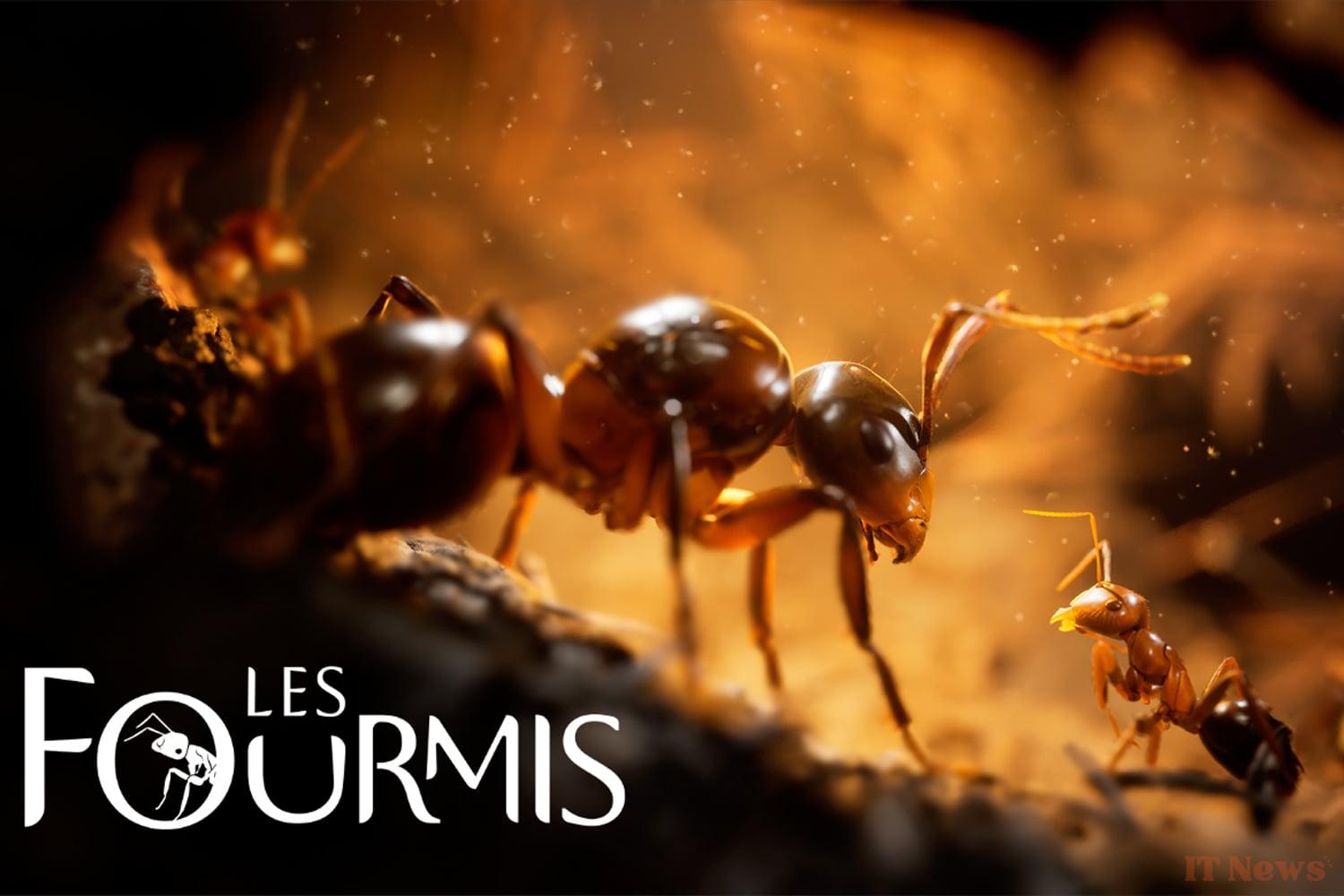
Les Fourmis, the strategy game from Microids centered on these fascinating insects, has finally arrived after an interminable wait. Is this title inspired by the essential book by Bernard Werber worth the detour? Here is our first impression after a few hours of discovery.
The first thing that strikes you as soon as you launch the game is its visual quality. It is immediately obvious that Microids has done a pretty huge amount of work in this area. The natural environment proposed by the studio is fantastically well done, in a stylized photorealistic style that benefits from great finesse in the textures, shimmering colors and quite fabulous light management that fully exploits the rendering capabilities of Unreal Engine 5. This virtual forest exudes life, teeming with details, and we take great pleasure in wandering between the trees and roots from the point of view of these little six-legged beings.
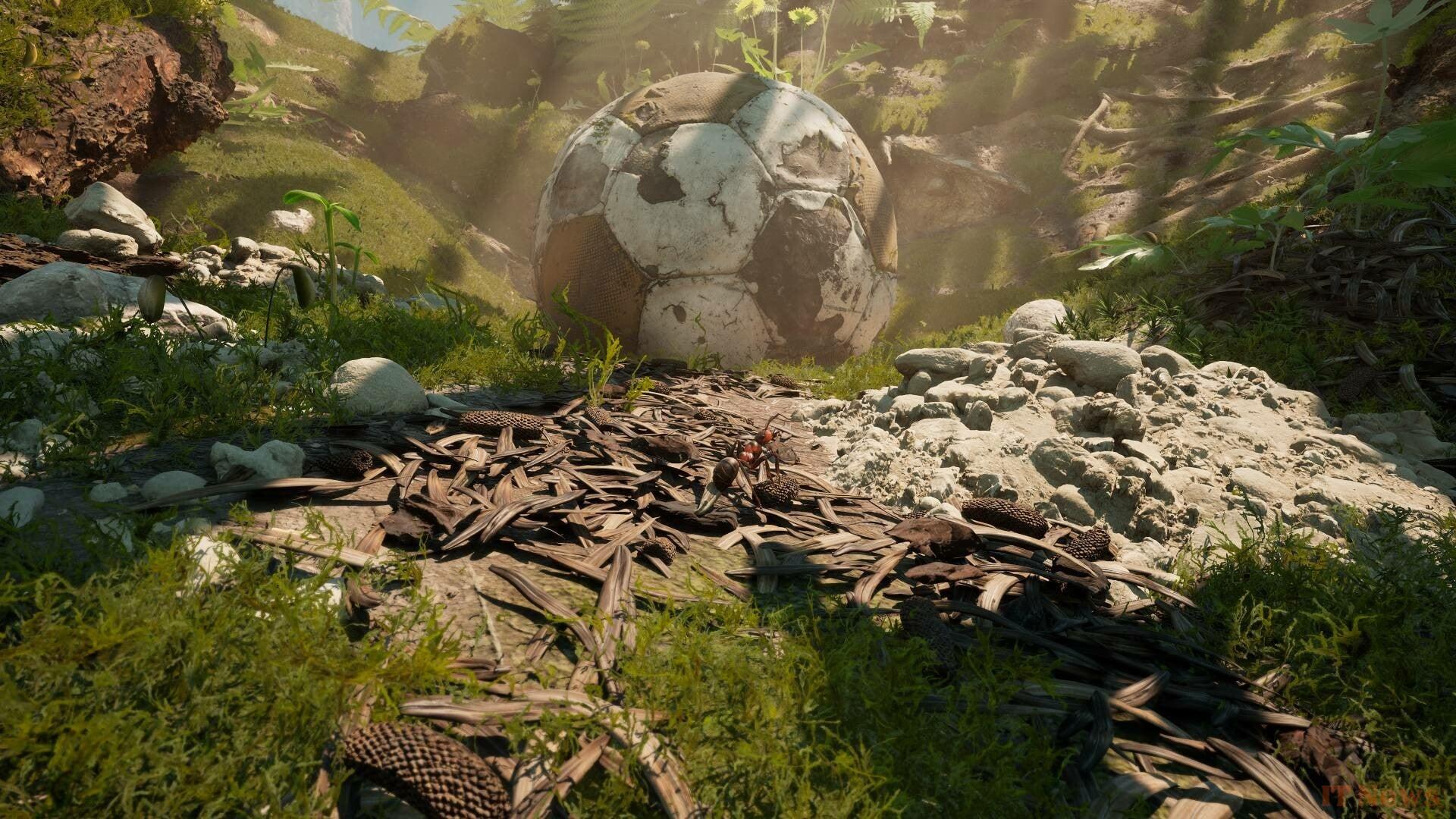
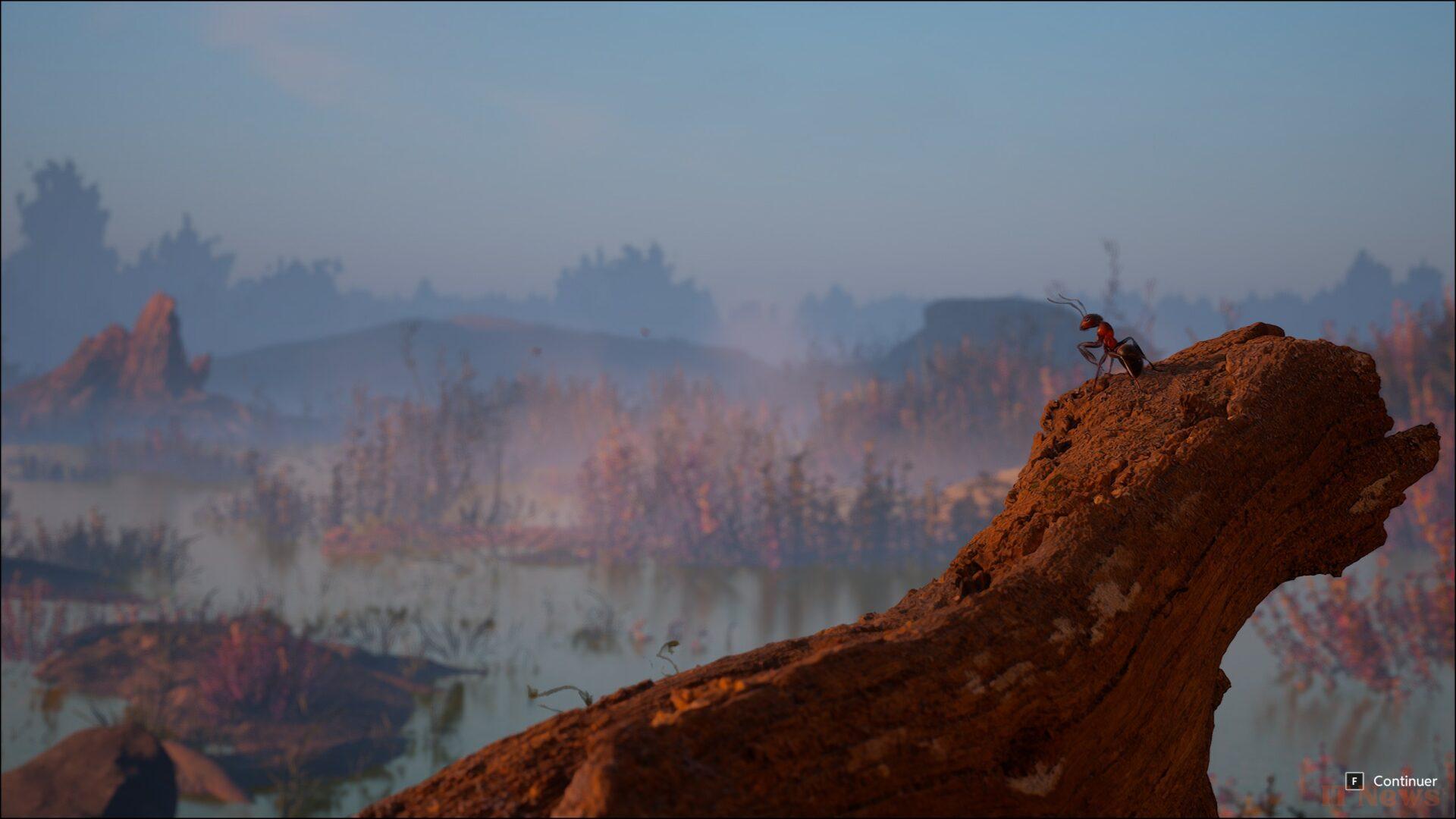
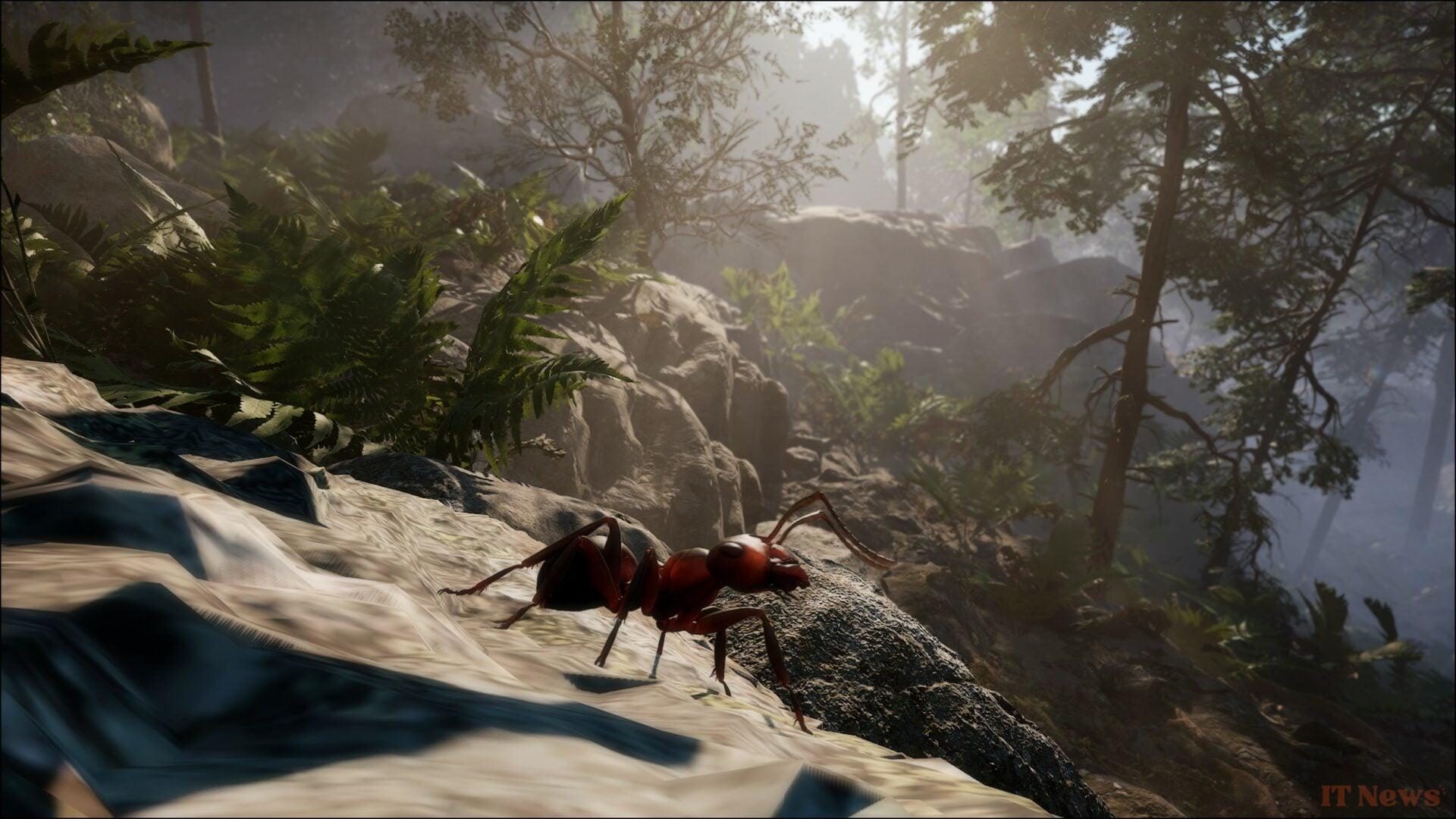
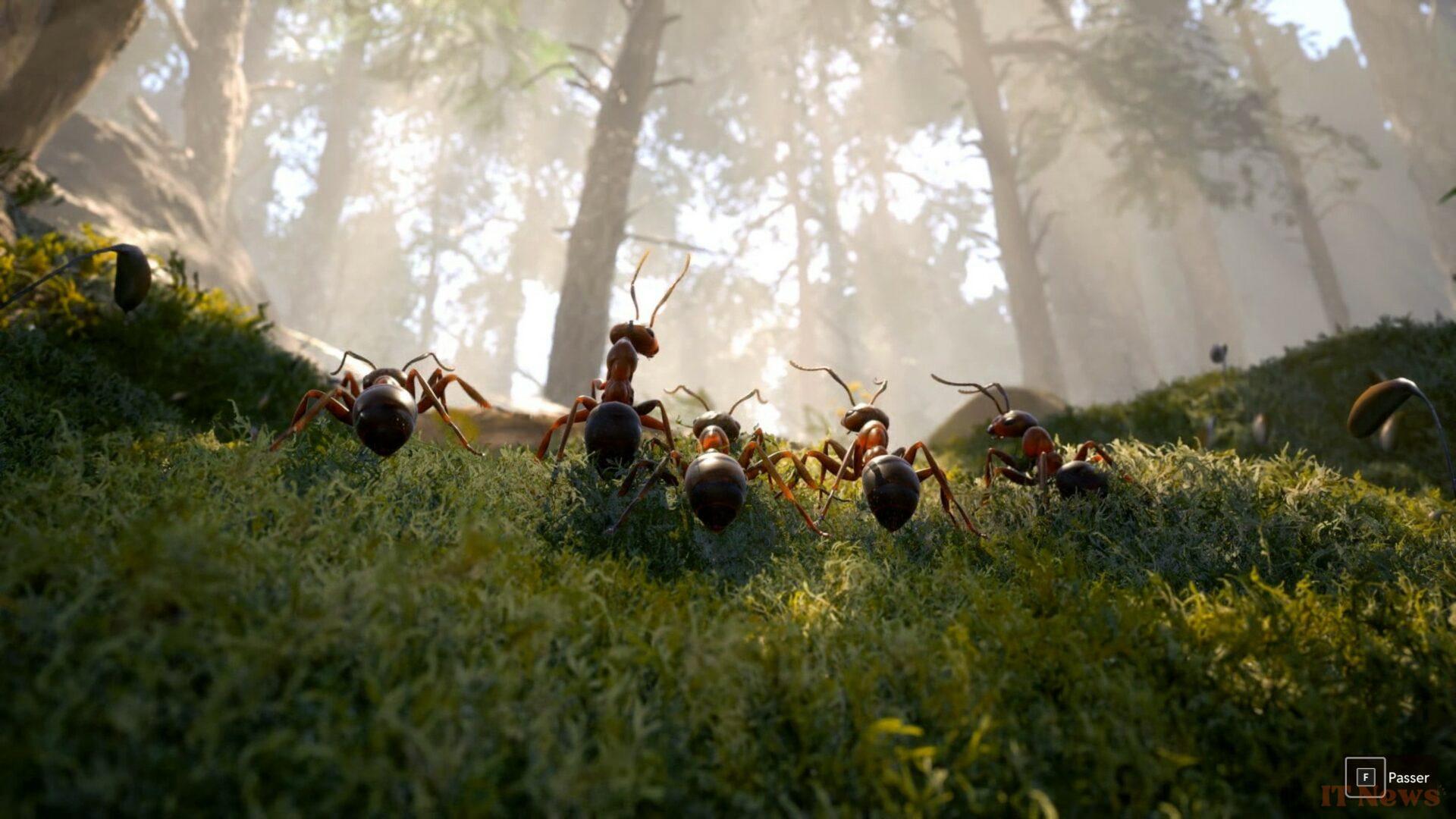
A godsend for those who appreciate games that are primarily contemplative, in short... provided they have a sufficiently powerful machine. Because even if the game looks great, it sometimes leaves something to be desired in terms of optimization. Our RTX 3070 was often pushed to its limits, so much so that we were forced to make some concessions on the quality of the rendering in order to be able to play in good conditions. A regrettable point, because once the effects of this graphic slap have faded, the excellent impression of the first moments has also dissipated; we then find ourselves faced with a game that is sadly wobbly on several levels.
A problematic interface
The first element that bothered us is the interface, which often takes up too much space on the screen. It considerably harms the immersion in this superb environment that is the strength of the game, especially at the beginning of the adventure when it comes to explaining the basics of the gameplay to the player. One can't help but think that a discreet, even downright minimalist, UI would have been more appropriate in order to remain consistent with the natural and organic dimension of the game.
This is a design choice that is all the more frustrating since the extreme simplicity of the gameplay struggles to justify this abundance of icons and windows, which are not always clear. Indeed, we realize after a few dozen minutes that the game is quite basic in terms of gameplay, especially if we decide to treat The Ants as the real-time strategy game it claims to be.
Confused and redundant gameplay
Resource management, for example, is astonishingly poor — a real disappointment, knowing that it is an absolutely central theme in the life of an ant colony. We simply click on a few collection points to collect them, and use them directly to improve our various nests through a confusing and not very functional interface. Admittedly, watching workers dismantle a pine cone or a piece of fruit that has fallen from a tree is satisfying enough — but in terms of pure gameplay, it's still far too thin to satisfy fans of traditional RTS games.
And unfortunately, the conclusion is much the same when we look at the clashes with the other species that populate the forest. In practice, The Ants plays like a traditional RTS, but reduced to the bare minimum. Mechanically speaking, unit control is implemented in a shaky way, particularly because of the third-person view which makes the whole thing quite counter-intuitive.
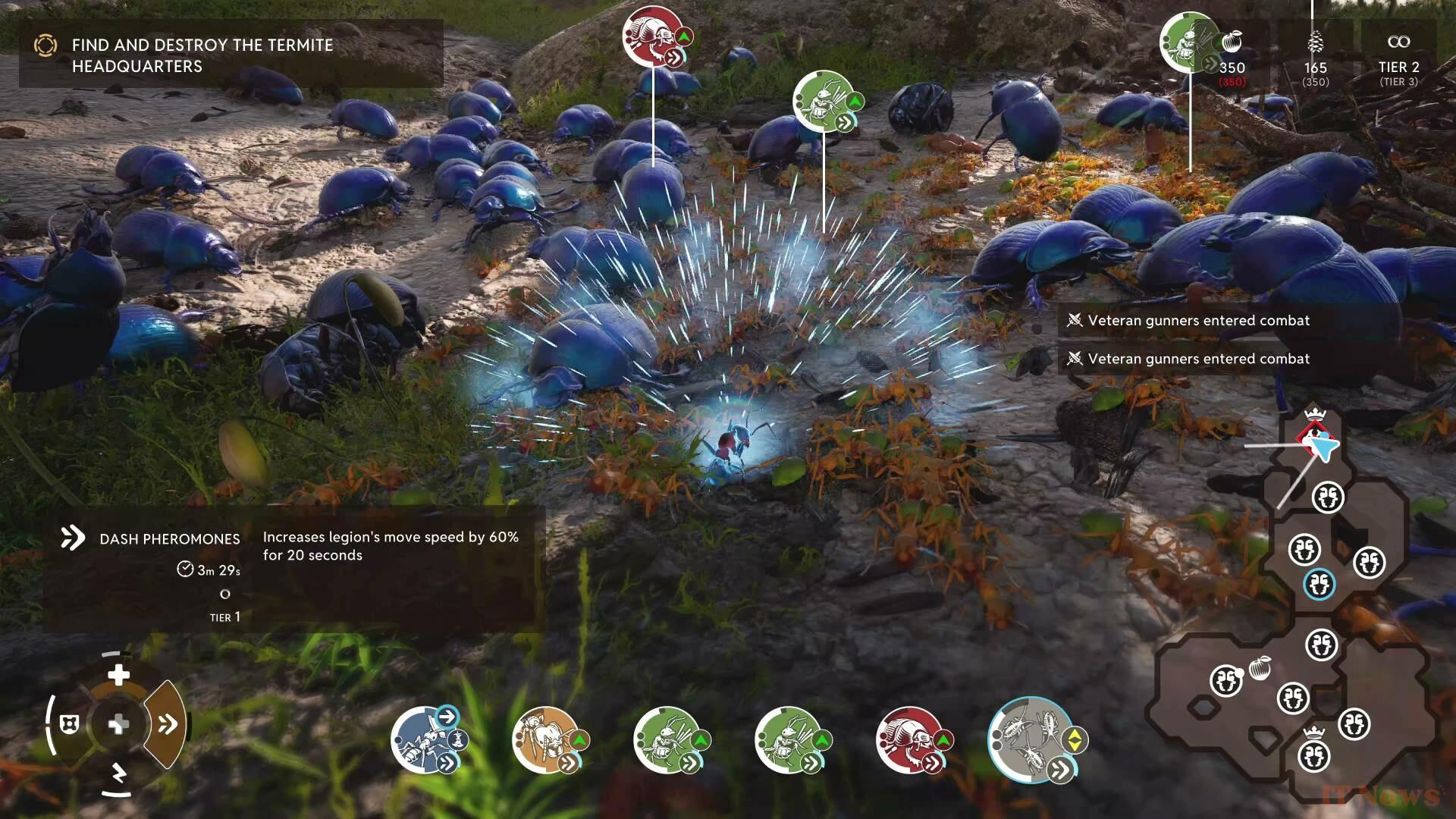
This point would have been excusable if the strategic dimension was satisfactory, but it must be said that it also leaves something to be desired. The ant you play as essentially plays the role of a general, and never really takes part in the clashes. In practice, you just select a cohort of units and assign them a target... and that's about it. Once the initial order is given, the player finds himself practically excluded from the action and reduced to the rank of spectator, without the slightest micro-management option. Nice for five minutes, the time to watch the different species of insects fight each other. But even this contemplative dimension quickly hits a wall because of the third-person view and the interface, which prevent us from fully appreciating a large-scale clash.
Result: the fights are both trivial and confusing, and this gameplay loop quickly becomes redundant. We sincerely regret that Microids did not decide to integrate an aerial view in the manner of a classic RTS, or a small additional layer of complexity to spice up the experience, for example by using the weather or the diversity of the terrain. So many missed opportunities...
A shaky homage to Werber's work
As you will have understood, it is difficult to consider The Ants as a full-fledged RTS, as this strategic dimension is discreet during the game. The problem is that the adventure side is not much more satisfying.
We expected a lot from the game at this level because of the link with the eponymous book, but the game has all the trouble in the world to emulate Werber's narrative virtuosity; it must be said right away, those who were hoping for a game that lives up to the author's work risk being disappointed. The dialogues, for example, are completely anecdotal, and the interactions with the rest of the colony are at best superficial.
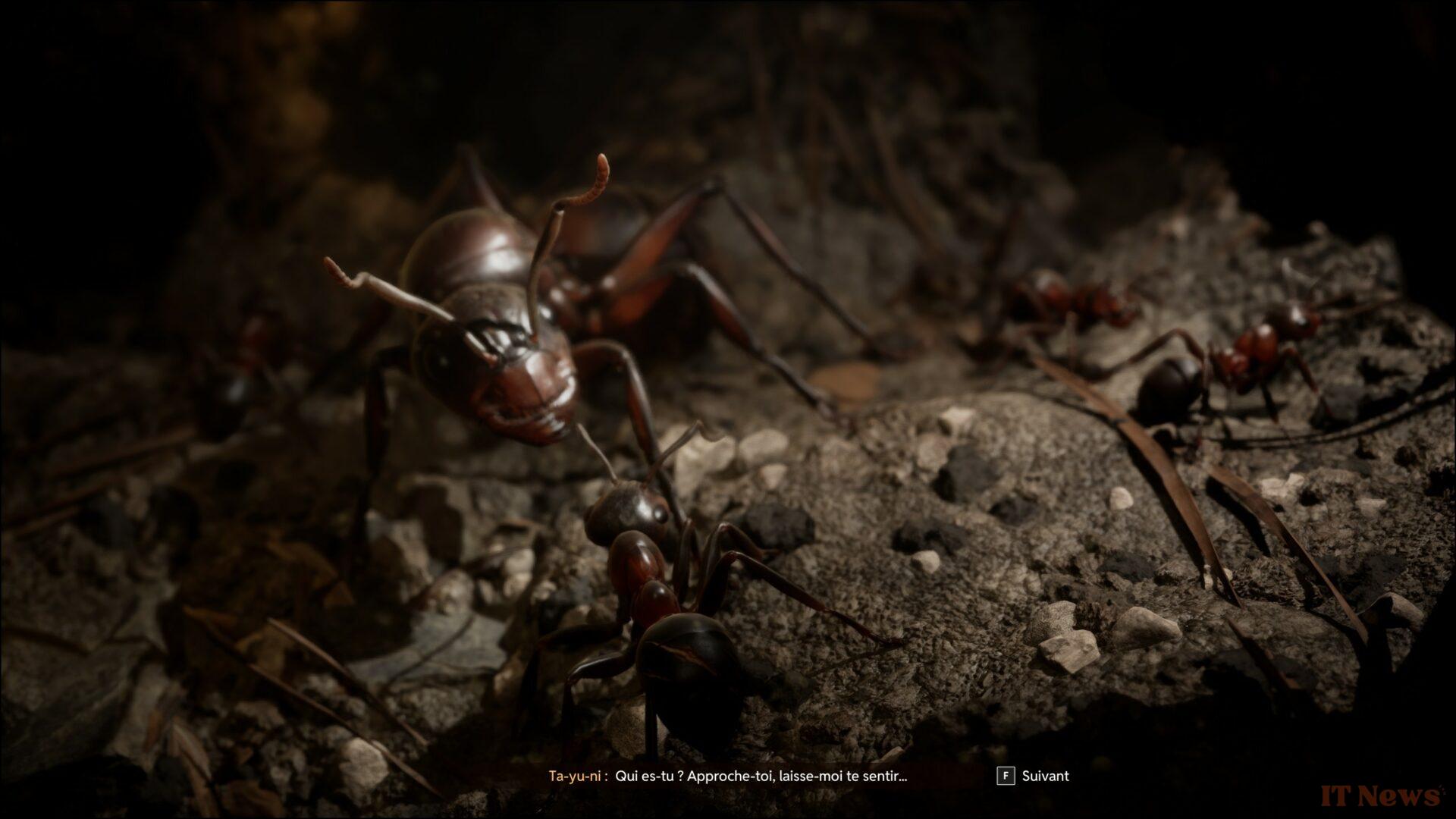
Worse still: the almost philosophical dimension that pushes readers to question themes such as intelligence and the coexistence of species is practically absent from the game, at least in the first few hours.
Werber's scientific rigor and famous attention to detail, if enriching in the book, also fall by the wayside for gameplay reasons. A particularly glaring example of this gap is in the movements. In the game, our ant is able to perform real goat jumps. However, in the real world, there are only a handful of species that are able to do this - and none of them resemble the ants that we embody in the Microids title.
A disappointing foretaste
Of course, it should be noted that this is only a first impression; it is quite possible that these negative points will fade further into the adventure for those who have the courage to persevere.
But in the end, this first encounter with The Ants was still more than mixed. We came away quite disappointed, and with the impression that the game is failing to build its own identity. Too simplistic and confusing to be a good strategy game, not engaging enough to offer a memorable adventure, not educational in the least... we end up with a title that is certainly not devoid of interest, but which will undoubtedly have a hard time satisfying lovers of these fascinating insects or RTS fans. Only those looking for a primarily contemplative game could find what they are looking for, provided they can get past this often confusing and messy gameplay. What a shame!


0 Comments