
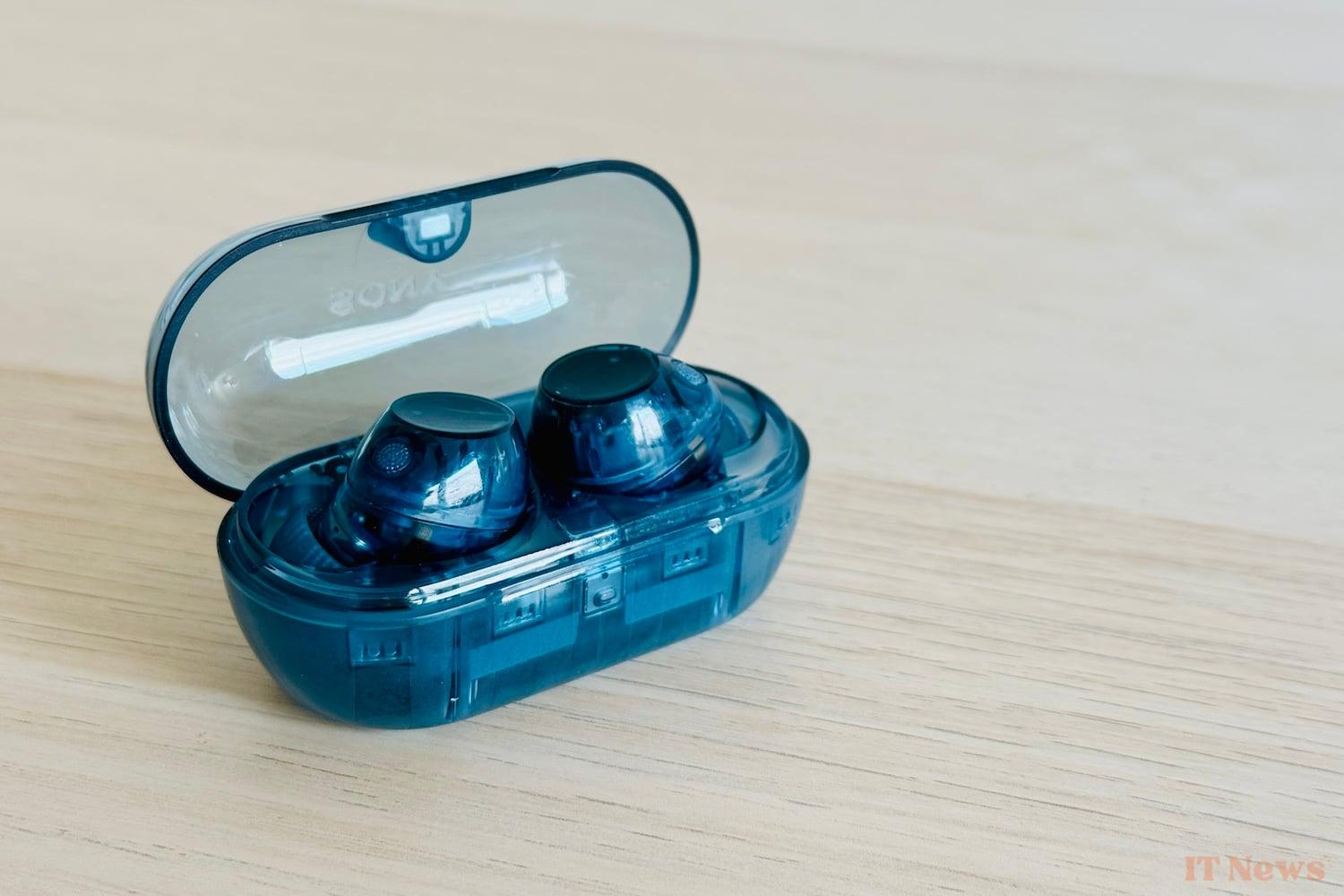
There's more to life than the WF-1000X, as powerful as they are. Sony wants to prove it once again to anyone who doesn't want to spend 250 euros on true wireless earbuds with active noise cancellation. Heirs to the WF-C700N released in 2023, this new WF-C710N version (we thank again and again the Sony marketing team for naming their products) is available at the same, much more affordable price of 120 euros. Let's also acknowledge the fact that the price has been maintained the same from one generation to the next, while competitors generally take advantage of this to increase it by around ten euros.
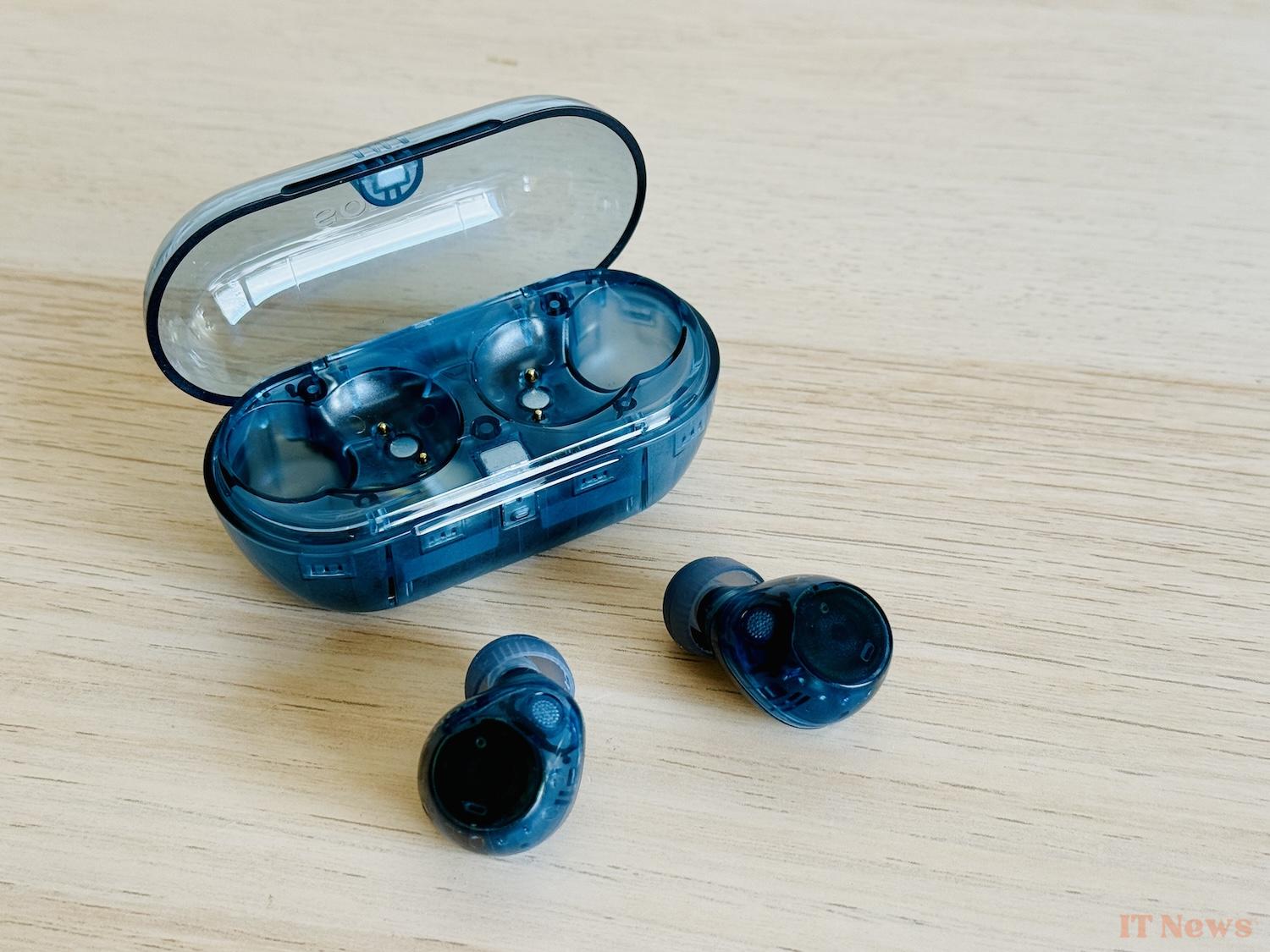
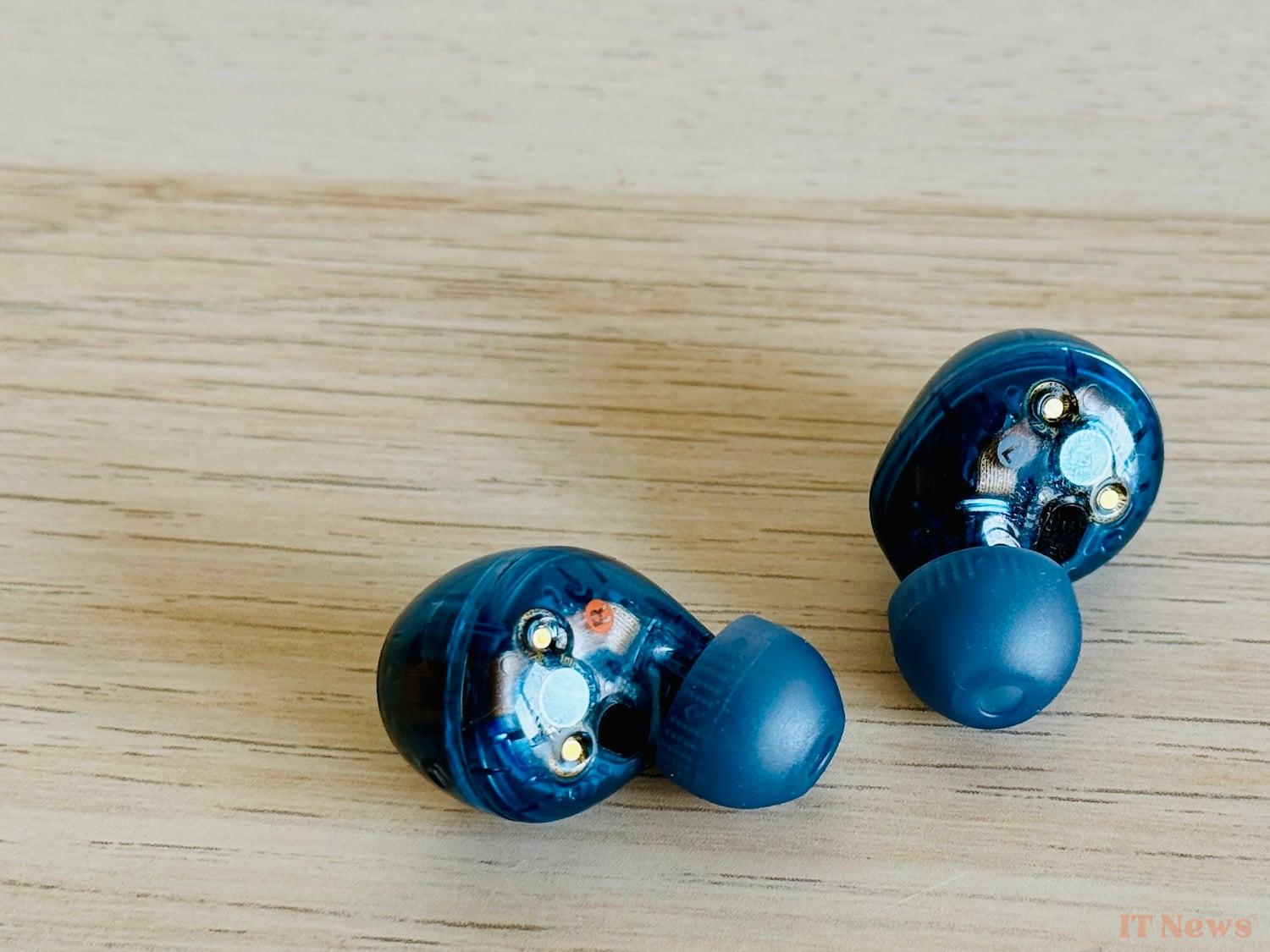
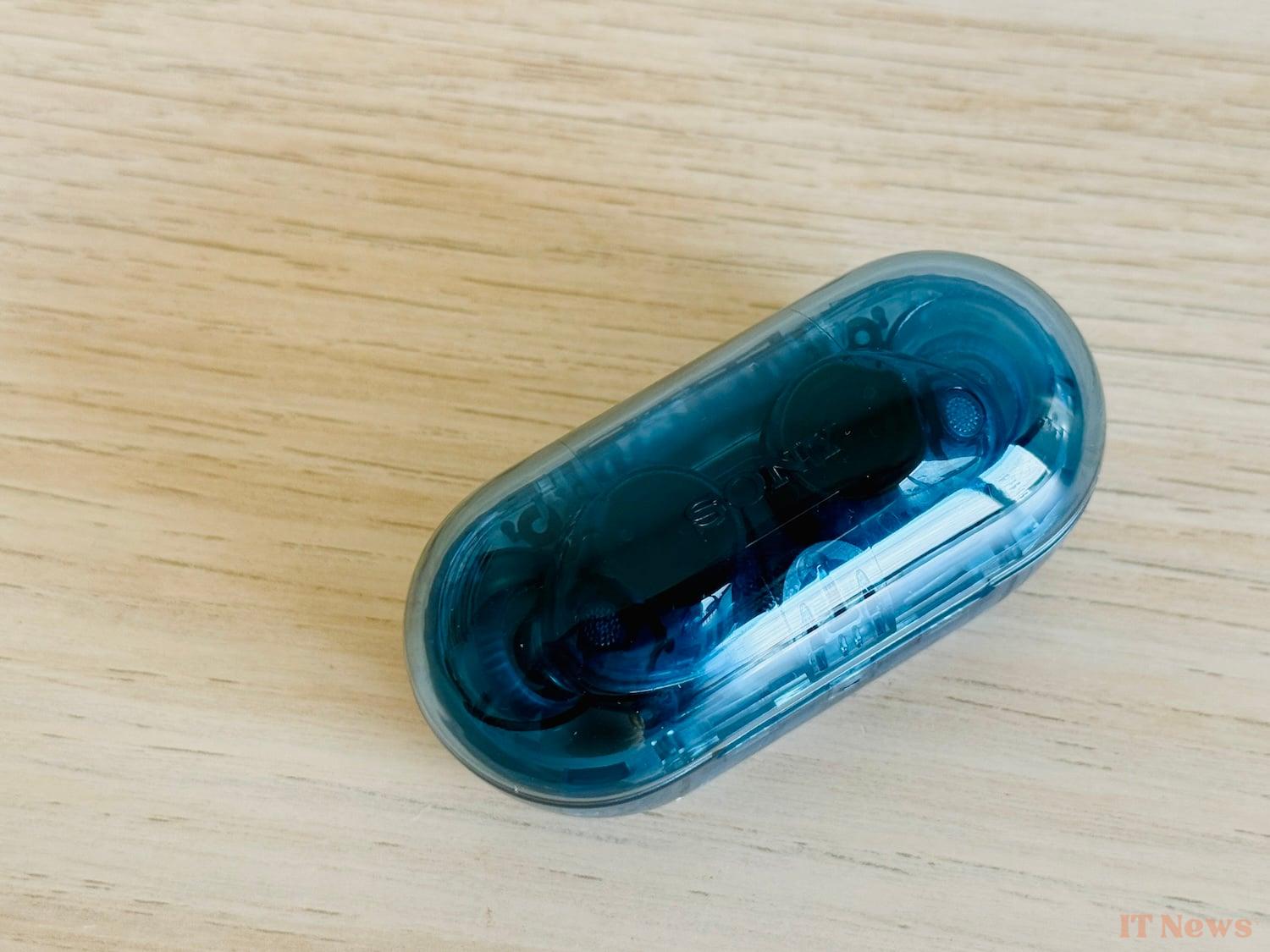
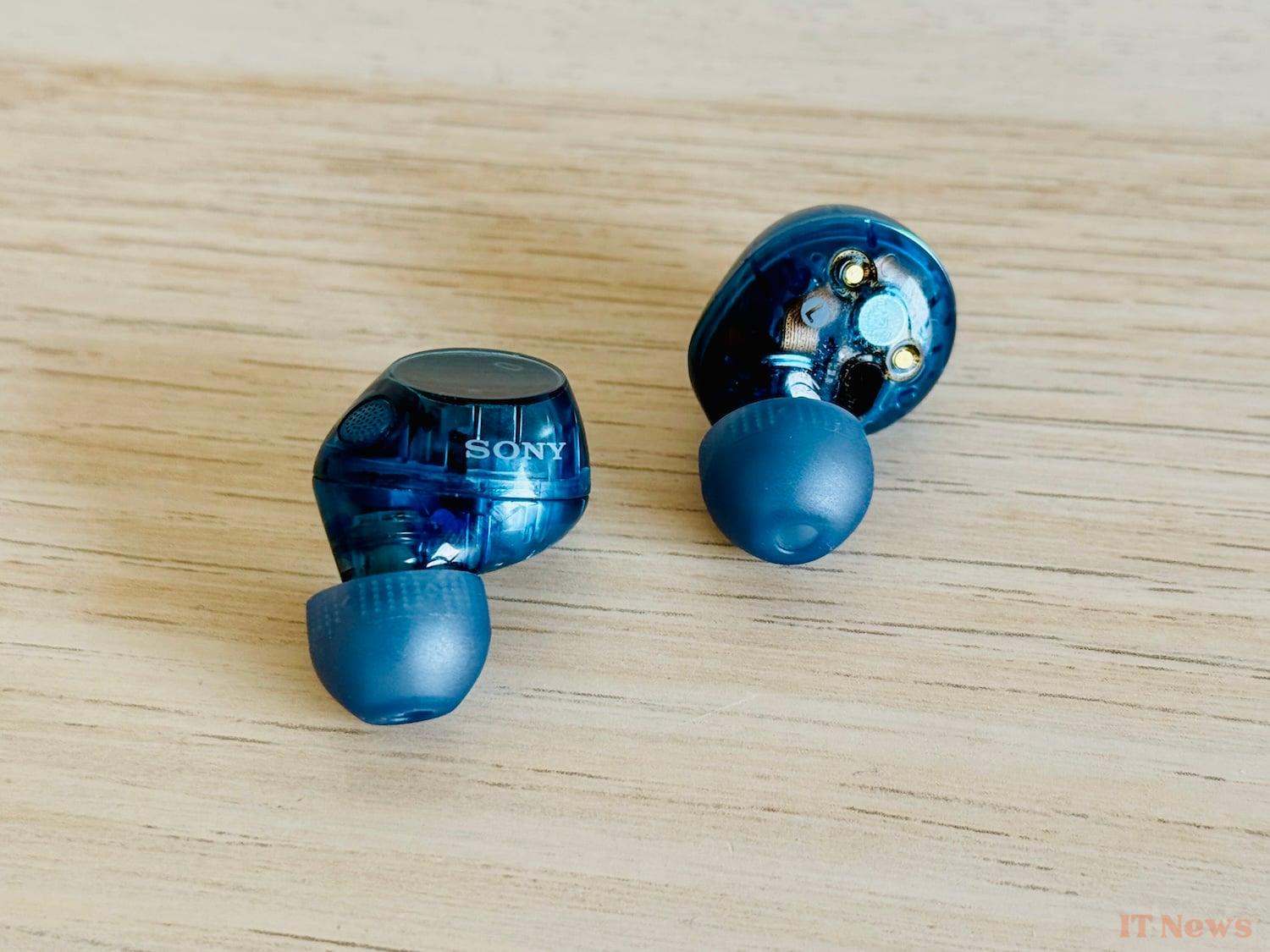
The version provided by the brand for our test features the brand new "glass blue" finish, which is completely transparent (they are also available in opaque pink, black, and white versions). An approach that is reminiscent of what Nothing offers on its smartphones and headphones, not hesitating to reveal their electronic innards. If the nod to its competitor is more than emphatic, we love the result which is largely up to par.
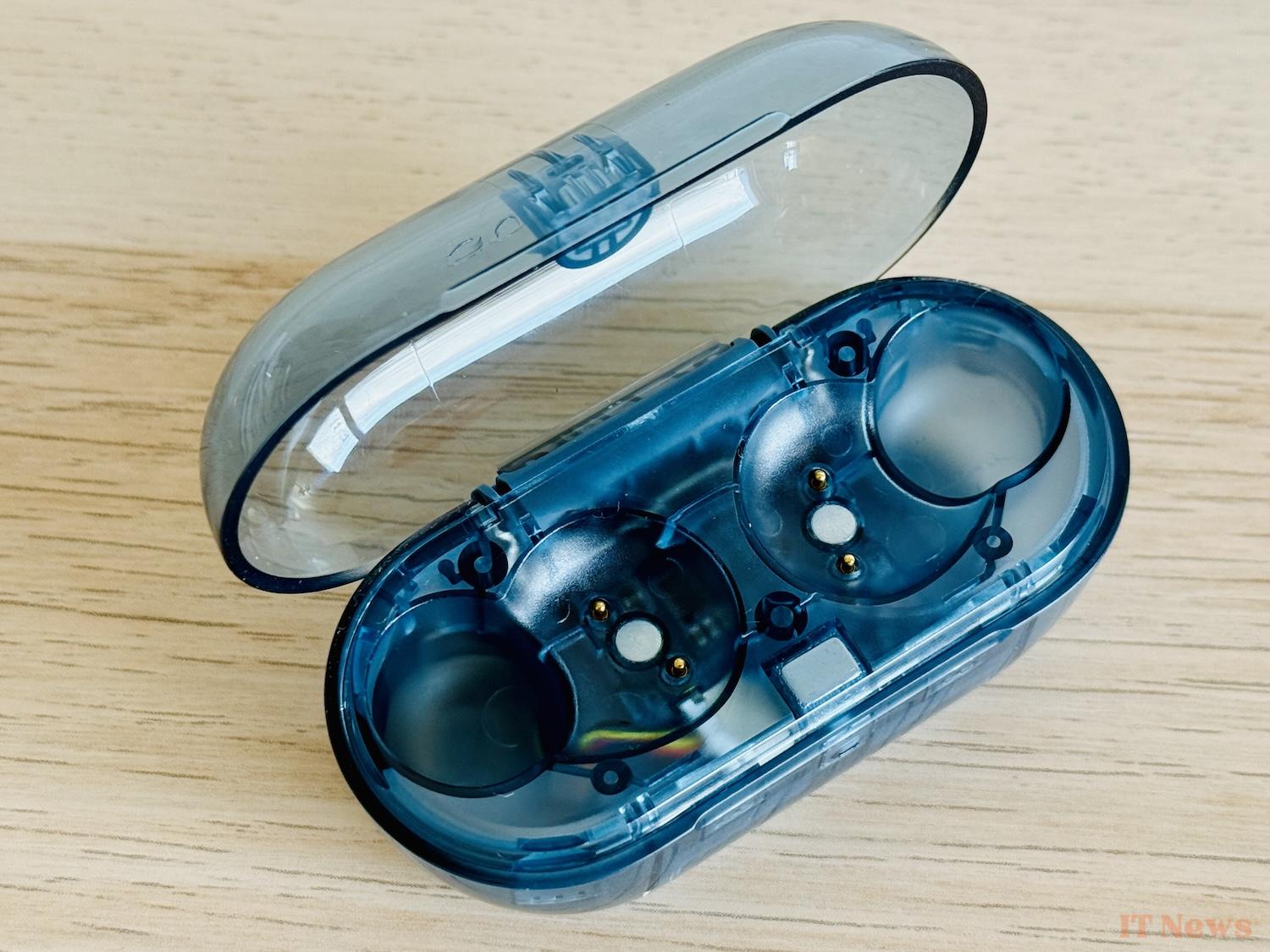
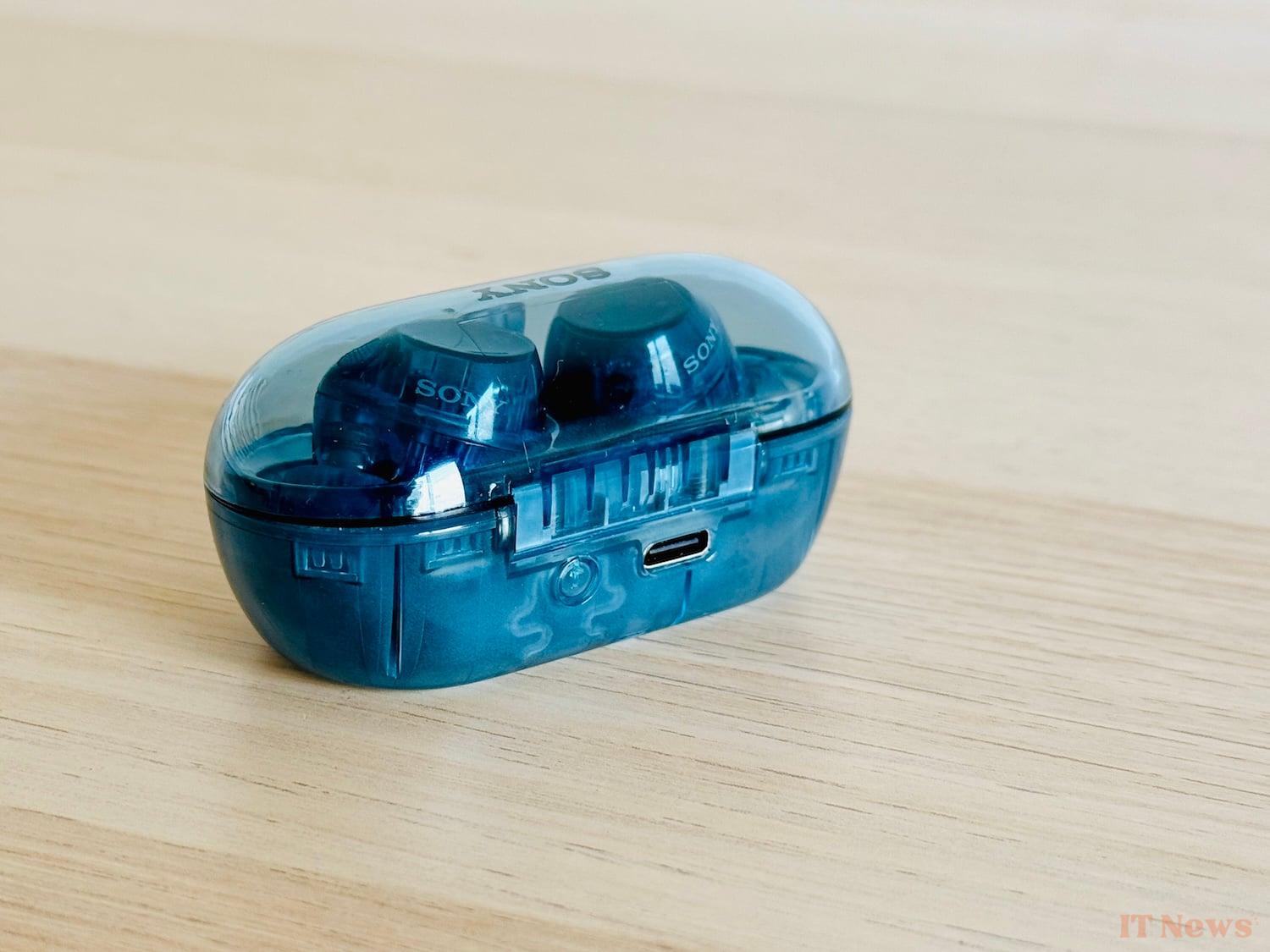
The finish is also up to par. Sure, the plastics are a bit light—which is quite logical in this price range—but the casing's finish is impeccable, as is the perfectly adjusted hinge mechanism. The same goes for the earphones, which swap the physical buttons of the previous generation for touch-sensitive surfaces. Very light once placed in the ears (5.2 g), they stay perfectly in place even during our running exercises. They are also perfectly suited for this use thanks to an IPX4 certification. There's nothing to say about their comfort; we were able to keep them in place for several hours without any discomfort. Three sizes of eartips are included, as well as a USB-A to USB-C cable.
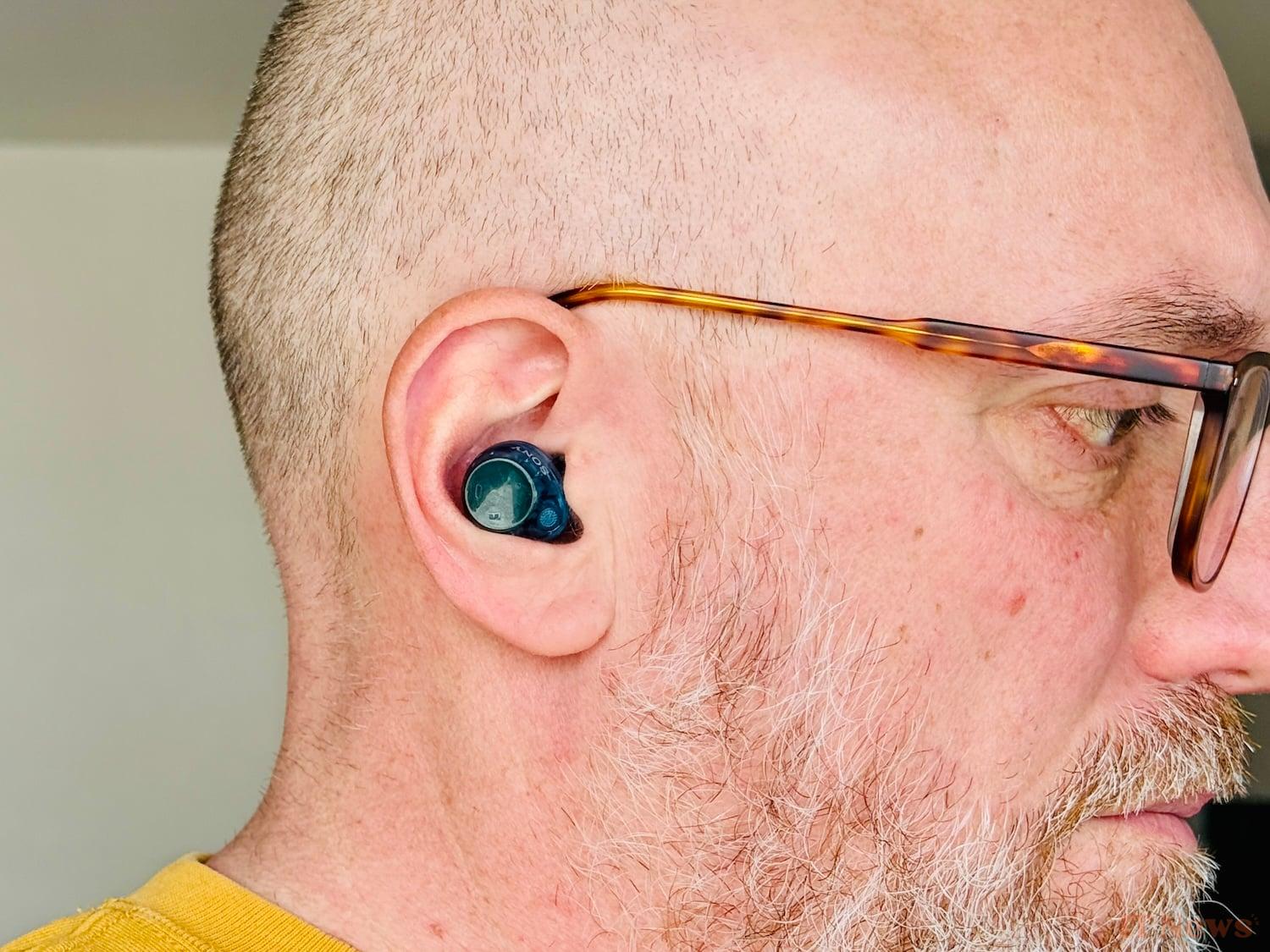
Touch instead of physical buttons
Pairing with Windows and Android is made easy thanks to the Swift Pair and Fast Pair functions. For other devices, simply press the button on the back of the open case containing the earphones to switch to detection mode. The touch surfaces on the earpieces are large and responsive. They offer all the classic functions: play/pause, track change, ANC/transparency, voice assistant and even volume adjustment by tapping several times in a row. 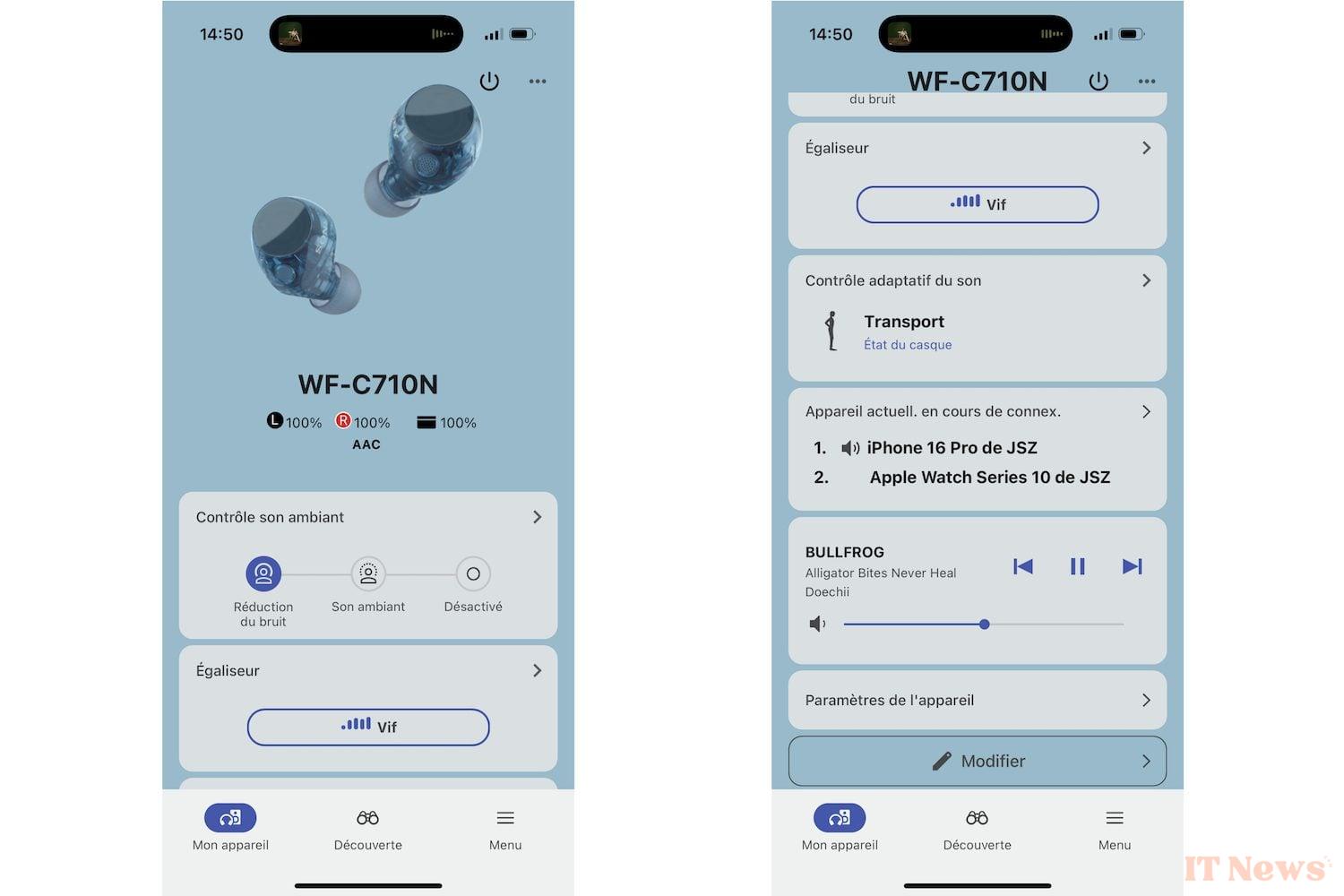
Via the Sound Connect app, it is possible to customize the double and triple tap by assigning them the Spotify Tap and Amazon Music Play Now functions, to launch your personalized playlist on each of these two services. This application is well known for being one of the most comprehensive on the market, if not the most comprehensive. We are therefore delighted to find a whole range of settings to best suit its use: multipoint connection for two devices, pause when you remove one earpiece and adaptive sound control. 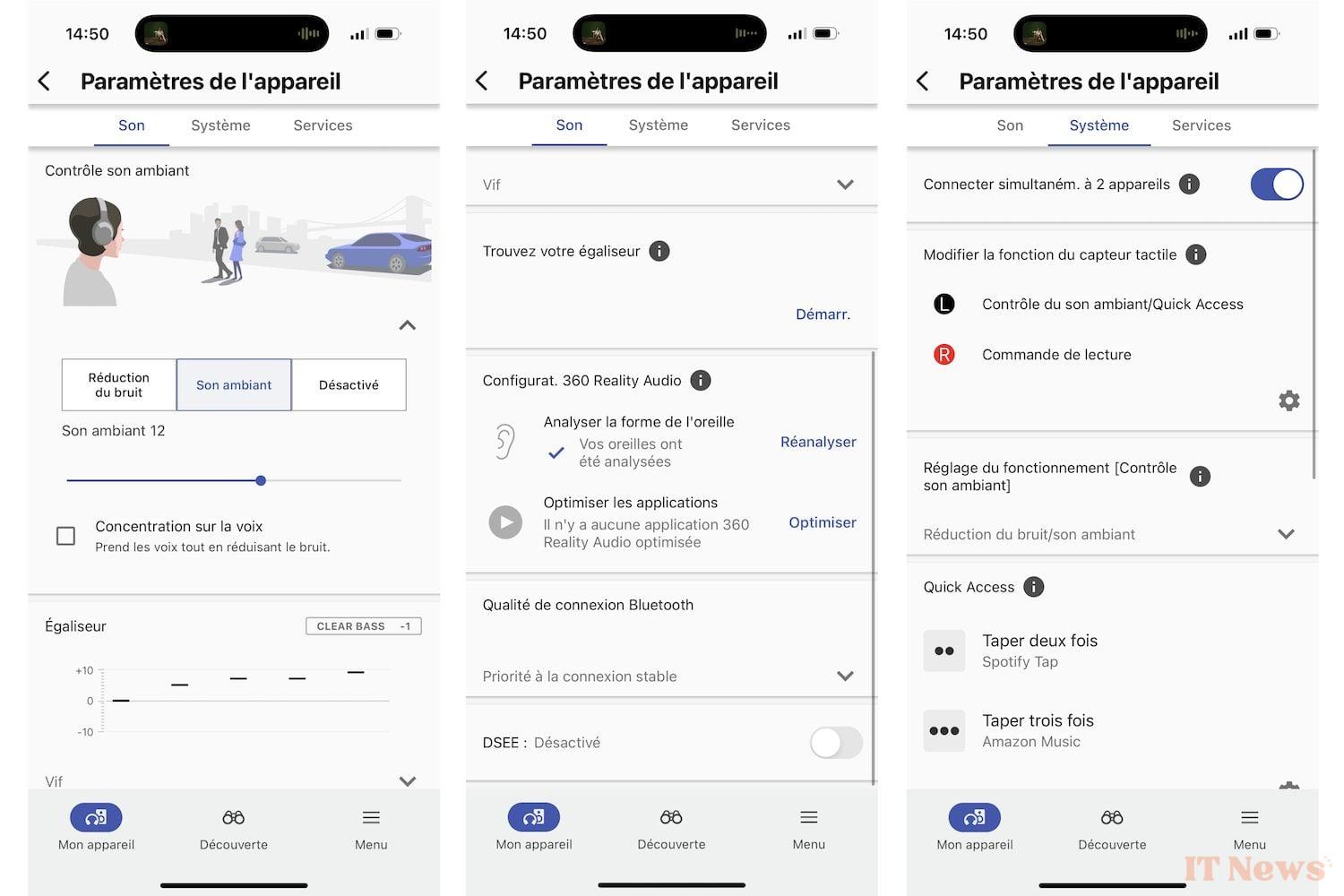
This latest feature analyzes your position and activity to juggle between noise reduction and the 20 levels of transparency. ANC is pushed to the max in transport or moderate transparency in the city when walking so as not to be completely isolated from car traffic. You can even determine behaviors based on a specific location (home, office, etc.) to be sure to automatically get the one you want. It's a useful and relevant system that we enjoyed using throughout our test. 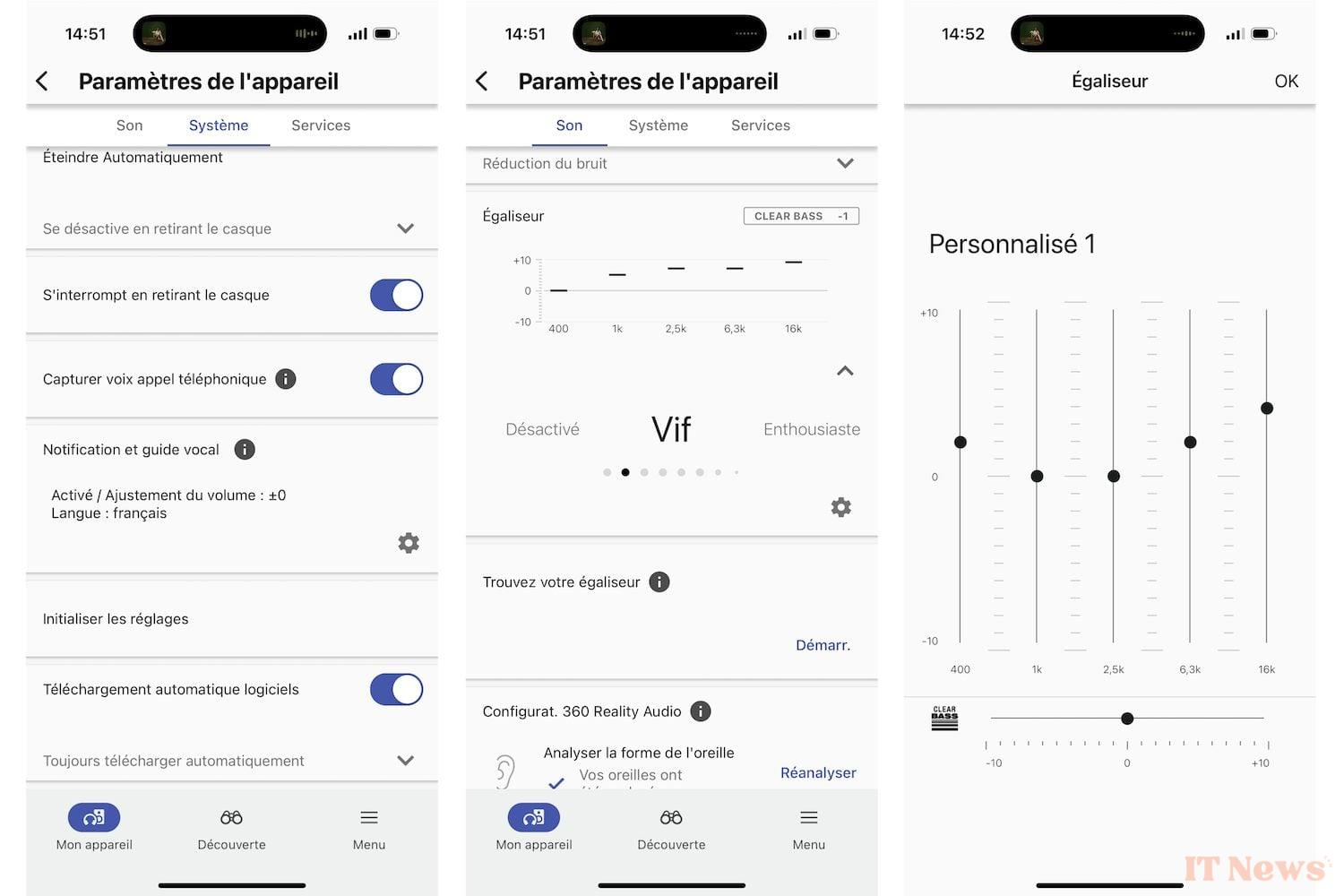
The comprehensiveness of Sound Connect is therefore no longer in doubt, but we would like its interface to be more responsive and especially less confusing. It is sometimes complicated to use, without knowing where to find a particular function. Fingers crossed that a future update will finally clarify all this and give it the ergonomics it deserves.
Very decent noise reduction
To offer active noise reduction worthy of the name, Sony relies on two microphones placed on each earpiece. And without reaching that of the WF-1000X, it is quite respectable, well supported by passive isolation that is already quite effective on high frequencies. Once the ANC is activated, we gain a few more decibels, but without completely succeeding in completely annihilating the sounds of rolling in transport or engine noise in the city. Quite logically, the transparent mode struggles to be completely neutral. Useful for staying alert to one's surroundings, it is much less pleasant when it comes to carrying on a conversation. Especially since the microphones are relatively sensitive to wind. The performance is, however, completely on par with what is available in this price range.
Sony has much more difficulty with the hands-free kit mode, which is perfectly effective in quiet environments, but quickly overwhelmed in noisy ones. Despite its Precise Voice Pickup system, which uses AI powered by 500 million voice samples, the WF-C710N struggles to accurately capture the user's voice. There are numerous sound artifacts, to the point where conversations in the street are incomprehensible.
Audio quality to balance
Fortunately, the Japanese manufacturer happily makes up for it with audio quality, with the 5mm drivers doing an excellent job. The first thing that strikes you when you use these headphones is the strong presence of the bass. It's even "boomy," providing a dynamism that's a little too strong to be honest. The treble doesn't take long to respond; it's far too timid to provide enough detail to do justice to Sony's expertise. Only the midrange performs well, and even then, the high midrange could be criticized for being somewhat masked by the bass.
A strange observation, you might say, but the good news is that it is possible to rebalance all of this very easily via the Sound Connect equalizer. To do this, you can choose the "Lively" or "Treble Boost" presets. Better still, you can juggle with the five-band manual equalizer to fine-tune the whole thing until you get a signal that's much more neutral than the original. The WF-C710N then sounds more than adequate, with excellent dynamics, controlled reproduction of instrument timbres, and a wide, open stereo scene. At 120 euros, it's a treat to be able to benefit from such audio quality.
Especially since Sony allows you to do this for a long time. We were able to use them with noise reduction activated for 8 hours 12 minutes between two charges (8 hours 30 minutes claimed by the manufacturer). This is an excellent performance, to the point that one wonders what remains of the LinkBuds Fit released at the very end of 2024, marketed at 180 euros and offering only 5 hours 20 minutes of autonomy.


0 Comments