
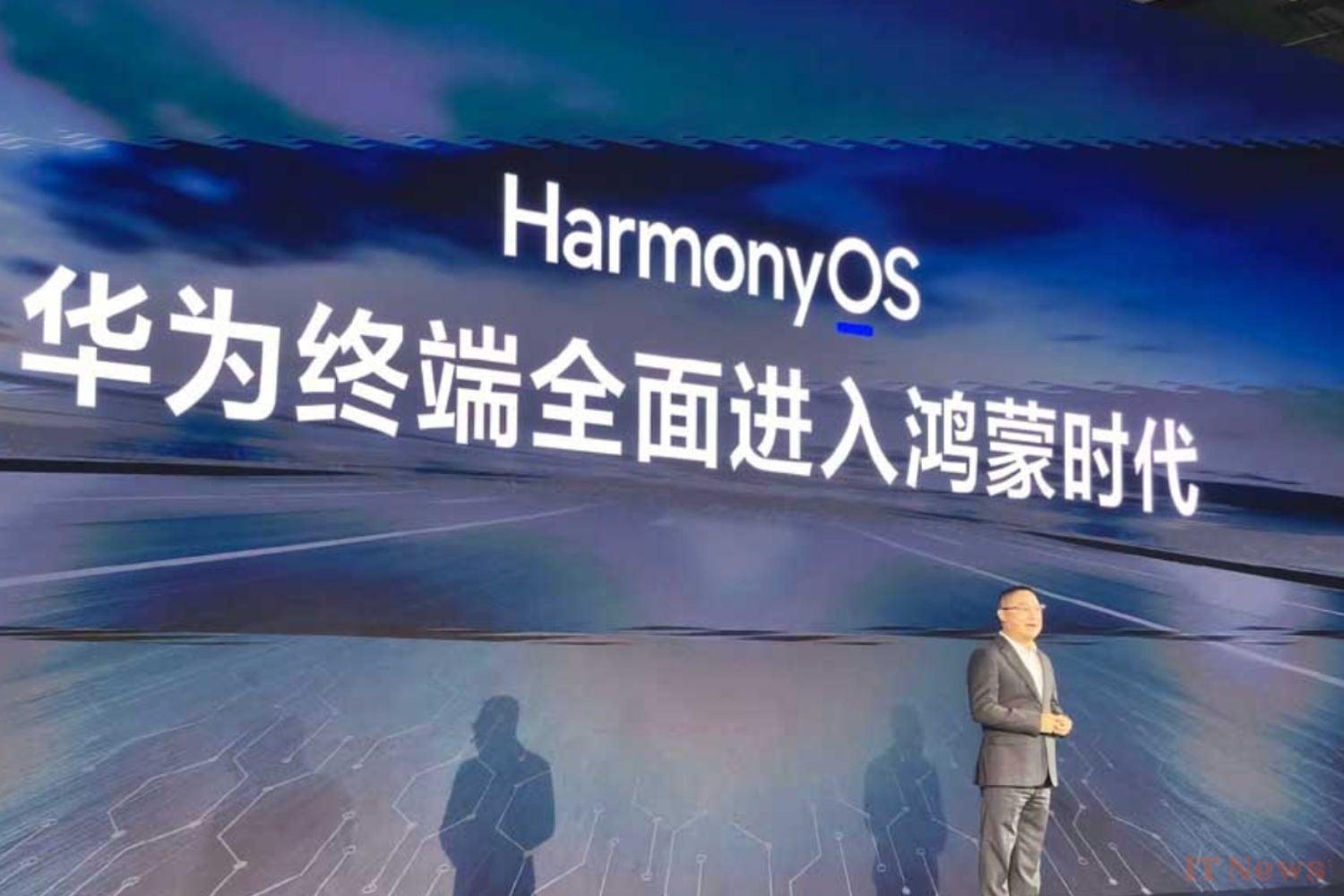
Increasing independence from American digital solutions: that's the message sent by Huawei – and China – on Thursday, May 8. Yesterday, the Chinese telecommunications giant published a blog post, announcing that it would launch its first laptop equipped with its own operating system, "Harmony OS NeXt," in China on May 19.
"Harmony," which was first developed for its smartphones, is now reportedly being deployed on Huawei computers as the operating system. The former Chinese champion was forced to develop in-house software for its smartphones after being blacklisted by the United States in 2019. And history is repeating itself for its computer operating system. Since last March, Huawei has been unable to install Microsoft Windows on its devices – until now, its laptops were equipped with Windows 11 and Linux.
US apps and technologies banned from Huawei devices
As a reminder, after the first US sanctions, the company had plummeted to the bottom of the smartphone vendor rankings. The United States accused the company of copying its American champions, while being in Beijing's pay, in the midst of a Sino-American trade war: allegations strongly refuted by the company concerned.
In practice, Huawei is no longer allowed to purchase components or services if American technology is used. This rule therefore prohibited it from offering the Gmail, Maps, and YouTube apps on its smartphones. Also gone are the latest-generation chips, as well as Google's Android system, must-haves that the Chinese company had undertaken to rebuild or develop on its own.
What will this system look like?
Initially, the group deployed an initial version of HarmonyOS, based on Android's open source code. This allowed Android applications to run on its smartphones. At the same time, the Shenzhen group threw itself into the development of "HarmonyOS Next," its in-house operating system. And now, it's the latter that will be installed on Huawei PCs.
On Thursday, the Chinese company showed off what its system looks like during an event in Shenzhen in the south of the country. An App Dock, similar to other OSes, allows access to files, applications and other computer features such as settings, gallery, browser and the Huawei App Store etc.
Its app store offers a wide list of apps developed in China, which are mainly aimed at Chinese users: alongside apps like Tencent Video, there are local alternatives to Teams (DingTalk, developed by Alibaba) and WPS (equivalent to Microsoft Office), details the Chinese media ITHome.
A turning point for Huawei?
The Chinese giant wants to play the card of integration between smartphone and computer: users will be able to use voice and touch in addition to the classic keyboard and mouse. By the end of the year, the device is expected to support more than 2,000 applications, according to Chinese media Nanfang Daily, cited by the South China Morning Post (SCMP).
According to experts cited by the Global Times, the announcement represents a turning point for Huawei. The company "has the potential to break the dominance of Microsoft's Windows and Apple's macOS in desktop operating systems."
"The launch of HarmonyOS on PCs will reduce dependence on (American) systems, mitigate the risks of supply disruptions, and strengthen the resilience of the Chinese PC industry in the face of external uncertainties," said Wang Peng, an associate researcher at the Beijing Academy of Social Sciences, in an interview with the Global Times.
While the operating system presents itself as a genuine alternative to American operating systems, it is currently aimed exclusively at Chinese users. Don't look for popular European apps like Photoshop or Chrome in Huawei's app store: you won't find them. An international launch of HarmonyOS on PC doesn't appear to be planned for the time being.


0 Comments