
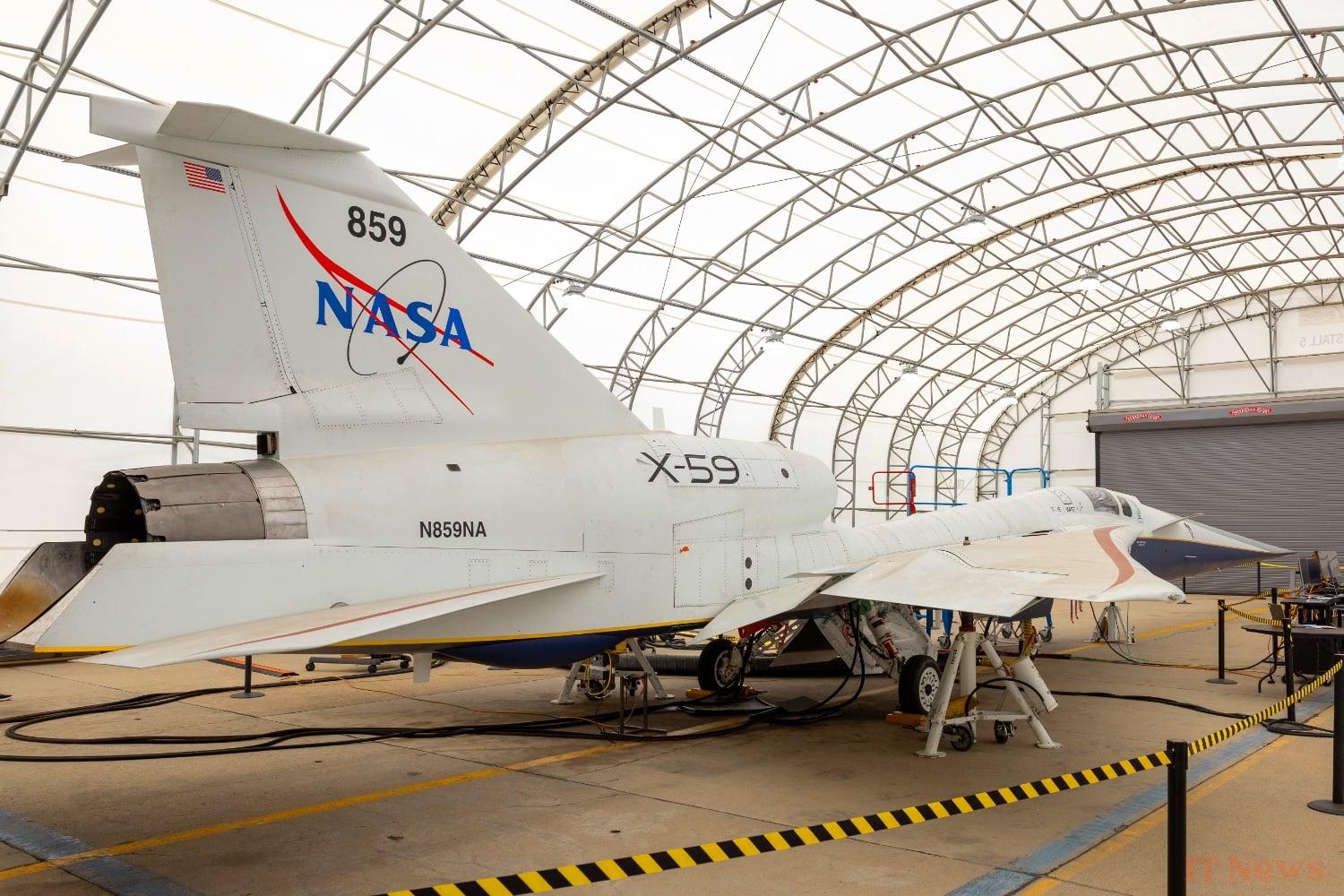
NASA's X-59 supersonic research aircraft has just reached a very important milestone in its development. The experimental aircraft has successfully completed a comprehensive battery of ground simulation tests, faithfully reproducing flight conditions... without ever taking off from the Californian desert.
Toward the first flight
"The idea behind these tests is to command the aircraft's subsystems and flight computer to operate as if it were flying," explains Yohan Lin, X-59 senior avionics engineer at NASA's Armstrong Flight Research Center in Edwards, California.
These tests, nicknamed "aluminum bird" after the aircraft's main construction material, represent a new approach in aeronautical development. Unlike traditional "iron bird" tests, which use a metal structure replicating aircraft systems, the team chose to use the unique X-59 aircraft directly.
During these tests, engineers from NASA and contractor Lockheed Martin activated most of the X-59's systems, except for the engine. When the test pilot moved the control column, the flight computer responded by moving the rudder or other control surfaces, just as it would in real flight.
The aircraft was simultaneously electronically connected to a ground computer that sent simulated signals—interpreted as real by the X-59—such as changes in altitude, speed, temperature, or the status of various systems.
The goal of these ground simulation tests was to ensure that the hardware and software that allow the X-59 to fly safely work together properly and can handle any unforeseen problems. "We thought we'd find a few things during testing that would cause us to go back and tweak them to work better, especially with some of the software, and that's what we ended up experimenting with. So those tests were very helpful," the engineer said. The next step will be to roll the aircraft out onto the taxiways at the airport adjacent to Lockheed Martin's Skunk Works facility in Palmdale, California, where the X-59 was built. The first flight would follow these taxi tests.
Since its public debut in January 2024, the aircraft has already passed several crucial examinations: a flight readiness review conducted by independent experts, structural tests including "shakedowns" to check for vibration-related issues, the first ignition of the GE Aerospace jet engine with afterburner tests, wiring verification to eliminate electromagnetic interference, and speed-hold tests simulating the autopilot.


0 Comments