
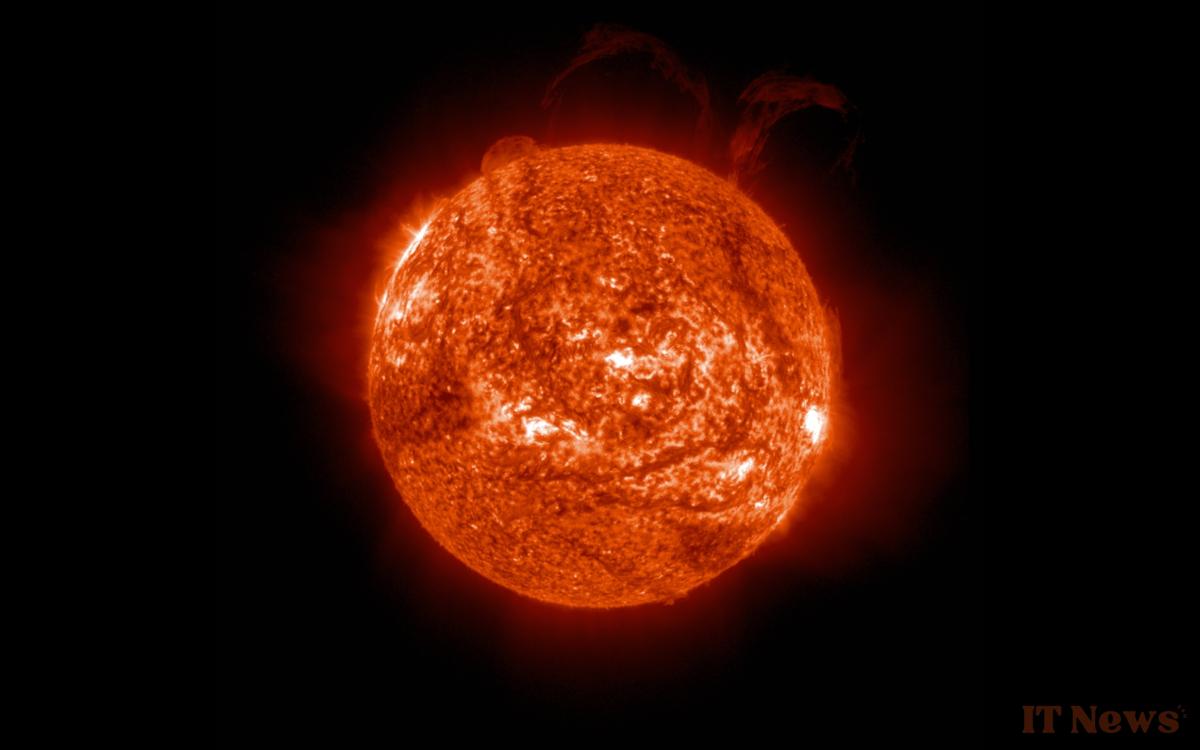
A rare video shows a solar flare of exceptional magnitude that occurred on the night of May 12-13. The plasma filament rose nearly a million kilometers above the Sun's surface. An impressive spectacle that we were lucky enough to be able to capture live.
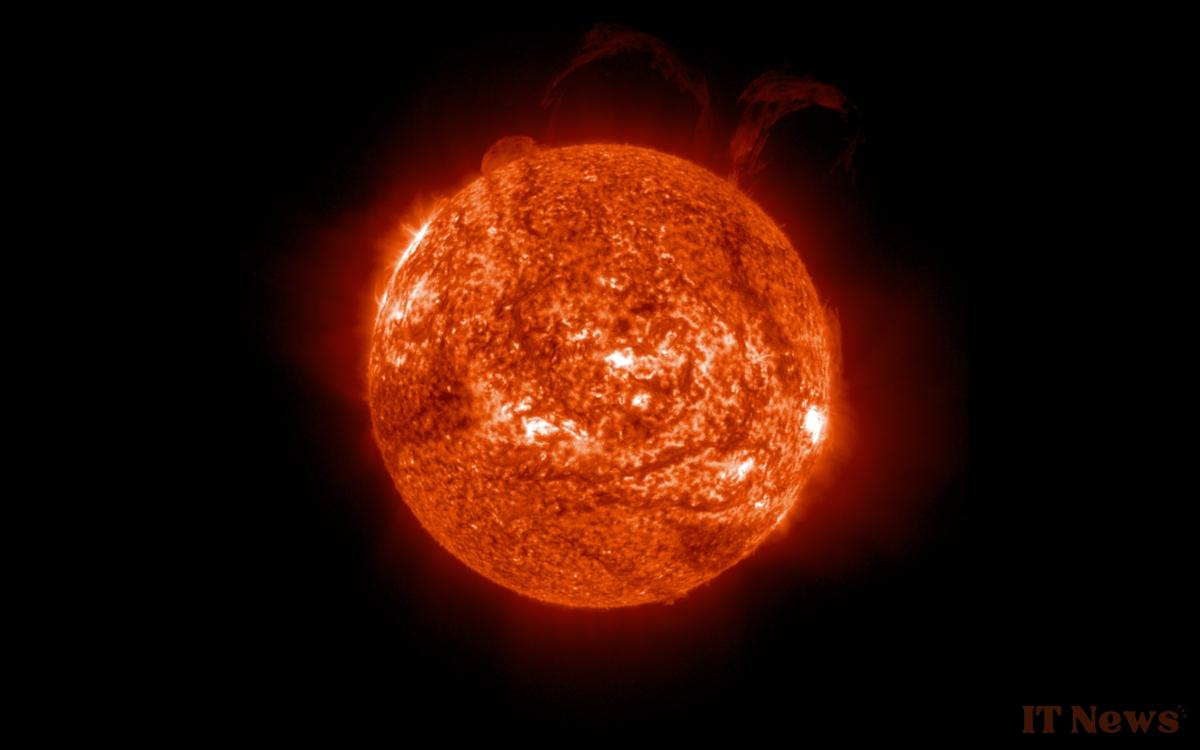
The Sun regularly produces manifestations of extreme power. Among them, some eruptions can project vast quantities of matter into space. Invisible from Earth, these events are continuously observed using specialized satellites. Their magnitude and complexity fascinate scientists and astronomy enthusiasts alike. The images provided by space agencies allow us to precisely visualize these usually inaccessible phenomena. On the night of May 12-13, 2025, NASA instruments captured a particularly spectacular eruption. The observed filament rose nearly a million kilometers, more than twice the distance between Earth and the Moon. Suspended by magnetic fields on the surface of our star, this structure eventually destabilized before being violently thrown across the northern hemisphere. Looped images of this moment were quickly shared online by specialists and enthusiasts.
The Sun projects an immense wave of material a million kilometers long
The filament is a band of plasma that is cooler and denser than the solar environment, making it visible as a dark line in images of the Sun. These structures are held in balance by the sun's magnetic fields. When this balance is disrupted, they can explode and form what is called a coronal mass ejection. This phenomenon projects a bubble at high speed into space. The unusual size of this eruption struck observers, some comparing it to an angel's wing due to its extensive shape.
The images released by NASA show a gigantic loop detaching itself from the solar surface, in a slow but powerful movement. The explosion quickly attracted the attention of specialist communities. Even if this eruption does not pose a threat, its power and aesthetics have aroused admiration. Researchers will continue to analyze it to better understand the internal dynamics of the Sun and how these filaments form, maintain themselves, and then suddenly release into space.
today! Unfortunately it is directed north and will miss us. A direct hit from a CME like this can be high-end G4 storm material, maybe even G5. https://t.co/StNvwdYyqp pic.twitter.com/nFHPc5F8apNot sure what to call this eruption, maybe the “bird-wing” or “angel-wing” event? Either way, it is truly something to witness! Look at how large the blast is off the Sun's northern hemisphere. I could watch this animation loop for hours! pic.twitter.com/QZjcDPnFyE
— Vincent Ledvina (@Vincent_Ledvina) May 13, 2025
— Jure Atanackov (@JAtanackov) May 13, 2025


0 Comments