
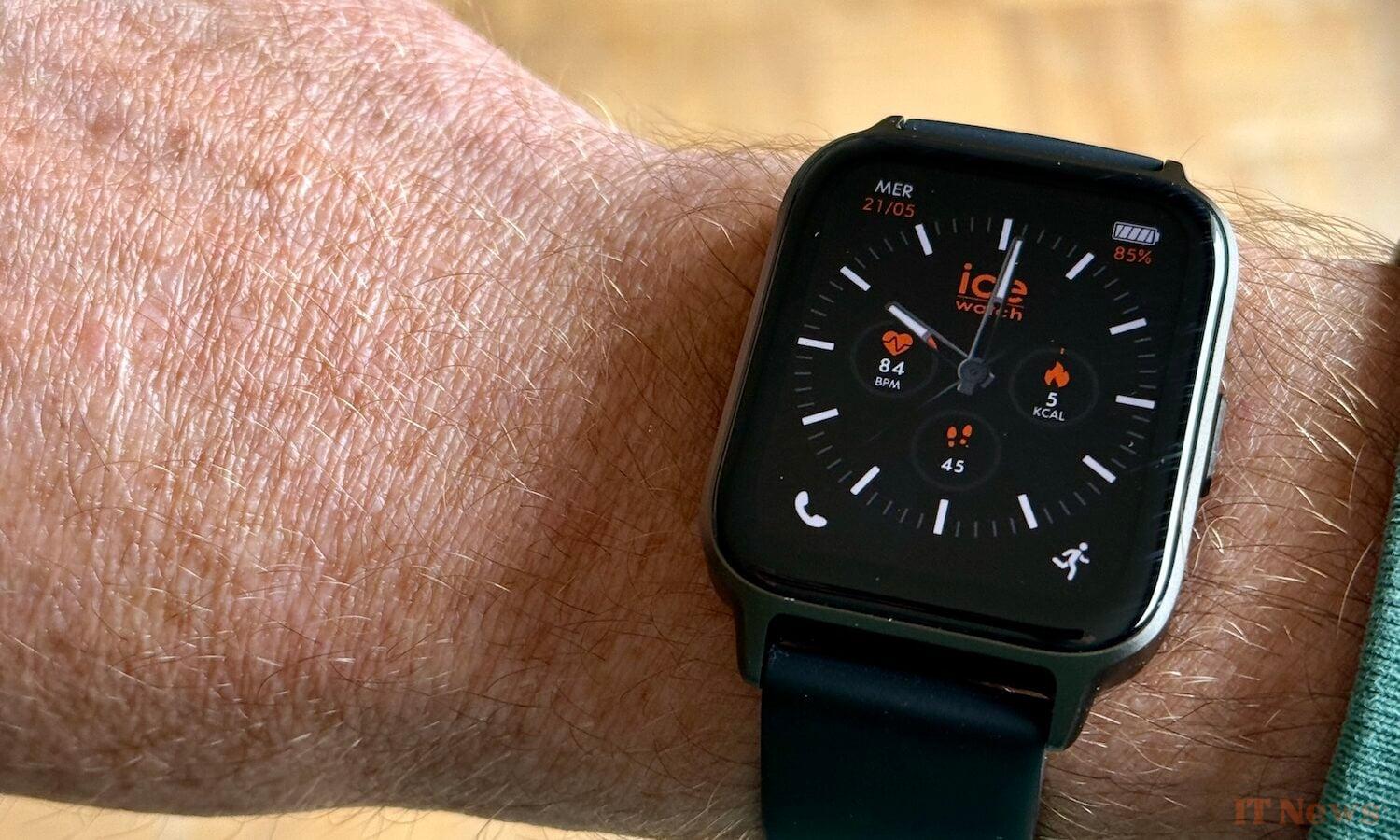
A Belgian brand known for its classic watches in vibrant, accessible colors, Ice Watch is bringing its philosophy to the smartwatch market with the Ice Fit 1.78. Available for just €130, it aims to offer the essential features of a modern smartwatch without the price tag. At first glance, the offering is tempting: a bright AMOLED display, a battery life of up to a week, a design reminiscent of the Apple Watch, and comprehensive health and fitness tracking. Our two-week test of the device lets us know if it lives up to its promises.
A watch with style
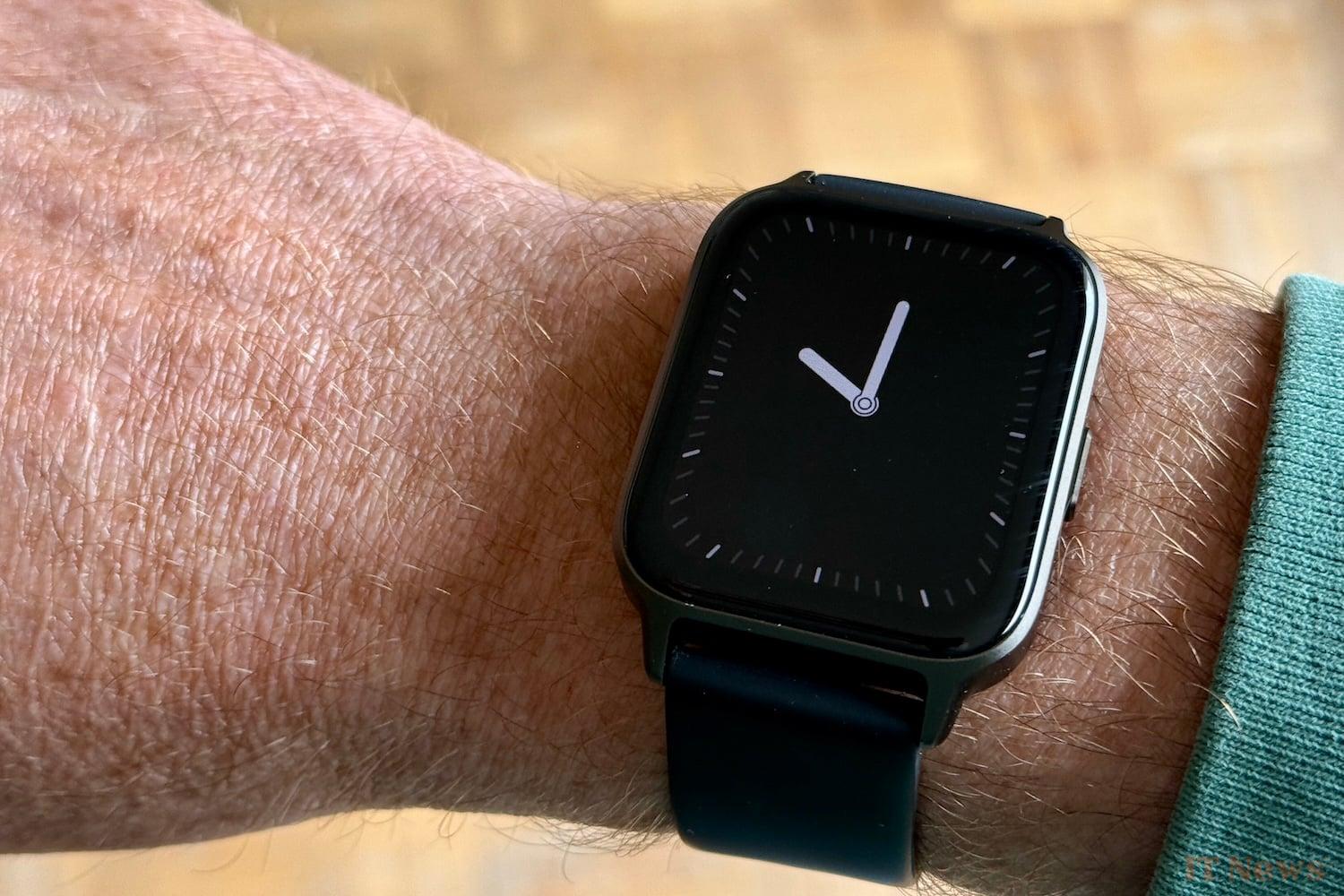
With its rectangular shape, the Ice Watch Fit fully embraces its Apple Watch inspiration. And that's not a bad thing: the look is modern, understated, and very comfortable on the wrist. The 45 x 38.5 mm, 10.5 mm thick case is surrounded by aluminum with a plastic back, which helps maintain a featherweight 36 grams. As a result, the watch is quickly forgotten, day or night.
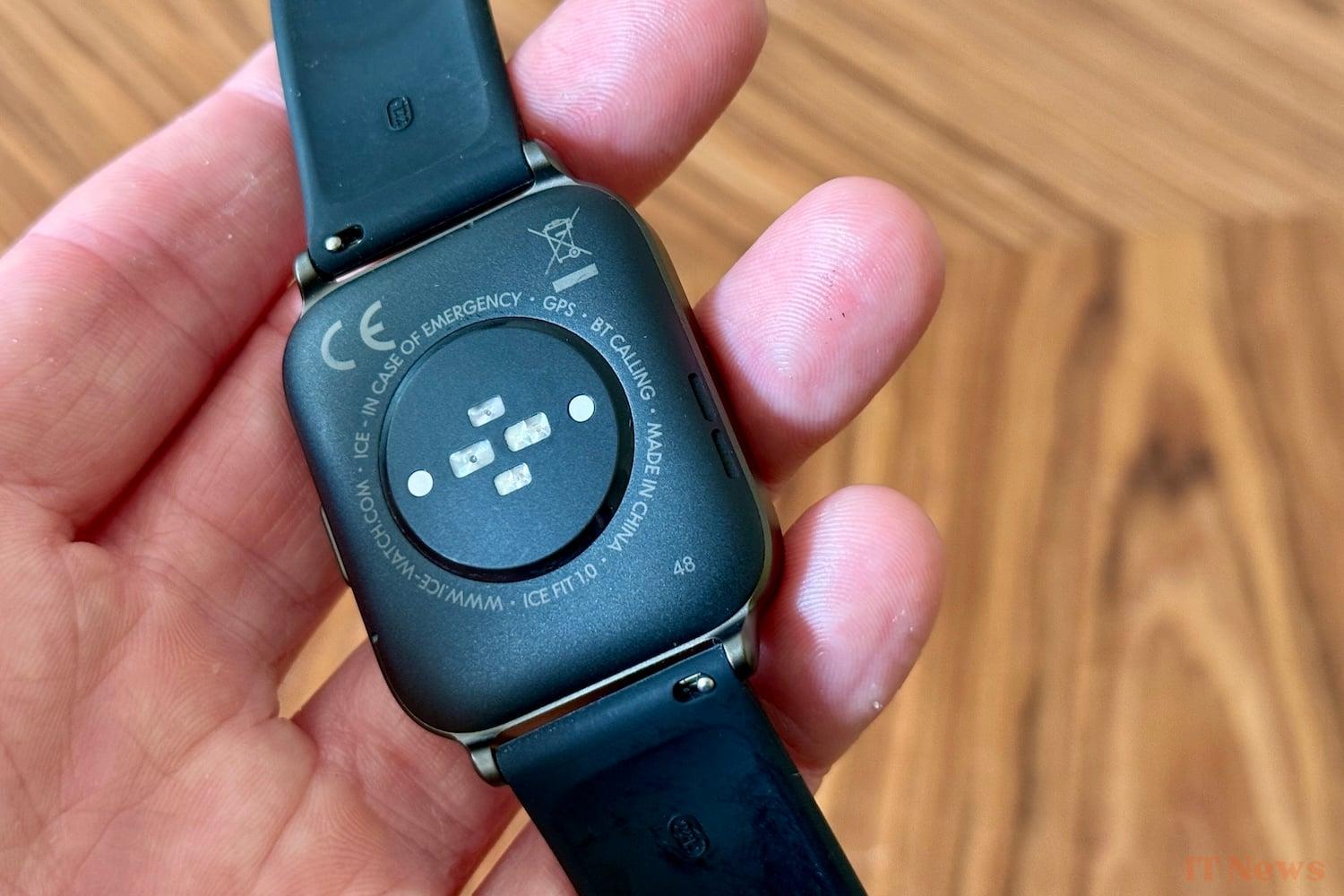
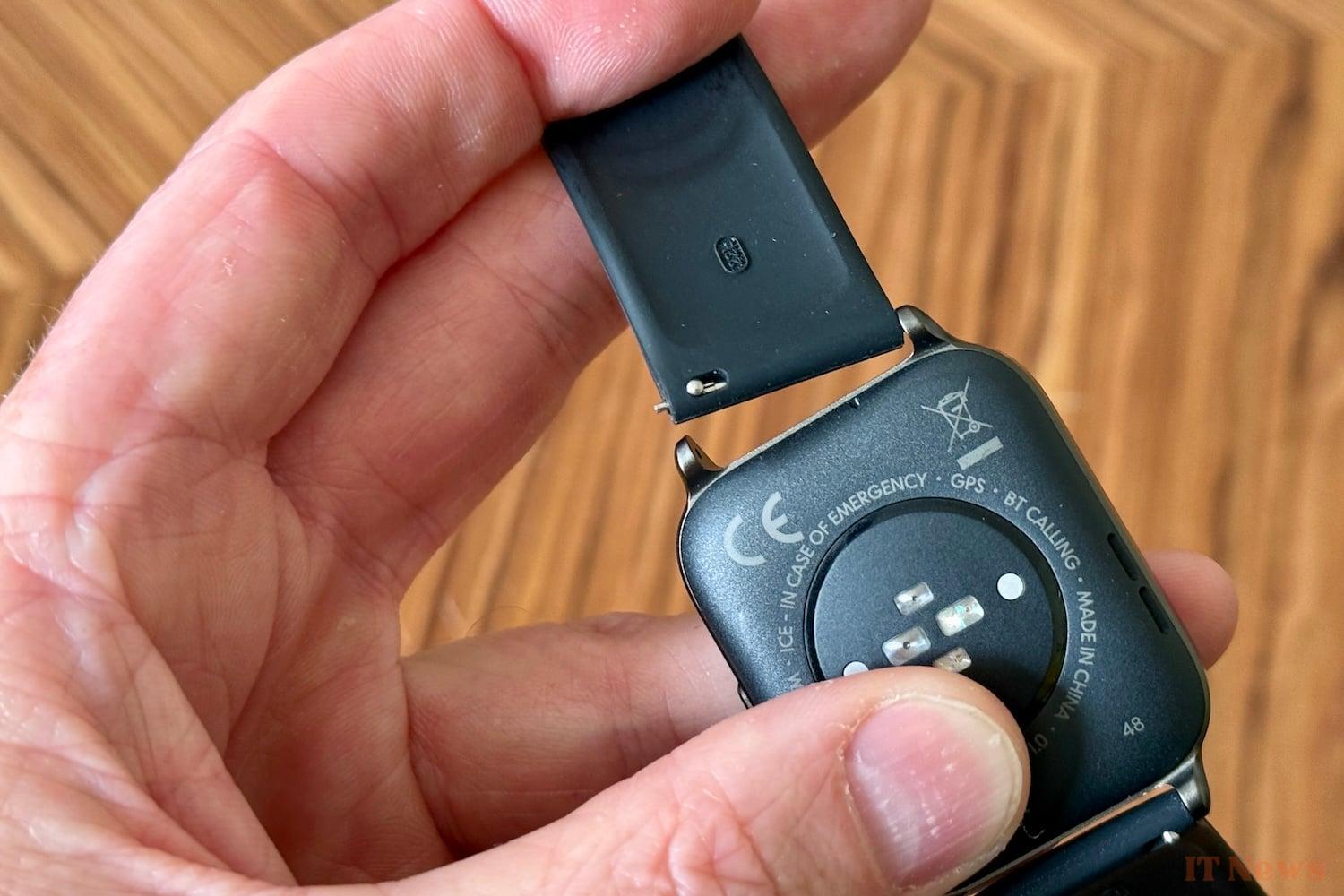
The finish is decent for this price segment. The silicone strap is interchangeable and comfortable over time. It doesn't cause irritation, even during sports activities. The watch is IP68 certified, which guarantees good resistance to water and dust. Be careful, however, with its 3ATM certification, it is not intended for use underwater (pool or sea), even though swimming is included among the activities offered. If we were you, we wouldn't risk it.
A beautiful display, but navigation could be improved
The main asset of this watch is undoubtedly its 1.78-inch AMOLED screen with a resolution of 368 x 448 pixels. The colors are vivid, the blacks deep, and readability in full sunlight is very good thanks to good maximum brightness. However, we regret the absence of automatic brightness, which requires juggling with the settings according to the lighting conditions and which can be very energy-consuming as we will see later.
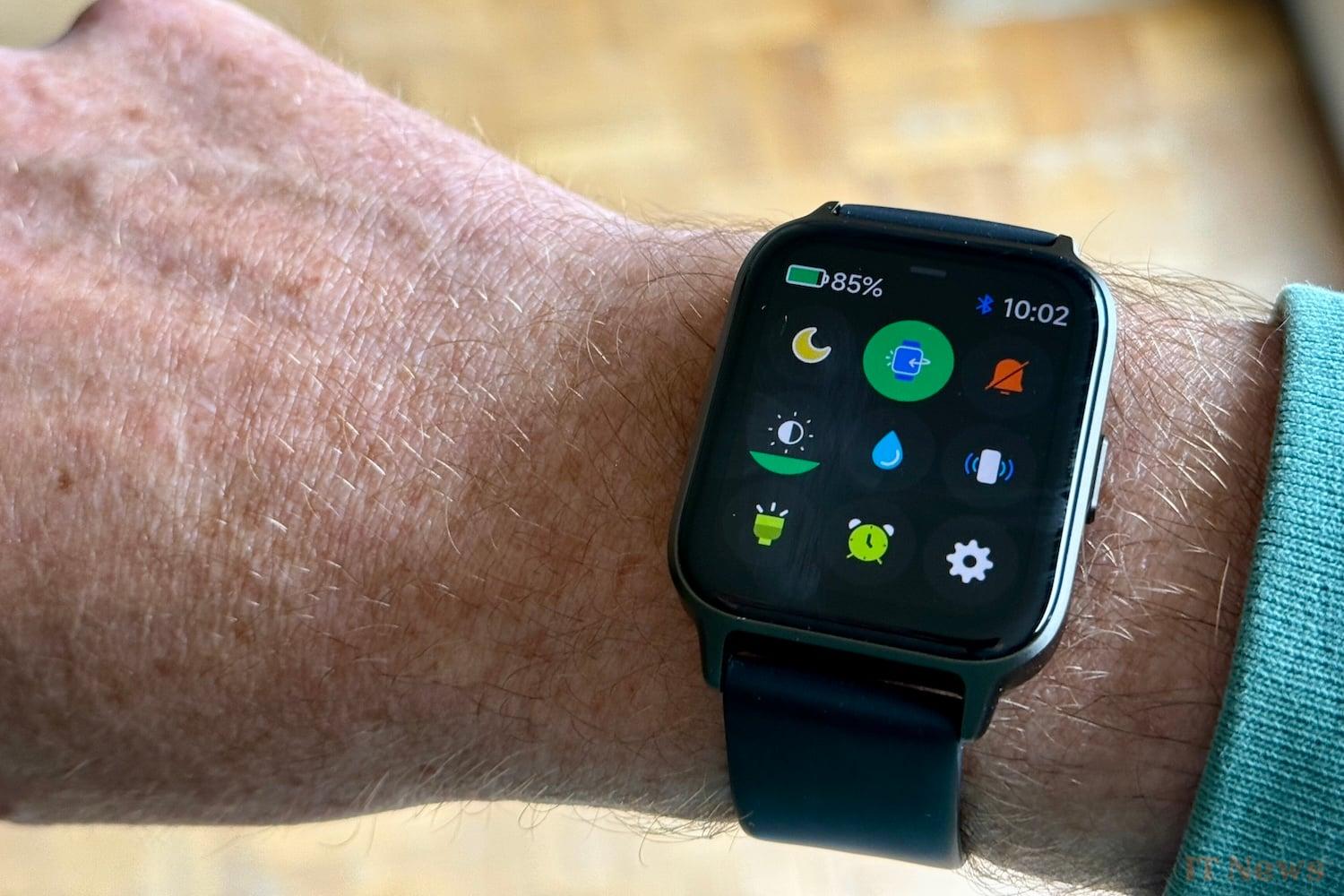
Navigation relies exclusively on the touchscreen and a single side button. This button mainly acts as a back button or quick access to the main menu. The gestures are simple: swipe up to access shortcuts, down for notifications, left or right to navigate between widgets.
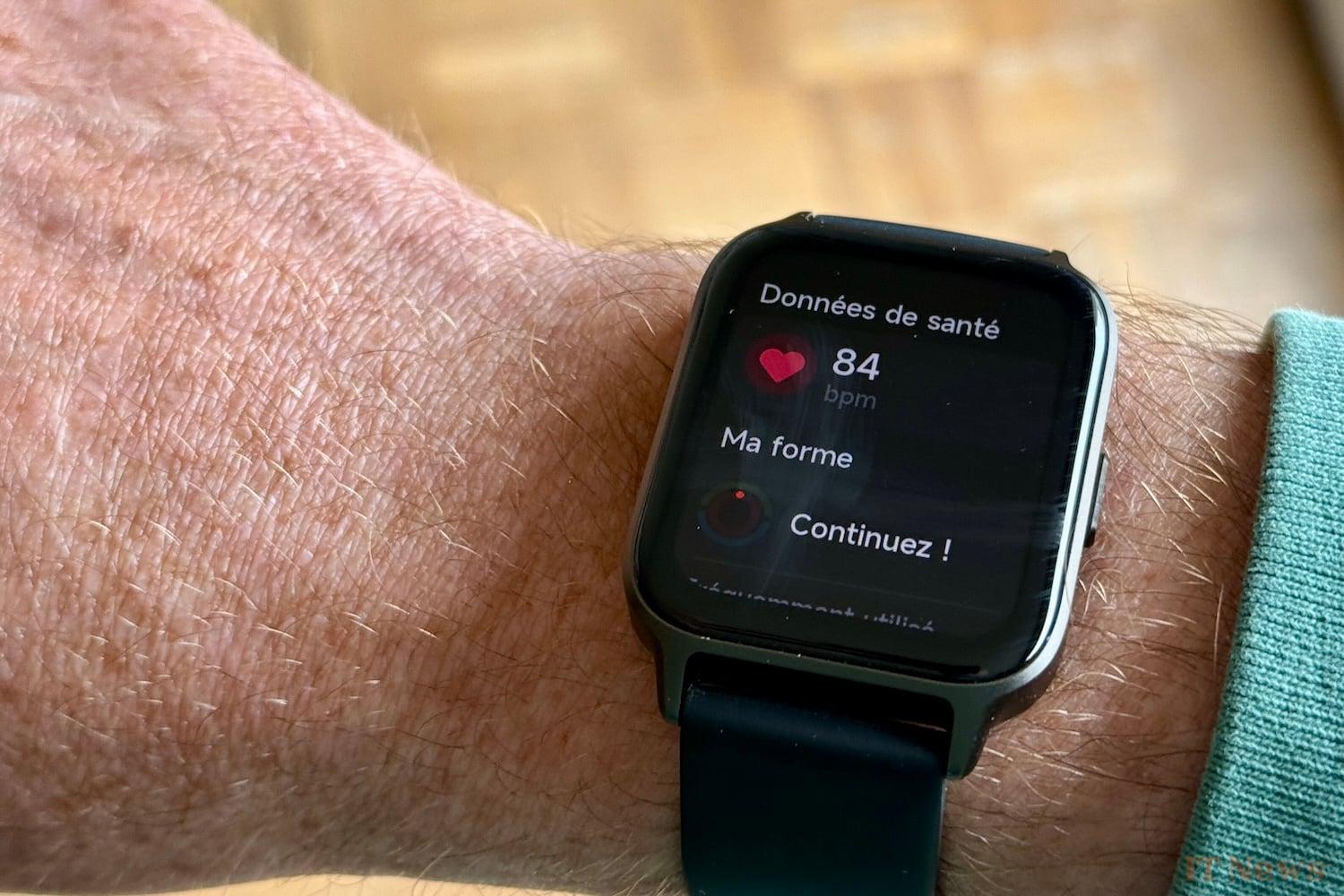
The interface is generally fluid, but it sometimes presents some slowness or jerkiness, especially when changing watch faces or accessing historical data. Nothing prohibitive, but it's a reminder of the very affordable positioning of this watch. There are around twenty watch faces available via the companion app. This allows you to vary the styles according to your mood.
The Ice Fit app is quite comprehensive
To operate, the watch relies on the ICE Fit app, available on iOS and Android. It offers a simple and relatively comprehensive experience. The home screen includes the main data: number of steps, sleep duration, heart rate, SpO2, sports activities, etc. The graphs are clear, and it is possible to set goals for steps, sleep, or sports, but the lack of personalized recommendations or in-depth analysis limits the interest in in-depth monitoring. In terms of connectivity, the watch offers neither Wi-Fi nor NFC. Contactless payments are therefore out of the question. 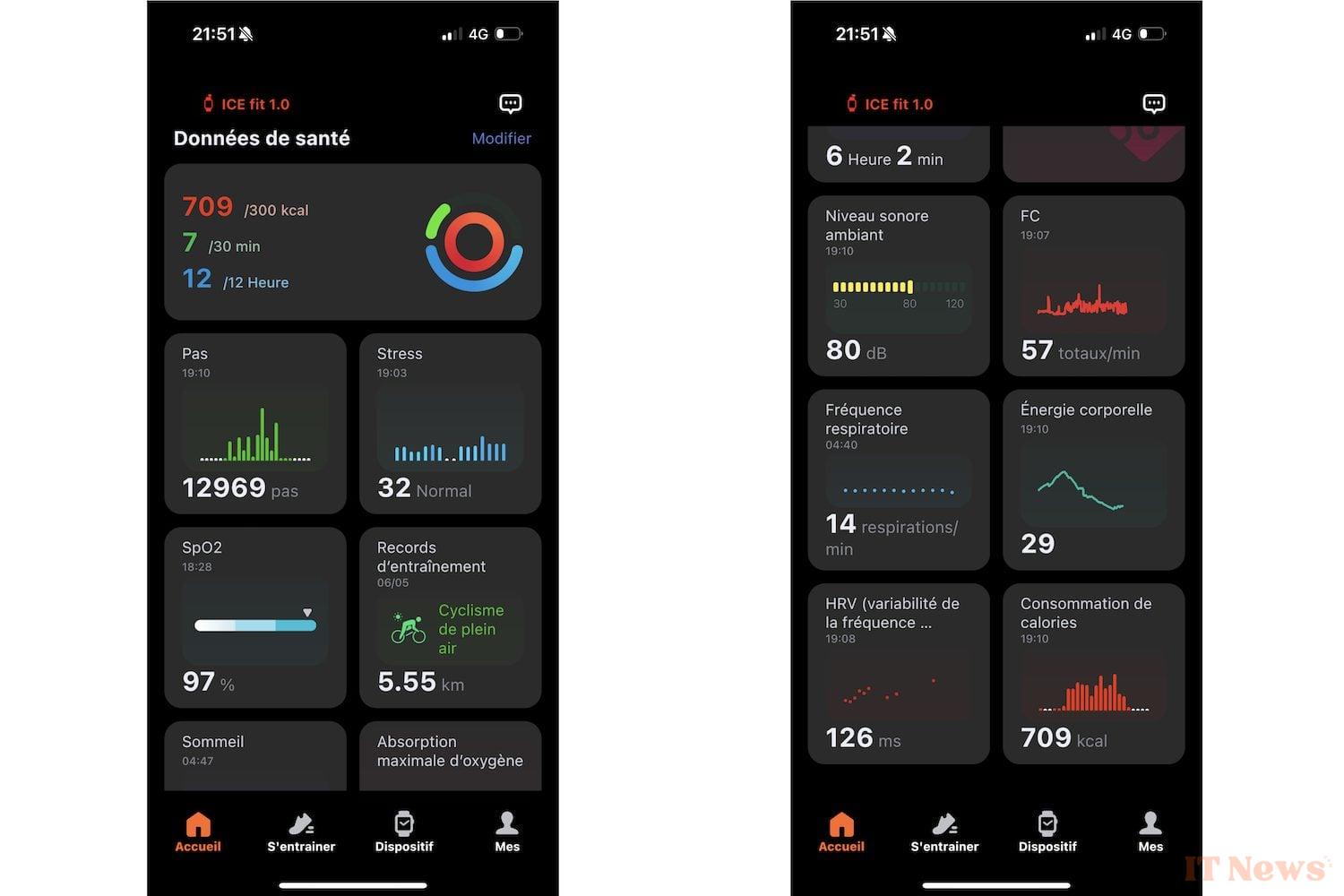
Notification management is basic: you can read them, but not interact with them. It's the bare minimum, but it's still frustrating when you're coming from a more comprehensive model. Their management doesn't always work with the smartphone either: deleting them on the latter doesn't delete them on the watch. However, we appreciate the ability to choose which apps have the right to send their notifications to the watch so as not to find ourselves overwhelmed. Finally, you can control the smartphone's music playback and trigger the camera remotely.
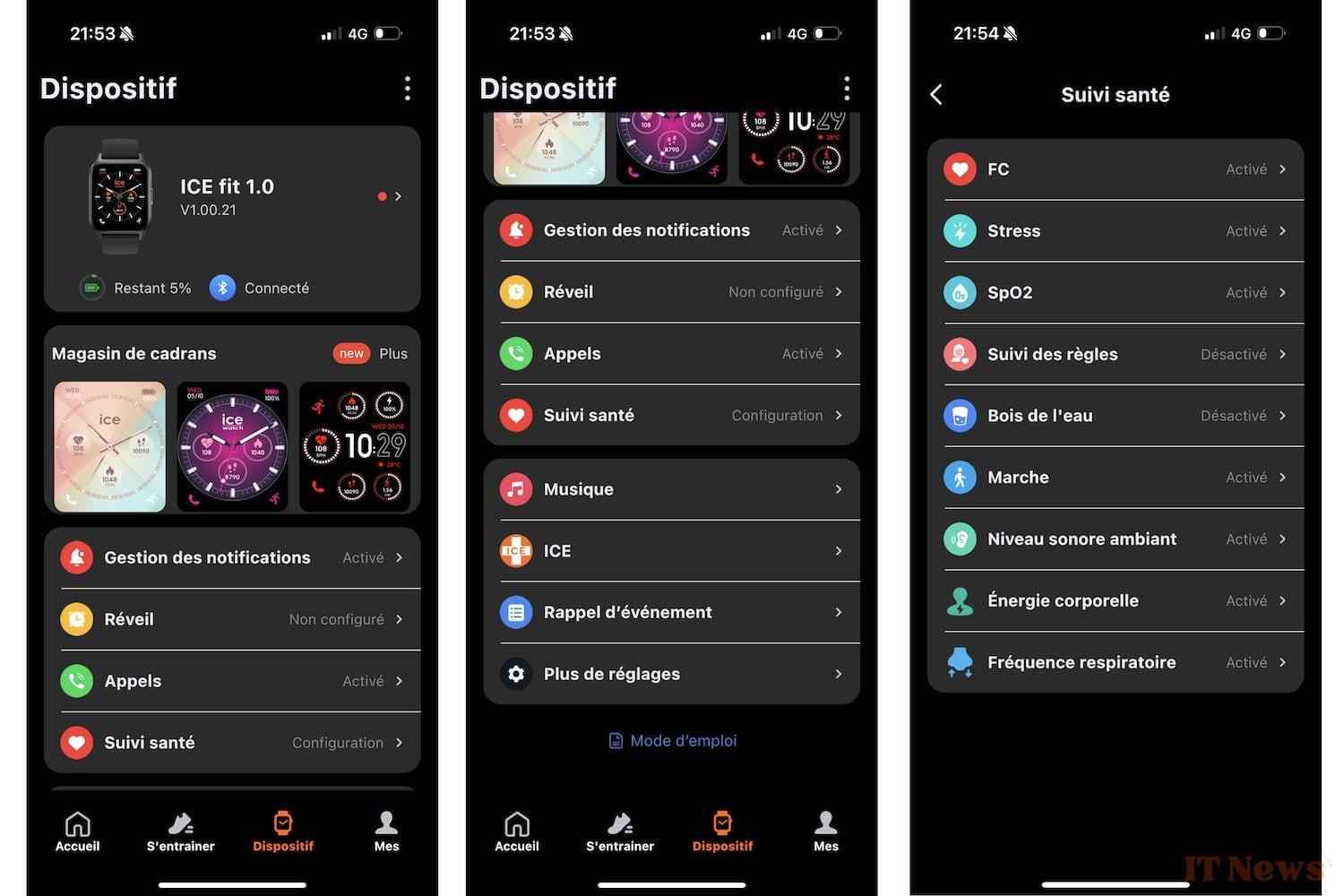
Connectivity with other apps is limited to Strava and Apple Health (on our iOS smartphone). These are the two main services, but those who use others will, for example, have to juggle transmission to Health and then to their reference service. Possible, but not very simple.
For occasional sports tracking
The Ice Fit offers an onboard GPS, a very good feature for this price range. When going outdoors, you don't have to bring your smartphone to record your running or walking route. Unfortunately, our multiple tests have shown the chip's lack of precision, which often indicates a track far from the street you walked on. The comparison is even harsh compared to our Apple Watch Series 10. The speeds recorded during our bike rides also seemed completely surreal.
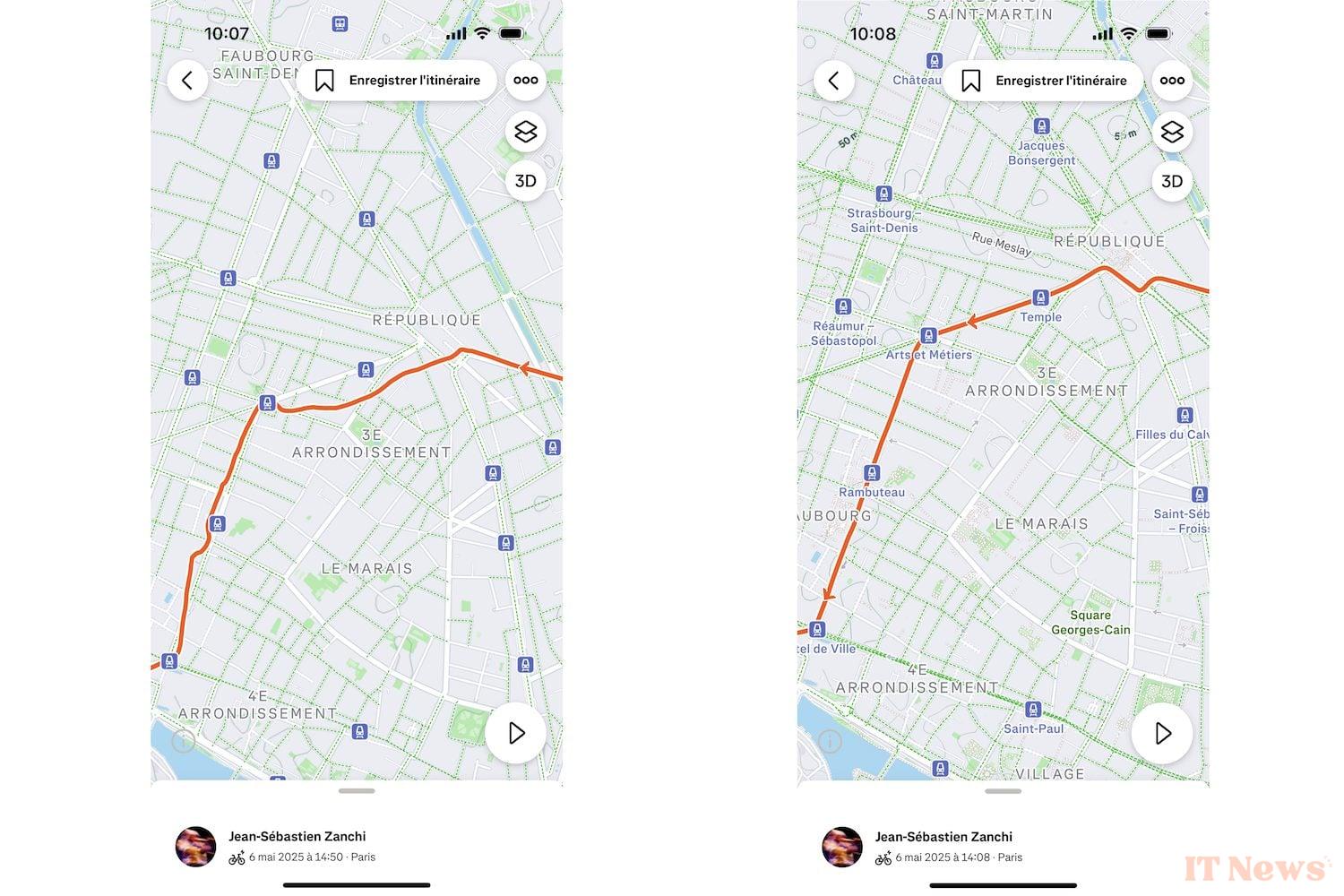
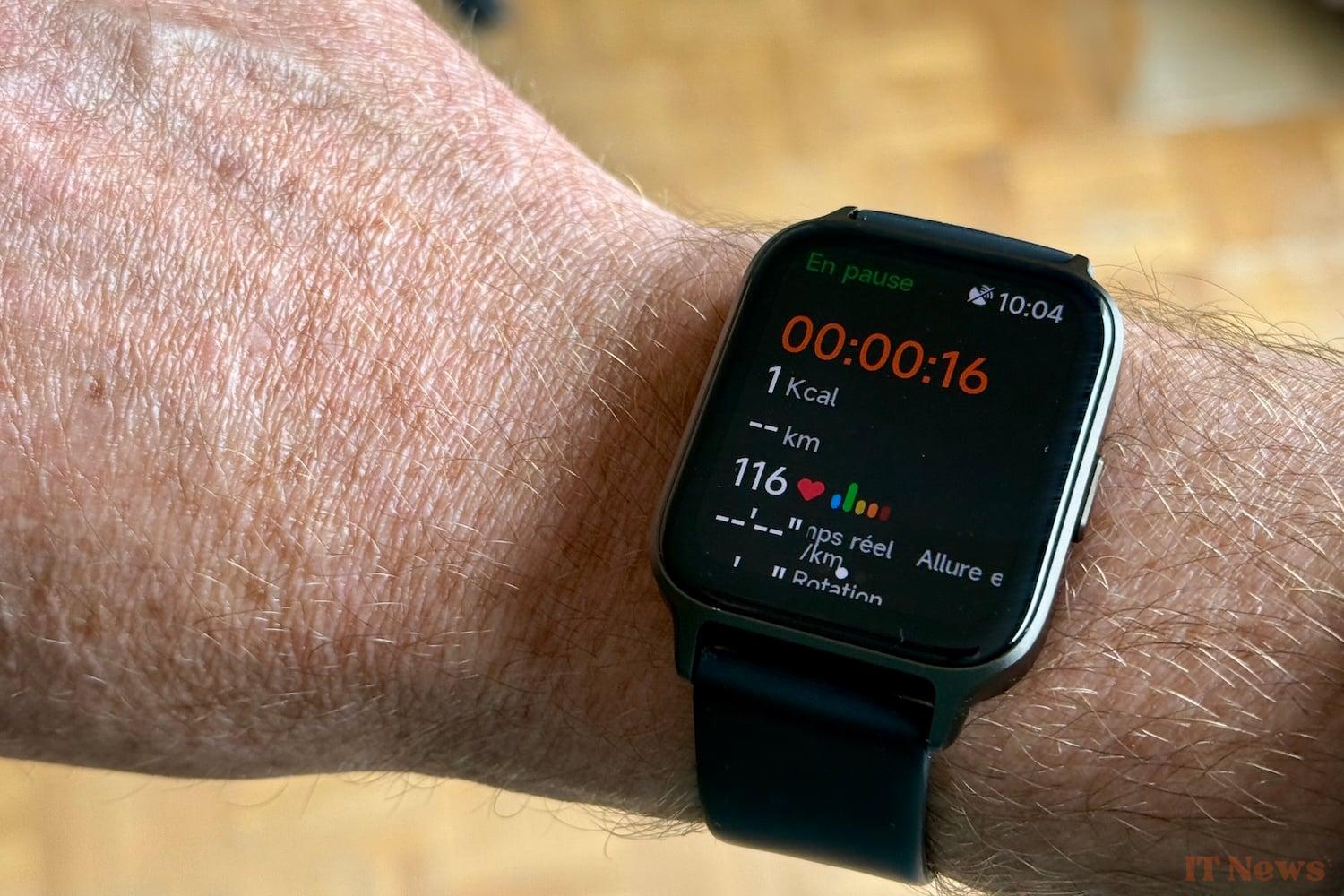
For indoor sports or simple activities (walking, running, cycling, yoga, etc.), the watch offers around forty sports profiles. In practice, they don't really change the behavior of the watch, which simply displays the duration, heart rate, and estimated calories.
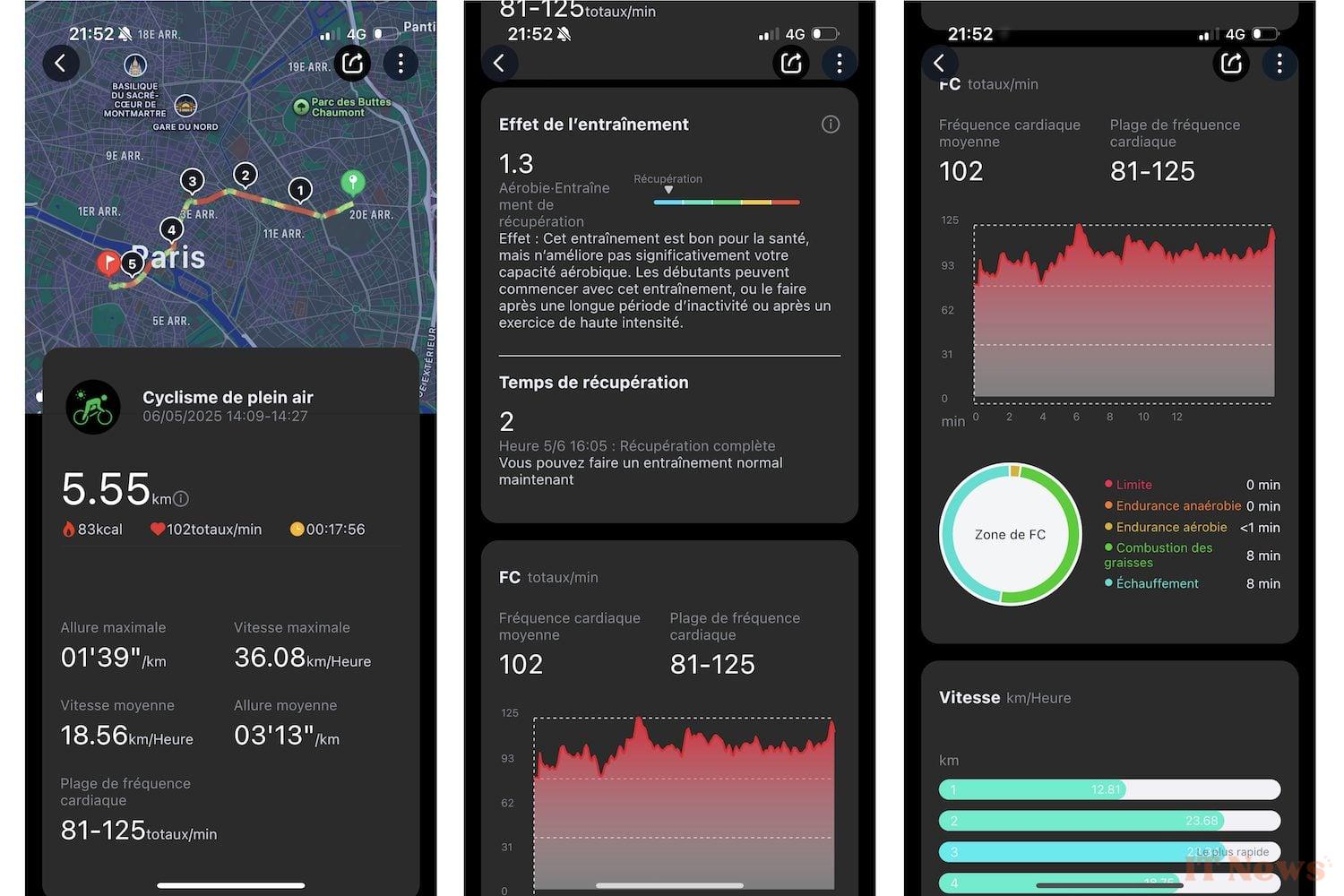
The watch includes a heart rate sensor, a pulse oximeter (SpO2), and an accelerometer. During our tests, heart rate readings remained consistent at rest, but quickly showed their limitations during intense exercise, with difficulty accurately tracking rapid variations. Sleep tracking is basic but useful: total time, sleep phases, and nighttime awakening detection are simply displayed.
Battery life in "always on" mode
Ice Watch advertises between 5 and 7 days of battery life in typical use. During our test, we opted to activate all health tracking features, as well as the screen being on all the time, as is expected on modern watches. Notifications were active, with two or three workouts per week and sleep tracking. Under these conditions, the Ice Fit only lasted 2.5 days.
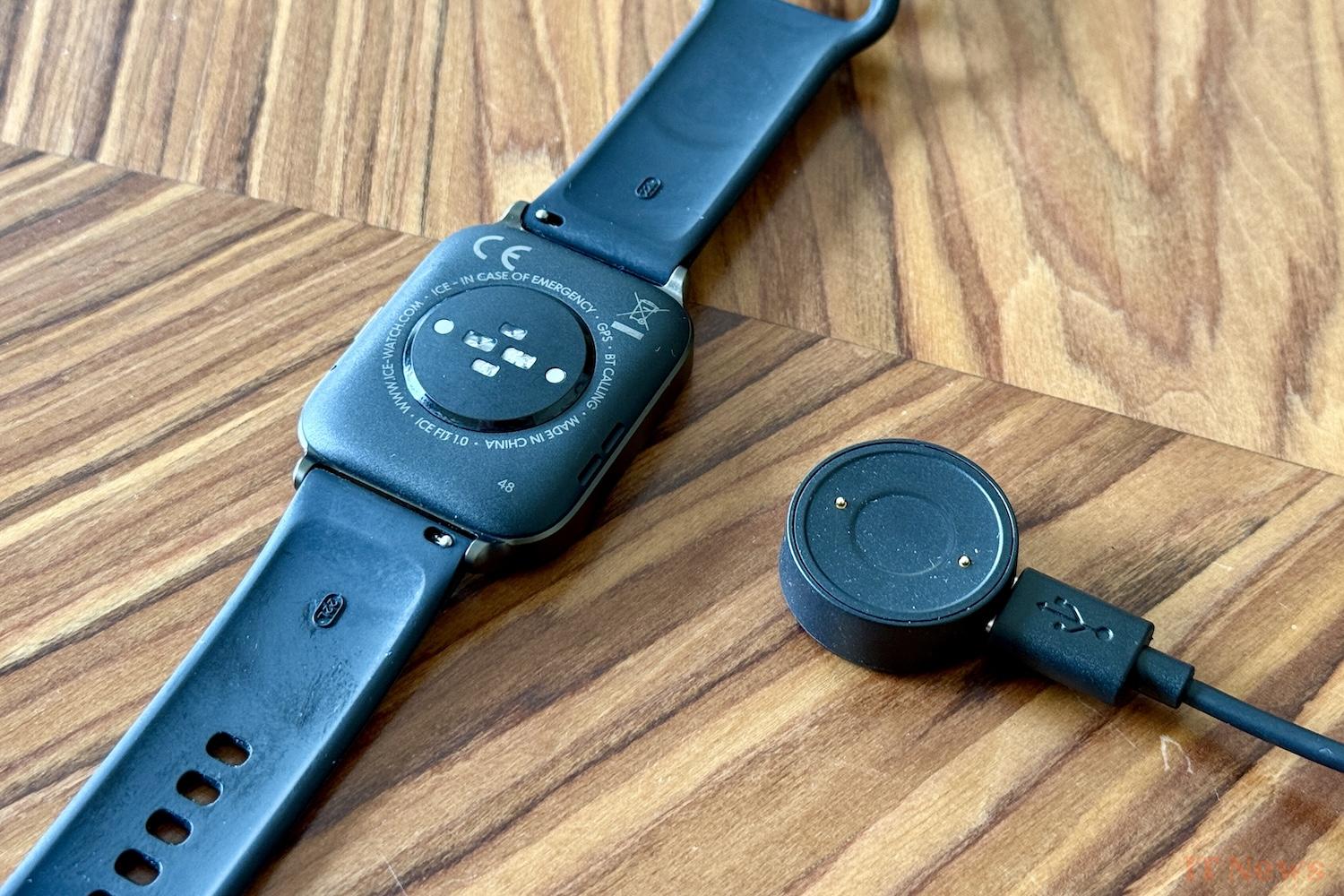
This is certainly due to a weak battery, but especially to the lack of automatic brightness. The screen doesn't adapt to the environment and thus consumes far too much energy. It can certainly be adjusted manually, but the handling becomes tiresome after a while. A full charge only takes about two hours via the small magnetic base provided. The latter is practical, but it's not the most stable: it's best to avoid inclined surfaces if you want it to remain firmly attached to the watch.


0 Comments