

WhatsApp is testing a new option to better manage the quality of automatically downloaded photos and videos. This feature, which gives users more control, could soon be extended to all Android devices.

WhatsApp continues to add options to better adapt to current uses. In recent months, the app has integrated features such as the creation of personalized chatbots capable of communicating directly with your contacts. The web version has also been upgraded to offer the same features as on mobile. In this vein, a new feature currently being tested allows you to influence the quality of downloads.
According to WABetaInfo, a new option called “Auto Download Quality” has been spotted in version 2.25.18.11 of WhatsApp for Android. This allows you to pre-define the quality of photos and videos that the app automatically uploads. The option is located in the Settings > Storage and Data menu, just below the existing setting for media upload quality. The rollout remains limited to certain users, but should gradually expand in the coming weeks.
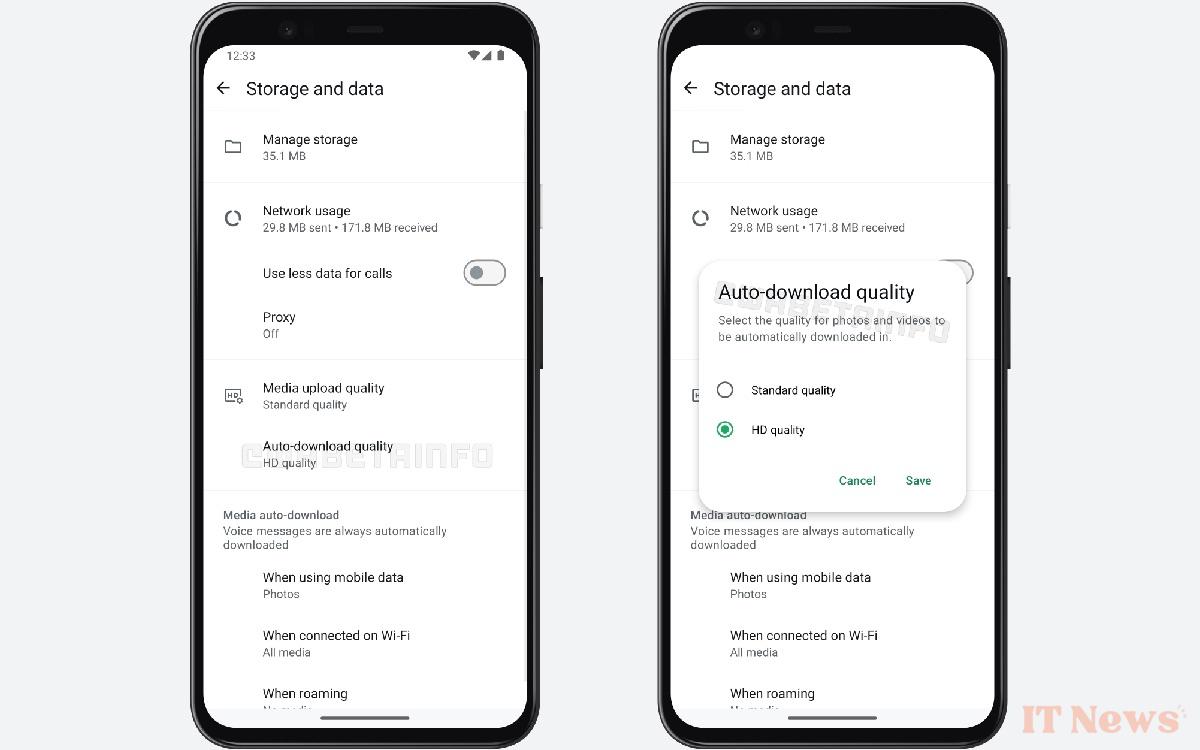
WhatsApp offers two quality levels for automatic downloads
The user can choose between two quality levels: standard or HD. In the first, WhatsApp downloads a compressed version of the media, which saves storage space and limits mobile data consumption. By selecting the second option, the high-resolution version will be directly saved to the phone. Note that when downloading in standard quality, it is still possible to manually display the HD version in the conversation, as long as the file remains available on the servers.
To ensure this flexibility, WhatsApp has implemented a double-send system. When a user shares a photo or video in HD, the application generates both a compressed version and a high-quality version. Both files are sent from the sender's device, as the app cannot compress content on its own servers due to end-to-end encryption. The recipient will automatically receive the version corresponding to the parameters they have chosen. This operation guarantees better control of the data while respecting the confidentiality of the exchanges.


0 Comments