
Google now uses AI to protect users from threats in web search, Chrome, and Android. AI makes it possible to establish even more effective security measures than before to hunt down scams, fraudulent sites, and malicious files.

As online scams become increasingly numerous and sophisticated, Google has integrated AI into its various security systems to protect its users, whether on its search engine search, on their Chrome browser or on an Android device. In a blog post, the company looks back at the measures it has implemented and how they work concretely to prevent us from falling for a scam.
For Google Search, “AI helps us detect and block hundreds of millions of fraudulent results every day”, it is explained. The integration of AI tools makes it possible to detect 20 times more fraudulent pages. “This allows us to analyze vast amounts of text on the web, identify coordinated scam campaigns, and detect emerging threats, staying one step ahead to keep you safe on search engines,” Google assures.
Gemini protects Chrome users
For example, the firm has seen “a significant increase in the number of malicious actors on the web impersonating airline customer service providers and defrauding people in difficulty” and has managed to reduce these scams by more than 80%.
Google also announces that it is now using its Gemini Nano extended language model to power its Enhanced Protection in Chrome. As a reminder, if you use the browser, you can enable it in Settings by going to the Privacy & security section and then the Safe Browsing menu. According to Google, this mode provides twice the protection against phishing and other scams. It thoroughly analyzes suspicious downloads and warns you of dangerous sites, even if they are not yet in its database.
“This on-device approach provides instant insight into risky websites and allows us to offer protection, even against never-before-seen scams. Gemini Nano is ideal for this use thanks to its ability to analyze the varied and complex nature of websites, allowing us to adapt more quickly to new scam tactics,” reports Google, which plans to extend this protection to Android devices in the future.
On mobile, Google monitors notifications, messages, and calls.
“Sometimes the risk from fraudulent sites can extend beyond the site itself. If you have website notifications enabled, malicious sites may attempt to scam you through a barrage of notifications. To help you stay ahead of malicious, spam notifications or misleading, we're launching new AI-powered warnings for Chrome on Android,” the Alphabet subsidiary further announced.
When Chrome's machine learning model detects a notification, the user sees a warning. They then have the option to unsubscribe from receiving notifications from that source, or view the blocked content. If the warning is an error, you can choose to allow future notifications from that website.
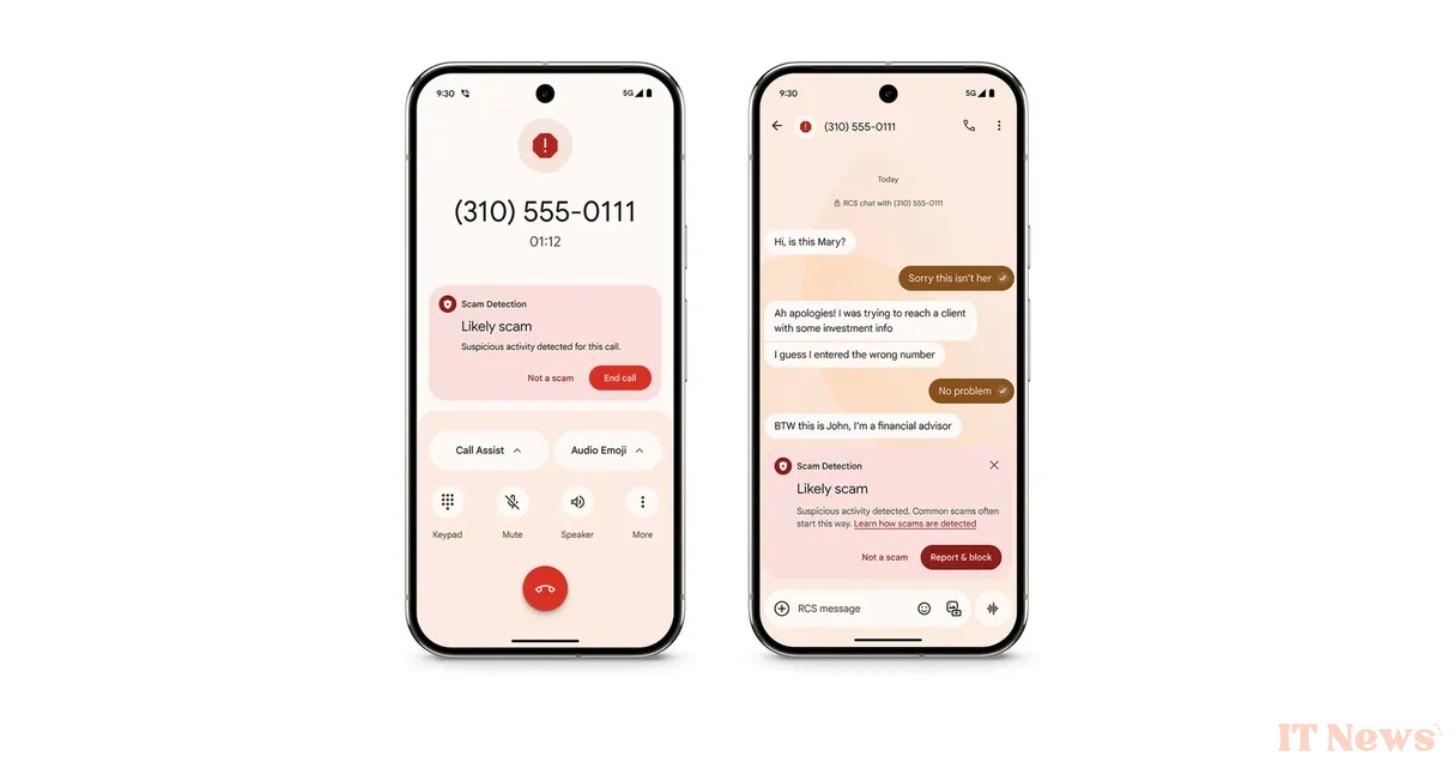
Finally, Google is cracking down on call and message scams. AI threat detection was recently added to Android's native Phone and Messages apps to help prevent this type of trap. A classic scam is the one involving bank advisors or customer support. Sometimes, scammers even have very specific information about you, from data leaks like the one Free suffered, and use it to try to make you believe they are legitimate.
Google already warns us when it thinks a call might be spam, saving us from picking up and wasting time with a salesperson. It will go even further by clearly displaying on the screen when it considers the contact you are communicating with (by voice call or messages) is likely to be a scammer.


0 Comments