

Even though the Epic Games Store is doubling its efforts to attract customers, it's far from the popularity of its direct competitor, Steam. With approximately 67 million monthly active users, compared to over 150 million according to estimates, Valve has a head start that will be difficult to catch up. PC gamers are used to it, and it's difficult to get them to change, especially when everyone is happy with Steam's offering. Unfortunately, there are also consequences to having so many customers in the event of a problem...
Steam hacked? Watch your data!
Notice to Steam users, active or not! You must change your password immediately! In all likelihood, Valve's platform has been the victim of a massive hack. According to Underdark, who reported the information on his LinkedIn profile, the hacker, who goes by the pseudonym Machine1337, put the data of more than 89 million accounts up for sale for $5,000. According to the details, this hack was made possible due to a flaw in the two-factor authentication system. This famous method allows you to send a message to your mobile phone to ensure that you are the account holder on X or Y platform. In this case, Steam.
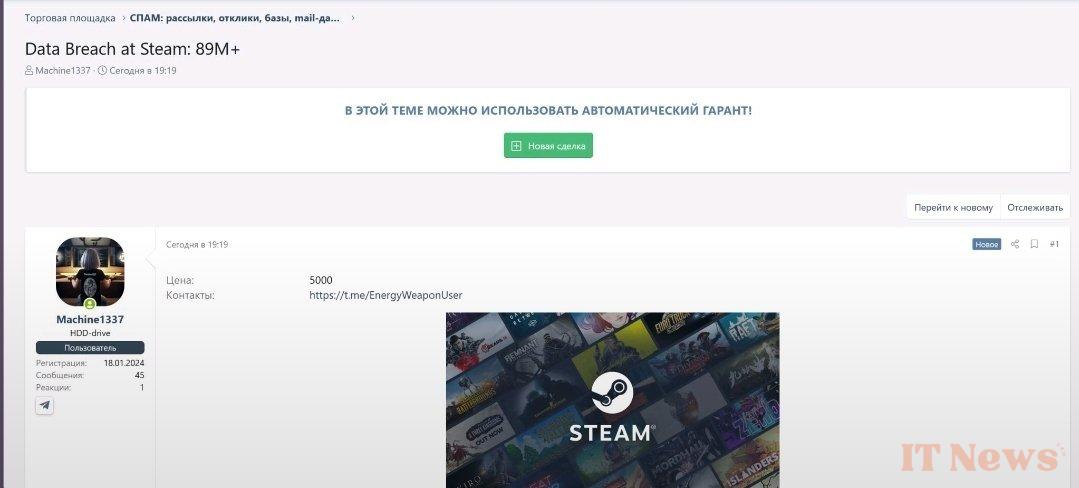
For now, Valve has not released an official statement, and the matter remains somewhat unclear. It seems likely that this wasn't a direct breach of the Steam database, but rather an external service used by the distribution platform. The company's name, Twilio, has been circulating, but according to a Valve spokesperson, this is inaccurate. "I was contacted by a Valve representative, who told me they don't use Trillio" (via Mellow_Online1). While waiting for confirmation of the theft of data belonging to millions of Steam users, it's best to take action. First, the simplest solution to limit the damage is to change your password. Second, it's advisable to have Steam Guard. This is a strong authentication method that can be activated via email or smartphone. You can consult the Steam Guard article on the subject. By doing so, you will protect yourself from potential phishing attempts.
Source: Underdark, MellowOnline1.


0 Comments