
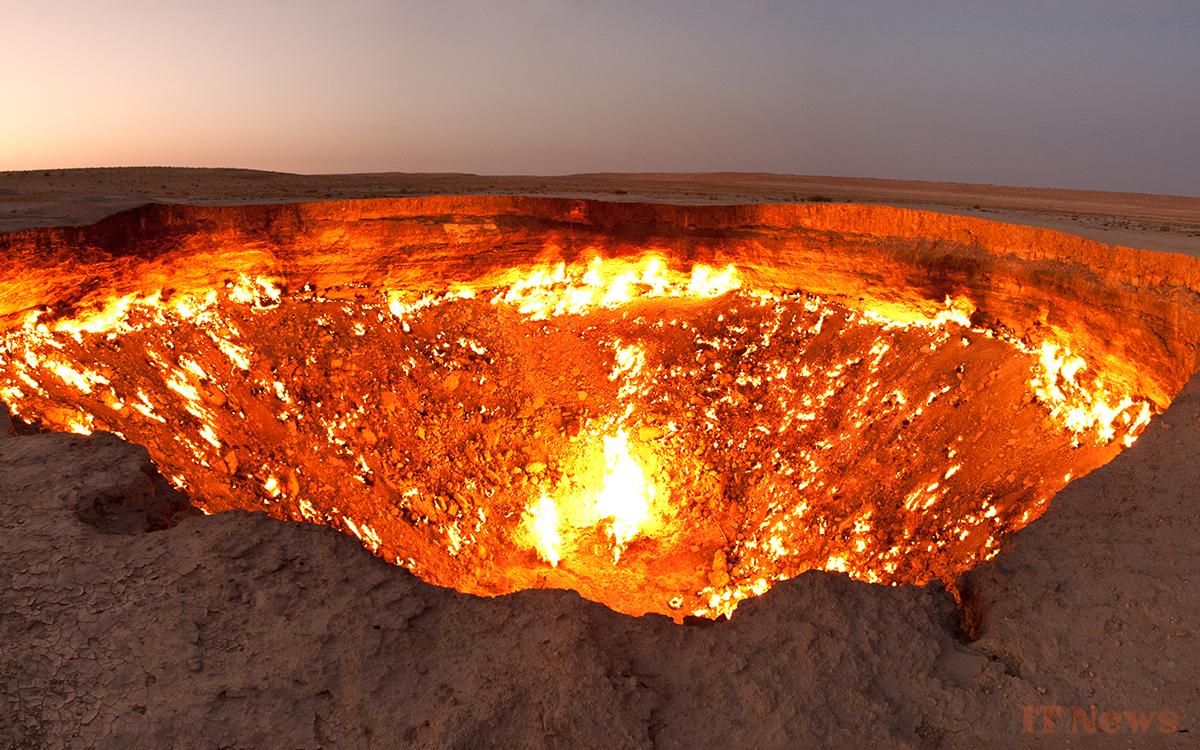
A large crater that has been burning for over 50 years is slowly closing. Nicknamed the Gate of Hell, it will cause less and less harm to the Earth thanks to the efforts made to extinguish it.
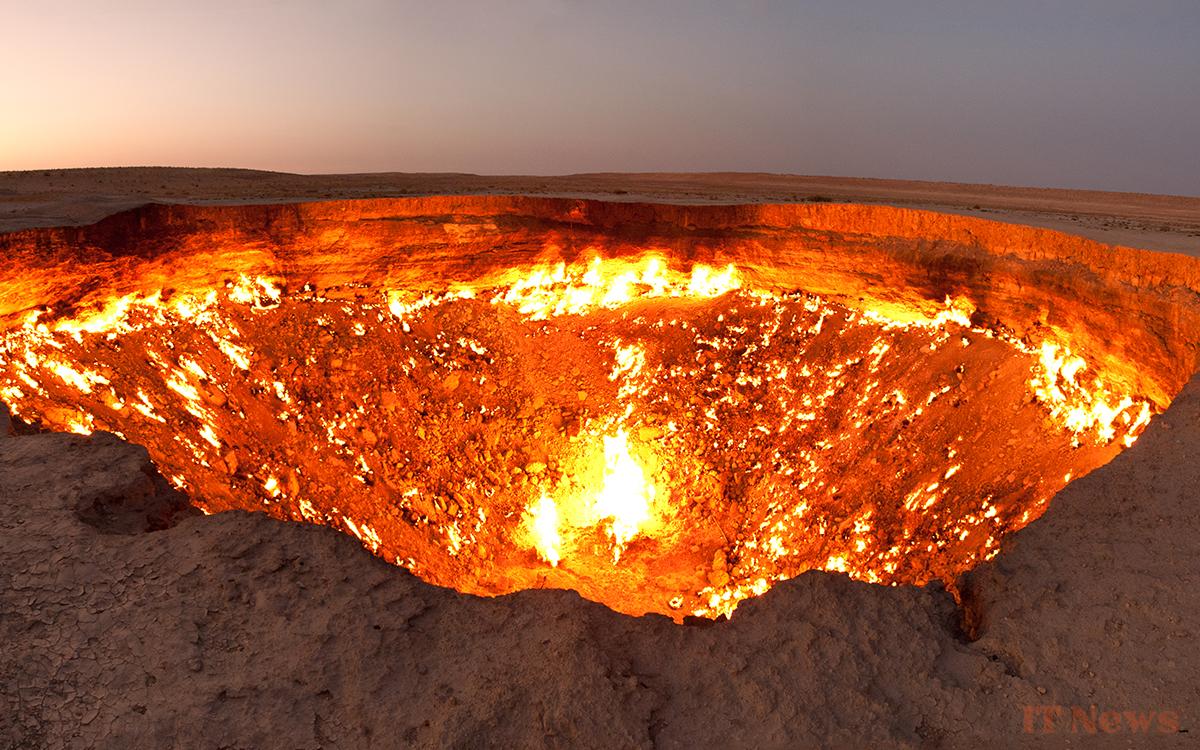
The territory of Turkmenistan in Central Asia has a particularity. More than half of the country is in fact occupied by the Karakum Desert, which stretches over 350,000 km². That's impressive enough in itself, but it doesn't stop there. This same desert is home to an extremely unique place that attracts many tourists and other thrill-seekers every year: the Gates of Hell. Nothing to do with the sculpture of the same name created by Auguste Rodin.
Behind this evocative name hides a crater 69 meters in diameter and 30 meters deep. You can see it in the illustration of this article: it's a huge blaze. It's not new, as it's estimated that it's been burning continuously since 1971, or 54 years. Officially, we don't really know how it came to be, but we do have a clear idea of the most likely hypothesis.
The Gates of Hell are beginning to close, more than 50 years after they opened
In 1971, a Russian drilling rig was digging wells in various locations in the Karakum Desert. The goal was to find gas. The machine then apparently pierced a pocket of natural gas, which can release deadly methane into the air. To prevent this, the people on site apparently set fire to the gas, believing that a few days would be enough to burn everything. That was 54 years ago, and the fire is still burning.
At one time, the flames were visible for miles around. Today, you have to get up close to see the still-glowing embers glowing in the night. This doesn't take away from the danger of the place: the Darvaza Crater, as it's really called, is the main source of methane pollution in Turkmenistan. The country has been doing what it can to reduce it for many years, and its efforts finally seem to be paying off.
Closing the Gates of Hell is important for the environment
On June 5, 2025, Turkmen scientists speak at an international conference and announce good news: the “Gateways of Hell” are finally closing. The country's gas company, Turkmengas, has been able to reopen previously closed wells around the crater and drill new ones. Their goal is simple: extract the methane before it reaches where it catches fire. As the latest measurements show, it's working.
“The receipt of low-pressure gas and slightly carbonated formation water from various wells indicates a decrease in gas recharge to the crater,” says Turkmengas. Encouraging results recorded by the MARS platform (Methane Alert and Response System) set up within the framework of the United Nations Environment Programme. Turkmenistan has been a member since March 2024.
There is still work to be done before the Gates of Hell are finally closed. Other wells are being dug to deprive it of its gas reserves, and therefore of its fuel reserves. As an aside, the Darvaza crater is not unique. The town of Centralia, Pennsylvania, has been burning for over 60 years because of the coal it contains underground. The same goes for Jharia in India, where the fire has been burning for 100 years. The absolute record is held by the “burning mountain” in Australia: 6,000 years without interruption. That's hot.


0 Comments